Category
Manufacturer
Model
New England Machine
New England Machine is known for providing custom machinery solutions, particularly for the packaging industry. They specialize in designing and manufacturing equipment that meets the specific needs of their clients.
FAQ:
What types of equipment does New England Machine manufacture?
New England Machine has built a strong reputation in the packaging industry by producing custom machinery solutions designed to meet specific production requirements. Their equipment lineup covers a broad range of packaging line functions, with a particular focus on container handling and closure applications. Common categories include rotary bottle unscramblers, inline cappers, spindle cappers, chuck cappers, and snap cappers, each engineered for different container types, cap styles, and line speeds.
Beyond those core categories, the company is also known for producing equipment like plastic bottle unscramblers and multi-spindle cap tighteners, which are frequently found in food, beverage, pharmaceutical, and personal care manufacturing environments. Because the company has been active in the industry for many years, there is a substantial installed base of their machines still running in production facilities across the country, which is one reason used New England Machine equipment remains consistently sought after on the secondary market.
What should buyers know about purchasing used New England Machine equipment?
Buying used packaging machinery is a practical way to add proven equipment to a production line at a fraction of the cost of sourcing a comparable machine through other channels. With New England Machine specifically, buyers benefit from the fact that the company built equipment with durability in mind, and many of their machines have long service lives even after years of production use. That said, used equipment is sold as-is, so the condition of any individual machine depends heavily on how it was maintained, how hard it ran, and how long it sat idle before being listed for sale.
Buyers should approach any used machinery purchase with a clear inspection plan. Reputable used equipment dealers will offer in-person visits, video walkthroughs, or recorded video captures of the machine so buyers can assess its current condition before committing. It is also worth contacting New England Machine directly to understand what level of parts availability and technical support exists for the specific model being considered, since older or discontinued models may have more limited manufacturer support than more recent production runs.
How do New England Machine bottle unscramblers work, and what are they used for?
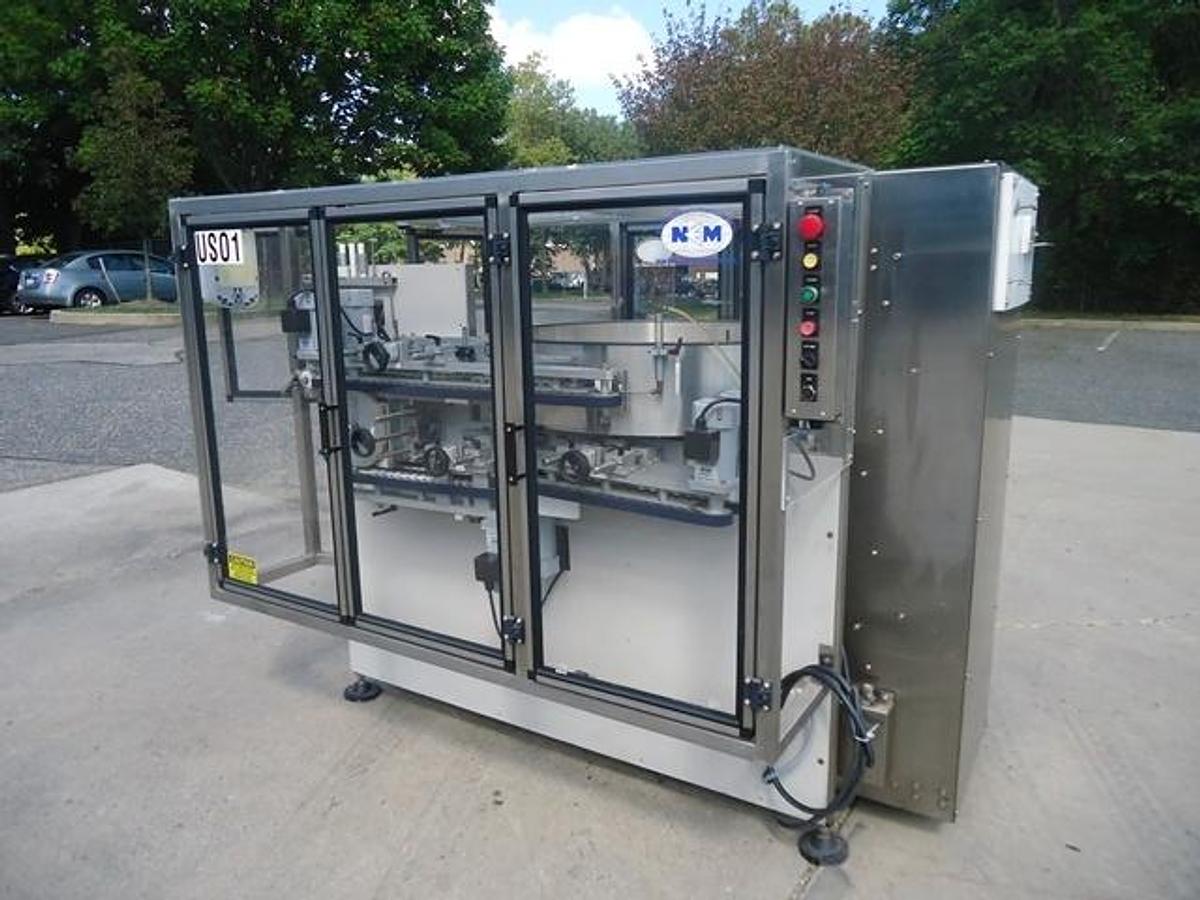
Bottle unscramblers are designed to take randomly oriented containers from a bulk hopper and orient them upright and in a single-file line, ready to feed into the next stage of a packaging line such as a filler or labeler. New England Machine's unscramblers, including models like the NEHCP-36 plastic bottle unscrambler, accomplish this through a combination of rotating discs, timing screws, and guide rails that sort and position containers at high speed without damaging them. The result is a continuous, controlled flow of properly oriented bottles delivered to the downstream equipment.
These machines are used across a wide range of industries, including food and beverage, nutraceuticals, pharmaceuticals, and household products. They are particularly valuable in high-volume operations where hand-feeding containers would create a bottleneck. Throughput capacity varies by model, with some units handling a few hundred containers per minute and higher-end industrial models capable of exceeding 1,000 containers per minute. Buyers evaluating a used unscrambler should confirm that the machine's speed range and container compatibility match the bottle sizes and production volumes their line requires.
What is a spindle cap tightener, and how does the New England Machine version differ from other cappers?
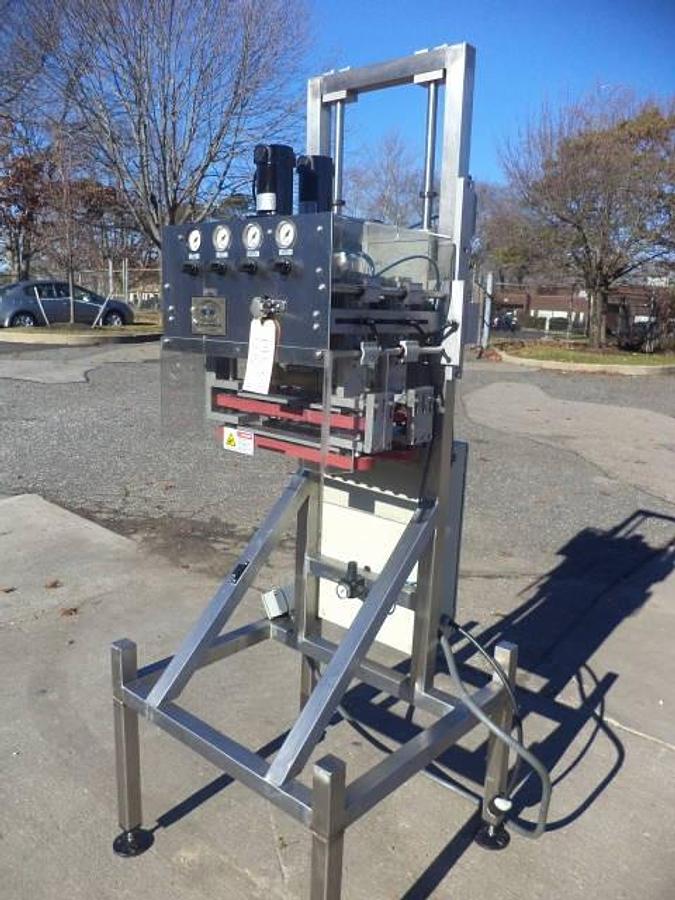
A spindle cap tightener applies and tightens threaded closures onto containers as they pass through the machine on a conveyor. The closure is placed on the container either manually or by a cap delivery system, and then the bottle passes between a series of spinning rubber discs that grip the cap and torque it down to a consistent tightness. This style of capper is well suited to continuous motion production lines and works across a wide variety of cap sizes and container types with relatively simple changeover adjustments.
New England Machine's four-spindle cap tightener is a recognized model in this category, designed for single-phase electrical service which makes it easier to install in facilities without three-phase power infrastructure. Compared to chuck cappers, which apply torque from above using a chuck that grips each individual cap, spindle cappers generally offer higher throughput because they do not require the line to index or stop. Chuck cappers tend to deliver more precise torque control, which makes them preferred for applications with strict closure specifications. Buyers choosing between the two styles should consider their required line speed, cap type, and torque consistency requirements before selecting a machine.
How do buyers evaluate the condition of used packaging machinery before purchasing?
Evaluating used packaging machinery requires a structured approach because condition can vary significantly from one machine to the next, even among units of the same model. The most reliable starting point is a direct inspection, either in person at the dealer's facility or at the plant where the machine was last in production. Many dealers can also arrange video inspections or provide detailed video captures showing the machine's major components, wear points, and any visible damage. Buyers should pay close attention to the condition of belts, timing screws, guide rails, electrical panels, and any pneumatic or servo components, as these are common wear items on packaging equipment.
It is important to understand that most used equipment dealers do not have the permitting or production infrastructure to run actual product through a machine during an inspection. What they can typically demonstrate is that the machine powers on, that major mechanical systems move freely, and that there are no obvious signs of damage or significant missing components. For a more thorough assessment, buyers may want to bring in a qualified packaging machinery technician to inspect the unit alongside them. Consulting the manufacturer about parts availability for the specific model is also a smart step, since some older New England Machine models may have limited support for certain components.
What integration considerations matter when adding used New England Machine equipment to an existing packaging line?
Packaging lines are built around tight coordination between individual machines, so adding a used piece of equipment requires careful attention to how it will physically and operationally connect with what is already in place. Key factors include conveyor height and width compatibility, infeed and discharge timing, electrical requirements (particularly whether the machine runs on single-phase or three-phase power), and whether the control system can communicate with adjacent equipment or a line PLC. New England Machine equipment, like the single-phase four-spindle cap tightener, is sometimes specifically designed to simplify installation in facilities with certain electrical configurations, which is worth confirming before purchase.
Container and closure compatibility is equally important. Used unscramblers and cappers are typically set up for a specific range of bottle diameters, heights, and cap sizes. Changeover parts such as timing screws, star wheels, and guide rail inserts may or may not be included with a used machine, and sourcing those parts separately can add cost and lead time. Buyers should request a full inventory of included tooling and change parts when evaluating any used packaging machine, and confirm that the machine's throughput speed range aligns with the rest of the line to avoid creating a new bottleneck.
Why is there consistent demand for used New England Machine equipment on the secondary market?
New England Machine has been a recognized name in packaging machinery for many years, which means a large number of their machines were installed across food, beverage, pharmaceutical, and consumer goods facilities over several decades. When those facilities upgrade their lines, consolidate operations, or close entirely, the equipment they release tends to find ready buyers. The company's reputation for building durable, purpose-engineered machinery means that used units often have significant remaining service life, making them attractive to manufacturers looking to expand capacity or replace aging equipment without the lead times associated with sourcing a comparable machine through other channels.
The secondary market for this type of equipment is also driven by the economics of packaging line ownership. A used bottle unscrambler or spindle capper in good working condition can represent substantial savings compared to other acquisition paths, while still delivering the throughput and reliability a production line requires. For smaller manufacturers or contract packagers running lower volumes, a used New England Machine unit can provide industrial-grade performance at a price point that fits a tighter capital budget. That combination of brand credibility, proven durability, and cost efficiency keeps demand for these machines active on the used equipment market.
What should buyers ask a used machinery dealer before purchasing New England Machine equipment?
Before committing to a purchase, buyers should gather enough information to understand both the machine's history and the full cost of acquiring it. Useful questions include: How long has the machine been out of production? Was it decommissioned or is it still running? What is included with the machine in terms of change parts, tooling, and documentation? Are manuals or electrical schematics available? Has any maintenance been performed by the dealer, and if so, what was done? These details help a buyer build a realistic picture of what they are getting and what additional investment may be needed to get the machine running in their facility.
On the logistics side, buyers should ask for a detailed breakdown of packaging, rigging, freight, and any other costs that will be added to the machine price. Larger packaging machines often require specialized rigging for loading and unloading, which adds to the total landed cost. Payment terms are also worth clarifying upfront. Most used equipment dealers require full payment before a machine ships, though some may extend terms to established customers. Understanding all of these factors before agreeing to a purchase prevents surprises and allows for accurate budgeting.
What are the typical shipping and freight considerations for used packaging machinery?
Shipping used packaging machinery is more involved than standard freight because of the weight, size, and mechanical sensitivity of the equipment. Proper packaging is critical to preventing damage in transit. Depending on the machine's size and fragility, this can range from basic palletization with banding and stretch wrap to full custom crating with internal blocking and bracing. Dealers will typically charge for this packaging work, and the level of protection required will affect that cost. Buyers should ask specifically what packaging method will be used and whether the freight quote includes crating or only palletizing.
For larger or heavier machines, rigging is an additional consideration. Loading a multi-hundred-pound unscrambler or capper onto a truck requires a forklift or crane, and unloading at the destination requires the same. If the buyer's facility does not have that equipment on site, they will need to arrange for it separately or factor it into their freight coordination. Some dealers can recommend freight carriers experienced with machinery shipments, which can simplify the process. The total landed cost of a used machine, including the purchase price, packaging, rigging, and freight, should be calculated before finalizing any purchase decision.
How does buying used packaging machinery compare to purchasing through other channels?
The primary appeal of buying used packaging machinery is cost. A used New England Machine bottle unscrambler or cap tightener in good working condition typically represents a meaningful reduction in capital outlay compared to acquiring a comparable machine through other means, while delivering the same core functionality on the production floor. For manufacturers facing budget constraints, production deadlines, or uncertainty about long-term volume needs, used equipment allows them to add capacity quickly and at a lower financial commitment.
The trade-off is that used machines come without the support structure that accompanies a purchase from a manufacturer. There is no factory warranty, no guaranteed parts availability for every component, and no assurance that the machine will perform to its original specifications without some degree of refurbishment. Buyers take on more responsibility for due diligence, which is why choosing a reputable dealer with a long track record in the packaging machinery space matters. A dealer who specializes in this category of equipment will have better knowledge of what to look for, more accurate condition assessments, and a clearer sense of what parts and support are realistically available for a given model. That expertise reduces the risk that comes with buying equipment as-is.