Category
Manufacturer
Model
New Brunswick Scientific
New Brunswick Scientific manufactures equipment for the life sciences sector, focusing on bioprocessing and laboratory instruments. Their products are crucial for research and development in biotechnology and pharmaceuticals.
FAQ:
What types of equipment did New Brunswick Scientific manufacture?
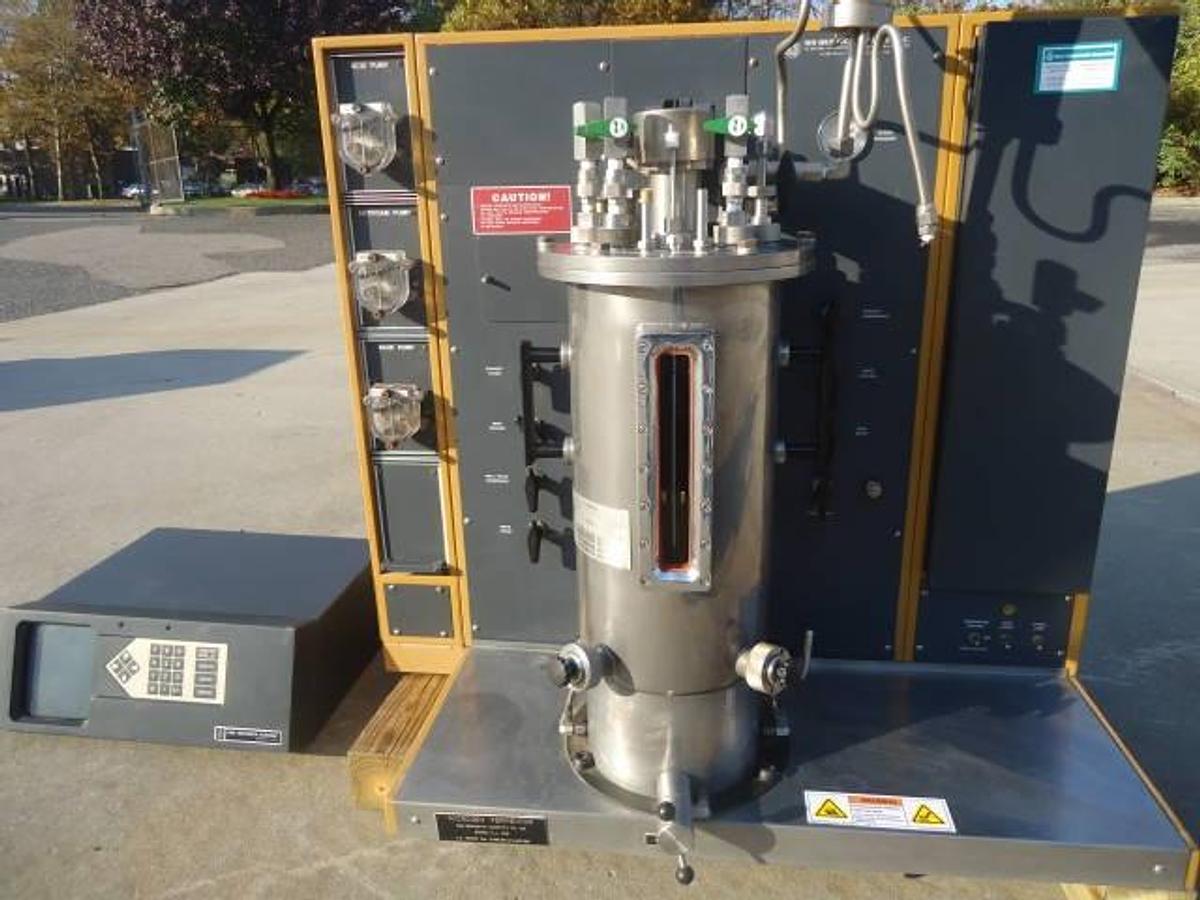
New Brunswick Scientific (NBS) built a broad range of instruments for the life sciences sector, with a particular focus on bioprocessing and laboratory research. Their most recognized product lines include the Innova orbital shaker series, BioFlo bioreactors and fermenters, Excella shakers, and Classic series incubator shakers. They also produced fermentors in various scales, including stainless steel vessels like the 16-liter Microgen fermentor, which was designed for microbial and cell culture work in biotechnology and pharmaceutical research environments.
NBS equipment became a staple in research institutions, contract manufacturing organizations, and pharmaceutical development labs because of the durability and precision of the instruments. The BioFlo line in particular earned a strong reputation for scalable bioprocessing, while the Innova shaker series became widely used for cell culture, protein expression, and general laboratory mixing applications. Eppendorf eventually acquired NBS, and some product lines have continued under that brand, though many of the classic NBS models are now considered legacy equipment available primarily through the used market.
What should buyers look for when purchasing used New Brunswick Scientific fermentors?
Used NBS fermentors, including stainless steel models like the Microgen series, require careful evaluation before purchase. Buyers should confirm the vessel material and grade (316 stainless steel is standard for most NBS fermentors and offers good corrosion resistance), check the working volume and total vessel capacity, and verify that all control modules for temperature, pH, dissolved oxygen, and agitation are present and functional. The condition of seals, spargers, impellers, and any glass or stainless components should be inspected closely, as these are wear items that may need replacement.
Beyond the physical condition of the vessel, buyers should ask about the control unit and software compatibility, since older NBS fermentor systems may rely on proprietary controllers that are difficult to source parts for. Requesting a video inspection or arranging an in-person visit to see the unit powered on is strongly advisable. Documentation including user manuals, service records, and calibration certificates adds significant value and reduces the time needed to bring the equipment back into operation. Consulting with Eppendorf (the current brand owner) about parts and support availability for the specific model is also a practical step before committing to a purchase.
Are used NBS Innova shakers a reliable choice for laboratory use?
NBS Innova orbital shakers are among the most sought-after instruments on the used laboratory equipment market, and for good reason. These units were built with industrial-grade motors and robust mechanical components, and it is not uncommon for well-maintained Innova shakers to remain in active service for 15 to 20 years or more. Their reputation for consistent orbital motion, accurate temperature control (in the incubated models), and quiet operation has kept demand strong even as the instruments age.
That said, buyers purchasing used Innova shakers should verify a few key specifications to make sure the unit fits their application. Flask capacity and platform size, speed range in RPM, orbit diameter, and temperature control range are all critical parameters. For labs outside North America, voltage and frequency compatibility is especially important, since many used units sold on the secondary market are configured for 120V/60Hz North American power. A reputable used equipment dealer should be able to provide detailed photos, video demonstrations, and the opportunity for inspection so buyers can assess the unit's current condition accurately before purchase.
How does the used NBS equipment market compare to buying directly from the manufacturer?
NBS as an independent brand no longer sells equipment directly, as the company was acquired by Eppendorf. This means the secondary market is the primary channel for acquiring classic NBS instruments like the BioFlo bioreactors, Innova shakers, and Microgen fermentors. Buying used through a reputable dealer typically offers significant cost savings compared to purchasing equivalent functionality in a current-generation instrument, which can be a major advantage for labs operating under budget constraints or needing a specific configuration that is no longer available in current product lines.
The trade-off is that used equipment is sold as-is, without manufacturer warranties, and buyers take on the responsibility of evaluating condition and fitness for purpose. This makes the choice of dealer important. Dealers who specialize in life sciences and bioprocessing equipment, have a verifiable track record, and offer inspection options provide considerably more confidence than general surplus sellers. Buyers should also factor in the cost of any reconditioning, consumable replacement, or calibration needed to bring the equipment to their required standard, since these costs affect the true landed price of the instrument.
What specifications should buyers confirm before purchasing used NBS shakers or incubator shakers?
Getting the specifications right before purchasing a used NBS shaker is essential, because many models look similar externally but differ in ways that can make them unsuitable for a specific application. The most important parameters to confirm include platform or flask capacity (measured in total flask volume the unit can accommodate), speed range in RPM, orbit diameter (typically 1 inch or 2 inch, which affects mixing efficiency for different culture volumes), and whether the unit is a basic shaker or an incubated model with temperature control. For incubated models, the temperature control range and uniformity rating matter significantly for cell culture work.
Power requirements deserve particular attention for any international purchase. NBS equipment manufactured for the North American market is typically rated for 120V/60Hz, while European and Asian labs generally operate on 220-240V/50Hz. Running equipment on incompatible power without a proper transformer can damage the unit. Buyers should also ask whether documentation such as the user manual and service manual is included, since this information is increasingly difficult to find for discontinued NBS models and can save considerable time during setup and troubleshooting.
Can used NBS equipment still be serviced and supported?
Eppendorf, which acquired New Brunswick Scientific, provides some level of support for legacy NBS equipment, but the depth of that support depends heavily on the specific model and its age. For more recent NBS instruments that transitioned into the Eppendorf product line, parts availability and technical support tend to be reasonably accessible. For older or discontinued models, OEM parts can be limited or unavailable, which means buyers may need to rely on third-party parts suppliers or independent service technicians who specialize in laboratory equipment.
Before purchasing a used NBS instrument, it is worth contacting Eppendorf directly to ask about parts availability and service support for the specific model number. This step can reveal whether critical consumables like impeller seals, pH probe assemblies, or control board components are still stocked. Independent service companies that specialize in bioprocessing and lab equipment often have experience with NBS instruments and can be a practical alternative to OEM service. Having access to a service manual, which a good used equipment dealer may be able to provide, also makes third-party servicing considerably more straightforward.
What is the typical process for inspecting used NBS equipment before purchase?
Reputable used equipment dealers generally offer buyers the option to inspect instruments through in-person visits, live video calls, or recorded video walkthroughs of the machine. The goal of any inspection is to get an accurate picture of the equipment's current condition, including visible wear, completeness of components, and ideally a powered demonstration showing that the unit operates as expected. For NBS fermentors and bioreactors, this might include confirming that the control unit powers on, agitation functions correctly, and that vessel components like impellers, spargers, and seals are present.
It is worth understanding that most used equipment dealers are not licensed production facilities and cannot run actual biological processes as part of a demonstration. What they can typically show is mechanical and electrical function. In some cases, NBS equipment may still be installed at the facility where it was originally used, and the dealer may be able to arrange an inspection at that location where the equipment could potentially be observed in or near active production conditions. Buyers should ask specific questions during any inspection, request close-up views of wear items and control interfaces, and verify serial numbers and model designations to cross-reference with manufacturer documentation.
What are typical shipping considerations for used NBS bioreactors and fermentors?
Shipping used bioprocessing equipment like NBS fermentors and bioreactors requires more planning than shipping standard lab instruments because of the size, weight, and fragility of vessel components. Proper packaging is critical. Depending on the size of the unit, this can range from palletized and stretch-wrapped shipping to full custom crating with internal bracing to protect glass components, control panels, and stainless steel vessels from damage in transit. Larger systems with heavy vessels or integrated control towers may require professional rigging for loading and unloading, which adds to the total shipping cost.
Buyers should ask dealers for a detailed breakdown of packaging, rigging, and freight costs before finalizing a purchase, since these expenses can be substantial for larger NBS systems and will affect the true landed cost of the equipment. For international shipments, customs documentation, import duties, and compliance with destination country electrical standards are additional factors to address. It is also worth confirming whether the dealer ships equipment disassembled (which can reduce freight dimensions but requires reassembly expertise on the buyer's end) or as a complete unit.
What payment terms are standard when buying used laboratory equipment from a dealer?
Most used laboratory equipment dealers require full payment prior to releasing equipment for shipment. This is standard practice across the industry and reflects the fact that used equipment transactions do not carry the same credit infrastructure as purchases from large manufacturers or distributors. For buyers purchasing from a dealer for the first time, full payment upfront should be expected. Some dealers extend payment terms to established repeat customers with whom they have a documented purchase history, but this is the exception rather than the rule.
Buyers should clarify accepted payment methods early in the process, as dealers vary in whether they accept wire transfers, credit cards, or other instruments. Wire transfer is the most commonly accepted method for larger transactions. It is also reasonable to ask about the dealer's process between payment and shipment, including how quickly equipment is prepared and released after funds are confirmed, and what documentation (such as a bill of sale or export paperwork for international transactions) will be provided. Understanding the full timeline from payment to delivery helps buyers plan around equipment installation and commissioning schedules.
Why is documentation important when buying used NBS equipment, and what should buyers request?
Documentation can make a meaningful difference in how quickly and smoothly used NBS equipment is put back into service. User manuals cover operating procedures, maintenance schedules, and troubleshooting steps that are specific to the model, and for discontinued NBS instruments these manuals are increasingly difficult to find through public sources. Service manuals go a step further by providing component diagrams, calibration procedures, and repair guidance that independent technicians need to work on the equipment. Calibration certificates, where available, provide a baseline record of the instrument's last verified performance state.
Buyers should ask dealers directly whether any documentation is included with a given unit. Even partial documentation, such as a user manual without a service manual, adds value by reducing the time needed to get familiar with the equipment. For NBS instruments that will be used in regulated environments (GMP pharmaceutical production, for example), a documented maintenance and calibration history may also be needed to satisfy quality system requirements. If documentation is not available from the dealer, Eppendorf may be able to supply manuals for certain legacy NBS models, and third-party manual repositories sometimes carry older NBS documentation as well.