Category
Manufacturer
Model
FAQ:
What types of used Nercon Engineering conveyor systems are typically available for purchase?
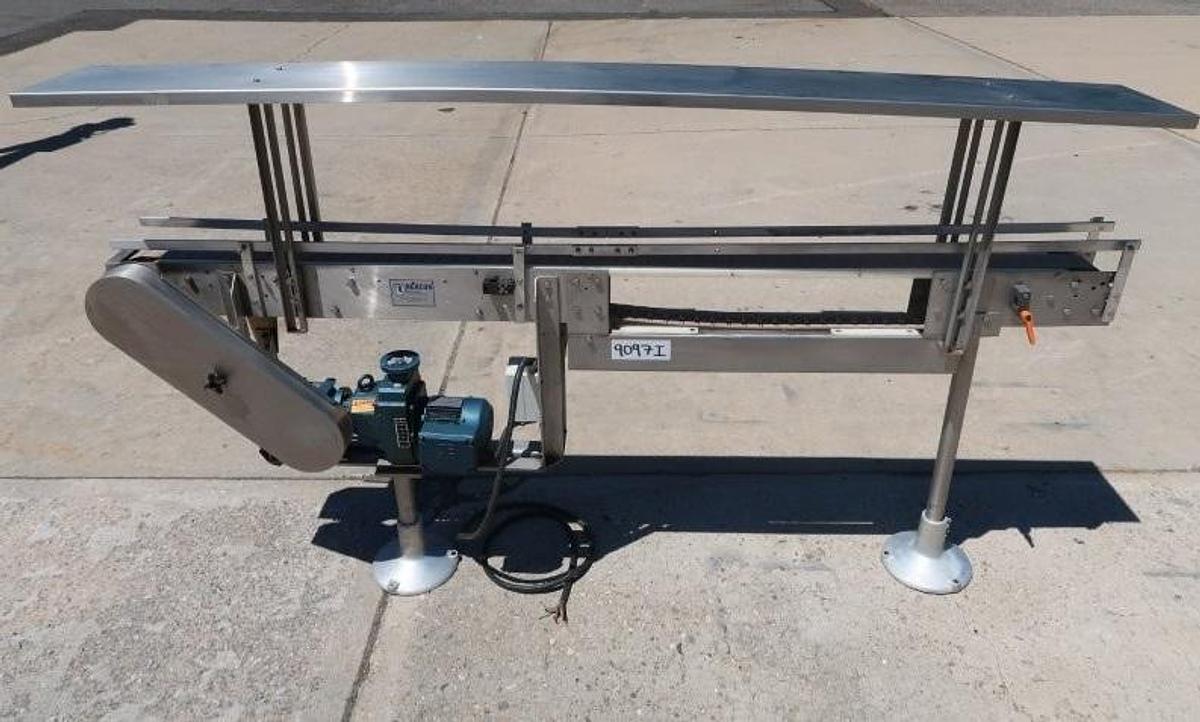
Nercon Engineering & Manufacturing produces a wide range of conveyor systems, and the used market reflects that variety. Buyers commonly find accumulation conveyors, flat belt conveyors, tabletop chain conveyors, flex conveyors, and incline/decline conveyors available through used equipment dealers. Stainless steel bottle conveyors are also frequently listed, including narrow-width models designed for single-file bottle handling in packaging lines. Dimensions vary considerably across listings, so buyers can often find equipment that closely matches their footprint requirements without major modification.
Nercon built its reputation largely in food and beverage and consumer goods packaging, so much of the used inventory reflects those applications. Open-frame hygienic designs, tool-less belt adjustment features, and stainless steel construction are common across many of their conveyor lines, which makes used Nercon equipment attractive to buyers who need food-grade compliance. Because these machines were built for demanding production environments, even older units tend to retain meaningful structural integrity, which is part of why they remain in circulation on the secondary market for many years after initial installation.
What industries are Nercon Engineering conveyors best suited for?
Nercon Engineering conveyors were designed with food and beverage processing and packaging in mind, and that focus is reflected in the materials and construction choices found across their product lines. Stainless steel frames, hygienic open-frame designs that minimize product buildup, and easy-clean belt systems make Nercon equipment a practical fit for facilities that operate under food safety regulations such as FSMA or require regular washdown procedures. Beverage bottling, canned goods, snack food packaging, and dairy processing are among the most common applications where Nercon conveyors appear.
Beyond food and beverage, Nercon conveyors are also used in general consumer goods packaging, pharmaceutical packaging, and light industrial assembly lines where controlled product flow and gentle handling are priorities. Their tabletop chain and accumulation conveyor designs work well in lines that require zero-pressure or low-pressure accumulation zones, which is a common need in high-speed packaging environments. Buyers from a range of industries have found that Nercon's build quality translates well to applications outside of food processing, particularly when stainless steel construction or specific belt configurations align with their production requirements.
How do I verify the condition and functionality of used Nercon conveyor equipment before buying?
Inspecting used conveyor equipment thoroughly before purchase is one of the most important steps a buyer can take. Reputable used equipment dealers will typically offer in-person inspections, virtual walkthroughs, or video documentation of the machine so buyers can assess its current condition. For Nercon conveyors still located at an active production facility, it may be possible to arrange an inspection while the equipment is still running, which gives the clearest picture of mechanical function. Decommissioned equipment can still be inspected visually for frame integrity, belt condition, drive components, and signs of wear or corrosion.
Buyers should pay close attention to the condition of the belt or chain, the drive motor and gearbox, side rails, and any variable frequency drive (VFD) components. Stainless steel frames on Nercon equipment hold up well over time, but welds, mounting hardware, and adjustment mechanisms should all be examined. It is worth noting that most used equipment dealers do not have active production lines, so functional testing under load conditions is generally not available at the dealer's facility. Consulting with Nercon directly about the specific model and age of a unit can also help buyers understand what level of manufacturer support and parts availability to expect before committing to a purchase.
Are replacement parts and components still available for older Nercon conveyor systems?
Parts availability for older Nercon conveyor equipment varies depending on the model, age, and how much the design has changed over the years. Nercon Engineering & Manufacturing is still an active company based in Oconto, Wisconsin, which is a meaningful advantage compared to buying used equipment from manufacturers that have gone out of business. Buyers should contact Nercon directly to ask about parts support for the specific model they are considering, since the company can clarify whether belts, drives, side guides, and other wear components are still produced or stocked.
For many Nercon conveyor models, standard components like flat belts, tabletop chains, motors, and gearboxes are sourced from third-party suppliers and are not proprietary, which makes replacement easier and less expensive. Variable frequency drives, sensors, and controls on older machines may require sourcing from industrial electronics suppliers if Nercon no longer carries those specific components. Before purchasing a used Nercon conveyor, it is a good practice to document the model number, drive specifications, belt type, and any control components, then verify sourcing options for those parts independently. This due diligence helps avoid situations where a machine is structurally sound but difficult to maintain due to obsolete components.
Does used Nercon conveyor equipment come with a warranty?
Used conveyor equipment, including Nercon machines sold through secondary market dealers, is typically sold as-is. Warranties are generally offered only by the original manufacturer on equipment sold through authorized channels, and that coverage does not transfer to subsequent buyers on the used market. This places the responsibility of evaluation squarely on the buyer, which is why thorough inspection before purchase is so important. Selecting a dealer with a long track record in industrial machinery and specific experience with conveyor systems helps reduce the risk that comes with as-is transactions.
Buyers should treat the inspection process as their primary protection. A reputable dealer will facilitate in-person or video inspections and provide honest documentation of the machine's condition, including any visible wear, missing components, or known issues. Consulting with Nercon about the model's age and expected service life can also help set realistic expectations about what the equipment will require after purchase. The absence of a warranty does not make used Nercon equipment a poor choice; it simply means buyers need to do their homework upfront and factor potential refurbishment costs into their total acquisition budget.
Can used Nercon conveyors be reconfigured or modified to fit a different production line layout?
Nercon conveyors are generally considered to be among the more adaptable used conveyor systems available on the secondary market. Many of their designs feature modular construction, adjustable side rails, and tool-less belt changeout systems that make physical reconfiguration more practical than it would be with older or more rigid conveyor designs. Incline angles, side guide widths, and drive positions can often be adjusted to accommodate different product sizes or line orientations. That said, the degree of flexibility depends heavily on the specific model and its original configuration.
For more significant modifications, such as changing conveyor length, adding accumulation zones, or integrating the unit into an automated line with sensors and controls, buyers typically work with a systems integrator or in-house engineering team. It is worth having a qualified technician review the machine's specifications against your layout requirements before purchase rather than after. Used equipment dealers can often provide dimensional drawings or specification sheets that help with pre-purchase planning. Nercon's engineering team may also be able to provide guidance on what modifications are feasible for a given model, which can save significant time and cost during installation.
How do I determine the right conveyor speed, width, and length for my application when buying used?
Selecting the right used conveyor starts with defining your production requirements in specific, measurable terms. Conveyor width needs to accommodate the widest product or container you plan to run, with enough clearance on the sides for stable transport. For bottle or container handling, width is often matched to the container diameter plus a margin for side guides. Length is determined by the distance between transfer points in your line, and buyers should account for drive tail and head sections that add to the overall footprint beyond the active belt surface.
Speed requirements are typically calculated based on your target throughput in units per minute and the spacing between products on the belt. Nercon conveyors equipped with variable frequency drives offer the advantage of adjustable belt speed, which provides flexibility if your line speed requirements change. When evaluating a used unit, confirm whether the existing drive and VFD setup matches your required speed range, or whether the motor and drive will need to be changed out. Reviewing the machine's original specification plate, if still present, and cross-referencing it with your line requirements is a practical starting point. If you are unsure about compatibility, consulting with a conveyor systems engineer before purchasing used equipment is a worthwhile investment.
What should I expect when it comes to shipping and delivery of used Nercon conveyor equipment?
Shipping used conveyor equipment involves more logistical planning than typical freight shipments, and costs can vary significantly depending on the size of the machine, its weight, and how it needs to be packaged for transit. Smaller conveyors may ship on standard pallets, while larger or heavier units often require custom crating to prevent damage during handling. Buyers should ask dealers specifically about how the equipment will be packaged and whether crating is included in the quoted price or billed separately. The level of packaging directly affects the risk of damage in transit, so this is not a detail to overlook.
For heavier Nercon conveyor systems, loading at the origin and unloading at the destination may require rigging equipment such as forklifts or cranes, which adds to the total landed cost. Buyers should confirm whether the dealer handles rigging at their facility and whether the buyer is responsible for arranging unloading at the destination. Freight quotes should be obtained with full details on the machine's crated dimensions and weight before committing to a purchase, since shipping costs for industrial equipment can be a meaningful portion of the total acquisition cost. Most used equipment dealers require full payment before the equipment ships.
What are the key construction features that make Nercon conveyor equipment durable over time?
Nercon Engineering built its conveyor lines with longevity in mind, which is a primary reason their equipment continues to trade actively on the used market years and sometimes decades after initial installation. Stainless steel frame construction is a defining feature across many of their product lines, offering resistance to corrosion in washdown environments and the structural rigidity needed for continuous high-speed operation. Open-frame designs reduce areas where food particles or debris can accumulate, which simplifies cleaning and extends the service life of belts and drive components.
Beyond the frame, Nercon conveyors are known for features like tool-less belt tensioning and tracking adjustments, which reduce maintenance time and lower the risk of improper adjustments that can accelerate wear. Drive components are typically mounted in accessible positions, and many models were designed with standard off-the-shelf motors and gearboxes that are straightforward to source. Variable frequency drive compatibility across much of their lineup also means that speed control and soft-start functionality can be maintained or upgraded without replacing the entire conveyor. These design choices compound over the machine's life, contributing to operational lifespans that can reach 15 to 25 years with proper maintenance.
What payment terms should buyers expect when purchasing used Nercon conveyor equipment?
Payment practices in the used industrial equipment market follow a fairly consistent pattern. Most dealers require full payment before the equipment is released for shipping or pickup. This is standard across the industry and reflects the fact that used machinery transactions typically do not involve the credit infrastructure that exists in new equipment sales. Buyers should plan their acquisition budget accordingly and confirm payment requirements with the dealer early in the process to avoid delays once a purchase decision is made.
Some dealers may offer payment terms to repeat customers or established buyers with a prior transaction history, but this is the exception rather than the rule for first-time purchases. Acceptable payment methods vary by dealer and may include wire transfer, ACH, or other arrangements. Buyers should also factor in all ancillary costs, including crating, rigging, freight, and any applicable taxes or import duties, when calculating total acquisition cost. Getting a complete cost breakdown from the dealer before finalizing the transaction helps avoid surprises and ensures an accurate comparison between different equipment options or sources.