Category
Manufacturer
Model
Nedco
Nedco offers manufacturing equipment primarily for the electrical and telecommunications industries. They are known for their high-quality cable management and connectivity solutions that enhance operational efficiency.
FAQ:
What kind of business is Nedco, and what industries does their equipment serve?
Nedco is a manufacturer of industrial equipment with a strong focus on the electrical and telecommunications industries. They are particularly known for cable management and connectivity solutions, along with material handling equipment used in manufacturing and processing environments. Their product line has historically served facilities that require reliable, purpose-built machinery for moving, managing, and processing materials at scale.
Used Nedco equipment turns up across a range of industrial settings, including electrical component manufacturing, wire and cable production, and general industrial processing. Specific pieces like bucket elevators are commonly found in food processing, chemical handling, and bulk material operations. Because Nedco built equipment to industrial-grade standards, their machines tend to have long service lives, which is part of why they remain in demand on the used equipment market well after their initial production runs.
What types of used Nedco manufacturing equipment are typically available on the market?
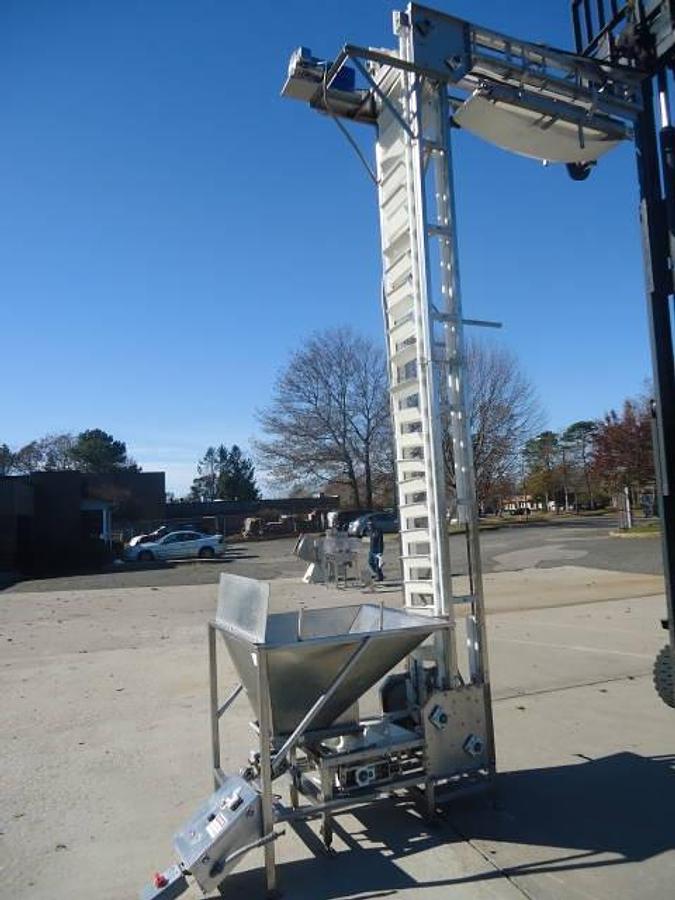
Used Nedco equipment available through dealers tends to span material handling and processing machinery. Bucket elevators are among the more commonly listed Nedco pieces, with configurations like 15-foot high stainless steel units with 6-inch by 12-inch buckets appearing in dealer inventories. These are used to vertically convey bulk materials such as granules, pellets, powders, and similar products in manufacturing and processing plants.
Beyond bucket elevators, Nedco's broader catalog of cable management and connectivity equipment occasionally surfaces in the used market as facilities upgrade or decommission older production lines. The availability of any specific model at a given time depends entirely on what has recently come off production floors, so buyers looking for a particular piece are generally best served by checking with dealers who specialize in industrial surplus and who actively update their inventories.
What does 'manufacture of machinery and equipment NEC' mean in an industrial context?
The classification 'manufacture of machinery and equipment NEC' (Not Elsewhere Classified) is an industry category used in standard industrial classification systems to group manufacturers that produce specialized machinery not covered by more specific categories. It typically captures producers of equipment used in particular niche processes, including material handling, bulk conveying, and specialized production line machinery. Nedco falls within the broader industrial equipment manufacturing space, producing machines that serve specific operational needs in electrical, telecom, and processing industries.
For buyers of used equipment, this classification matters mostly as a way to understand what types of machines a manufacturer produced and which industries those machines were designed to serve. When sourcing used equipment, knowing the manufacturer's original market focus helps buyers assess whether a particular machine was built to the standards their own production environment requires. Nedco's industrial-grade build quality is part of what makes their used equipment a viable option for buyers looking for durable, purpose-built machinery.
Can I inspect used Nedco equipment before purchasing?
Reputable used equipment dealers typically offer buyers the option to inspect machinery in person, through a scheduled video call, or by requesting video documentation of the equipment. This is especially important for used machinery because there is no substitute for actually seeing the machine's current condition, verifying that key components are intact, and assessing wear on mechanical parts. For larger or more complex pieces, an in-person visit is often the most thorough approach.
In some cases, equipment being sold is still installed and operating at a production facility, which means an inspection can be arranged at the plant where the machine is currently in use. This gives buyers a chance to see the equipment running under real conditions. Keep in mind that dealers typically cannot run full production tests themselves, since operating production equipment requires permits and infrastructure that most dealers do not maintain. The goal of any inspection is to get an honest, accurate picture of the machine's current mechanical and operational state before committing to a purchase.
Does used Nedco equipment come with a warranty?
Used manufacturing equipment is generally sold on an 'as is' basis, which is standard practice across the used equipment industry. Warranties on used machinery are not typically provided by dealers. Manufacturer warranties, if they were ever transferable, are almost always expired by the time industrial equipment reaches the secondary market, particularly for machines that have been in active production for years.
This puts the responsibility of due diligence squarely on the buyer, which is why selecting a dealer with a long track record in the industry matters. Buyers should take advantage of inspection options, ask detailed questions about the machine's history and condition, and consult the manufacturer directly to understand what parts and technical support may still be available for the specific model and age of the equipment they are considering. Some Nedco models may have better parts availability than others depending on how recently they were produced and whether the manufacturer still supports that line.
How should I evaluate the condition of used manufacturing equipment before buying?
The most important factors to assess are mechanical wear, electrical condition, and the availability of any service or maintenance history. Ask the dealer whether the machine has been electrically tested or mechanically verified, and request photos or video of the equipment from multiple angles, including close-ups of high-wear components like bearings, belts, buckets, chains, motors, and control panels. If the machine has documentation such as maintenance logs or prior service records, that information significantly increases confidence in the equipment's remaining useful life.
Beyond the physical condition, buyers should think about compatibility with their existing production environment. This includes confirming voltage requirements, physical footprint, feed and discharge configurations, and throughput capacity. For something like a bucket elevator, the bucket size, elevator height, and material contact surfaces (such as stainless steel for food-grade or sanitary applications) all affect whether the machine is a practical fit. Taking the time to cross-reference the machine's specifications against your production requirements before purchasing will save significant time and expense after the fact.
How does shipping work for used manufacturing equipment, and what costs should I expect?
Shipping costs for used industrial equipment vary based on the size and weight of the machine, its current location, the destination, and the level of packaging or crating required to protect it in transit. Smaller machines may ship on standard pallets, while larger or more fragile equipment may require custom crating. Heavier machines often need professional rigging services for loading and unloading, which adds to the total landed cost. Buyers should ask the dealer for a detailed breakdown of packaging, rigging, and freight charges before finalizing a purchase.
For large pieces of equipment like bucket elevators, rigging is almost always required. These machines are heavy, structurally complex, and cannot simply be loaded onto a flatbed without proper equipment and expertise. Getting a clear picture of the full delivered cost, not just the purchase price, is essential for accurate budgeting. Some dealers can coordinate freight on the buyer's behalf, while others require the buyer to arrange their own carrier. Either way, confirming these logistics early in the process avoids surprises at the time of shipment.
What are the typical payment terms for purchasing used manufacturing equipment?
The standard practice among used equipment dealers is to require full payment before the machine ships. This is the norm in the industry and applies to most transactions, particularly with buyers who are purchasing from a dealer for the first time. Some dealers may extend payment terms to established repeat customers, but this is handled on a case-by-case basis and is not something buyers should assume will be available.
Payment methods vary by dealer but commonly include wire transfer, certified check, or other forms of guaranteed funds. Credit card payments are less common for large equipment transactions due to processing fees and transaction limits. Buyers should clarify accepted payment methods, any deposit requirements, and the payment timeline relative to shipping and pickup when negotiating a purchase. Getting all terms confirmed in writing before sending funds is a basic but important step in any used equipment transaction.
What is a bucket elevator, and what is it used for in manufacturing?
A bucket elevator is a type of conveyor system designed to move bulk materials vertically. It consists of a series of buckets attached to a belt or chain that cycles continuously, scooping material at the bottom and discharging it at the top. They are used in a wide range of industries including food processing, chemical manufacturing, grain handling, mining, and plastics production. The materials being conveyed can range from fine powders and granules to larger pellets or irregular bulk solids.
Stainless steel bucket elevators, like the Nedco unit with 6-inch by 12-inch buckets, are particularly valued in food processing and pharmaceutical applications where sanitation standards require non-corrosive, easy-to-clean surfaces. The 15-foot height on a unit like this is suited to mid-scale operations where vertical space is a factor in plant layout. Bucket size determines throughput capacity, so matching the bucket dimensions and elevator speed to your actual production volume is a key part of selecting the right unit for a given application.
How do I determine if a used piece of manufacturing equipment is compatible with my production line?
Start with the technical specifications: voltage and phase requirements, physical dimensions, weight, feed inlet and discharge outlet sizes, and throughput or capacity ratings. These numbers need to align with what your facility can accommodate and what your process actually demands. For equipment like bucket elevators, you also need to consider the material being conveyed, since factors like particle size, bulk density, moisture content, and abrasiveness all affect whether a given machine will perform reliably in your application.
Beyond the specs, think about the age of the machine and the availability of replacement parts. Contacting the manufacturer directly to ask about parts support for a specific model and serial number range is a step many buyers skip but should not. Older equipment may be mechanically sound but difficult to maintain if key components are no longer produced. A dealer who specializes in the relevant equipment category can often provide useful guidance on this, and experienced dealers will know which models tend to have strong aftermarket parts support versus those that are harder to keep running long-term.