Category
Manufacturer
Model
FAQ:
What is a perforated basket centrifuge and what is it used for?
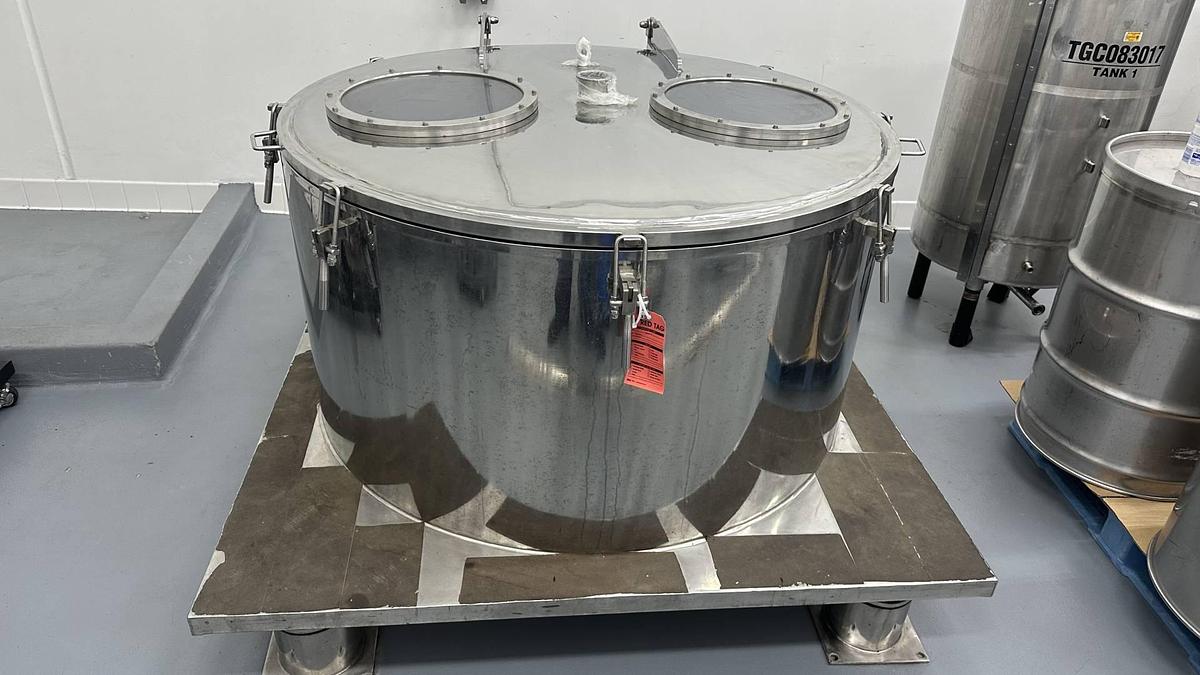
A perforated basket centrifuge is a type of industrial centrifuge that uses a rotating cylindrical basket with small holes or perforations in the wall to separate solids from liquids. As the basket spins at high speed, centrifugal force pushes liquid through the perforations while retaining the solid material inside the basket. This design makes it well-suited for batch processing applications where a relatively dry solid cake is the desired end product.
These machines are widely used across chemical processing, pharmaceutical manufacturing, food production, and specialty materials industries. Common applications include sugar crystallization, salt dewatering, polymer drying, and the separation of fine chemical solids from mother liquors. The stainless steel construction found on many basket centrifuges, including the 48-inch diameter SS perforated basket centrifuge associated with Nanjing Kingreat equipment, is particularly important for corrosive or food-grade environments where contamination control and chemical resistance are critical requirements. A 300 kg capacity rating indicates a machine built for meaningful industrial throughput, not laboratory or pilot-scale use.
What types of industrial centrifuges did Nanjing Kingreat manufacture?
Nanjing Kingreat is a Chinese manufacturer based in Nanjing, Jiangsu Province, specializing in separation and filtration equipment. The company's product range is oriented toward industrial-scale solid-liquid separation, and their equipment has been used in chemical, pharmaceutical, food processing, and wastewater treatment applications. Basket centrifuges represent one of the core product types associated with the brand, with stainless steel perforated basket designs being particularly common in the used equipment market.
Beyond basket centrifuges, Chinese centrifuge manufacturers of Kingreat's profile typically produce horizontal decanter centrifuges, disc stack centrifuges, and tubular centrifuges, each designed for different separation tasks and feed characteristics. Decanter centrifuges handle continuous feed streams with higher solids content, while disc stack and tubular designs are used for fine particle or liquid-liquid separation. Buyers researching used Nanjing Kingreat equipment should pay close attention to the specific model, basket diameter, bowl speed (RPM), and material of construction, as these details determine whether a given machine suits their process requirements.
What should buyers look for when evaluating a used Nanjing Kingreat centrifuge?
Evaluating a used industrial centrifuge requires careful attention to both mechanical condition and process compatibility. Key mechanical items to assess include the condition of the basket or bowl, bearing wear, seal integrity, drive components, and the control panel or drive electronics. On a perforated basket centrifuge, the basket itself should be inspected for cracks, corrosion, or deformation, as these directly affect both performance and safety. Stainless steel construction helps resist corrosion, but years of exposure to aggressive chemicals or improper cleaning can still cause pitting or stress cracking that is not immediately visible.
Beyond the physical condition of the machine, buyers should verify that the centrifuge's capacity, bowl diameter, and rotational speed match their intended application. A 48-inch diameter basket centrifuge with a 300 kg capacity rating is a substantial piece of equipment suited for medium to large batch production environments. Prospective buyers should also ask the selling dealer about the machine's service history, how long it was in operation, and what materials it processed, since residual contamination or material incompatibility can be a real concern in pharmaceutical or food-grade applications. Requesting an inspection, either in person or via video, is strongly advisable before committing to a purchase.
How does the inspection process work when buying a used industrial centrifuge?
Reputable used equipment dealers typically offer buyers the option to inspect machinery before purchase, either through an in-person visit, a live video call, or recorded video footage of the machine. For a piece of rotating equipment like a centrifuge, visual inspection of the basket, housing, seals, drive system, and control components can reveal a great deal about overall condition. In some cases, the machine may still be installed at the facility where it was last operated, allowing the buyer to observe it under actual production conditions, which provides the most accurate picture of its working order.
It is worth understanding that most used equipment dealers do not have the permitting or infrastructure to run actual production tests with process materials. What they can typically demonstrate is that the machine powers on, rotates freely, and shows no obvious mechanical defects. Buyers with specific process requirements, such as handling hazardous chemicals or meeting pharmaceutical cleanliness standards, should factor in the cost of a thorough post-purchase inspection and reconditioning by a qualified service technician. Engaging a third-party mechanical inspector who specializes in centrifuge or separation equipment is a reasonable step for high-value purchases, and most dealers will cooperate with such arrangements.
What industries commonly use basket centrifuges like those made by Nanjing Kingreat?
Perforated basket centrifuges are workhorses in a broad range of manufacturing and processing industries. The chemical industry relies on them heavily for separating crystalline solids, salts, and fine powders from process liquids. Pharmaceutical manufacturers use basket centrifuges for isolating active pharmaceutical ingredients (APIs) and intermediates, where stainless steel construction and cleanability are non-negotiable. Food and beverage processing facilities use similar equipment for sugar, starch, and other food-grade solid separation tasks.
Wastewater treatment and environmental processing operations also make use of basket centrifuges, though decanter-style machines tend to dominate that sector for continuous high-volume sludge dewatering. Specialty chemical, dye, and agrochemical producers are frequent users as well, given the batch-processing flexibility that basket centrifuges offer. The 48-inch basket diameter found on the Nanjing Kingreat unit listed in the used equipment market places it squarely in the mid-to-large industrial category, making it relevant for production-scale operations rather than smaller pilot facilities. Buyers from any of these sectors should verify that the machine's materials of construction and surface finishes are appropriate for their specific process fluids and regulatory requirements.
What does stainless steel construction mean for a centrifuge's suitability and longevity?
Stainless steel is the material of choice for centrifuge baskets and housings in applications involving corrosive chemicals, food-grade products, or pharmaceutical materials. Compared to carbon steel, stainless steel offers significantly better resistance to oxidation, many acids, and cleaning agents like caustic soda or steam sterilization cycles. The most common grades used in industrial centrifuges are 304 and 316 stainless steel, with 316 providing better resistance to chloride-containing environments and more aggressive chemical exposure.
For buyers evaluating a used stainless steel centrifuge, the key question is not just whether the machine is made of stainless steel, but what grade was used and how well it has held up over its service life. Pitting corrosion, weld discoloration, and surface roughness can develop over time, particularly if the machine was used with incompatible process streams or inadequately cleaned between batches. A thorough visual inspection of the basket interior and housing surfaces is essential. In pharmaceutical or food applications, surface finish specifications (often measured in Ra values for roughness) may also need to be verified, as used equipment may have experienced surface degradation that affects cleanability and regulatory compliance.
How is pricing typically determined for used industrial centrifuges?
Used industrial centrifuge pricing depends on several intersecting factors: the size and capacity of the machine, the manufacturer's reputation, the age and condition of the equipment, the material of construction, and current market demand for that type of separator. Larger machines with stainless steel construction and higher throughput capacity generally command higher prices than smaller or carbon steel equivalents. Equipment that was recently decommissioned from a well-maintained facility tends to be priced higher than machines that have been sitting idle for extended periods.
Unlike purchasing directly from a manufacturer where list pricing may be published, used equipment pricing is often negotiated based on the specific machine's condition and the buyer's requirements. Buyers should also account for costs beyond the listed price, including rigging, crating or palletization, freight to their facility, any reconditioning or parts replacement needed, and reinstallation. For a large basket centrifuge with a 48-inch diameter, these ancillary costs can be substantial and should be factored into the total cost of ownership calculation before making a purchase decision. Contacting the selling dealer directly to get a clear picture of all-in landed costs is a practical first step.
What are the typical shipping and logistics considerations for purchasing a large used centrifuge?
Industrial centrifuges are heavy, precision-balanced machines that require careful handling during transport. The rotating assembly, bearings, and seals are all sensitive to shock and vibration, so proper packaging is critical to preventing damage in transit. Dealers will typically palletize or crate the equipment, with the level of packaging varying based on the shipping distance, mode of transport, and the machine's size and fragility. Buyers should ask specifically about how the machine will be prepared for shipment and what that packaging costs, as crating a large centrifuge can add meaningfully to the total purchase price.
For a machine the size of a 48-inch basket centrifuge, loading and unloading will require appropriate rigging equipment such as a forklift or crane, and those rigging services carry their own costs at both the origin and destination. Freight charges will vary based on the shipping distance, carrier rates, and whether the machine is moving domestically or internationally. Buyers should request a detailed breakdown of all shipping-related costs from the dealer before finalizing a purchase, so there are no surprises when the equipment arrives. Customs clearance, import duties, and local transport from the port of entry to the final facility are additional factors for international buyers to budget for.
What payment terms should buyers expect when purchasing used industrial equipment?
Most used equipment dealers require full payment before a machine is released for shipment. This is standard practice in the industry and reflects the fact that used equipment transactions involve physical assets that cannot be easily returned or resold quickly if a buyer defaults after shipping has begun. Payment is typically made by wire transfer, though some dealers may accept other forms of verified payment. Buyers should confirm the accepted payment methods with the dealer early in the process to avoid delays.
In some cases, dealers may offer extended payment terms to established customers with a prior purchasing history, but first-time buyers should generally plan for full payment upfront. For high-value purchases, buyers may want to consider using an escrow service or other payment protection mechanism to reduce risk, particularly for international transactions. Thoroughly vetting the dealer's reputation, reviewing their track record in the industry, and confirming that they specialize in the relevant equipment category are all reasonable steps before wiring funds for a significant capital equipment purchase.
How should buyers approach parts availability and technical support for a used Nanjing Kingreat centrifuge?
Parts availability is one of the most practical considerations when buying any used industrial machine, and centrifuges are no exception. Wear items like seals, bearings, belts, and screen baskets will eventually need replacement, and the ease of sourcing those parts varies significantly depending on the manufacturer and the age of the machine. For equipment made by Chinese manufacturers like Nanjing Kingreat, some parts may be available through the manufacturer directly or through distributors that carry Chinese industrial equipment components, but buyers should verify this before purchasing rather than assuming availability.
Contacting the manufacturer directly is a worthwhile step to understand what level of support they can realistically provide for a specific model, particularly if the machine is older or has been discontinued. Some manufacturers are willing to supply parts and technical documentation even for equipment that has changed hands multiple times, while others may have limited records or capacity to support older models. Independent centrifuge service companies can often source or fabricate common wear parts for standard centrifuge designs, which provides an alternative support path even if the original manufacturer's support is limited. Buyers should factor potential parts sourcing challenges into their overall assessment of whether a particular used machine represents good value for their operation.