Category
Manufacturer
Model
FAQ:
What is an MXK stainless plow mixer and what makes it different from other industrial mixers?
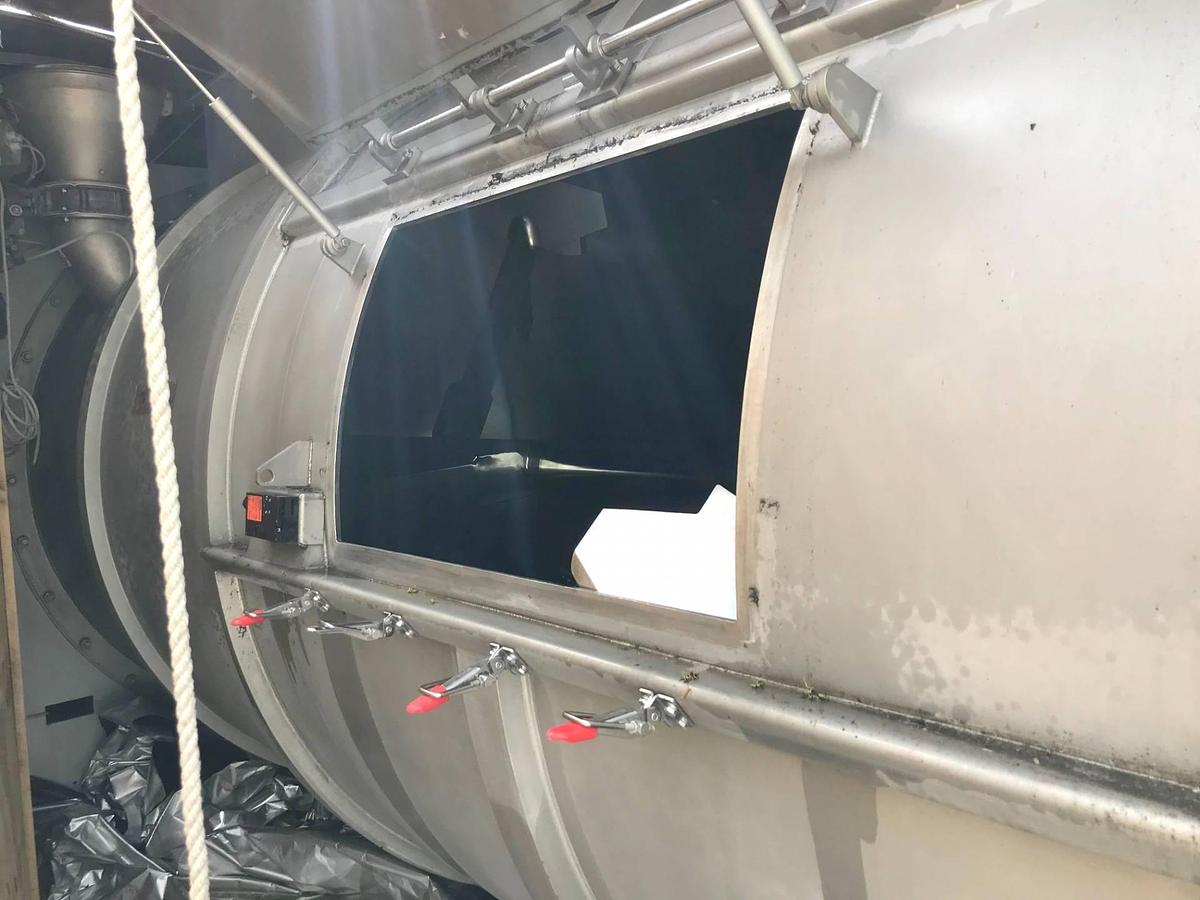
The MXK is an industrial-grade stainless steel plow mixer designed for heavy-duty blending and mixing applications. The defining feature of a plow mixer is its plow-shaped mixing tools that rotate along the horizontal axis of a cylindrical drum, creating a fluidized mixing zone that moves material both radially and axially. This action produces very thorough, homogeneous blending in relatively short cycle times compared to ribbon blenders or paddle mixers. The MXK configuration also incorporates choppers, which are high-speed secondary mixing tools mounted on the vessel wall. Choppers break up agglomerates, lumps, and clumps in real time during the mixing cycle, which is especially important when working with cohesive powders, granules, or wet materials that tend to ball up.
The stainless steel construction is what makes the MXK suitable for food, pharmaceutical, and chemical applications where hygiene and corrosion resistance are non-negotiable. Stainless mixers are far easier to clean and sanitize than carbon steel alternatives, and they hold up well against the moisture, acids, and cleaning agents common in regulated production environments. The combination of plow mixing action, chopper capability, and stainless construction puts the MXK in a category of machines used by processors who need consistent, repeatable results across batches of demanding materials.
What capacity does the MXK stainless plow mixer come in?
The MXK stainless plow mixer is available in a 7,000-liter configuration, which places it firmly in the large-scale industrial category. A vessel of this size is typically used in high-volume production environments where batch throughput is a priority, such as large food manufacturing plants, chemical blending facilities, or industrial powder processing operations. At 7,000 liters, this machine is not a pilot-scale or laboratory unit. It requires substantial floor space, appropriate structural support, and compatible material handling infrastructure like pneumatic conveying systems or bulk bag unloaders for loading, and discharge systems suited to the output volume.
Buyers evaluating a mixer of this capacity should also factor in motor horsepower, drive system specifications, and the physical footprint of the machine when assessing whether it fits their facility. Plow mixers at this scale typically run on three-phase industrial power and may require crane or forklift access for installation and positioning. If a 7,000-liter batch size exceeds current production needs, it is worth considering whether the machine can be run at partial fill, since plow mixers generally perform best within a recommended fill range, typically between 40 and 70 percent of total vessel volume, depending on the material being processed.
What industries and applications is the MXK stainless plow mixer best suited for?
Plow mixers in stainless steel construction are widely used across food processing, nutraceuticals, pharmaceuticals, specialty chemicals, and animal feed manufacturing. The plow mixing principle handles a broad range of material types, including dry powders, granules, pastes, and materials that require liquid additions during the mixing cycle. The choppers make the MXK particularly effective with cohesive or sticky materials that would otherwise clump and resist homogenization. Common applications include spice and seasoning blending, bakery ingredient mixing, detergent powder production, fertilizer blending, and pharmaceutical granulation.
The stainless steel construction of the MXK makes it appropriate for any application where product contact surfaces must meet sanitary or hygienic standards. In food and pharmaceutical environments, this typically means compliance with standards set by organizations like NSF, FDA, or the European Hygienic Engineering and Design Group (EHEDG). Buyers working in these regulated industries should verify the specific grade of stainless steel used in the machine and confirm that the design accommodates the cleaning validation protocols required in their facility. For chemical applications that involve aggressive acids or chlorides, 316L stainless is generally preferred over 304 stainless due to its higher molybdenum content and better resistance to pitting corrosion.
What is the role of the choppers in an MXK plow mixer?
Choppers are high-speed auxiliary mixing tools mounted directly on the wall of the mixing vessel, separate from the main plow shaft. They typically spin at speeds several times higher than the main plow tools, often in the range of 1,500 to 3,000 RPM depending on the machine design. Their primary function is to break up agglomerates and lumps that form during mixing, particularly when fine powders are blended together or when liquid binders are added to dry materials. Without choppers, these clumps can survive the mixing cycle and create inconsistencies in the final blend.
In practical terms, choppers expand the range of materials a plow mixer can handle effectively. They are especially valuable in applications like wet granulation, where a liquid is sprayed into a powder bed and the tendency to form large wet clumps is high. They also help with materials that have strong cohesive forces, such as certain food powders with high fat content or hygroscopic ingredients that absorb moisture and stick together. On the MXK, the inclusion of choppers as a standard feature means the machine is configured for demanding blending tasks, not just simple free-flowing powder mixing. Buyers should confirm the number of chopper units installed and their placement within the vessel, as this affects coverage and effectiveness across the full batch volume.
What should buyers look for when inspecting a used MXK stainless plow mixer before purchasing?
A thorough inspection of a used plow mixer should cover both the mechanical components and the condition of all product-contact surfaces. On the mechanical side, buyers should examine the main drive system including the gearbox, motor, and coupling for signs of wear, leaks, or unusual noise during operation. The plow tools and chopper blades should be inspected for wear, deformation, or missing components, since worn plow tools reduce mixing efficiency and may indicate the machine has seen very heavy use. Shaft seals and end covers should be checked for integrity, as failed seals allow product contamination and can cause bearing damage over time.
For the stainless vessel itself, buyers should look closely at weld quality, surface finish, and any signs of pitting, corrosion, or repair welds that might indicate prior damage. Interior surface condition is especially important for food or pharmaceutical applications where cleanability and compliance with hygienic design standards are required. Discharge valves, inspection doors, and any spray nozzle fittings should all be examined for proper function and seal condition. Reputable used equipment dealers will typically accommodate in-person or video inspections so buyers can assess the machine's actual condition before committing to a purchase. Buyers should also reach out to the manufacturer to understand what parts and technical support are available for the specific model and age of the machine, since older units may have limited parts availability.
What stainless steel grades are typically used in industrial plow mixers, and does it matter?
The two most common stainless steel grades used in industrial mixing equipment are 304 and 316L. Type 304 stainless, also called 18/8 stainless, is the more common and economical choice. It offers good corrosion resistance, excellent cleanability, and is suitable for most food, chemical, and general industrial applications. Type 316L contains molybdenum, which significantly improves resistance to pitting and crevice corrosion in environments with chlorides, acids, or saline solutions. The 'L' designation indicates a low carbon content, which reduces the risk of sensitization during welding and is preferred in equipment that undergoes frequent cleaning with aggressive chemical agents.
For buyers evaluating a used stainless plow mixer, the grade of steel used in the vessel and product-contact components matters considerably depending on the intended application. A machine built in 304 stainless may be perfectly adequate for dry powder blending or general food manufacturing, but it could be a poor fit for a pharmaceutical process that requires repeated exposure to chloride-based sanitizers, or a chemical application involving acidic materials. Buyers should ask the dealer or confirm through available documentation what grade of stainless was specified for the vessel shell, internal components, and any fittings. If documentation is unavailable, a positive material identification (PMI) test can verify the steel grade on-site before purchase.
What is the typical price range for a used industrial stainless plow mixer of this size?
Used industrial plow mixers in the large-capacity range, such as units at or near 7,000 liters, represent a significant capital investment even on the secondary market. Pricing for used equipment of this type varies widely based on the manufacturer, age of the machine, mechanical condition, included accessories, and current market demand. In general, large-scale stainless plow mixers with choppers from recognized industrial manufacturers can range from tens of thousands to well over a hundred thousand dollars on the used market. Machines in excellent working condition with recent refurbishment or documented service history tend to command higher prices, while units sold strictly as-is with visible wear or unknown service histories are typically priced lower to reflect the additional risk the buyer assumes.
Buyers should also factor in the total landed cost of the equipment, not just the purchase price. Shipping a machine of this size requires specialized rigging, heavy freight transport, and potentially crane service for unloading and installation, all of which add to the total cost. Depending on the buyer's location and the machine's origin, freight costs alone can be substantial. Getting a detailed quote from the dealer that breaks out the machine price, packaging or crating costs, rigging fees, and freight charges gives a much clearer picture of what the equipment will actually cost to put into service.
How does buying a used MXK stainless mixer differ from buying a new one, and what risks should buyers understand?
Purchasing used industrial mixing equipment carries a fundamentally different risk profile than buying directly from a manufacturer. Used machines are sold as-is, meaning the buyer accepts the equipment in its current condition without the protections that come with a manufacturer purchase, such as factory testing, documentation of build specifications, or coverage under a manufacturer's warranty. The responsibility for evaluating the machine's condition falls on the buyer, which is why inspection is such a critical step in the process. A buyer who skips or rushes inspection on a large used mixer may discover costly mechanical issues only after the machine arrives and is put into service.
That said, buying used also offers real advantages. The price difference between used and new equipment at this scale can be very large, and a well-maintained used plow mixer can deliver many years of reliable service at a fraction of the cost of a comparable new machine. The key is selecting a reputable used equipment dealer with a demonstrated history in industrial and food processing machinery, and taking full advantage of any inspection opportunities the dealer offers. Buyers should also contact the manufacturer of the machine directly to understand what technical support, spare parts, and service documentation are available for the specific model and age of the unit they are considering. Parts availability can vary significantly depending on how old the machine is and whether the manufacturer still actively supports that model line.
What are the typical shipping and logistics considerations for a large stainless plow mixer?
Moving a large industrial mixer like a 7,000-liter plow mixer is a serious logistical undertaking. Machines of this size and weight require heavy-duty rigging for loading at the origin point, which typically means a crane or industrial forklift rated for the machine's weight. The equipment must be properly secured and protected for transit, which may involve custom crating, skidding, or wrapping to prevent damage to the vessel, drive components, and any protruding fittings or nozzles. The level of packaging required has a direct impact on shipping cost, and buyers should ask the dealer specifically what packaging will be used and what those charges include.
On the receiving end, buyers need to be equally prepared. Unloading a machine of this scale requires rigging equipment and personnel capable of handling the load safely. If the destination facility does not have an overhead crane or a forklift with sufficient capacity, those resources need to be arranged in advance. Buyers should also verify that the machine can physically enter the building through available doorways and be positioned in its intended location before the shipment arrives. Discussing all of these logistics with the dealer prior to purchase is the best way to avoid surprises. Dealers experienced in selling large industrial equipment can usually provide guidance on typical freight costs, carrier requirements, and what buyers need to have in place at their facility before delivery.
Are replacement parts and ongoing support available for used MXK plow mixers?
Parts availability for a used industrial mixer depends heavily on the machine's age, the manufacturer's current product lineup, and whether the model is still in active production. For mixers from established manufacturers with a long history in the industry, common wear parts like plow tools, chopper blades, shaft seals, and drive components are often still available through the manufacturer or authorized parts distributors, even for machines that are no longer being built. However, for older or discontinued models, some parts may need to be fabricated to spec or sourced through third-party suppliers, which can increase lead times and costs.
Buyers of used plow mixers are strongly encouraged to contact the manufacturer directly before finalizing a purchase to ask specifically about parts availability and technical support for the model in question. This conversation can reveal whether the machine is well-supported or whether the buyer will face challenges sourcing critical components down the road. It is also worth asking the selling dealer whether any spare parts are included with the machine, as sellers sometimes have accumulated spare parts that can transfer with the sale. Having a small inventory of common wear parts on hand from the start can reduce downtime risk considerably once the machine is in production.