Category
Manufacturer
Model
Murzan
Murzan specializes in providing advanced mixing and blending solutions for the food and beverage industries. Their equipment is designed to handle a variety of materials, ensuring consistency in production.
FAQ:
What types of Murzan equipment are available on the used market?
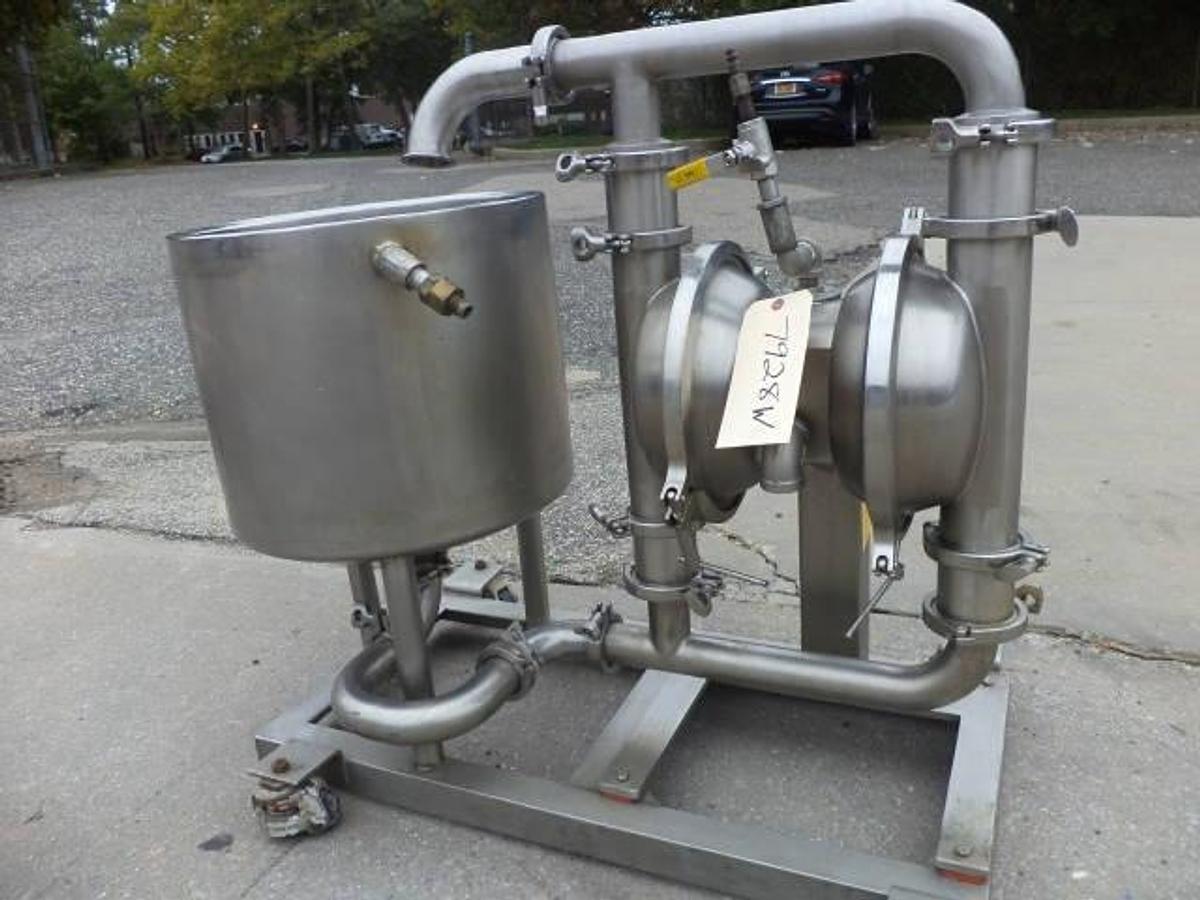
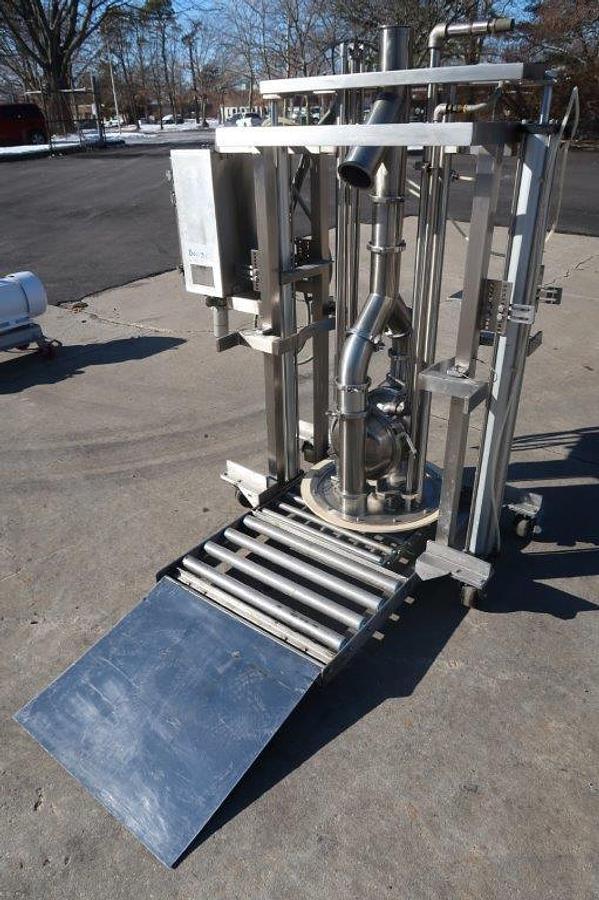
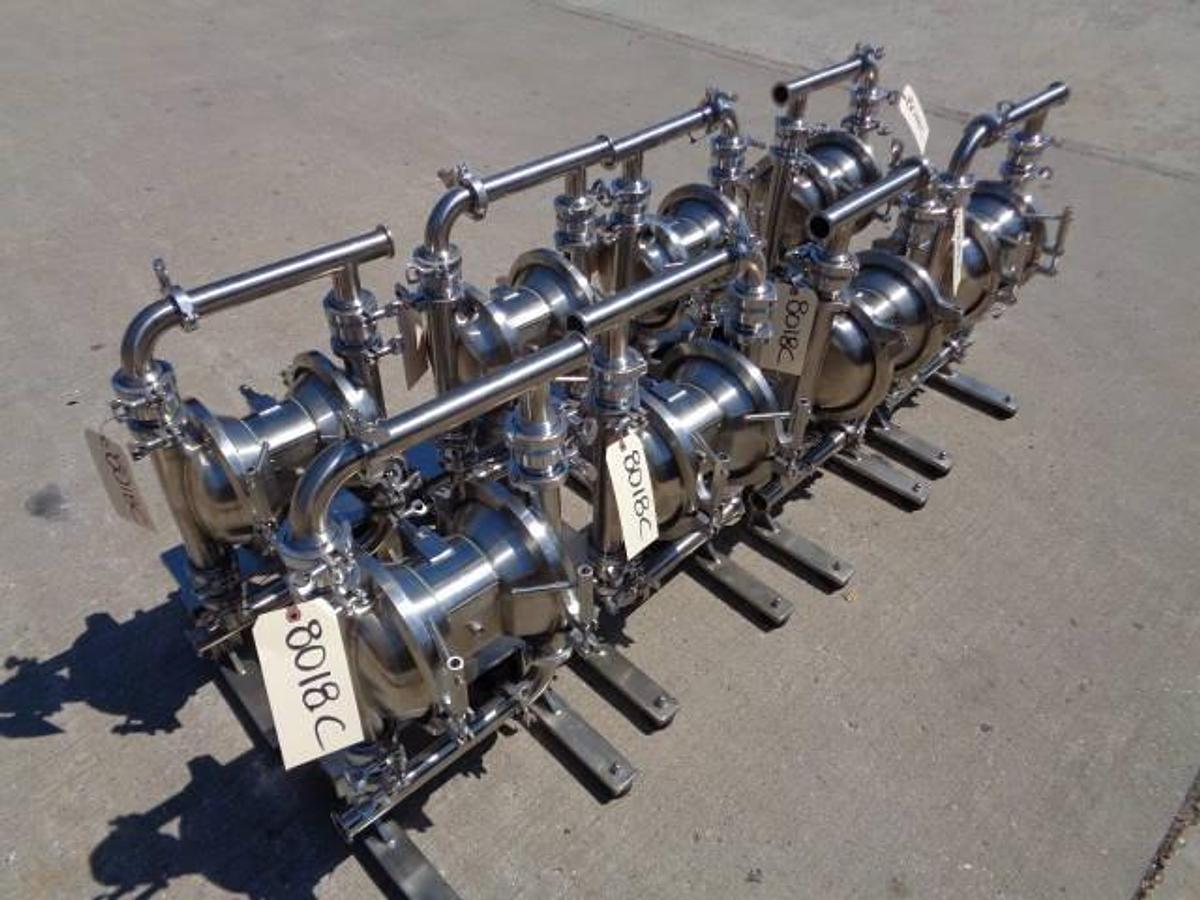
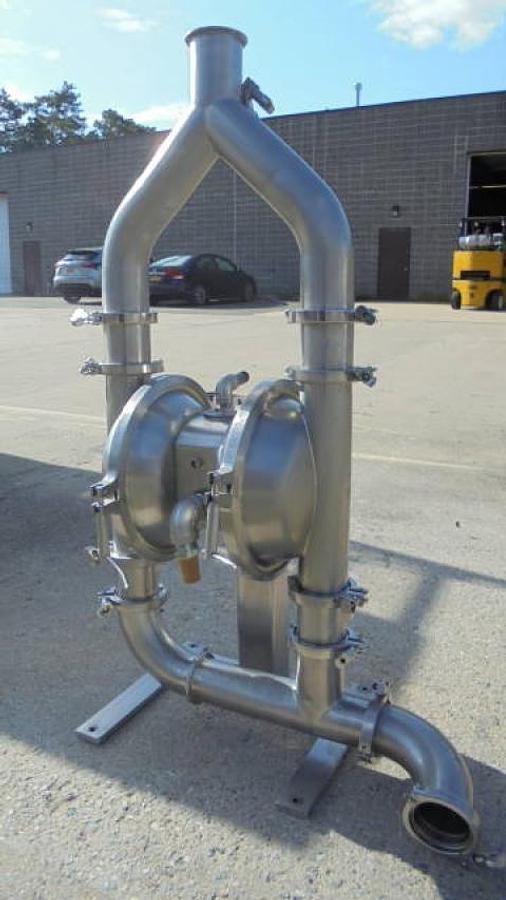
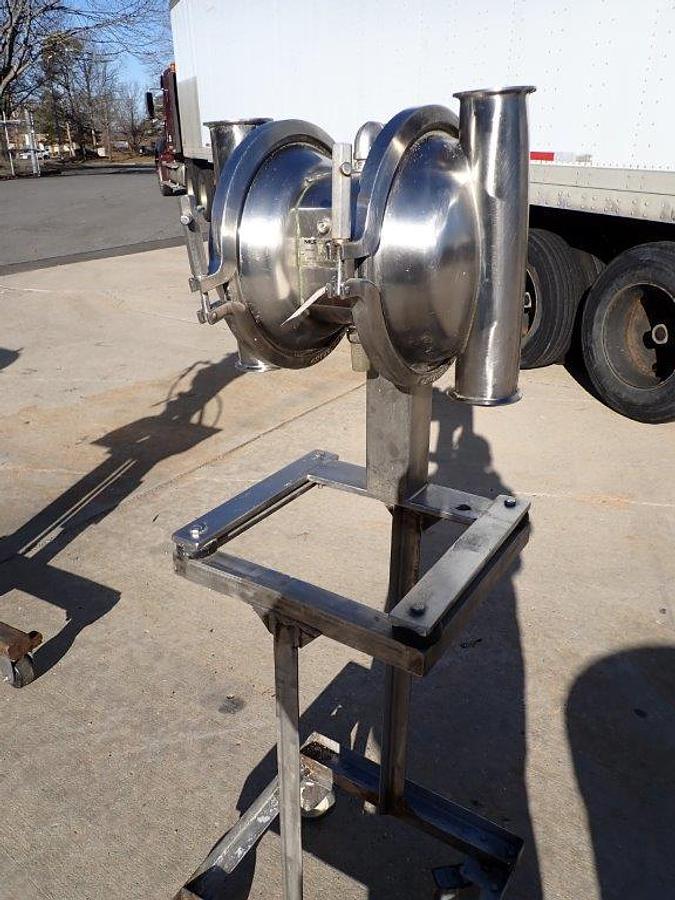
Murzan produces a focused line of fluid transfer and drum unloading equipment, and the models that appear most often on the used market reflect the company's core strengths in sanitary pumping applications. The most commonly available units include air-operated double diaphragm (AODD) pumps in stainless steel, portable drum unloading systems, and jacketed pump configurations designed for temperature-sensitive products. Specific models like the PI50-SL-1B-SC sanitary double diaphragm pump, the DUS-50M and DUS-10M portable drum unloading systems, and the 2x2 316 stainless steel jacketed double diaphragm pump represent the types of equipment that surface regularly through used machinery dealers.
Beyond individual pump units, Murzan's drum unloading systems are particularly sought after because they allow processors to efficiently empty viscous products directly from drums without manual scooping or product waste. These systems are portable, which adds to their appeal in multi-line production environments. Buyers searching the used market should pay close attention to the specific model designation and material of construction, since Murzan offers configurations in different stainless steel grades and with varying inlet and outlet sizes that directly affect compatibility with existing production lines.
What industries use Murzan pumps and drum unloading systems?
Murzan equipment is built around the needs of industries that handle viscous, semi-solid, or hygiene-sensitive materials. Food and beverage processing is the most prominent application, where Murzan pumps move products like sauces, pastes, jams, dressings, batters, and thick syrups that standard centrifugal pumps cannot handle without product degradation or excessive shear. The sanitary construction of most Murzan models makes them equally well-suited for dairy, confectionery, and nutraceutical production, where clean-in-place capability and product contact surface compliance are non-negotiable.
Outside of food processing, Murzan equipment sees regular use in pharmaceutical manufacturing, cosmetics production, and specialty chemical applications. In these sectors, the ability to transfer high-viscosity gels, creams, and pastes with minimal contamination risk is critical. The stainless steel construction and smooth internal flow paths common to Murzan designs reduce the risk of bacterial harboring and make sanitation between product runs faster and more reliable. This cross-industry versatility is one reason used Murzan equipment retains strong demand, since a pump decommissioned from a food plant may be entirely appropriate for a cosmetics or pharmaceutical facility with similar viscosity and hygiene requirements.
What makes Murzan double diaphragm pumps suitable for high-viscosity applications?
Air-operated double diaphragm pumps work by using compressed air to alternately flex two diaphragms, creating a reciprocating pumping action that pulls fluid in on one stroke and pushes it out on the other. This design generates strong suction lift and can move thick, paste-like materials that would stall or cavitate a centrifugal pump. Murzan's AODD pumps are specifically engineered with larger flow passages, sanitary-grade ball check valves, and smooth internal geometries that allow dense products like tomato paste, peanut butter, cosmetic creams, and pharmaceutical gels to pass through without clogging or excessive pressure drop.
The jacketed versions of Murzan's double diaphragm pumps add another layer of capability for temperature-sensitive materials. A jacketed pump body allows hot water or steam to circulate around the product contact zone, keeping high-viscosity materials at the temperature needed to maintain flowability. This is particularly valuable for chocolate, waxes, adhesives, and similar products that solidify or become unworkable if they cool during transfer. When evaluating a used Murzan AODD pump, buyers should confirm the diaphragm material, check valve condition, and whether the jacketing connections are intact, as these components directly determine whether the pump will perform as expected on their specific product.
How do Murzan drum unloading systems work?
Murzan drum unloading systems are designed to extract viscous products directly from standard 55-gallon drums or similar containers with minimal product waste and without manual intervention. The system typically consists of a follower plate that descends into the drum as product is pumped out, maintaining constant contact with the product surface to prevent air inclusion and reduce residual waste at the bottom of the drum. The pump unit mounts above the drum and drives the transfer through an air-operated mechanism, making the system operable without electrical connections at the drum itself, which is an important safety consideration in food and chemical environments.
The DUS-10M and DUS-50M models represent two common configurations, with differences in throughput capacity and physical footprint suited to different production scales. The portable design of these units means they can be moved between drum stations or production lines, which is a practical advantage in facilities that process multiple products. On the used market, buyers should inspect the follower plate seal condition, the pump's diaphragm integrity, and any product contact surfaces for wear, pitting, or residue from previous applications. Confirming the drum diameter compatibility is also essential, since follower plate sizing is specific to the drum dimensions the system was configured for.
What should buyers know about purchasing used Murzan equipment?
Used Murzan equipment is sold on an as-is basis, which places the responsibility for evaluating condition squarely on the buyer. Unlike purchasing directly from a manufacturer, used equipment transactions do not include coverage for defects or performance issues discovered after the sale. This makes the inspection process critical. Reputable used equipment dealers will typically offer in-person inspections, video walkthroughs, or photo documentation of the machine's current condition, and buyers should take full advantage of these options before committing to a purchase. Asking for details on the machine's previous application, hours of use, and any maintenance history can provide useful context even if it cannot be independently verified.
One practical step buyers often overlook is contacting Murzan directly to understand what level of support is available for the specific model and age of equipment they are considering. Parts availability, service documentation, and technical support can vary depending on how long a model has been in production and whether it has been updated or discontinued. Older models may have limited spare parts availability, while more recent designs may still be fully supported. Getting clarity on this before purchase helps buyers avoid situations where a pump needs a diaphragm or check valve replacement and the parts are difficult to source. Selecting a used equipment dealer with a demonstrated history in food processing or fluid handling machinery is also a meaningful factor in getting accurate, reliable information about what you are buying.
What materials are used in Murzan pump construction, and why does it matter?
Most Murzan pumps intended for food, beverage, pharmaceutical, and cosmetic applications are constructed from 316 stainless steel for all product-contact surfaces. Type 316 stainless steel is preferred over 304 in sanitary applications because of its higher molybdenum content, which significantly improves resistance to pitting corrosion from chlorides present in cleaning agents, brines, and acidic food products. The smooth surface finish on sanitary-grade Murzan components also reduces the microscopic surface irregularities where bacteria and product residue can accumulate, making cleaning more effective and reducing the risk of cross-contamination between production runs.
Internal components like diaphragms and check valve balls are typically made from elastomers such as PTFE, Santoprene, or Buna-N, and the choice of elastomer matters considerably depending on the product being pumped. PTFE diaphragms offer the broadest chemical compatibility and are often specified for aggressive solvents, acids, and products where taste or odor transfer from the elastomer is a concern. Buyers evaluating used Murzan equipment should confirm what elastomer materials are currently installed, since diaphragms and check valves wear over time and may have been replaced with materials that are not appropriate for the buyer's intended application. Verifying material compatibility with the specific product to be pumped is a step that should happen before the machine is put into service.
What are typical flow rate and pressure specifications for Murzan double diaphragm pumps?
Murzan's air-operated double diaphragm pumps are available in several size configurations, and flow rate capacity is directly tied to the pump's port size and diaphragm diameter. Smaller models with 1-inch or 1.5-inch connections are suited for lower-volume applications or highly viscous products where flow rates are inherently limited by the product's resistance to movement. Larger models with 2-inch or 3-inch connections can handle significantly higher throughput, with some configurations capable of moving several hundred gallons per hour under optimal conditions. However, actual flow rates in viscous product applications are always lower than water-based rated capacities, and buyers should factor in a meaningful derating when calculating whether a particular pump will meet their production throughput requirements.
Pressure performance in AODD pumps is closely tied to the inlet air pressure supplied to the pump. Murzan pumps are generally designed to operate within standard industrial compressed air ranges, typically between 20 and 100 PSI inlet air pressure, with discharge pressure roughly matching the air supply pressure. This means the pump can be tuned for different applications by adjusting air pressure, which is a practical advantage in facilities where line pressure requirements vary by product or destination. When reviewing used Murzan pump listings, buyers should look for the model's rated port size, maximum air inlet pressure, and any documentation about previous operating conditions, as these details help determine whether the pump is appropriately sized for the intended application.
How should buyers approach inspecting used Murzan equipment before purchase?
A thorough inspection of used Murzan equipment should cover both the mechanical condition of the pump and the integrity of all product-contact surfaces. For double diaphragm pumps, the diaphragms themselves are wear items that should be examined for cracking, thinning, or deformation, since a failed diaphragm will cause the pump to lose prime or allow product to enter the air side of the pump. Check valves, ball seats, and manifold surfaces should be inspected for wear, scoring, or corrosion. On drum unloading systems, the follower plate seal and the condition of the pump's mounting and drive components are the primary areas of concern.
Most used equipment dealers can accommodate in-person inspections at their facility, and many also offer video inspections or detailed photo documentation for buyers who cannot travel. In some cases, the equipment may still be installed at the facility where it was previously in production, which can allow for an inspection under real operating conditions. Keep in mind that used equipment dealers generally do not have the production permits or infrastructure to run a pump on actual product during an inspection, so functional testing is typically limited to confirming air supply operation and mechanical movement rather than a full production trial. Buyers with specific performance requirements should plan for a commissioning period after installation to verify that the equipment meets their production needs before full deployment.
What are the typical shipping and logistics considerations for used Murzan equipment?
Murzan pumps and drum unloading systems vary considerably in size and weight, and shipping costs reflect that range. Smaller individual pump units may ship on a standard pallet with appropriate blocking and bracing, while larger drum unloading systems or multi-unit lots may require custom crating to prevent damage during transit. The level of packaging required directly affects shipping costs, and buyers should ask the dealer for specifics on how the equipment will be prepared for shipment before agreeing to a price. Inadequate packaging is one of the most common causes of transit damage on used equipment, so understanding what protection is included is a reasonable and important question.
For heavier or larger configurations, rigging costs for loading at the dealer's facility and unloading at the buyer's facility can add meaningfully to the total landed cost of the equipment. Buyers should confirm whether the quoted price includes rigging and freight or whether these are additional charges, and should request a full breakdown of costs to the delivery point before finalizing the purchase. International shipments add further complexity in the form of customs documentation, import duties, and export compliance requirements, which can vary significantly depending on the destination country. Getting a complete landed cost estimate, including all packaging, freight, rigging, and any applicable duties, gives buyers a realistic picture of the total investment before committing.
Are replacement parts readily available for used Murzan equipment?
Parts availability for Murzan equipment depends significantly on the age and model of the specific unit. Murzan pumps that are relatively recent models and still in active production are more likely to have diaphragms, check valve balls, seats, and manifold components readily available through Murzan's distribution network or through industrial fluid handling suppliers. Older or discontinued models may present more of a challenge, and buyers should contact Murzan directly before purchasing a used unit to confirm that wear parts for that specific model are still being manufactured and stocked.
For air-operated double diaphragm pumps in general, the most frequently replaced components are diaphragms, check valve balls, and seat seals. These are consumable items that wear with use and should be inspected at installation and replaced on a regular maintenance schedule. In some cases, aftermarket suppliers produce compatible diaphragm and valve kits for popular AODD pump configurations, which can provide an alternative sourcing option if manufacturer parts are difficult to obtain. Buyers should document the exact model number, serial number, and material specifications of the pump they are purchasing so they can accurately identify the correct replacement parts when the time comes. Having a set of spare diaphragms and check valve components on hand before putting a used pump into production is a practical way to reduce downtime risk.