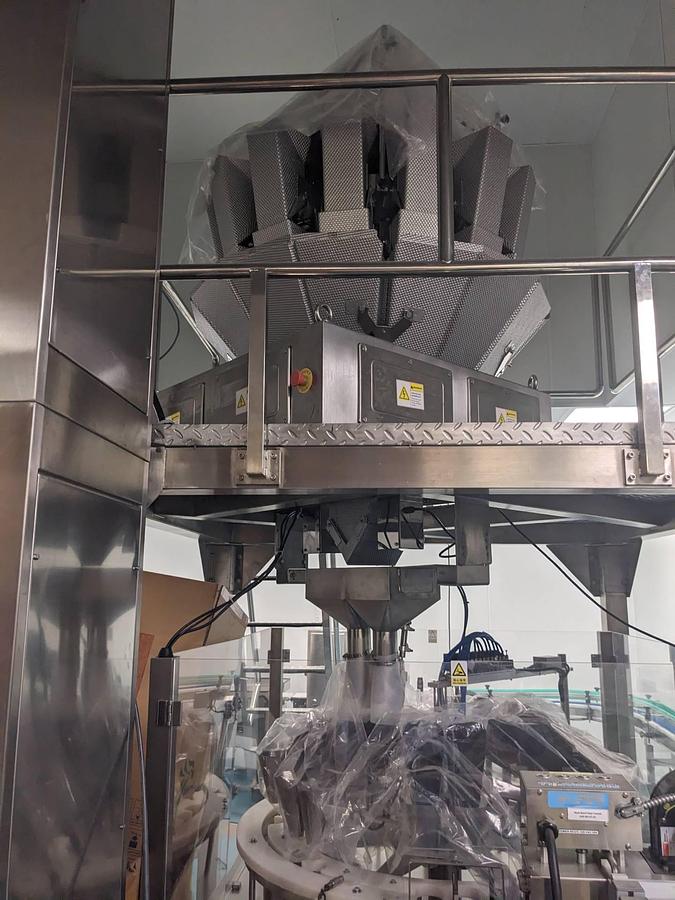
Category
Manufacturer
Model
FAQ:
What production speeds can MTC gummy bottling line equipment achieve?
Production speed is one of the first things buyers look at when evaluating gummy bottling equipment, and MTC lines are designed to cover a meaningful range of output requirements. Small to mid-size supplement manufacturers typically target lines capable of producing 20 to 100 bottles per minute, while high-volume operations may require 100 or more bottles per minute to keep pace with demand. The specific speed a given machine achieves depends on factors like bottle size, gummy count per bottle, gummy format, and how many integrated functions the line is performing simultaneously.
When shopping for used MTC gummy bottling equipment, it is worth asking the seller for documentation or historical run data that reflects the actual throughput achieved during production, not just the rated nameplate speed. Real-world speeds can differ from theoretical maximums depending on the product being run, the condition of the machine, and how well it was maintained. A thorough inspection, combined with any available production records, gives buyers the clearest picture of what to expect before committing to a purchase.
What bottle sizes and formats is MTC gummy bottling line equipment compatible with?
MTC gummy bottling lines are generally built to accommodate a range of bottle sizes and container formats, which is important for manufacturers producing multiple SKUs or planning to expand their product lines. Compatibility typically spans common round and square bottle profiles in volumes ranging from small single-serving containers up to larger family-size or bulk supplement bottles. The specific range supported by any particular machine depends on the model and the tooling or change parts that were configured for it.
For used equipment, buyers should confirm which format tooling and change parts are included with the machine at the time of sale, since some parts may have been removed or lost over the years. Missing change parts for certain bottle sizes can add cost after purchase, as replacement tooling may need to be sourced separately. Asking the seller for a complete inventory of included parts before finalizing a deal is a practical step that helps avoid surprises after delivery.
Does MTC gummy bottling line equipment handle counting, filling, capping, and labeling in one integrated system?
Many MTC gummy bottling lines are configured as complete, integrated systems that combine multiple packaging functions into a single continuous line. A fully integrated setup typically includes vibratory or electronic gummy counting, bottle filling, cotton or filler wad insertion, desiccant packet insertion, capping, induction sealing, and pressure-sensitive or roll-fed labeling. Running all of these operations in sequence on one line reduces the need for manual transfers between stations, cuts down on labor costs, and minimizes the floor space required compared to running separate standalone machines.
That said, the specific functions included on any used MTC line depend on how it was originally configured and what components remain with the machine at the time of resale. Some lines may be sold as complete turnkey systems, while others may be partial lines missing one or more stations. Buyers should request a detailed breakdown of every included component and verify that all stations are present and accounted for before purchase. This is especially important with used equipment, where configurations can vary significantly from one machine to the next.
Why do gummy bottling lines require different counting technology than tablet or capsule lines?
Gummies present a set of handling challenges that standard tablet or capsule counting equipment is not designed to manage. Unlike hard tablets, which are uniform, rigid, and free-flowing, gummies are irregular in shape, sticky on the surface due to sugar or coating, and prone to clumping together during feeding and counting. These characteristics can cause misfires in optical counting sensors, bridging in vibratory feeders, and inconsistent fill counts if the equipment is not specifically designed for confectionery-style products.
Gummy-specific counting systems typically use wider vibratory track designs, gentler handling mechanisms, and sensor arrays calibrated to detect irregular shapes rather than perfectly round or oblong objects. Temperature and humidity in the production environment also matter, since gummies can become stickier in warm or humid conditions, increasing the likelihood of clumping or product damage during handling. When evaluating used gummy bottling equipment, it is worth asking about the counting technology used and whether the machine has a documented history of running gummy products specifically, as opposed to tablets or capsules.
What sanitation and GMP compliance features should buyers look for in used gummy bottling equipment?
Sanitary design is a critical factor in gummy packaging equipment because sugar residue, coatings, and moisture from gummy products can build up quickly on contact surfaces, creating conditions that are difficult to clean and potentially problematic from a food safety standpoint. Equipment built for gummy applications should ideally feature stainless steel product contact surfaces, tool-free or minimal-tool disassembly for cleaning, and IP-rated wash-down capability that allows thorough sanitation without damaging electrical components. Designs that minimize crevices, horizontal ledges, and hard-to-reach areas reduce cleaning time and the risk of cross-contamination between production runs.
For used equipment, buyers should inspect contact surfaces carefully for signs of corrosion, pitting, or residue buildup that may indicate inadequate cleaning during the machine's service life. It is also worth checking whether the machine's design aligns with current Good Manufacturing Practice (GMP) expectations for dietary supplement or food production facilities, since older equipment may predate certain design standards. Consulting with a sanitation or compliance specialist before purchasing used gummy bottling equipment can help identify any upgrades or modifications that might be needed to meet facility standards.
How difficult is the changeover process on MTC gummy bottling lines when switching between bottle sizes or gummy counts?
Changeover flexibility is one of the most practical considerations for supplement manufacturers running multiple SKUs on a single line. On well-designed gummy bottling equipment, format changes between different bottle sizes or fill counts involve swapping change parts, adjusting guide rails and conveyor widths, and recalibrating counting sensors. The time required for a changeover can range from under an hour on lines designed for quick format changes to several hours on older or more mechanically complex equipment, depending on how many stations need to be adjusted and whether the machine uses tool-free or tool-assisted adjustment mechanisms.
With used MTC equipment, the ease of changeover also depends on whether all the necessary change parts for each format are included with the machine. If change parts for certain bottle sizes are missing, sourcing replacements adds both time and cost. Buyers planning to run multiple formats should ask the seller specifically which bottle sizes the included tooling supports, and should factor in the cost of any additional change parts needed before calculating the total investment. Machines that were used in high-SKU production environments may already have a broader set of tooling available, which can be a significant advantage.
What should buyers inspect when evaluating used MTC gummy bottling line equipment?
A thorough inspection is the single most important step in purchasing used gummy bottling equipment, since these machines are sold as-is and buyers take on responsibility for assessing condition before committing to a purchase. Key areas to evaluate include the condition of all product contact surfaces, the integrity of vibratory feeders and counting tracks, the function of capping heads and torque mechanisms, the condition of conveyor belts and drive components, and the state of all electrical panels and controls. Any visible corrosion, worn tooling, cracked components, or evidence of makeshift repairs should be noted and factored into pricing negotiations.
Inspections can typically be arranged in person at the seller's facility or remotely via live video walkthrough or recorded video of the machine. Some equipment may still be installed at an active production facility, where it may be possible to observe it running, though most used equipment dealers do not have the production permits required to run actual product through the machine during a demonstration. Buyers should also ask about the machine's maintenance history and service records if available, and consider consulting with a qualified equipment technician who has experience with gummy packaging lines before finalizing any purchase decision.
What is the typical lead time for receiving used MTC gummy bottling line equipment after purchase?
Lead time for used gummy bottling equipment depends on several variables, including how quickly the machine can be rigged out of its current location, the packaging and crating required for safe transit, the shipping distance, and the freight method selected. For machines that are already decommissioned and ready to move, the process from payment to delivery can sometimes be completed within a few weeks. Machines still installed in an active facility may take longer to become available, as the seller needs to coordinate removal with the facility's production schedule.
Shipping costs and timelines also vary based on the size and weight of the line. Complete gummy bottling lines with multiple integrated stations can be quite large, requiring specialized rigging equipment for loading and unloading, and flatbed or enclosed freight rather than standard LTL shipping. Buyers should request a detailed quote from the seller that covers packaging, crating, rigging, and freight costs so the full landed cost of the equipment is clear before finalizing the purchase. Factoring in time for installation and any needed adjustments or repairs after delivery gives a more realistic picture of when the line will be ready for production.
Are installation support and operator training available when purchasing used gummy bottling line equipment?
Support services for used equipment vary considerably depending on the dealer and the machine's age and model. Unlike purchasing directly from a manufacturer, buying used machinery typically does not include factory installation or training as part of the transaction. That said, some used equipment dealers can connect buyers with third-party technicians or field service engineers who have experience with the specific brand and model, and can assist with installation, commissioning, and operator training on a fee basis.
Buyers should also contact the equipment manufacturer directly to determine what level of support is available for the specific model being purchased. Older machines or discontinued models may have limited parts availability and reduced manufacturer support, while more recent models may still fall within a range where the manufacturer can provide documentation, spare parts, and potentially field service. Understanding the support landscape before purchase, rather than after, helps buyers plan realistically for the time and resources needed to get the line running at their facility.
What are the standard payment and shipping terms for purchasing used gummy bottling line equipment?
Used equipment dealers typically require full payment prior to releasing machinery for shipment. This is standard practice in the industry, as dealers generally do not extend credit terms to first-time buyers. Repeat customers with an established purchasing history may occasionally be offered alternative arrangements, but buyers should plan for full payment upfront as the default expectation. Acceptable payment methods vary by dealer and are worth confirming early in the purchasing process.
Shipping costs for gummy bottling lines can be substantial and should be treated as a significant line item in the total acquisition budget. Complete integrated lines with multiple stations require careful disassembly, palletization or custom crating, and in many cases specialized rigging equipment for both loading at origin and unloading at the destination facility. Buyers should request an itemized quote covering all of these elements, since the cost difference between basic palletization and full custom crating can be meaningful. Clarifying who is responsible for arranging freight, and whether the seller provides any assistance with logistics coordination, helps avoid miscommunication and delays once payment is made.