Category
Manufacturer
Model
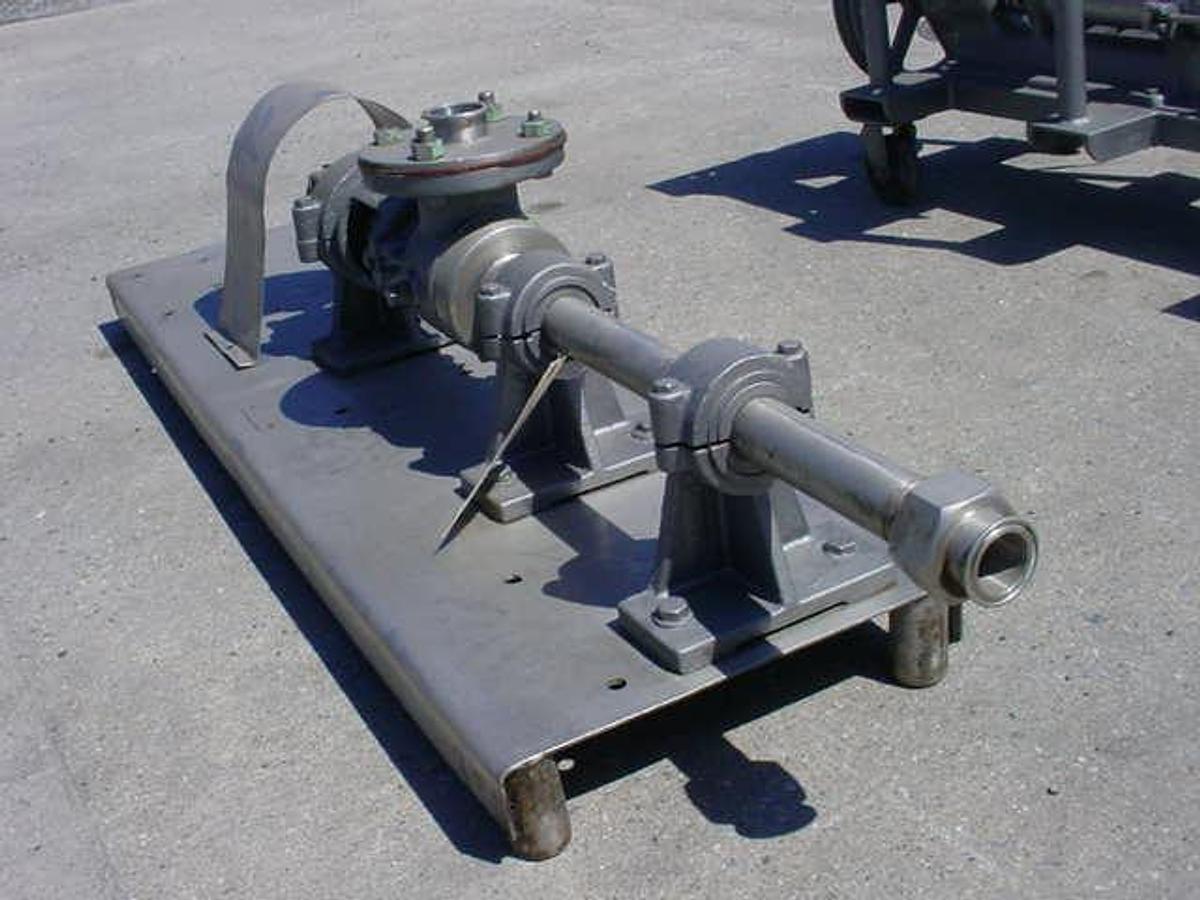
MOYNO 2″: X 1-1/2″” STAINLESS STEEL PROGRESSIVE CAVITY PUMP, No Motor
FAQ:
What is a Moyno progressive cavity pump and how does it work?
A Moyno progressive cavity pump is a type of positive displacement pump that moves fluid through a series of fixed-volume cavities formed between a helical rotor and a double-helix stator. As the rotor turns eccentrically inside the stator, these cavities progress from the inlet to the outlet, carrying fluid along with them. The result is a smooth, pulsation-free flow that remains consistent regardless of pressure variations downstream. Moyno is a brand under NOV (National Oilwell Varco) and has become one of the most recognized names in progressive cavity pump technology, with a reputation built over decades of engineering development.
The key mechanical advantage of this design is that it can handle fluids that would destroy or simply pass through a centrifugal pump. High-viscosity materials, shear-sensitive products, abrasive slurries, and fluids containing suspended solids are all handled effectively. The gentle, cavity-by-cavity transfer of fluid means the pump does not shear or degrade the product during transfer, which is critical in food processing, pharmaceuticals, and certain chemical applications. Flow rate is directly proportional to the rotor speed, which makes Moyno pumps highly controllable and well-suited for metering and dosing duties.
What industries commonly use Moyno progressive cavity pumps?
Moyno progressive cavity pumps appear across a wide range of industries, largely because of their ability to handle difficult fluids that other pump types cannot manage reliably. Wastewater treatment facilities use them to transfer sludge, biosolids, and slurries with high solids content. Oil and gas operations rely on them for multiphase flow, crude transfer, and chemical injection. Food and beverage processors use sanitary-grade Moyno models for transferring viscous products like sauces, batters, meat emulsions, and dairy ingredients without damaging the product structure.
Beyond those core sectors, Moyno pumps are also common in pulp and paper manufacturing, mining operations, pharmaceutical production, and general chemical processing. The availability of stainless steel and sanitary configurations, including hopper-fed designs for thick or paste-like materials, makes them adaptable across very different production environments. Used Moyno pumps sold through industrial equipment dealers often come from decommissioned food processing or wastewater plants, and buyers from those same industries frequently find that a used unit in good condition meets their operational requirements without the lead time associated with sourcing equipment through other channels.
What is the difference between a Moyno progressive cavity pump and a centrifugal pump?
The fundamental difference comes down to how each pump moves fluid. A centrifugal pump uses a spinning impeller to impart velocity to the fluid, which is then converted to pressure. This works well for low-viscosity, clean liquids at high flow rates, but performance drops sharply as viscosity increases, and the high-speed impeller can shear or damage sensitive materials. Centrifugal pumps also struggle with entrained solids and cannot self-prime reliably in all configurations.
A Moyno progressive cavity pump, by contrast, is a positive displacement device. It moves a fixed volume of fluid per revolution regardless of the fluid's viscosity or the downstream pressure. This makes it far more suitable for thick, abrasive, or shear-sensitive materials. It also delivers a smooth, consistent flow with virtually no pulsation, which is valuable in metering applications where accuracy matters. The trade-off is that progressive cavity pumps are generally slower, require more maintenance attention to the rotor and stator wear components, and are not the right choice for thin, clean fluids at very high flow rates where a centrifugal pump would be far more efficient and cost-effective.
Are Moyno progressive cavity pumps suitable for abrasive or high-viscosity fluids?
Moyno progressive cavity pumps are specifically engineered for exactly these types of fluids, and it is one of the primary reasons they are specified over other pump technologies. The progressive cavity design creates a series of sealed chambers that carry fluid from suction to discharge at low velocity and with minimal turbulence. This means abrasive particles in the fluid are transported rather than impacted at high speed, which reduces wear compared to centrifugal or vane-type pumps. Fluids with viscosities ranging from thin liquids up to very heavy pastes and slurries can all be handled, depending on the specific model and configuration.
For abrasive applications, the selection of rotor and stator materials becomes especially important. Hardened chrome steel rotors paired with abrasion-resistant elastomer stators extend service life considerably in applications involving sand, grit, or hard particulates. For high-viscosity materials, hopper-fed configurations are available that allow thick products to gravity-feed into the pump intake rather than relying on suction lift. Buyers sourcing used Moyno pumps for abrasive or viscous duties should pay close attention to the condition of the rotor and stator during inspection, as these are the primary wear components and their condition directly affects pump performance.
What stator and rotor materials are available for Moyno pumps, and why does it matter?
The rotor in a Moyno progressive cavity pump is typically made from hardened carbon steel with a chrome plating, though stainless steel rotors are available for corrosive or sanitary applications. The stator is a molded elastomer bonded inside a metal housing, and the elastomer material is the variable that most directly affects chemical compatibility and service life. Common stator elastomers include Buna-N (nitrile), which handles oils and hydrocarbons well; EPDM, which is suited for water-based fluids and steam; Viton, which offers broad chemical resistance for aggressive fluids; and Neoprene, which provides general-purpose performance across moderate chemical exposures.
Choosing the wrong elastomer for a given fluid can lead to stator swelling, cracking, or rapid degradation, all of which will cause the pump to lose efficiency or fail entirely. This is one of the most important technical checks when evaluating a used Moyno pump for a specific application. The fluid being handled needs to be cross-referenced against the elastomer's chemical resistance data before the pump is put into service. In sanitary applications, such as food processing or pharmaceuticals, FDA-compliant elastomers are required, and stainless steel wetted components are standard. Used Moyno pumps listed as sanitary models typically reflect these construction standards, but buyers should verify the specific materials with the seller before purchasing.
What sizes and flow rates are available for Moyno progressive cavity pumps?
Moyno progressive cavity pumps are manufactured across a broad size range to cover everything from small laboratory or metering duties to large industrial transfer applications. Smaller models, such as 2-inch by 1.5-inch configurations, are commonly used in food processing, chemical dosing, and pharmaceutical applications where precise, low-volume flow control is needed. Mid-range sizes, such as 2-inch by 2-inch or 3-inch by 3-inch models, handle higher throughput in wastewater, food production, and industrial processing environments. Larger configurations are used in mining, oil and gas, and municipal water treatment where high flow rates and elevated pressures are required.
Flow rates vary widely depending on the model, the number of pump stages, and the operating speed. Single-stage Moyno pumps are typically used for lower-pressure applications, while multi-stage designs achieve higher discharge pressures. Because flow rate is proportional to rotor speed in a positive displacement pump, pairing a Moyno pump with a variable frequency drive (VFD) allows precise flow control across a wide operating range. Buyers shopping for used Moyno pumps should identify their required flow rate and pressure before evaluating specific models, as the pump geometry (rotor pitch, stator cavity volume) determines the flow per revolution and must match the application.
What should buyers inspect when purchasing a used Moyno progressive cavity pump?
The rotor and stator are the first things to examine on any used Moyno progressive cavity pump. The rotor surface should be smooth and free of pitting, scoring, or chrome delamination. Even minor surface damage on the rotor accelerates stator wear and reduces volumetric efficiency. The stator should be checked for swelling, cracking, hardening, or any sign of chemical attack. A stator that has been exposed to an incompatible fluid may look intact on the outside but perform poorly under load. Buyers should also check the condition of the mechanical seal or packing, the drive shaft and coupling, and the bearing housings for any signs of wear or overheating.
For sanitary Moyno pumps, additional attention should be paid to the condition of all wetted surfaces, gaskets, and clamp fittings to confirm they meet the hygiene standards required for the intended application. Reputable used equipment dealers will typically accommodate in-person inspections or provide detailed video walkthroughs of the machine so buyers can assess condition before committing to a purchase. If the pump is still installed at a production facility, it may be possible to observe it running under actual operating conditions, which provides the clearest picture of its current state. Buyers should also contact the manufacturer to understand parts availability for the specific model and serial number, since older or discontinued models may have limited support.
What is the typical price range for used Moyno progressive cavity pumps?
Pricing for used Moyno progressive cavity pumps varies considerably based on size, configuration, material of construction, and overall condition. Smaller stainless steel models in the 2-inch range, without motors, typically sell in the range of a few hundred to a couple of thousand dollars depending on condition and the seller. Larger sanitary or industrial models, particularly those in good working condition with complete drive assemblies, can reach several thousand dollars or more. Portable sanitary configurations and hopper-fed designs tend to command higher prices due to their specialized construction and the cost of sanitary-grade stainless steel components.
Buyers should factor in the full landed cost when evaluating any used pump purchase. This includes shipping, any required crating or rigging for heavier units, and the potential cost of replacing wear components such as the rotor, stator, or mechanical seal before the pump is put back into service. A used Moyno pump purchased at a lower price point may still represent excellent value if the core components are in good shape, but a thorough inspection is essential to understanding what refurbishment costs might be involved. Comparing the total acquisition and reconditioning cost against the price of sourcing a comparable unit through other channels helps buyers make a well-informed purchasing decision.
What are the shipping and payment considerations when buying a used Moyno pump from a dealer?
Used Moyno pumps, depending on their size and configuration, can range from relatively compact units that ship on a standard pallet to larger industrial models that require heavy-duty crating and rigging equipment for loading and unloading. Dealers will typically quote shipping costs based on the packaging required to protect the pump in transit, the destination, and whether specialized rigging or freight services are needed. Buyers should ask for a detailed breakdown of packaging, rigging, and freight costs upfront to understand the full landed cost before agreeing to a purchase. Smaller pumps without motors may ship economically via standard freight, while larger or heavier units will require flatbed or specialized industrial freight services.
On payment terms, most used equipment dealers require full payment prior to releasing a machine for shipment. Some dealers extend credit terms to established repeat customers, but this is not standard practice for first-time buyers. Payment is typically made by wire transfer or other methods specified by the dealer. Buyers should confirm all payment and shipping details in writing before completing a transaction, and should clarify whether the quoted price includes the motor or if the pump is being sold without a drive unit, as this is common with used progressive cavity pumps and affects both the price and the installation planning required on the buyer's end.
What is a sanitary progressive cavity pump and when is it required?
A sanitary progressive cavity pump is a version of the standard progressive cavity design built to meet hygiene standards required in food processing, beverage production, dairy, and pharmaceutical manufacturing. The key differences from an industrial pump are in the materials and surface finishes used for wetted components. Sanitary models use stainless steel for all parts that contact the product, with polished interior surfaces that meet Ra (surface roughness) specifications to prevent bacterial adhesion and allow effective cleaning in place (CIP) or sterilization in place (SIP). Clamp-style fittings replace threaded connections to allow tool-free disassembly for inspection and cleaning, and all elastomers used in seals and stators must comply with FDA or equivalent food-contact regulations.
These pumps are specified whenever the product being transferred must meet food safety or pharmaceutical purity standards, or when the production environment is subject to regulatory inspection. Common applications include pumping meat emulsions, sauces, yogurt, cream, pharmaceutical gels, and similar viscous or semi-solid products. Hopper-fed sanitary designs are particularly useful for very thick materials that cannot be drawn into the pump by suction alone. Used sanitary Moyno pumps are actively sought by food and beverage processors and contract manufacturers looking to expand capacity without the cost and lead time of sourcing equipment through other channels, provided the units are in acceptable hygienic condition and the wetted materials are appropriate for the intended product.