Category
Manufacturer
Model
Mondial
Mondial manufactures high-quality packaging and processing machines for various industries, including food and pharmaceuticals. Their advanced technology in labeling and filling systems is well-regarded for improving production efficiency.
FAQ:
What types of packaging machines does Mondial manufacture?
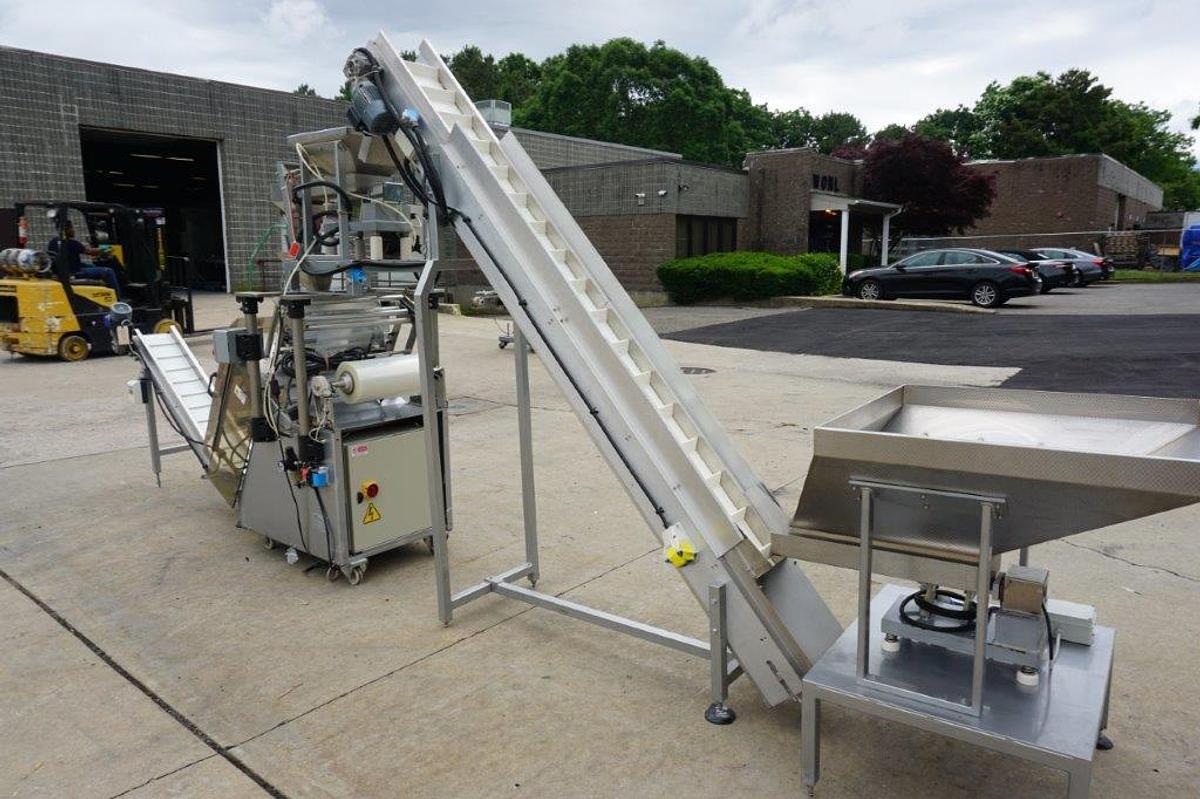
Mondial produces a range of packaging and processing equipment covering several core functions in industrial production lines. Their lineup includes form/fill/seal machines, filling systems, labeling equipment, sealing machines, and wrapping systems. The Mondial Pack MV100, for example, is a small-scale form/fill/seal machine designed around a rigidized bucket configuration, which gives a sense of the brand's focus on practical, production-ready formats across different output volumes.
Beyond individual machine types, Mondial's technology is particularly recognized in labeling and filling applications, where precision and throughput consistency matter. Their machines are built to handle a variety of packaging materials, which makes them adaptable across different production environments. Buyers looking at used Mondial equipment will typically find machines that were originally deployed in food processing, pharmaceutical manufacturing, or consumer goods packaging, reflecting the brand's cross-industry relevance.
What industries use Mondial packaging machines?
Mondial packaging machines are designed to serve a broad range of industries, with food processing and pharmaceuticals being the two most prominent sectors. In food production, their filling and sealing equipment handles products ranging from dry goods and powders to liquids and semi-viscous materials. Pharmaceutical applications tend to rely on Mondial's labeling and filling systems, where accuracy and compliance with production standards are critical considerations.
Consumer goods manufacturers also make use of Mondial equipment, particularly for wrapping and shrink packaging applications. The machines' adaptability to different packaging materials, including films, pouches, and rigid containers, makes them practical across sectors where packaging format requirements vary. Small and medium-sized enterprises in particular have gravitated toward Mondial equipment because of its operational straightforwardness and relatively accessible maintenance profile compared to some higher-end European brands.
What should buyers know about purchasing a used Mondial packaging machine?
Buying a used Mondial machine is meaningfully different from purchasing factory-fresh equipment. Used machines are sold as-is, which places the responsibility of due diligence squarely on the buyer. The most important step is arranging a thorough inspection before committing to a purchase. Reputable used equipment dealers will typically offer in-person inspections, video walkthroughs, or detailed photo documentation of the machine's current condition. Some machines may still be in active production at a facility, in which case an inspection can often be arranged at the plant itself.
Buyers should also contact Mondial directly or consult with a knowledgeable technician to assess parts availability and manufacturer support for the specific model and age of the machine they're considering. Older models may have limited parts availability, which affects long-term operating costs and downtime risk. Choosing a dealer who specializes in packaging machinery, rather than a generalist reseller, gives buyers a better chance of getting accurate condition information and relevant technical context for the equipment.
How do you inspect a used Mondial packaging machine before buying?
Inspection options for used packaging equipment generally fall into three categories: in-person visits, live video calls, and recorded video documentation. For a machine like a form/fill/seal unit or a filling system, an in-person inspection is the most thorough approach because it allows the buyer or their technician to physically examine wear on mechanical components, check electrical panels, review seals and gaskets, and assess the overall cleanliness and maintenance history of the machine.
When an in-person visit isn't practical, a live video inspection with a dealer representative walking through the machine in real time is a solid alternative. The buyer should ask to see the machine powered on if possible, observe any moving parts in operation, and request close-up views of areas prone to wear, such as sealing jaws, conveyor belts, and filling nozzles. Keep in mind that most equipment dealers are not set up to run actual production tests with real product, since that requires separate permitting and facility capabilities. The goal of any inspection is to get an honest, accurate picture of the machine's current mechanical and operational state.
What is the price range for used Mondial packaging machines?
Pricing for used Mondial packaging machines varies considerably depending on the machine type, model, age, condition, and configuration. Smaller machines like compact form/fill/seal units tend to sit at the lower end of the used equipment price spectrum, while larger, more automated filling and labeling lines can command significantly higher prices. As a general reference point, used packaging machinery in this category from established brands can range from a few thousand dollars for basic units to tens of thousands for more complex, higher-throughput systems.
Beyond the sticker price, buyers should factor in the full landed cost of the equipment. This includes freight charges, any crating or palletization required for safe transport, rigging fees for loading and unloading heavier machines, and potential costs for installation or recommissioning at the buyer's facility. Getting a clear breakdown of these additional costs from the dealer before finalizing a purchase prevents surprises and allows for a more accurate comparison between different machines or sellers.
Are Mondial packaging machines a practical option for small or mid-sized businesses?
Mondial equipment has historically been well-regarded among small and medium-sized enterprises, largely because the machines tend to prioritize operational simplicity and ease of maintenance. For a smaller operation that doesn't have a large in-house engineering team, a machine that's straightforward to run and maintain reduces both downtime risk and the cost of keeping it running. The Mondial Pack MV100, for instance, is a compact form/fill/seal machine, which suggests the brand has products scaled for lower-volume or space-constrained production environments.
That said, the suitability of any specific used machine for a smaller business depends heavily on the machine's condition and the buyer's production requirements. A used machine in good working order can offer excellent value for a growing operation that needs packaging capability without the capital outlay of brand-new equipment. Buyers should be realistic about their technical capacity for maintenance and troubleshooting, and factor in the availability of local service technicians familiar with Mondial equipment when evaluating a purchase.
What is a form/fill/seal machine and what is it used for?
A form/fill/seal (FFS) machine is a type of packaging equipment that performs three functions in a single automated sequence: it forms a package from a flat roll of film or a rigid material, fills that package with a product, and then seals it closed. These machines are widely used across food, pharmaceutical, and consumer goods industries because they consolidate multiple packaging steps into one continuous process, which improves throughput and reduces labor requirements compared to handling each step separately.
Form/fill/seal machines come in vertical and horizontal configurations depending on the product type and packaging format. Vertical FFS machines are common for free-flowing products like grains, powders, snacks, and liquids, where the product is dropped or pumped into a downward-forming bag. Horizontal configurations are more typical for solid or irregularly shaped products. The Mondial Pack MV100 is a small-scale FFS machine built around a rigidized bucket design, making it suited for products that benefit from a more structured container format. Used FFS machines are frequently sought on the secondary market because they represent significant capital equipment that retains practical value well beyond their initial production deployment.
How does shipping work when buying a used Mondial packaging machine?
Shipping costs and logistics for used packaging machinery depend on several variables, including the size and weight of the machine, its destination, and the level of packaging required to protect it during transit. Smaller machines may ship on standard pallets, while larger or more complex equipment typically requires custom crating to prevent damage. Buyers should ask the dealer specifically what packaging method will be used and whether that cost is included in the quoted price or billed separately.
For heavier machines, rigging, which refers to the specialized equipment and labor used to lift, move, and load industrial machinery, is often an additional cost that buyers don't always anticipate. At the destination, unloading may also require a forklift or crane depending on the machine's dimensions and weight. Getting a full breakdown of packaging, rigging, freight, and any customs or import fees (for international shipments) before finalizing a purchase gives buyers a clear picture of the true landed cost of the equipment.
What payment terms are typical when buying used packaging machinery?
Used equipment dealers generally require full payment before a machine ships. This is standard practice in the industry and reflects the nature of secondary market transactions, where the dealer needs to confirm funds before releasing equipment. Buyers who are new to a particular dealer should expect to pay in full upfront, typically via wire transfer, though the accepted payment methods vary by seller.
Some dealers extend more flexible terms to repeat customers or established business relationships, but this is not the norm for first-time transactions. Buyers should clarify payment expectations early in the process, before investing significant time in inspections or negotiations. It's also worth confirming what happens to the payment if a machine fails inspection or if there's a dispute about the condition of the equipment, so that both parties have a shared understanding of the transaction terms before money changes hands.
How can buyers assess parts availability and long-term support for a used Mondial machine?
Parts availability is one of the most practical considerations when buying any used industrial machine, and it's worth investigating before committing to a purchase rather than after. The best starting point is contacting Mondial directly to ask about parts support for the specific model and production year of the machine in question. Manufacturers vary considerably in how long they continue to support older models, and some older or discontinued machines may have limited or no factory parts availability, which means buyers would need to rely on third-party fabrication or refurbished components.
Beyond the manufacturer, buyers should look into whether independent service technicians in their region are familiar with Mondial equipment. For machines that were widely distributed in a particular market, aftermarket support tends to be more accessible. Dealers who specialize in packaging machinery are often a useful resource here, since they may have experience sourcing parts or can point buyers toward service networks relevant to the brand. Understanding the support landscape before purchase helps buyers make a realistic assessment of the machine's total cost of ownership and operational risk over time.