Category
Manufacturer
Model
Mokon
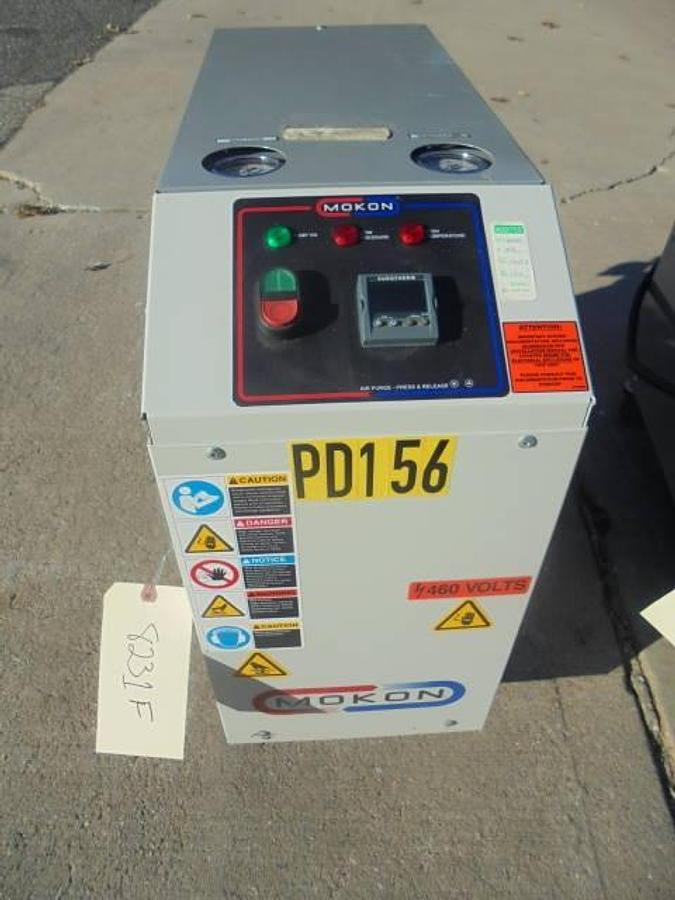
Mokon specializes in temperature control equipment, primarily for the plastics and rubber industries. Their systems are designed to provide precise temperature management, which is crucial for maintaining product quality during the manufacturing process.
FAQ:
What types of Mokon temperature control units are commonly available on the used equipment market?
Mokon has produced several distinct product lines over the decades, and all of them show up regularly in the used equipment market. The three most frequently traded series are the Thermolator (water-based), the Unitherm (oil-based), and the HydroTherm series. Each was engineered for a specific range of temperatures and applications, so buyers typically seek out a particular series based on their process requirements rather than just the brand name alone.
The HydroTherm line, in particular, is a water temperature system that has been widely used in plastics and rubber processing. Used listings often include single-zone and multi-zone configurations, varying pump sizes, and different heating capacities measured in kilowatts. When browsing used Mokon equipment, it pays to look closely at the model number and nameplate data, since those details will tell you the maximum working temperature, pump flow rate in GPM, and electrical specifications, all of which determine whether a given unit fits your application.
What industries are Mokon temperature control systems best suited for?
Mokon built its reputation primarily in the plastics and rubber industries, where precise mold temperature control directly affects part quality, cycle times, and scrap rates. Injection molding, blow molding, extrusion, and rubber vulcanization are among the most common applications. In these processes, even a few degrees of temperature variation can cause warping, sink marks, or inconsistent material flow, so a reliable temperature control unit is not optional equipment.
Beyond plastics and rubber, Mokon systems are used in chemical processing, food production, and other manufacturing environments where a controlled heat transfer fluid loop is needed. The brand has been in production since 1955, which means there is a large installed base across many industries and a corresponding supply of used units available when facilities upgrade or consolidate equipment. Buyers from outside the plastics industry should pay close attention to the temperature range and fluid compatibility of any specific unit they are considering, since not every model is suited for every application.
What temperature ranges can Mokon units handle?
The answer depends largely on whether the unit uses water or oil as the heat transfer medium. Water-based Mokon units, such as those in the Thermolator and HydroTherm series, are generally rated for process temperatures up to around 250°F. That range covers the majority of thermoplastic injection molding and blow molding applications, where mold temperatures typically fall between 50°F and 200°F depending on the resin being processed.
Oil-based units, such as the Unitherm series, are designed for higher-temperature applications and can reach 400°F or beyond. These are common in processes involving engineering resins, rubber molding, or any application where water at elevated pressure would be impractical or unsafe. When evaluating a used Mokon unit, always confirm the maximum rated temperature from the nameplate or documentation rather than relying solely on the series name, since different configurations within the same product family can carry different ratings.
What is the difference between Mokon single-zone and multi-zone temperature control systems?
A single-zone Mokon unit controls the temperature of one fluid circuit, meaning it heats or cools one process connection point at a consistent setpoint. This is the straightforward choice for molds or processes with a single temperature requirement and one inlet/outlet pair. Single-zone units are simpler to operate, easier to maintain, and typically less expensive on the used market.
Multi-zone systems run two or more independent temperature circuits from a single cabinet, allowing different sections of a mold or process to be held at different temperatures simultaneously. This is valuable in large or complex molds where one zone might need to run hotter than another to achieve uniform cooling or controlled flow. Multi-zone units command higher prices on the used market and require more careful inspection, since each zone has its own pump, heater, and controls that all need to be evaluated independently. Buyers should confirm how many zones are functional and whether the controls for each zone are intact before purchasing.
Do Mokon temperature control units use water, oil, or both as heat transfer media?
Mokon manufactures units designed specifically for water and units designed specifically for oil, and the two are not interchangeable. Water units circulate pressurized water through the process and are the more common choice for standard thermoplastic molding applications. They are generally less expensive to purchase and operate, easier to clean, and sufficient for the temperature ranges most injection molders need. The HydroTherm and Thermolator series fall into this category.
Oil units, like the Unitherm series, circulate a thermal fluid (typically a synthetic or mineral-based heat transfer oil) and are built to handle the higher temperatures and different safety considerations that come with hot oil systems. They require compatible hoses, fittings, and fluid that are rated for oil service. On the used market, it is critical to know which type you are buying before committing, since retrofitting a water unit for oil service (or vice versa) is not a straightforward modification. The product model number and nameplate will confirm which fluid the unit was designed for.
What should buyers check when evaluating a used Mokon temperature control unit?
The nameplate is the starting point. It will show the maximum working temperature, heating capacity in kW, pump flow rate in GPM, working pressure, and electrical requirements. Confirm that all of those specifications match your application before going further. Beyond the nameplate, the condition of the pump, heater elements, and plumbing connections deserves close attention, since those are the components most likely to show wear on a used unit. Look for signs of corrosion, scale buildup in water lines, or evidence of fluid leaks around fittings and seals.
Reputable used equipment dealers will typically accommodate in-person inspections or video walkthroughs of the machine so buyers can assess its condition directly. Some units may still be in service at the selling facility, which makes a functional inspection possible. Keep in mind that most dealers are not set up to run production processes, so a full production test may not be available, but a visual and mechanical inspection can still reveal a great deal about the unit's condition. Consulting with Mokon or an authorized service provider about parts availability for the specific model and age of the unit is also a smart step before purchase, since older models may have limited parts support.
What electrical requirements do Mokon temperature control systems typically need?
Most Mokon temperature control units are built for three-phase industrial power, commonly at 208V, 230V, or 460V at 60Hz. The specific voltage and amperage draw will vary based on the heating capacity of the unit, since a 9kW heater and a 36kW heater pull very different amounts of current even if they share the same basic platform. Single-phase units exist in smaller, lower-capacity configurations, but the majority of production-grade Mokon equipment is three-phase.
Before purchasing a used unit, buyers should verify the voltage and phase requirements from the nameplate and confirm that their facility can supply the correct power. Rewiring a temperature control unit for a different voltage is sometimes possible but adds cost and complexity, and it should only be done by a qualified electrician familiar with industrial heating equipment. The electrical disconnect and any required fusing or breaker sizing should also be factored into the total installation cost when calculating what a used unit will actually cost to put into service.
Are replacement parts and service support available for used Mokon equipment?
Mokon has been manufacturing temperature control equipment since 1955, and the brand carries a reputation for durable construction that has kept many older units in service for decades. That longevity is part of what makes used Mokon equipment attractive, but it also means some units on the market are old enough that parts availability can vary. Common wear items like pump seals, heater elements, and temperature sensors are generally available through Mokon directly or through industrial supply channels, particularly for models that were produced in large quantities.
For older or discontinued models, buyers should contact Mokon before finalizing a purchase to understand what level of support to expect. The manufacturer can often advise on whether replacement parts are stocked, whether cross-compatible components exist, and whether technical documentation is available for a given model. This step is worth taking seriously, because a unit that cannot be serviced when something fails has limited practical value regardless of how well it runs at the time of purchase. Selecting a used equipment dealer who specializes in temperature control or plastics processing equipment also helps, since those dealers are more likely to have the technical knowledge to answer questions about serviceability.
What is the typical price range for used Mokon temperature control equipment?
Pricing on the used market for Mokon units spans a wide range depending on the series, heating capacity, number of zones, age, and overall condition. Smaller, older single-zone water units can be found at the lower end of the spectrum, sometimes in the low hundreds to a few thousand dollars. Larger, higher-capacity units with multiple zones, more recent controls, or oil service capability will typically command significantly higher prices, sometimes reaching into the tens of thousands for well-maintained units with desirable specifications.
Beyond the purchase price, buyers should factor in the full landed cost of the equipment. Shipping charges will vary based on the size and weight of the unit, the packaging or crating required to protect it in transit, and whether specialized rigging is needed for loading and unloading at either end. Most used equipment dealers require full payment prior to shipping. Getting a clear picture of all those costs before committing to a purchase helps avoid surprises and allows for a fair comparison between units listed at different prices.
How should buyers approach the inspection process for used Mokon equipment?
The inspection is one of the most important steps in buying any used industrial equipment, and temperature control units are no exception. Reputable dealers will typically offer in-person inspections, virtual walkthroughs, or detailed video captures of the machine so buyers can assess its condition before committing. For units that are still installed and running at a production facility, it may be possible to arrange an inspection while the equipment is in operation, which provides the most useful information about its current working condition.
Buyers should approach the inspection with a checklist that covers the physical condition of the cabinet and components, the legibility and accuracy of the nameplate data, the condition of hoses, fittings, and plumbing connections, the state of the pump and motor, and the functionality of the controls and display. Most dealers are not equipped to run a full production simulation, since that would require process-specific permitting and setup, but a mechanical and visual inspection combined with a review of the unit's history can still give buyers a solid understanding of what they are purchasing. Selecting a dealer who specializes in plastics or process equipment adds an extra layer of confidence, since those dealers understand what to look for and can answer technical questions about the specific unit.