Category
Manufacturer
Model
Modern Process Equipment
Modern Process Equipment specializes in providing innovative solutions for the food and chemical processing industries. They are particularly known for their high-quality grinding and milling equipment, which is essential for achieving the desired particle sizes in various production processes.
FAQ:
What types of used Modern Process Equipment machines are typically available on the secondary market?
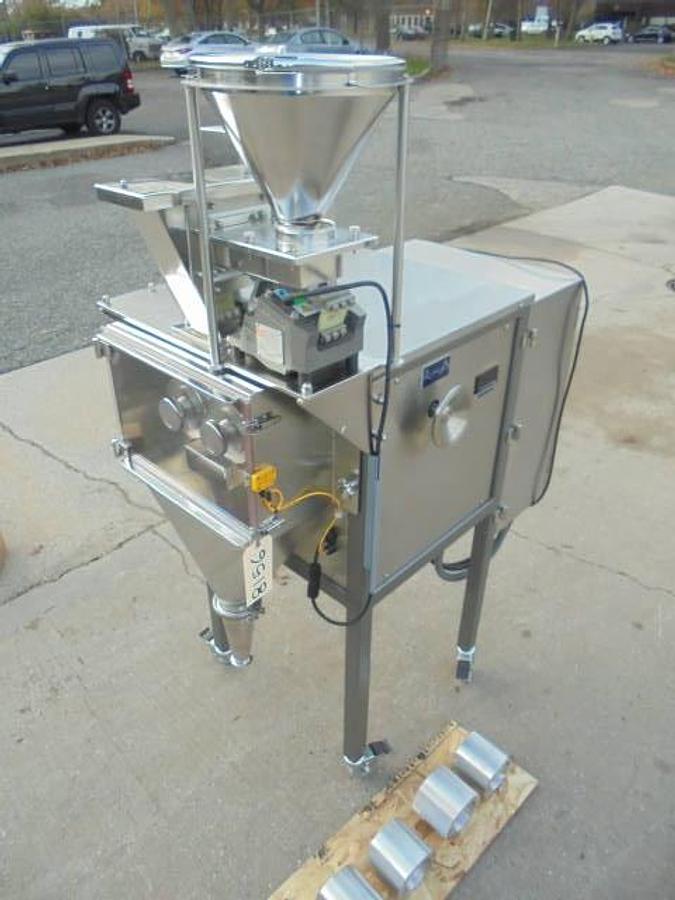
Modern Process Equipment (MPE) produces a focused line of grinding, milling, and size-reduction machinery used across food and chemical processing. On the used market, buyers most commonly encounter MPE Gran-U-Lizer roll compactors and granulators, lump breakers, and various milling systems designed to achieve precise particle size distributions. Stainless steel construction is a hallmark of MPE equipment, making units particularly attractive to buyers in sanitary processing environments where corrosion resistance and cleanability are non-negotiable. Specific models like the MPE LPP 6.5 Gran-U-Lizer Roll Compactor appear periodically through reputable used equipment dealers.
Availability on the secondary market fluctuates based on plant closures, production line changes, and equipment upgrades at food and chemical manufacturing facilities. Because MPE machinery is built to demanding specifications, used units often retain significant functional value long after leaving the original production environment. Buyers sourcing used MPE equipment should work with dealers who specialize in food and chemical processing machinery, as these specialists are more likely to have relevant inventory, understand the technical nuances of the machines, and be able to provide accurate condition assessments.
What industries commonly use Modern Process Equipment grinding and milling machines?
MPE grinding and milling equipment serves a wide range of industries, with food processing being the most prominent. Applications include grinding spices, coffee, grains, sugar, salt, and other dry ingredients to specific particle sizes required for product consistency and texture. Chemical manufacturers also rely on MPE machinery for reducing particle size in pigments, fertilizers, and specialty compounds. Pharmaceutical and nutraceutical producers use similar size-reduction equipment when working with active ingredients or excipients that require tight particle distribution control.
Beyond food and chemicals, MPE-style roll compactors and granulators are used in any production environment where dry material needs to be densified and then broken down to a uniform granule size. This includes applications in cosmetics, plastics compounding, and certain mineral processing operations. The stainless steel construction common in MPE machines makes them particularly compatible with regulated industries like food and pharma, where equipment must meet strict hygiene and cleanability standards. Buyers from these sectors actively seek used MPE units because the machines are purpose-built for demanding, high-throughput production conditions.
What should buyers look for when inspecting used grinding and milling equipment before purchase?
A thorough inspection of used size-reduction equipment should cover several mechanical and structural areas. Roll condition is one of the most critical points on a roll compactor or granulator: buyers should check for wear patterns, surface scoring, and whether rolls are still within usable tolerance. Bearings, drive components, and seals should be examined for wear or signs of overheating. Stainless steel surfaces, especially in food-grade machines, should be inspected for pitting, cracks, or welds that may have been improperly repaired, as these can harbor contamination and complicate cleaning validation. Electrical panels, control systems, and any PLC components should also be reviewed for functionality and compatibility with the buyer's facility.
Reputable used equipment dealers will accommodate in-person inspections at their warehouse or, in cases where equipment is still installed at a production facility, can arrange access through the selling plant. Video inspections and detailed photo documentation are common alternatives when travel is not practical. Keep in mind that most used equipment dealers do not have the permitting or production infrastructure to run actual product through a machine during inspection, so buyers should focus on mechanical condition, completeness of components, and whether the machine powers up and cycles correctly. Consulting the manufacturer directly about the specific model's known wear points and parts availability is also a smart step before committing to a purchase.
How does a Gran-U-Lizer roll compactor work, and what makes it useful in processing applications?
A Gran-U-Lizer roll compactor works by feeding dry powder between two counter-rotating rolls that apply high pressure to compact the material into a dense sheet or ribbon. That compacted material then passes through a granulating section where it is broken down into uniform granules of a controlled particle size. The entire process is dry, meaning no binders, solvents, or moisture are introduced, which is a significant advantage in applications where adding liquid would degrade the product or complicate downstream processing. The result is a free-flowing granule with improved bulk density, which is easier to handle, blend, and package than raw powder.
This technology is particularly valuable in food processing for ingredients like salt, sugar, and spices, where consistent granule size directly affects product performance and consumer experience. In chemical processing, dry compaction and granulation improves the handling characteristics of fine powders that would otherwise cause dust control issues or segregation problems during blending. MPE's Gran-U-Lizer line is well-regarded for its stainless steel construction and the precision of its roll gap and pressure controls, which give operators the ability to fine-tune output particle size. Used units retain these capabilities as long as rolls and mechanical components are in good condition, making them a cost-effective option for processors looking to add compaction capacity without the lead time or cost of purchasing new machinery.
What certifications and compliance standards are relevant when buying used process equipment for food or chemical manufacturing?
Buyers in regulated industries need to understand which certifications apply to their specific application and verify whether a used machine meets those standards in its current condition. For food processing, FDA compliance is the primary concern, which generally means equipment must be constructed of food-safe materials (such as 316L stainless steel), designed for cleanability, and free of crevices or dead zones where product can accumulate. CE marking is relevant for equipment operating in European markets and indicates conformity with EU health and safety directives. ASME stamps apply primarily to pressure vessels rather than milling equipment, but any integrated pressure components should carry appropriate documentation.
For chemical processing, buyers may need to consider ATEX or NEC hazardous location ratings if the equipment will operate in environments with flammable dust or vapors. ISO standards related to quality management systems are typically a manufacturer-level certification and do not transfer automatically with a used machine. Buyers should request any available documentation, including original spec sheets, material certifications, and prior inspection records, from the dealer. It is also worth contacting the manufacturer directly to confirm whether a specific model and serial number meets current compliance requirements and whether the manufacturer can still provide technical support, documentation, or parts for that machine.
What are the typical power and utility requirements for used MPE milling and compaction equipment?
Power requirements for MPE grinding and milling equipment vary by model and size, but most industrial units operate on three-phase electrical power, commonly at 460V/60Hz in North American installations or 380V/50Hz for equipment configured for European markets. Drive motors on roll compactors and granulators typically range from a few horsepower on smaller lab-scale units to 25 horsepower or more on larger production models. Buyers should confirm the electrical configuration of any used machine before purchase and factor in the cost of any rewiring or transformer requirements if the machine's configuration does not match their facility's power supply.
Beyond electrical power, some milling and compaction systems require compressed air for pneumatic controls, product conveyance, or dust collection connections. Cooling water connections may be present on certain roll compactor designs where the rolls are internally cooled to manage heat generated during compaction. Buyers should request the original equipment documentation or specification sheets from the dealer to understand the full utility requirements. If documentation is not available, the manufacturer may be able to provide utility data for a specific model, which is one more reason to verify the model number and configuration of any used machine before finalizing a purchase.
Is used process equipment a practical alternative to buying new machinery for food and chemical processors?
For many processors, used equipment offers a legitimate and cost-effective path to adding or upgrading production capacity. The price difference between a used machine in good working condition and a comparable piece of new machinery can be substantial, often 40 to 70 percent less depending on the age, model, and market demand for that type of equipment. Lead times are another factor: new machinery from a manufacturer can take months to build and deliver, while a used machine that is already in a dealer's inventory can often be inspected, purchased, and shipped within weeks. For processors facing urgent capacity needs or budget constraints, this combination of lower cost and faster availability is hard to match.
The practical considerations that matter most with used equipment are condition, parts availability, and seller reputation. A well-maintained machine from a reputable manufacturer like MPE can deliver years of additional service life if it has been properly cared for and is purchased from a dealer who accurately represents its condition. Buyers should prioritize dealers with a long track record in the food and chemical processing equipment space, as these specialists are better positioned to source quality machines, provide honest condition assessments, and assist with technical questions. Consulting the equipment manufacturer before purchase to confirm parts availability and support for the specific model is also a practical step that reduces risk.
What does the shipping and delivery process look like for used industrial process equipment?
Shipping used industrial machinery involves more logistical complexity than standard freight, and buyers should understand the full scope of costs and requirements before committing to a purchase. Smaller milling and granulation units may ship palletized or in custom wooden crates, while larger machines may require disassembly, skidding, and heavy-duty crating to prevent damage in transit. The level of packaging required directly affects shipping costs, and buyers should ask the dealer specifically how the machine will be prepared for transport and what those preparation costs include. Freight costs themselves depend on the machine's weight, dimensions, origin, and destination, and buyers should request a freight quote that accounts for all of these variables to understand the true landed cost.
For heavier equipment, rigging is often required at both the origin and destination points. Loading a large machine onto a flatbed or into a container may require a crane or forklift with sufficient capacity, and unloading at the buyer's facility requires the same. These rigging services are typically arranged and billed separately from standard freight. Buyers should confirm with the dealer who is responsible for coordinating rigging at each end and what those costs are expected to be. International shipments add customs documentation, import duties, and potentially compliance inspections to the process. Asking detailed questions about packaging, rigging, freight, and any applicable customs requirements upfront prevents surprises and allows buyers to make accurate cost comparisons between different equipment options.
What payment terms are typical when purchasing used process equipment from a dealer?
The standard practice among used equipment dealers is to require full payment before a machine is released for shipping. This applies to most transactions, particularly for buyers who are purchasing from a dealer for the first time. Payment is typically accepted by wire transfer, and some dealers may accept other forms of cleared funds. Credit card payments are less common for large equipment transactions due to processing fees, though some dealers accommodate them for smaller purchases. Buyers should confirm acceptable payment methods with the dealer early in the process to avoid delays once a purchase decision is made.
Some dealers extend payment terms to established customers with a history of repeat transactions, but this is not a standard offering for first-time buyers. Buyers who need financing for a used equipment purchase typically arrange that independently through equipment financing companies or their own banking relationships, as most used equipment dealers do not act as lenders. It is worth noting that some dealers may require a deposit to hold a machine while a buyer arranges an inspection or finalizes financing, particularly for high-demand equipment. Clarifying deposit requirements, refund conditions for deposits, and the timeline for full payment are all reasonable questions to raise before signing any purchase agreement.
How can buyers verify the reputation and reliability of a used process equipment dealer?
Selecting the right dealer is one of the most important decisions in a used equipment transaction, because the dealer's honesty about machine condition directly affects the buyer's outcome. A dealer's track record is the most reliable indicator of trustworthiness. Buyers should look for dealers who have been operating in the used equipment space for many years and who specialize in the relevant industry, whether that is food processing, chemical manufacturing, or another sector. Specialization matters because dealers who focus on a particular industry are more likely to understand the technical requirements of the machinery they sell, accurately assess condition, and answer detailed questions about specific models.
Buyers can research dealers by reviewing customer feedback, asking for references from past transactions, and checking whether the dealer is affiliated with industry associations such as the NAEIR or similar trade groups. Transparency is another signal worth evaluating: reputable dealers provide detailed photos, accurate descriptions of condition, and are willing to accommodate inspection requests rather than pressuring buyers to purchase sight-unseen. A dealer who readily arranges in-person or video inspections and provides honest information about a machine's history and any known issues is demonstrating the kind of integrity that protects buyers. Given that used equipment is typically sold without warranty, the dealer's reputation for accurate representation effectively serves as the buyer's primary protection.