Category
Manufacturer
Model
Milton Roy
Milton Roy provides manufacturing equipment for the chemical and water treatment industries. They are particularly known for their metering pumps and chemical feed systems that ensure accurate dosing.
FAQ:
What types of Milton Roy equipment are available on the used market?
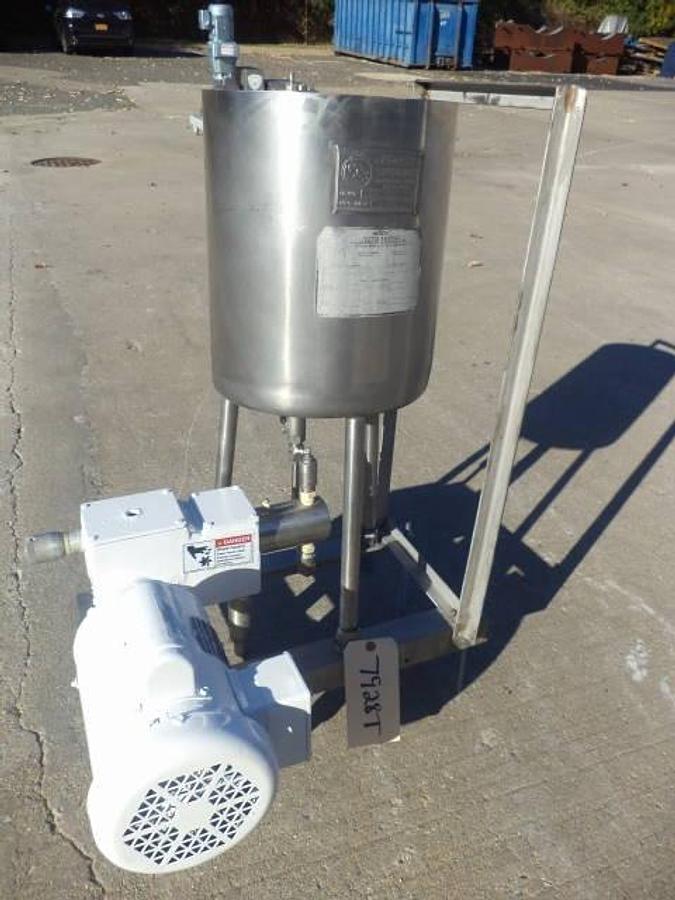
Milton Roy produces a range of industrial equipment, with metering pumps and chemical feed systems being the most commonly traded on the used market. Their product lines include the MilRoyal, Milroyal D, Milroyal B, ProSeries, and LMI series, each designed for different flow rates, pressure ratings, and chemical compatibility requirements. You'll also find complete process systems for sale, such as stainless steel tank assemblies fitted with Milton Roy proportioning pumps, which are ready for integration into existing production or treatment setups.
Because Milton Roy equipment is built for industrial durability, used units are frequently available after decommissioning from water treatment plants, chemical processing facilities, oil and gas operations, and pharmaceutical production lines. Buyers looking for a specific model or configuration should work with dealers who specialize in process and fluid handling equipment, as they tend to carry a more curated and accurately described inventory than general machinery resellers.
Is Milton Roy part of Ingersoll Rand?
Milton Roy has changed ownership several times over its long history. The brand was at one point part of larger industrial conglomerates, and it has been associated with various parent companies depending on the era. As of recent years, Milton Roy operates under the IDEX Corporation umbrella, which is a major manufacturer of pumps, flow measurement, and other fluidics equipment. It is not currently part of Ingersoll Rand, though the two companies do overlap in the broader industrial equipment space.
For buyers of used Milton Roy equipment, the ownership history matters mainly in terms of parts availability and technical support. Because Milton Roy has been a standalone brand with its own engineering identity for decades, most product lines have well-documented service manuals and a global parts ecosystem regardless of which corporate parent has held the brand at any given time. Consulting directly with the manufacturer or an authorized service center is the best way to confirm parts and support availability for a specific model before purchasing used.
What industries commonly use Milton Roy metering pumps?
Milton Roy metering pumps are used across a wide range of industries where precise chemical dosing is critical. Water and wastewater treatment is probably the most common application, where these pumps handle chlorination, pH adjustment, and other chemical feed processes. Oil and gas operations rely on them for corrosion inhibitor injection, scale prevention, and pipeline chemical treatment. Chemical processing plants use them for reagent addition and process chemical control, while food and beverage manufacturers use them for sanitizers, preservatives, and flavoring agents.
Pharmaceutical manufacturing is another significant application, where dosing accuracy is held to strict regulatory standards. Milton Roy pumps are well regarded in these environments because they consistently achieve repeatability within plus or minus one percent, which is a meaningful spec in any process where under- or over-dosing has safety or quality consequences. This broad industrial footprint means that used Milton Roy equipment tends to be available in a variety of configurations, and buyers from most process industries will find models suited to their specific requirements.
What is the typical lifespan of a metering or dosing pump like those made by Milton Roy?
The lifespan of a metering pump depends heavily on the application, the chemicals being dosed, maintenance practices, and how hard the pump was run during its service life. In favorable conditions, a well-maintained Milton Roy metering pump can operate reliably for 15 to 20 years or longer. Pumps used in aggressive chemical environments, or those that were not regularly serviced, will naturally have shorter usable lives. Key wear components include diaphragms, check valves, and liquid end materials, all of which can be replaced to extend the pump's functional life.
For buyers considering used Milton Roy pumps, the service history and condition of the liquid end are the most important factors to evaluate. A pump with a rebuilt or recently replaced liquid end can offer many more years of service even if the mechanical drive is older. Requesting a detailed inspection, either in person or via video, before purchasing is strongly recommended. Dealers who specialize in process equipment can usually provide photos or video of the pump's condition and clarify whether any refurbishment work has been done.
What flow rate and pressure ranges do Milton Roy metering pumps typically support?
Milton Roy offers metering pumps across a broad performance envelope, which is one reason the brand appears in so many different industrial settings. Smaller models in the LMI and ProSeries lines are designed for lower-flow applications, handling outputs from fractions of a gallon per hour up to several gallons per hour, at pressures typically ranging from 100 to 250 PSI. Larger models in the MilRoyal and Milroyal D series can handle significantly higher flow rates and pressures, with some configurations rated for several hundred gallons per hour and pressures exceeding 5,000 PSI in high-pressure injection applications.
When shopping for used Milton Roy equipment, it's important to match the pump's rated flow and pressure to your actual process requirements. The nameplate data and model number are the starting points for confirming specs, and dealers should be able to provide this information. Keep in mind that a used pump's actual performance may vary based on wear, so an inspection that includes a review of the pump's mechanical condition and any available service records will give you a more accurate picture of what to expect.
Can Milton Roy pumps handle corrosive or hazardous chemicals?
Yes, Milton Roy metering pumps are specifically engineered for use with a wide range of corrosive, aggressive, and hazardous chemicals. The liquid end materials, which include options like PVC, PVDF, stainless steel, and Hastelloy, are selected based on chemical compatibility. Diaphragm materials such as PTFE are commonly used for applications involving strong acids, bases, oxidizers, and solvents. This material flexibility is one of the reasons Milton Roy pumps are so widely used in chemical processing, water treatment, and oil and gas applications where the pumped fluid is anything but benign.
For buyers of used Milton Roy equipment, verifying the liquid end material and diaphragm type is essential before putting the pump into service with any aggressive chemical. A pump previously used for one chemical may not be compatible with a different fluid without replacing certain wetted components. Sellers should be able to identify the liquid end configuration from the model number or physical inspection, and buyers should cross-reference this against Milton Roy's chemical compatibility data for their specific application.
Are used Milton Roy pumps a reliable choice for active production or treatment processes?
Used Milton Roy pumps have a solid reputation for reliability in the secondary market, largely because the brand is built to industrial standards with robust mechanical drives and replaceable wear components. Many units that appear on the used market were decommissioned due to facility upgrades, process changes, or plant closures rather than mechanical failure, which means they may have significant service life remaining. The availability of spare parts and service documentation for most Milton Roy product lines also makes it practical to refurbish or maintain a used unit after purchase.
That said, buyers should approach any used pump purchase with appropriate due diligence. Selecting a dealer with a track record in process and fluid handling equipment is important, as is requesting a thorough inspection before committing to a purchase. Most reputable dealers will accommodate in-person or video inspections so buyers can assess the pump's physical condition. Used equipment is sold as-is, so the buyer takes on the responsibility of evaluating condition. Consulting with a Milton Roy service technician or the manufacturer about parts availability for the specific model and age of the unit is also a smart step before finalizing a purchase.
What should buyers inspect when evaluating a used Milton Roy metering pump?
The most critical areas to examine on a used Milton Roy metering pump are the liquid end, the diaphragm, and the check valves. These are the components that experience the most wear in normal operation and the ones most likely to need attention before the pump goes back into service. Look for signs of chemical attack, cracking, or deformation on any wetted parts. The mechanical drive, including the gearbox and stroke adjustment mechanism, should also be checked for smooth operation and any signs of oil leaks or excessive wear.
Beyond the physical inspection, ask the dealer about the pump's service history if it's available, and confirm the model number so you can look up the original specifications and identify compatible replacement parts. Some used Milton Roy pumps may still be installed and running at a facility, which gives buyers a chance to observe them in operation. In other cases, the equipment will be decommissioned and static, so a visual and mechanical inspection becomes even more important. Most dealers can facilitate a video walkthrough if an in-person visit isn't practical, and this should be taken advantage of before any purchase decision is made.
What is the typical price range for used Milton Roy metering pumps?
Pricing for used Milton Roy metering pumps varies considerably depending on the model, size, age, condition, and configuration. Smaller LMI or ProSeries units designed for low-flow chemical dosing might be found in the range of a few hundred to a couple thousand dollars. Larger, higher-pressure MilRoyal series pumps, especially those with stainless steel or Hastelloy liquid ends, can command significantly higher prices, sometimes ranging from several thousand dollars up to ten thousand dollars or more for complex or heavy-duty configurations. Complete process systems, such as a stainless steel tank paired with a proportioning pump, are priced based on the full assembly.
Buyers should factor in more than just the purchase price when budgeting for used Milton Roy equipment. Shipping costs, rigging, and any refurbishment or parts replacement needed to bring the pump to operating condition are all part of the true landed cost. Getting a clear picture of the pump's current condition through inspection, and researching the cost of any likely replacement parts, will help avoid surprises after the purchase is complete.
What are the shipping and payment considerations when buying used Milton Roy equipment?
Shipping used Milton Roy pumps and process systems requires careful planning, particularly for larger or heavier units. Smaller pumps can typically be palletized and shipped via freight carrier, but the packaging needs to be adequate to prevent damage in transit. Larger assemblies, such as complete tank and pump systems, may require crating and professional rigging for both loading and unloading. Buyers should ask the dealer for a detailed breakdown of packaging, rigging, and freight costs before finalizing a purchase, since these expenses can add meaningfully to the total cost of acquisition.
Payment terms for used industrial equipment typically require full payment before the equipment ships. Some dealers may offer alternative arrangements for repeat customers, but this is the exception rather than the rule. Buyers should also confirm the dealer's process for handling any discrepancies between the described condition and what arrives, since used equipment is generally sold as-is. Choosing a dealer with a long track record in industrial and process equipment is one of the better ways to reduce risk in a transaction where inspection options may be limited.