Category
Manufacturer
Model
FAQ:
What is a Milani rotary wine fermenter and how does it work?
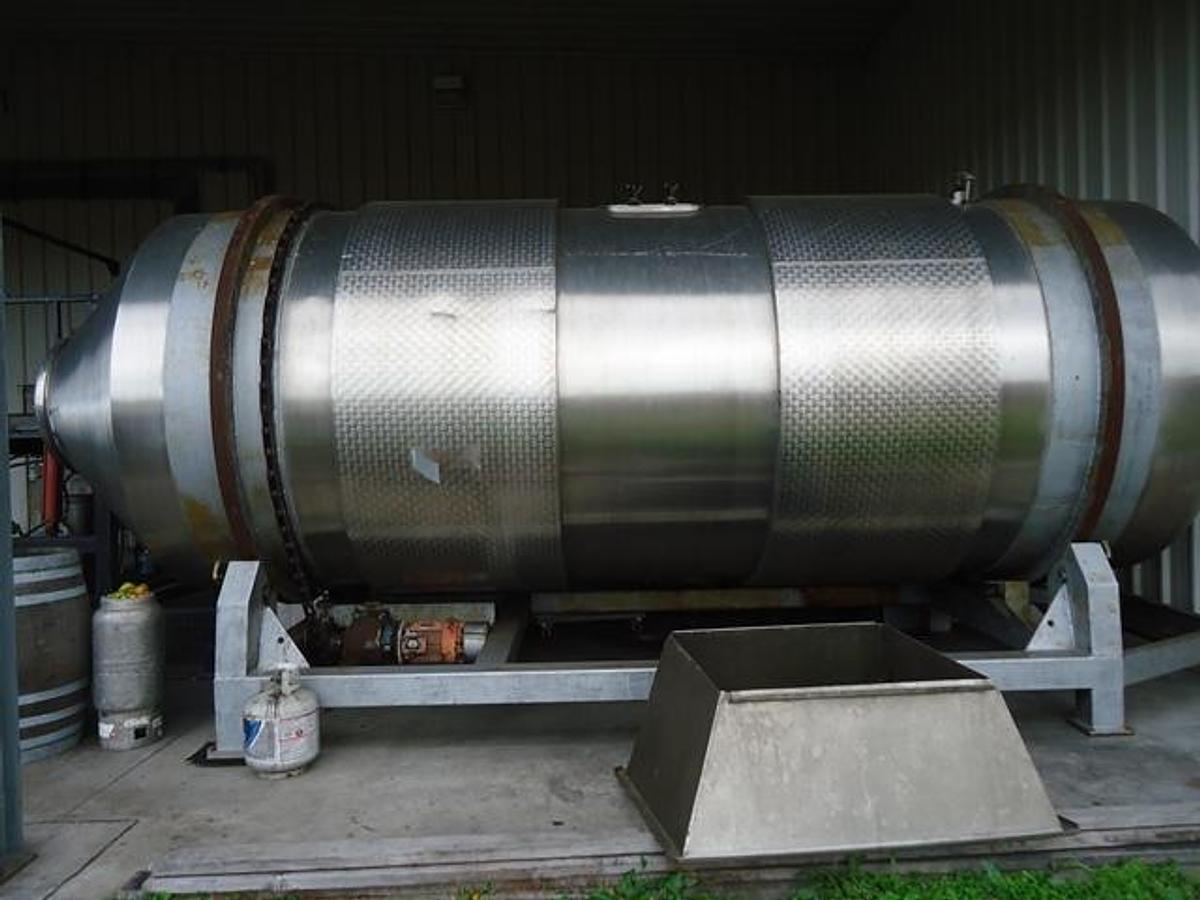
A Milani rotary wine fermenter is a horizontal, cylindrical stainless steel vessel designed specifically for fermenting red wine. Unlike traditional upright tanks where the grape solids (the "cap") float to the surface and require manual intervention to keep submerged, a rotary fermenter manages cap contact by slowly rotating the entire vessel on its horizontal axis. As the tank turns, the cap is continuously and gently folded back into the fermenting juice, ensuring consistent extraction of color, tannins, and aromatic compounds without the need for labor-intensive punch-down or pump-over operations.
Milani, an Italian winery equipment manufacturer with a long-standing reputation in the wine industry, engineered these units to automate one of the most time-consuming and physically demanding parts of red wine production. The rotation speed and frequency can typically be programmed to match the winemaker's extraction goals, giving precise control over the intensity of skin contact at each stage of fermentation. This combination of automation and control has made Milani rotary fermenters a preferred choice in premium red wine production facilities around the world.
How does a rotary fermenter improve wine quality compared to traditional open-top fermenters?
The primary quality advantage of a rotary fermenter lies in the consistency and gentleness of cap management. With traditional open-top tanks, punch-down or pump-over operations happen at scheduled intervals, which means the cap can dry out and oxidize between cycles. A rotary fermenter eliminates those gaps by providing continuous or precisely timed rotation, keeping the cap moist and in contact with the fermenting must throughout the process. The result is more stable color extraction, softer and better-integrated tannins, and enhanced aromatic complexity compared to more aggressive manual or mechanical methods.
Beyond extraction quality, the closed nature of a horizontal rotary vessel also limits oxygen exposure and volatile aroma loss during fermentation, which is particularly beneficial for preserving delicate fruit character in premium red wines. Because the rotation itself is gentle rather than forceful, the grape skins tend to remain more intact, reducing the extraction of harsh, astringent compounds that can come from excessive mechanical disruption. Winemakers working with varieties that require careful tannin management, such as Pinot Noir or Sangiovese, often find that rotary fermentation gives them a level of extraction control that is difficult to replicate with conventional open-top methods.
What sizes and capacities are typically available for Milani rotary fermenters?
Milani rotary fermenters have been produced across a wide range of capacities to serve different scales of winery operation. Smaller units commonly start around 50 hectoliters (roughly 3,300 gallons), while larger commercial models can reach several hundred hectoliters per vessel. The units listed on the used equipment market include models such as the 44-inch diameter horizontal configuration, which gives a practical indication of the vessel footprint and the volume of fruit each unit can handle per fermentation cycle.
When evaluating capacity for a specific winery, it is worth factoring in not just the liquid volume but also the headspace required for grape solids and carbon dioxide production during active fermentation. Rotary fermenters are typically filled to around 60 to 80 percent of their rated volume to allow for proper rotation and cap management. Buyers sourcing used Milani fermenters should confirm the exact internal dimensions and rated capacity with the seller, and cross-reference those figures against their anticipated harvest tonnage to ensure the equipment matches their production requirements.
Are Milani rotary fermenters suitable for small boutique wineries, or are they mainly designed for large commercial operations?
Milani rotary fermenters span a broad enough capacity range that they can be practical for boutique wineries as well as high-volume commercial producers. Smaller-capacity units in the 50 to 100 hectoliter range are well-suited to wineries producing a few hundred to a few thousand cases per year, particularly those focused on premium red wine where the quality benefits of rotary fermentation justify the equipment investment. The labor savings are also proportionally significant for small operations with limited staff, since automating cap management can free up considerable time during the busy harvest period.
For larger commercial wineries, multiple rotary fermenters can be run simultaneously or in sequence to handle high-tonnage harvests efficiently. The ability to program rotation cycles means that a single operator can oversee several vessels at once, something that would be impractical with manual punch-down on the same scale. Used Milani fermenters available through reputable equipment dealers can be a cost-effective way for wineries at either end of the scale to access this technology without the capital outlay of purchasing a brand-new unit from the manufacturer.
What materials are Milani rotary fermenters constructed from, and are they food-grade safe?
Milani rotary fermenters are constructed from food-grade stainless steel, typically AISI 304 or AISI 316 grade. Both grades are standard in the wine and beverage industry for their corrosion resistance, ease of sanitation, and non-reactive surface properties that prevent any metallic contamination of the wine. AISI 316 offers slightly higher resistance to acidic environments and chloride exposure, which makes it a preferred choice in applications where aggressive cleaning chemicals or high-acid grape varieties are involved.
The internal surfaces of these vessels are generally finished to a smooth, sanitary standard that minimizes harboring points for bacteria or spoilage organisms, which is critical in a winery environment where hygiene directly impacts wine quality. When purchasing a used Milani fermenter, buyers should inspect the interior welds, seals, and any gasket materials for signs of wear, pitting, or corrosion, as these areas are most susceptible to deterioration over time. A reputable used equipment dealer will typically facilitate an in-person or video inspection so that the buyer can assess the condition of the food-contact surfaces before committing to a purchase.
How does cap management in a rotary fermenter compare to punch-down and pump-over methods?
Punch-down involves physically pushing the floating cap of grape skins back into the fermenting juice using a tool or mechanical plunger, while pump-over draws juice from the bottom of the tank and sprays it over the top of the cap. Both methods are effective but require scheduled labor interventions, and the intensity of extraction can vary depending on how vigorously the operation is performed. Pump-over in particular introduces a degree of aeration that some winemakers want and others prefer to avoid, depending on the style of wine being produced.
A rotary fermenter replaces both of these approaches by rotating the entire vessel, which gently folds the cap into the juice as the tank turns. The extraction is highly consistent because the rotation parameters are set programmatically rather than depending on the physical effort of a cellar worker. This consistency tends to produce wines with more predictable tannin structure and color stability from batch to batch. The closed system also means less exposure to ambient oxygen and less evaporative loss of aromatics compared to open-top punch-down tanks, which is a meaningful advantage for producers focused on aromatic precision and wine longevity.
What should buyers inspect when purchasing a used Milani rotary fermenter?
When evaluating a used Milani rotary fermenter, the most critical areas to examine are the structural integrity of the vessel itself, the condition of the internal stainless steel surfaces, the seals and gaskets around hatches and fittings, and the mechanical components that drive the rotation. Pitting or corrosion on interior surfaces can be difficult to remediate and may compromise the sanitary integrity of the vessel. Seals and gaskets are consumable items that can be replaced, but buyers should factor that cost into their overall budget. The drive motor, gearbox, and any control systems for programming rotation cycles should also be checked for proper function.
Buyers should ask the seller to arrange an in-person inspection or, if distance makes that impractical, a thorough video walkthrough of the machine in its current condition. Some used fermenters may still be in active production at a facility, which provides the opportunity to observe the unit operating under real conditions. It is also worth contacting the manufacturer directly to determine what level of technical support, spare parts availability, and documentation can be expected for the specific model and production year being considered, since older units may have more limited parts availability than more recent ones.
How difficult is it to install and operate a Milani rotary fermenter?
Installation of a Milani rotary fermenter requires more planning than a standard upright tank because the horizontal orientation and rotation mechanism introduce additional structural and spatial requirements. The vessel needs a level, reinforced concrete pad capable of supporting the combined weight of the tank, the grape must, and the drive system during rotation. Adequate clearance around the vessel is necessary for the rotation arc, access hatches, and maintenance. Electrical connections for the drive motor and control panel need to be run by a qualified electrician familiar with winery equipment, and plumbing connections for juice drainage and cleaning-in-place (CIP) systems must be properly configured.
Day-to-day operation, once the unit is installed and commissioned, is relatively straightforward. Modern Milani fermenters use programmable controllers that allow winemakers to set rotation frequency, duration, and timing to match their extraction protocols. Staff training requirements are modest compared to manual cap management methods, since the system largely runs itself during a fermentation cycle. Buyers sourcing a used unit should request any available technical documentation, wiring diagrams, and operating manuals from the seller, as this material can significantly simplify the installation process and reduce reliance on outside technical support.
What is the typical price range for used Milani rotary wine fermenters?
Pricing for used Milani rotary fermenters varies considerably based on vessel capacity, the age and condition of the unit, the specific model configuration, and current market demand for winery equipment. Smaller-capacity units in good working condition can represent a fraction of the cost of a comparable unit purchased directly from the manufacturer, which is one of the primary reasons wineries seek out used equipment. Larger-capacity models or those with more advanced control systems will generally command higher prices on the secondary market.
Because these are used machines sold as-is, the final cost should be evaluated as a total landed cost that includes the purchase price, any inspection costs, freight and rigging charges, and any refurbishment or parts replacement needed after delivery. Shipping and rigging for a large horizontal fermenter can be a meaningful line item, particularly if heavy-duty craning or specialized transport is required. Buyers should request detailed quotes covering all of these elements from the seller before finalizing a purchase decision, so there are no surprises in the total investment required to get the unit operational.
What should buyers understand about shipping and logistics for a used Milani rotary fermenter?
Rotary fermenters are large, heavy pieces of equipment, and the logistics of moving them from a seller's location to a winery require careful planning. The horizontal cylindrical shape means that standard flatbed trucking is typically used, but the loading and unloading process often requires a crane or heavy-duty forklift with appropriate rigging capacity. Buyers should confirm with the seller exactly how the unit will be prepared for shipment, including whether it will be crated, palletized, or shipped as bare equipment, since the level of packaging directly affects the risk of transit damage.
Shipping costs for equipment of this size can be substantial and will depend on the distance, the weight and dimensions of the vessel, and the rigging requirements at both the origin and destination. Used equipment dealers will typically require full payment before the machine is released for shipment. Buyers should request an itemized breakdown of all freight, rigging, and packaging costs upfront so the total landed cost is clear before the transaction is completed. It is also worth confirming insurance coverage for the shipment, particularly for a high-value piece of production equipment where transit damage could be costly to remediate.