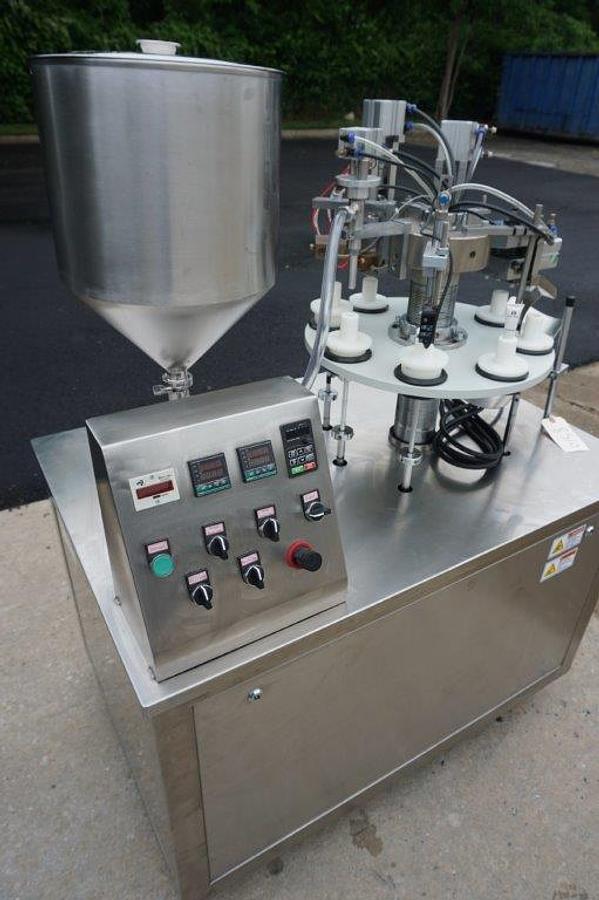
Category
Manufacturer
Model
FAQ:
What types of tubes can a MIC tube filling and sealing machine handle?
MIC tube filling and sealing machines are designed to handle a range of tube materials, including plastic (such as LDPE and HDPE), aluminum, and laminate tubes. The specific materials a machine can process depend on its sealing mechanism and configuration, so buyers should verify compatibility with their tube type before purchasing. Used MIC machines are commonly found in cosmetic, pharmaceutical, food, and chemical production environments, where these three tube materials are the most prevalent.
Plastic and laminate tubes are typically sealed using ultrasonic or hot air methods, while aluminum tubes generally require impulse or hot air sealing. When evaluating a used MIC machine, it is worth confirming which sealing head is installed, whether spare sealing components are included, and whether the machine was previously used with the same tube material you intend to run. A machine that was dedicated to one tube type in its prior production life may need adjustments or tooling changes to handle a different material.
What sealing method does a MIC tube filling and sealing machine use?
MIC tube filling and sealing machines are available with different sealing technologies depending on the model and the tube material they were built to process. The three most common sealing methods are hot air sealing, ultrasonic sealing, and impulse sealing. Hot air sealing works by directing a stream of heated air into the open end of the tube before folding and crimping it shut, and it is suitable for both plastic and aluminum tubes. Ultrasonic sealing uses high-frequency vibration to generate localized heat at the tube end, making it a popular choice for plastic and laminate tubes because it produces a clean, consistent seal without external heat sources.
Impulse sealing applies a brief burst of electrical current through a heating element to fuse the tube material, and it is often used for thinner plastic tubes. When reviewing a used MIC machine, buyers should identify which sealing system is installed, inspect the sealing jaws or heads for wear, and ask the seller whether the sealing components have been recently serviced or replaced. The condition of the sealing mechanism directly affects seal quality and production yield, so this is one of the more important areas to examine during any inspection.
What is the typical production speed of a MIC tube filling and sealing machine?
Production speed on MIC tube filling and sealing machines varies by model and automation level. Semi-automatic models generally require an operator to load tubes manually and typically achieve output rates in the range of 20 to 40 tubes per minute. Fully automatic models, which handle tube loading, filling, sealing, and discharge without manual intervention between cycles, can reach speeds of 60 to 120 tubes per minute or more depending on the specific machine configuration and the viscosity of the product being filled.
For a used machine like the MIC R-30, actual achievable speed in your production environment will depend on factors including product viscosity, tube size, the condition of the filling and sealing components, and how well the machine has been maintained. It is reasonable to ask the seller for documentation of the machine's rated speed and, if possible, to request a video of the machine running so you can observe its cycle rate under operating conditions. Keep in mind that a used machine running at slightly below its rated speed is not uncommon, and a qualified technician can often restore performance through calibration and part replacement.
What tube sizes (diameter and length) can a MIC tube filling and sealing machine accommodate?
MIC tube filling and sealing machines are built to handle a defined range of tube diameters and lengths, and the specific range varies by model. In general, machines in this category accommodate tube diameters from roughly 10mm to 50mm and tube lengths from approximately 50mm to 200mm, though individual models may fall outside these ranges. The tube holder, filling nozzle, and sealing head are all sized to match a particular tube format, and changeover to a different size typically requires swapping out tooling components.
Buyers evaluating a used MIC machine should confirm the tube size range the machine was configured for and ask whether any additional tooling or change parts are included with the sale. If you plan to run multiple tube sizes, understanding the changeover process, the time it takes, and whether all necessary parts are available is essential before committing to a purchase. Tube size compatibility is one of the first qualification checks to run when sourcing a used tube filling machine.
Is a MIC tube filling and sealing machine suitable for filling viscous products like creams, gels, and ointments?
Yes, MIC tube filling and sealing machines are well-suited for viscous products, which is one of the primary reasons they are widely used in cosmetic and pharmaceutical manufacturing. Products like creams, ointments, gels, lotions, and pastes are among the most common fills on these machines. The filling system on tube filling equipment designed for viscous products typically uses a piston-based or gear pump filling mechanism, which can accurately meter thick, non-free-flowing materials into tubes without air pockets or inconsistent fill weights.
Filling accuracy is a critical performance metric for viscous product applications. High-quality tube filling machines are generally rated for filling tolerances within plus or minus one percent, which minimizes product giveaway and ensures regulatory compliance in pharmaceutical and personal care applications. When evaluating a used MIC machine for viscous product use, it is worth asking about the type of filling pump installed, the condition of seals and pistons within the filling system, and whether the machine was previously used with a product of similar viscosity to yours. Residual product or dried material inside the filling head can also indicate past use and should be factored into your assessment of the machine's condition.
What is the difference between a semi-automatic and fully automatic MIC tube filling and sealing machine?
A semi-automatic MIC tube filling and sealing machine requires an operator to manually load empty tubes into the machine before each fill cycle. The machine then handles the filling and sealing steps automatically, but the operator must be present and engaged throughout production. These machines are a practical choice for lower-volume production runs, smaller batch sizes, or operations where product changeovers are frequent, since they tend to be simpler mechanically and easier to clean between runs.
Fully automatic models handle tube loading, orientation, filling, sealing, and discharge with minimal operator involvement, which significantly increases throughput and reduces labor costs per unit produced. Automatic machines are better suited to high-volume, continuous production environments. When shopping for a used MIC machine, the level of automation directly affects price, footprint, and the complexity of maintenance. Fully automatic machines have more components that can wear or require adjustment, so a thorough inspection of the loading and indexing systems is especially important when evaluating a used automatic model.
Do MIC tube filling and sealing machines meet GMP or CE standards?
MIC tube filling and sealing machines produced for pharmaceutical and cosmetic markets are generally designed with GMP (Good Manufacturing Practice) compliance in mind. This typically means contact parts are constructed from stainless steel or other approved materials, the machine is designed to minimize contamination risk, and surfaces are accessible for cleaning and inspection. CE marking, which indicates conformity with European health, safety, and environmental standards, is also a common certification on machines intended for European markets.
For a used machine, the relevant question is not just whether it was built to these standards, but whether it has been maintained in a way that preserves compliance. Buyers in regulated industries should inspect the machine's contact surfaces for wear, corrosion, or damage that could compromise product safety or cleanability. It is also advisable to consult with your quality and regulatory team before purchasing a used machine for GMP-regulated production, as validation documentation and maintenance records from the machine's prior owner can be valuable assets in establishing its suitability for your facility.
How do you change over a MIC tube filling and sealing machine between different tube sizes or products?
Changeover on a MIC tube filling and sealing machine involves swapping out the components that contact or position the tube, including the tube holders (also called tube nests or chucks), filling nozzle, and sealing jaws, to match the dimensions of the tube size being run. On some models, the filling volume is adjusted via the piston stroke or pump setting, and the sealing temperature or dwell time may also need to be recalibrated for a different tube material or wall thickness. A well-documented changeover procedure can typically be completed in 30 to 60 minutes by an experienced operator, though this varies by machine complexity.
For a used machine, one of the most important pre-purchase questions is what change parts are included with the sale. Tube filling machines are often sold with only the tooling that was in use at the time of decommissioning, which means you may need to source or fabricate additional tooling if you intend to run tube sizes the machine was not previously configured for. Asking the seller for a complete inventory of included change parts, and confirming availability of additional tooling from the manufacturer or a qualified tooling supplier, can prevent costly surprises after the machine arrives.
What should buyers inspect when evaluating a used MIC tube filling and sealing machine?
A thorough inspection of a used MIC tube filling and sealing machine should cover several key areas. The filling system, including the piston, cylinder, nozzle, and any seals or O-rings, should be examined for wear, scoring, or corrosion, since these components directly affect fill accuracy and product quality. The sealing mechanism, including the jaws, heating elements, and any ultrasonic transducers, should be checked for condition and alignment. The machine's drive components, including belts, cams, and bearings, should be inspected for wear, and the electrical panel and controls should be reviewed for any obvious damage or outdated components.
Most reputable used equipment dealers will accommodate in-person inspections at their facility or at the plant where the machine is currently located. Virtual inspections via video call and recorded video walkthroughs are also commonly available for buyers who cannot travel. Keep in mind that used equipment dealers typically do not have production-grade facilities for running actual product through a machine, so live product testing is rarely feasible at the dealer level. Buyers should also contact the manufacturer directly to understand what level of technical support, spare parts availability, and documentation can be expected for the specific model and year of manufacture being considered.
What are the typical shipping and payment considerations when buying a used MIC tube filling and sealing machine?
Shipping a used tube filling and sealing machine requires careful planning to prevent damage in transit. Depending on the machine's size and weight, it may need to be secured to a heavy-duty pallet, partially disassembled, or fully crated before shipment. Larger or heavier machines may also require specialized rigging equipment for loading at the seller's location and unloading at the buyer's facility, which adds to the total landed cost. Buyers should request a detailed breakdown of packaging, rigging, and freight charges from the seller before finalizing a purchase, since these costs can be substantial and are not always included in the listed machine price.
Payment terms in the used equipment market typically require full payment prior to shipment, as dealers generally do not extend credit to first-time buyers. Some dealers may offer payment terms to established repeat customers, but this is the exception rather than the rule. Buyers should factor in the full landed cost, including the machine price, export packaging, rigging, freight, and any import duties or taxes applicable to their location, when comparing options and building a budget for the acquisition.