Category
Manufacturer
Model
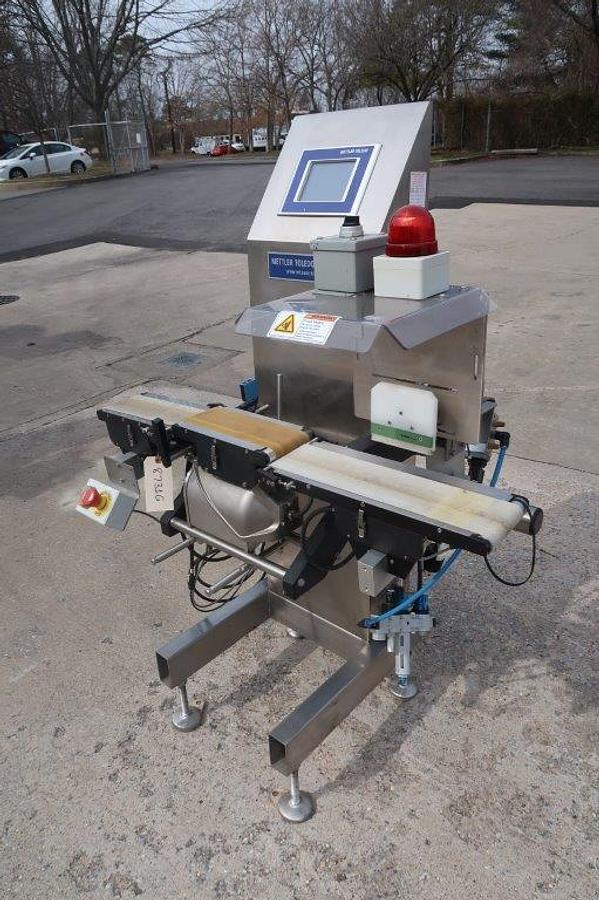
Mettler Toledo
Mettler Toledo is a leading provider of precision instruments and equipment for various industries, including food, pharmaceuticals, and chemicals. They are known for their high-quality scales and analytical instruments.
FAQ:
What types of Mettler Toledo equipment are commonly available on the used market?
Mettler Toledo produces a wide range of precision instruments across several product categories, and most of them surface regularly on the used equipment market. The most frequently traded items include analytical balances (such as the XPR and XSR series), industrial floor scales, high-speed checkweighers, benchtop meters like the SevenExcellence line, pipettes, and automated dispensing systems like the Quantos. Laboratory balances and pharmaceutical-grade instruments tend to be especially sought after because of the brand's reputation for accuracy and build quality. Industrial-scale equipment, including conveyorized checkweighers used in food and packaging lines, also appears with regularity as production facilities upgrade or decommission older lines.
The specific inventory available at any given time depends on what facilities are retiring from active production. A used equipment dealer specializing in precision instruments or food and pharmaceutical machinery will typically carry a rotating selection of Mettler Toledo models. Buyers looking for a specific model should check with dealers directly and ask to be notified when particular units become available, since desirable models can move quickly. It is also worth asking whether the equipment was in active production before decommissioning, as that context can give useful clues about the machine's service history and overall condition.
How do I know if a used Mettler Toledo scale or balance is still accurate and reliable?
Accuracy is the central concern with any used precision instrument, and Mettler Toledo equipment is no exception. The most important step a buyer can take is to request a calibration check or a calibration certificate before completing a purchase. Reputable dealers will often provide ISO-traceable or NIST-traceable calibration documentation, which gives an objective, third-party confirmation that the instrument is reading within its specified tolerances. If a certificate is not available, ask the dealer whether the unit can be tested or demonstrated prior to sale, either in person or via a live video session.
Beyond calibration, buyers should ask about the machine's service history, including how frequently it was calibrated during active use and whether any components have been replaced. Mettler Toledo builds its instruments to high manufacturing standards, which means a well-maintained unit can retain excellent accuracy well into its service life. That said, analytical balances and checkweighers used in demanding production environments may show more wear than lab instruments used intermittently. Consulting a Mettler Toledo-authorized service technician after purchase to perform an independent calibration check is a practical step, particularly for pharmaceutical or food-grade applications where measurement accuracy directly affects compliance and product quality.
Does used Mettler Toledo equipment come with a warranty?
Manufacturer warranties are tied to the original sale of the equipment and do not transfer to subsequent buyers through the used market. Used equipment dealers typically sell machinery on an as-is basis, meaning the buyer takes on responsibility for assessing the condition of the equipment prior to purchase. This makes the inspection process particularly important. Buyers should take full advantage of any inspection options the dealer offers, including in-person visits, video walkthroughs, or detailed photo documentation, to get the clearest possible picture of the machine's current state.
Choosing a reputable dealer with a demonstrated track record in precision instruments or the relevant industry (pharmaceutical, food processing, laboratory, etc.) is one of the most effective ways to reduce risk when buying used. Experienced dealers are more likely to accurately represent the condition of equipment and to have sourced machines from known production environments. It is also advisable to contact Mettler Toledo directly before purchasing an older or less common model, as the manufacturer can advise on the availability of service support, replacement parts, and firmware updates for that specific unit. Age and model generation can significantly affect the level of after-sale support a buyer should realistically expect.
What industries use Mettler Toledo equipment most heavily?
Mettler Toledo equipment is found across a broad range of industries, but it is particularly dominant in sectors where measurement precision directly affects product quality, safety, or regulatory compliance. Pharmaceuticals and biotechnology are among the heaviest users, relying on Mettler Toledo analytical balances, automated dispensing systems, and pH meters for formulation, quality control, and research applications. The food and beverage industry depends on the brand's industrial scales and high-speed checkweighers to ensure accurate fill weights, meet labeling regulations, and catch out-of-spec products before they leave the production line. Chemical manufacturing and academic or commercial research laboratories also represent major user bases.
This broad industry adoption is one reason used Mettler Toledo equipment holds its value well relative to competing brands. When a food manufacturer or pharmaceutical company decommissions a line, the instruments entering the used market have often been maintained to strict internal standards, making them attractive purchases for buyers in the same or adjacent industries. Buyers should confirm that the specific model they are considering is appropriate for their application, since Mettler Toledo produces instruments with very different specifications for laboratory versus industrial versus hazardous-area environments. A dealer familiar with the brand can help match the right model to the buyer's production or lab requirements.
How do I find the right Mettler Toledo model for my specific application?
Mettler Toledo's product catalog is extensive, and the right model depends on several variables: the type of measurement needed (mass, pH, conductivity, etc.), the required capacity and readability, the environment where the instrument will be used, and any industry-specific certifications the application demands. For industrial weighing, key considerations include the scale's maximum capacity, platform size, legal-for-trade (NTEP) certification status, and whether the unit needs to be rated for washdown or hazardous environments. For analytical balances, readability down to the microgram level matters, as does draft shield configuration and connectivity options for data logging.
When shopping for used equipment, start by identifying the model number of instruments currently used in your facility or by comparable operations in your industry. This gives you a reliable benchmark for specifications. Dealers who specialize in Mettler Toledo or precision instruments can often help match available inventory to a buyer's stated requirements. It is also worth downloading the technical datasheet for any model under consideration directly from Mettler Toledo's website, which provides full specifications, environmental ratings, and software compatibility information. Contacting Mettler Toledo's service division to ask about the support status of a specific model before purchasing is a smart step, particularly for older units where parts or firmware support may be limited.
Are replacement parts and service support available for used Mettler Toledo equipment?
Parts availability for Mettler Toledo equipment varies significantly depending on the model and its age. Mettler Toledo generally supports its product lines for a defined period after the model is discontinued, but older or legacy units may have limited parts availability directly from the manufacturer. Before purchasing a used unit, it is worth contacting Mettler Toledo's service organization with the specific model and serial number to ask about current parts and service support status. This one step can prevent the frustration of acquiring a well-priced instrument that cannot be serviced or repaired if something goes wrong.
For many popular Mettler Toledo models, a secondary market for replacement parts also exists through third-party service companies that specialize in precision instruments. These providers can sometimes source components for models that the manufacturer no longer actively supports. Dealers who have sold Mettler Toledo equipment over many years often have useful knowledge about which models have strong aftermarket support and which do not. Buyers should factor potential service costs into their total cost of ownership calculation, especially for complex instruments like automated dispensers or multi-sensor benchtop meters, where repairs can be more involved than a standard balance or floor scale.
What is the typical price range for used Mettler Toledo balances and scales?
Pricing for used Mettler Toledo equipment spans a wide range depending on the product type, model generation, condition, and current market supply. Entry-level used bench scales and basic industrial floor scales can be found in the low hundreds of dollars, while high-precision analytical balances in good working condition typically range from several hundred to a few thousand dollars depending on their readability and features. High-speed conveyorized checkweighers and automated laboratory systems represent the upper end of the used market, where prices can reach tens of thousands of dollars for well-maintained, production-ready units.
Mettler Toledo equipment generally commands a premium over comparable used instruments from other manufacturers because of the brand's reputation for accuracy, durability, and the availability of service support for many models. That premium is often justified by lower total cost of ownership, since a well-maintained Mettler Toledo instrument typically requires less frequent recalibration and has a longer usable service life than lower-tier alternatives. Buyers comparing prices across dealers should account for the full landed cost, including shipping, crating or rigging fees, and any calibration or inspection services required after delivery, rather than comparing purchase prices alone.
Can used Mettler Toledo equipment be calibrated after purchase, and what does that involve?
Calibration after purchase is not only possible for most Mettler Toledo instruments but is strongly recommended, particularly for applications in regulated industries like pharmaceuticals or food production. Mettler Toledo balances and scales are designed to be calibrated using traceable reference weights, and many models include internal motorized calibration mechanisms that simplify the process. For industrial scales and checkweighers, calibration typically involves certified test weights and is performed by a qualified technician. The resulting calibration certificate documents the instrument's performance against a traceable standard, which is a requirement in most quality management systems and regulatory frameworks.
Calibration costs vary depending on the instrument type, the number of calibration points required, and whether the buyer uses a Mettler Toledo service technician or an accredited third-party calibration lab. For a standard analytical balance, a single-point calibration from a third-party ISO-accredited lab might cost anywhere from $75 to $300, while a multi-point calibration for a large industrial scale or checkweigher can run considerably higher. Some buyers factor calibration into their initial budget as a standard post-purchase step, treating it similarly to a pre-delivery inspection. Dealers can sometimes arrange pre-shipment calibration checks, so it is worth asking about that option before the equipment leaves the facility.
What should I ask a dealer before buying used Mettler Toledo equipment?
A few targeted questions before committing to a purchase can significantly reduce the risk of buying used precision equipment. Start by asking for the full model number and serial number so you can verify the unit's specifications and check its support status with Mettler Toledo directly. Ask about the equipment's history: what industry it was used in, how long it was in service, and whether it was decommissioned from an active production environment or taken out of storage. If the equipment is still in a facility, ask whether an in-person or video inspection can be arranged, since seeing the machine in its current state is far more informative than photos alone.
Also ask about the condition of wear components, any known issues or non-functioning features, and whether any repairs or part replacements have been made. For checkweighers and other production-line equipment, ask whether the machine can be powered on for a functional demonstration. Keep in mind that most dealers do not have active production facilities, so testing with actual product may not be possible, but basic power-on and operational checks are often feasible. Finally, get a clear breakdown of all costs beyond the purchase price, including packaging, crating, rigging for loading and unloading, and freight, so you understand the true landed cost before making a decision.
How is used Mettler Toledo equipment typically shipped, and what should buyers expect for freight costs?
Shipping precision instruments and industrial weighing equipment requires careful handling to prevent damage in transit. Smaller items like bench scales and analytical balances are generally packaged on pallets with appropriate cushioning and protective wrapping. Larger equipment such as floor scales, conveyorized checkweighers, and multi-component systems typically require custom crating to protect sensitive components during transport. The level of packaging directly affects freight cost, and buyers should ask the dealer for a detailed breakdown of packaging and crating charges before agreeing to a purchase, since these costs can be meaningful for heavier or more complex machines.
For large or heavy equipment, professional rigging is often required for both loading at the dealer's facility and unloading at the buyer's location. Rigging services involve specialized equipment and trained personnel and are billed separately from standard freight charges. Buyers who are not familiar with receiving heavy industrial equipment should confirm in advance what equipment and personnel they will need on their end to safely unload the shipment. Freight costs themselves vary based on distance, carrier, freight class, and whether liftgate service or inside delivery is required. Getting a firm freight quote that covers the full door-to-door cost, including all accessorial charges, is the best way to avoid surprises and accurately compare the total cost of equipment from different dealers.