Category
Manufacturer
Model
Meto
FAQ:
What types of Meto equipment are available on the used market?
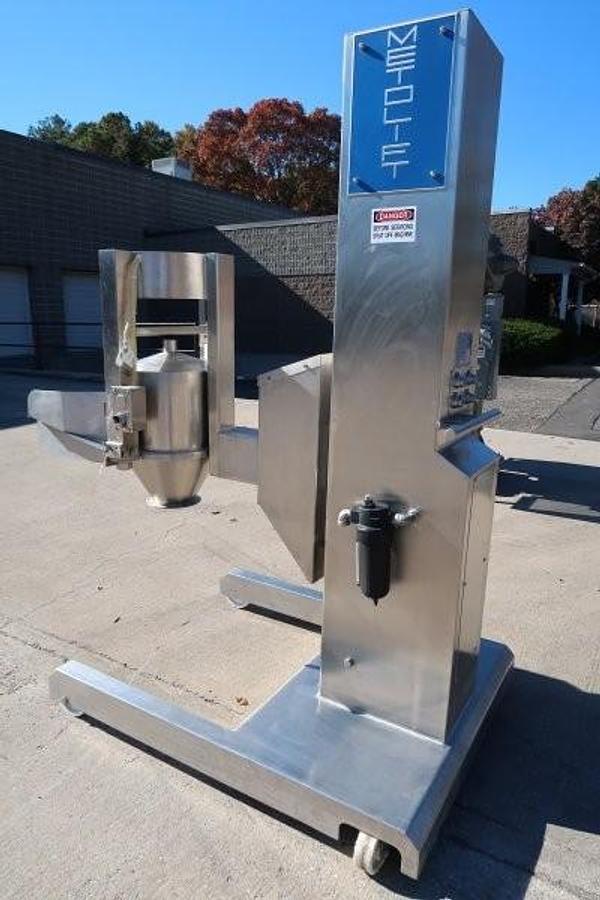
Meto produces a broad range of equipment that shows up regularly on the used market. The brand is best known for hand-held price labelers and pricing guns, but the product line extends well beyond that. Buyers can find Meto labeling systems in various configurations, bowl lifters (such as the stainless steel portable M2611-10 "Meto Lift" bowl lifter), tagging equipment, and label applicators suited to retail, food service, and warehouse environments. Model availability shifts constantly depending on what facilities are decommissioning or upgrading, so checking with used equipment dealers periodically is the best way to find a specific configuration.
When shopping for used Meto equipment, it helps to know the specific model series you need, since Meto has produced many generations of labelers with different label widths, line configurations, and feed mechanisms. Dealers who specialize in food processing or retail equipment tend to carry a more focused selection. Listings will typically include the model number, a description of the machine's condition, and photos, so buyers can cross-reference the specs against their production or labeling requirements before reaching out for an inspection.
What is the Meto M2611-10 bowl lifter used for?
The Meto M2611-10, marketed under the name "Meto Lift," is a portable stainless steel bowl lifter designed to mechanically raise and tilt heavy mixing bowls, reducing the manual effort required to transfer contents from large commercial mixers. Equipment like this is common in commercial bakeries, food processing facilities, and large-scale catering operations where workers routinely handle bowls that would otherwise require significant physical effort to empty or reposition. The stainless steel construction makes it suitable for food-contact environments where sanitation standards are strict.
Portable bowl lifters in this category are valued because they can be moved between workstations rather than being fixed to a single mixer. This flexibility is particularly useful in production environments where floor space is shared or where multiple mixer sizes are in use. Buyers considering a used Meto M2611-10 should confirm the bowl diameter and weight capacity against their own mixer specifications, and arrange an inspection to verify the lift mechanism, frame integrity, and any hydraulic or mechanical components are in proper working order before purchase.
What should buyers know about purchasing used Meto equipment instead of buying new?
Buying used Meto equipment can offer meaningful cost savings compared to purchasing current production models, which makes it an attractive option for businesses that need reliable labeling or processing equipment without the capital outlay of buying new. Used machines from established brands like Meto are particularly appealing because the brand has a long track record of durability in high-volume environments, meaning well-maintained used units can still deliver years of productive service. That said, the condition of any used machine varies depending on how it was used, how well it was maintained, and how long it sat idle before being listed for sale.
The most important step when buying used equipment is a thorough inspection. Reputable used equipment dealers will typically accommodate in-person visits, virtual walkthroughs, or video captures of the machine so buyers can assess its current condition accurately. Some machines may still be in active production at a facility, while others will have been decommissioned. Either way, buyers should ask detailed questions about operating hours, any known repairs or modifications, and the availability of replacement parts for that specific model. Consulting the manufacturer directly about parts and service support for older Meto models is also a smart step before committing to a purchase.
Does used Meto equipment come with a warranty?
Used equipment is generally sold on an as-is basis, which is standard practice across the used machinery industry. Warranties are typically only offered by original manufacturers on equipment sold through authorized channels, and that coverage does not transfer to subsequent buyers in most cases. This means the responsibility for evaluating the condition of the machine falls squarely on the buyer, which is why inspection is so critical before any purchase is finalized.
To protect themselves, buyers should focus on selecting dealers with a long track record in their specific equipment category, since experienced dealers are more likely to represent the condition of machines accurately and facilitate thorough inspections. Buyers should also contact Meto or its authorized service network to understand what level of support, parts availability, and technical documentation exists for the specific model they are considering. Older or discontinued models may have limited manufacturer support, while more recent models may still have active parts programs. Getting clarity on this before purchase helps avoid situations where a machine is operational but difficult or expensive to maintain.
Are replacement parts and consumables easy to find for used Meto equipment?
Meto has built a strong reputation in the labeling equipment market over many decades, and one benefit of that longevity is that consumables like compatible labels and ink rollers are widely available from multiple suppliers. Third-party manufacturers produce Meto-compatible label rolls and ink rollers for many of the most common model series, which helps keep ongoing operational costs manageable and reduces dependency on a single supply source. For businesses running high-volume labeling operations, this availability of consumables is a practical advantage.
Replacement mechanical parts are a different consideration and depend heavily on the specific model and its age. For widely used models, parts may be available through the manufacturer, authorized service centers, or third-party parts suppliers. For older or less common models, sourcing parts can be more challenging. Before purchasing a used Meto machine, it is worth contacting the manufacturer or a qualified service technician to confirm what parts are still available and what the typical failure points are for that model. This due diligence can save significant time and expense down the road if a repair becomes necessary.
What industries use Meto equipment most often?
Meto equipment has historically been most closely associated with retail environments, particularly supermarkets, grocery stores, and general merchandise retailers where price labeling at high volume is a daily operational requirement. The brand's hand-held labelers became widely adopted in these settings because of their durability and the ergonomic design that reduces operator fatigue during extended use. Warehouses and distribution centers also rely on Meto labeling tools for inventory management and shelf-price compliance.
Beyond retail labeling, Meto produces or has produced equipment used in food processing and commercial kitchen environments, as illustrated by products like the M2611-10 bowl lifter, which is designed for commercial bakeries and food production facilities. This broader footprint means used Meto equipment turns up across a range of industries. Buyers from food service, manufacturing, and logistics backgrounds may all find relevant Meto models on the used market, though the specific application requirements, such as label format, throughput speed, or load capacity, should always be matched carefully to the machine's documented specifications.
How do I determine which used Meto model is right for my operation?
Matching a used Meto machine to your specific needs starts with clearly defining your requirements before you begin searching. For labeling equipment, the key variables are label size and format, the number of lines of print, print resolution, and daily volume. Meto has produced labelers across a wide range of these specifications, so knowing your label dimensions and whether you need one-line, two-line, or multi-line printing will immediately narrow the field. For processing equipment like bowl lifters, the relevant specs are bowl diameter, maximum load capacity, and whether portability is required.
Once you have a shortlist of models that meet your technical requirements, the next step is assessing condition. Ask the dealer for detailed photos, a video walkthrough, or arrange an in-person inspection. If the machine is still in production at a facility, it may be possible to observe it operating under real conditions, though dealers typically cannot test actual product runs themselves due to permitting requirements. Cross-referencing the model number with manufacturer documentation and speaking with a qualified technician who is familiar with Meto equipment can help you evaluate whether the asking price reflects the machine's actual condition and remaining useful life.
What should buyers expect when it comes to shipping used Meto equipment?
Shipping costs for used Meto equipment vary based on the size and weight of the machine, the origin and destination, and the level of packaging or crating required to protect the equipment in transit. Smaller items like hand-held labelers are relatively straightforward to package and ship. Larger pieces of equipment, such as bowl lifters or industrial labeling systems, may require custom crating, pallet mounting, and in some cases specialized rigging for loading and unloading at both ends of the shipment. These rigging costs are separate from freight charges and should be factored into the total landed cost before agreeing to a purchase price.
Buyers should ask the dealer to provide a detailed breakdown of all shipping-related costs upfront, including packaging, crating, freight, and any destination rigging fees. This prevents surprises after the purchase is completed. For heavier equipment, it is also worth confirming whether the receiving facility has the appropriate loading dock equipment or forklift capacity to accept the shipment safely. Dealers experienced in shipping industrial equipment can usually advise on the logistics requirements and may be able to recommend freight carriers with experience handling machinery.
What are typical payment terms for purchasing used Meto equipment?
The standard practice among used equipment dealers is to require full payment before the machine is released for shipping. This applies to most transactions, particularly for first-time buyers with no established purchasing history with a given dealer. Some dealers extend payment terms or partial payment arrangements to repeat customers or in situations involving larger, more complex transactions, but this is at the dealer's discretion and not the norm for one-off purchases.
Buyers should clarify payment terms, accepted payment methods, and any deposit requirements before an inspection is scheduled or a purchase agreement is signed. Understanding the full payment timeline relative to the shipping and delivery schedule is also important, since there is often a gap between when payment clears and when the equipment is packaged, loaded, and in transit. Getting these details in writing as part of the purchase agreement protects both parties and ensures there are no misunderstandings about when the equipment will be released.
How should buyers inspect used Meto equipment before purchasing?
Inspection is one of the most important steps in any used equipment purchase, and reputable dealers will accommodate several formats depending on the buyer's location and the nature of the equipment. In-person inspections allow buyers or their technicians to physically examine the machine, check for wear, test mechanical functions, and assess the overall condition firsthand. Virtual inspections conducted via video call are a practical alternative for buyers who cannot travel to the equipment's location, and many dealers can also provide detailed video recordings that document the machine's condition and any operational demonstrations.
For Meto equipment specifically, an inspection should cover the mechanical components relevant to the machine type. On labeling equipment, this includes the feed mechanism, print head condition, and any drive components. On equipment like bowl lifters, it means checking the lift mechanism, frame welds, hydraulic or pneumatic systems, and any safety features. Keep in mind that dealers generally cannot run full production tests, since operating production equipment requires permitting and facility resources that a typical equipment dealer does not maintain. The goal of the inspection is to get an honest, accurate picture of the machine's current state so the buyer can make a well-informed decision.