Category
Manufacturer
Model
Merrill
Merrill manufactures a variety of machinery for the food and beverage industries, known for their processing and packaging equipment. Their solutions are designed to maximize efficiency and maintain high quality.
FAQ:
What types of food processing equipment does Merrill manufacture?
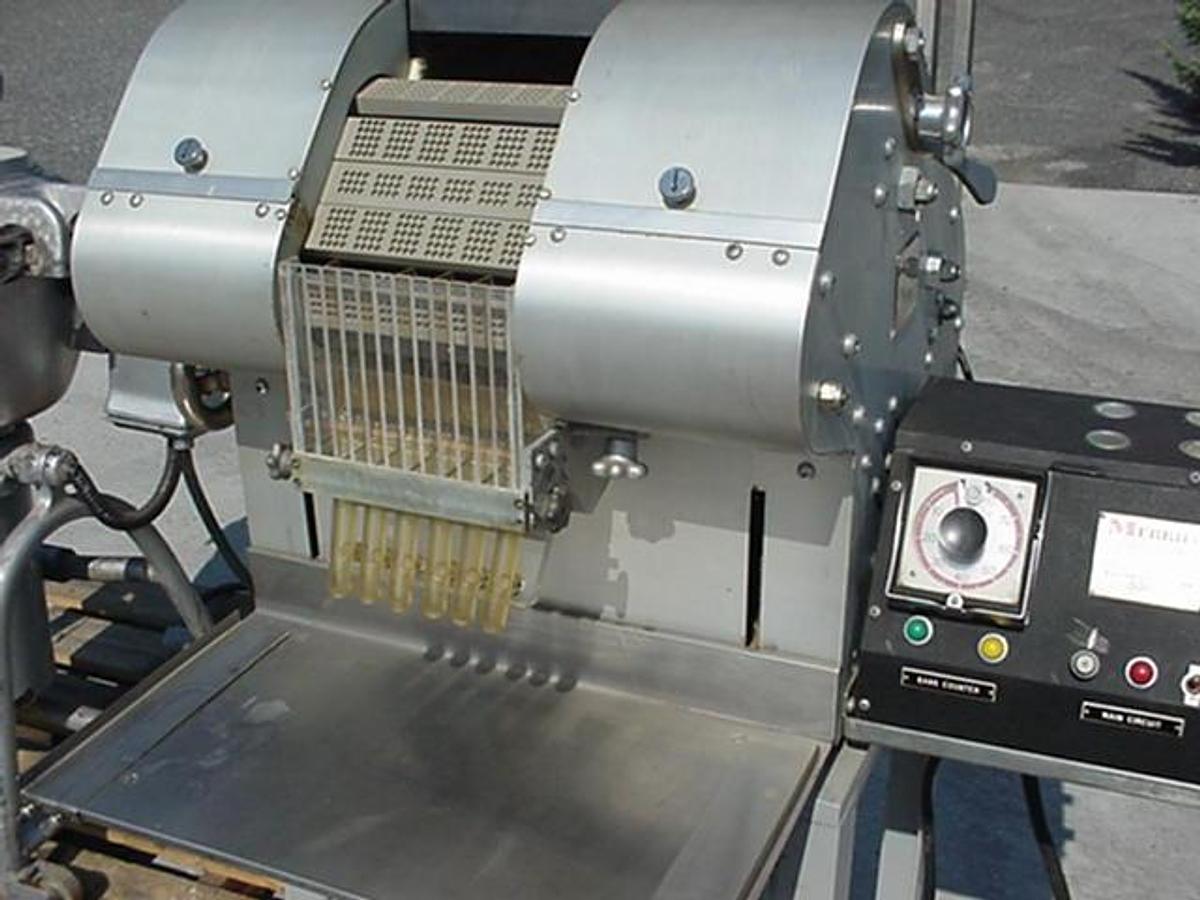
Merrill produces a range of machinery used across the food and beverage industries, with a focus on processing and packaging applications. The brand is commonly associated with slicing, dicing, portioning, and counting equipment used in commercial and industrial food production environments. One example that surfaces frequently in the used equipment market is the Merrill 30-6th Lab Scale Slat Counter, which reflects the brand's presence in both production-scale and lab-scale applications.
Buyers sourcing Merrill equipment typically encounter machines designed to maximize throughput efficiency while maintaining consistent product quality. The equipment tends to be built for demanding production environments, which is part of why the brand retains value in the secondary market. Anyone researching Merrill machinery should look closely at the specific model's capacity and throughput specifications, such as units per hour or batch size, since these vary considerably across the product line and directly affect whether a given machine fits the intended application.
Is used Merrill food processing equipment a reliable option for commercial buyers?
Used Merrill food processing equipment can be a practical and cost-effective choice for commercial buyers, provided they approach the purchase carefully. Merrill machines are generally built with durability in mind, using stainless steel components and construction suited to demanding food production environments. That build quality means well-maintained units often retain solid working condition even after years of service, which is why they continue to trade actively in the secondary market.
The key to a successful purchase is thorough due diligence before committing. Since used equipment is sold as-is, buyers carry the responsibility of assessing condition. Reputable used equipment dealers will typically accommodate in-person or video inspections so buyers can evaluate the machine's current working order. It also helps to consult directly with Merrill or authorized service contacts to understand parts availability and support options for the specific model and age of the machine being considered, since older models may have more limited service networks than more recent ones.
What should buyers inspect before purchasing used Merrill food processing equipment?
Before purchasing any used food processing machine, buyers should request a thorough inspection that covers both mechanical condition and food-contact surfaces. For Merrill equipment specifically, that means examining wear on cutting, slicing, or portioning components, checking the condition of seals and gaskets, and confirming that all drive mechanisms and controls function as expected. Stainless steel frames and panels should be inspected for corrosion, dents, or repairs that could affect sanitation or structural integrity.
Dealers handling used Merrill equipment will generally offer in-person inspections, virtual walkthroughs, or video documentation of the machine in its current state. Some equipment may still be installed at an active production facility, where an inspection can be arranged on-site. Keep in mind that most used equipment dealers do not have the production permitting required to run actual food product through a machine during a demonstration, so buyers should factor that limitation into their assessment process. Consulting Merrill directly about the model in question can also help buyers understand what wear patterns are typical and what service history to look for.
What food safety certifications should buyers look for on Merrill food processing equipment?
Food safety compliance is a top priority for any commercial or industrial food processing operation, and buyers evaluating Merrill equipment should verify which certifications apply to the specific model they are considering. Common certifications relevant to food processing machinery include NSF (National Sanitation Foundation), USDA acceptance for direct food-contact applications, and CE marking for equipment destined for European markets. These certifications indicate that a machine was designed and tested to meet defined standards for hygiene, cleanability, and food-contact material safety.
For used equipment, buyers should request documentation or verify certification details with the manufacturer directly, since compliance status can depend on the model year and any modifications made during the machine's service life. Merrill's product line spans multiple applications across the food and beverage industry, so certification specifics can differ between models. Confirming compliance requirements with the relevant regulatory body for the buyer's specific production category is always a sound step before finalizing any equipment purchase.
How difficult is it to clean and maintain Merrill food processing equipment?
Merrill food processing equipment is generally designed with commercial sanitation requirements in mind. Machines built for food production environments typically feature stainless steel construction, smooth surfaces, and tool-accessible components that allow for thorough cleaning between production runs. The ease of sanitation is one of the primary reasons stainless steel is standard in this category of equipment, as it resists corrosion, tolerates chemical sanitizers, and does not harbor bacteria the way porous materials can.
For used Merrill machines, the maintenance picture depends significantly on how well the equipment was serviced during its prior life. Buyers should ask about the machine's maintenance history and look for signs of proper upkeep during inspection. Sourcing a service manual for the specific Merrill model is advisable before purchase, as it will outline recommended cleaning procedures, lubrication schedules, and wear parts that need periodic replacement. Contacting Merrill directly can help buyers understand parts availability for the model in question, which is an important factor in estimating ongoing maintenance costs and keeping the machine in reliable working order.
Are replacement parts available for used Merrill food processing machines?
Parts availability is one of the most important factors buyers should investigate before purchasing any used food processing equipment, and Merrill machines are no exception. The availability of replacement components depends heavily on the model and its age. More recent models in an active product line tend to have better parts support, while older or discontinued models may require sourcing components through third-party suppliers or fabricators.
The recommended approach is to contact Merrill directly before completing a purchase to ask specifically about parts support for the model being considered. A reputable used equipment dealer should also be able to provide the machine's model number and serial number in advance so buyers can do this research. Understanding lead times and costs for commonly replaced wear parts, such as blades, belts, seals, and drive components, helps buyers make an informed assessment of the total cost of ownership rather than focusing solely on the purchase price.
What is the typical price range for used Merrill food processing equipment?
Pricing for used Merrill food processing equipment varies considerably depending on the type of machine, its age, condition, and the complexity of the application it was built for. Lab-scale or smaller-format machines such as counters and portioning units tend to be priced lower than full production-line slicing or packaging systems. Buyers can generally expect used equipment pricing to reflect a meaningful discount compared to buying the equivalent machine through a manufacturer's channel, which is one of the primary reasons the secondary market exists.
Condition plays a major role in determining price. Machines that have been recently serviced, have lower hours, or come with documented maintenance histories typically command higher prices than units sold strictly as-is with no service records. Buyers should also account for costs beyond the purchase price, including shipping, rigging, installation, and any reconditioning work needed before the machine enters production. Getting a clear picture of the total landed cost, not just the sticker price, is essential to comparing options accurately.
What are the typical shipping and rigging considerations for used Merrill food processing equipment?
Shipping used food processing equipment requires more planning than standard freight, and buyers should discuss packaging and logistics details with the dealer before finalizing a purchase. Smaller machines are typically palletized and shrink-wrapped, while larger or heavier units may require custom crating to prevent damage in transit. The level of packaging directly affects freight cost, so buyers should ask specifically what packaging will be used and whether crating is included in the quoted price or billed separately.
Larger Merrill machines may also require professional rigging for loading and unloading, which adds to the overall cost. Rigging involves specialized equipment and trained personnel to safely move heavy machinery, and it is not something that can be skipped without risking damage to the machine or injury on site. Buyers should request a complete breakdown of packaging, rigging, and freight charges from the dealer so they can calculate the true landed cost of the equipment before committing to the purchase.
What payment terms do used food processing equipment dealers typically require?
Most used equipment dealers require full payment before a machine is released for shipping. This is standard practice in the secondary equipment market and reflects the fact that used machinery, unlike retail goods, is typically a one-of-a-kind transaction where the seller needs to confirm cleared funds before arranging logistics. Buyers purchasing for the first time from a given dealer should expect to pay in full upfront.
Some dealers may offer extended terms to established customers with a prior purchase history, but this is not the norm for first-time transactions. Payment is commonly accepted by wire transfer, and buyers should confirm accepted payment methods with the dealer early in the process. It is also worth clarifying exactly when title transfers and when the machine will be available for pickup or shipping once payment clears, so there are no delays in getting equipment into production.
Is Merrill food processing equipment suitable for smaller food production operations?
Merrill's product line includes equipment at multiple scales, which makes it relevant to a range of operation sizes. The Merrill 30-6th Lab Scale Slat Counter, for example, is specifically designed for lab-scale use, indicating that the brand produces machinery suited to smaller batch environments and product development settings, not only high-volume production lines. Buyers running smaller operations should look closely at capacity specifications, including units per hour and batch size, to confirm a given machine fits their throughput needs.
For smaller food businesses, the used equipment market can be especially practical since it makes machines that might otherwise be out of budget more financially accessible. The trade-off is that buyers take on more responsibility for assessing condition and planning for maintenance. Choosing a dealer with deep experience in food processing equipment, and one willing to provide thorough inspection access and honest condition reporting, helps smaller buyers make confident decisions without the safety net of a manufacturer purchase process.