Category
Manufacturer
Model
FAQ:
What is a Mastermatic Pitco fryer and what makes it different from a standard Pitco fryer?
The Mastermatic designation refers to a specific line of Pitco commercial fryers that include a built-in automatic oil filtration system. On a standard Pitco fryer, operators must manually drain and filter the cooking oil, which involves handling extremely hot oil and takes the fryer out of service during the process. The Mastermatic line eliminates that manual step by integrating a filtration pump and filter system directly into the unit, allowing staff to filter oil at the push of a button with far less exposure to hot oil and far less downtime.
This distinction matters a great deal in high-volume foodservice operations like quick-service restaurants, cafeterias, and food production facilities where fryers run for extended hours and oil quality directly affects food quality. The automatic filtration capability is not just a convenience feature; it plays a real role in extending fry oil life, which is one of the more significant ongoing costs in a commercial kitchen. Pitco is a long-established commercial fryer brand with a strong presence in the foodservice industry, and the Mastermatic line represents some of their most operationally efficient equipment.
What models are available in the Mastermatic Pitco fryer line?
Common Mastermatic models include the SG14-M, SG18-M, SG35M, and SG45M, among others. The number in the model name typically corresponds to the oil capacity of the fryer expressed in pounds of shortening. So an SG18-M holds approximately 18 pounds of shortening, while an SG45M holds around 45 pounds. This makes it relatively straightforward to compare models based on production volume requirements.
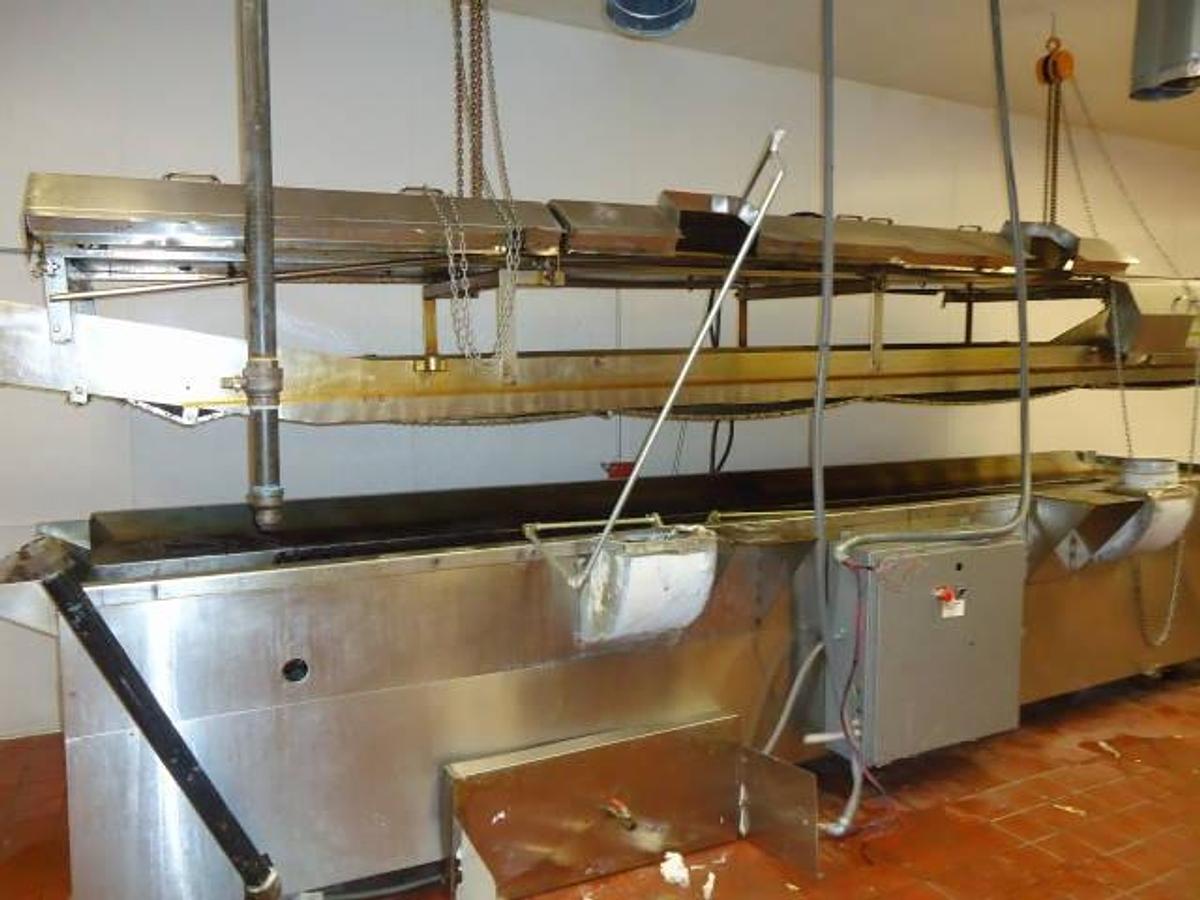
The SG35M and SG45M are generally considered high-capacity units suited for large-scale operations, while the SG14-M and SG18-M serve smaller or medium-volume kitchens. Pitco also produced continuous belt fryer configurations under the Mastermatic or related product lines, which are designed for continuous-flow food production rather than batch frying. These are commonly found in food processing and large institutional settings. When shopping for a used Mastermatic fryer, understanding the model number helps buyers quickly gauge whether a particular unit fits their production needs before diving into the full specifications.
Are Mastermatic Pitco fryers available in gas or electric configurations?
Mastermatic Pitco fryers are primarily available in gas configurations, with models designed to run on either natural gas or liquid propane (LP). BTU ratings across the Mastermatic line typically range from approximately 80,000 BTU on smaller models up to 150,000 BTU or more on larger, high-capacity units. Gas-fired fryers are the dominant choice in commercial foodservice for their fast recovery times and lower energy costs compared to electric alternatives in most utility markets.
Some Pitco fryer models in the broader product line are available in electric configurations, but the Mastermatic automatic filtration series is most commonly associated with gas-fired units. Buyers sourcing used Mastermatic fryers should confirm whether a specific unit is set up for natural gas or propane, as conversion kits are sometimes available but require proper installation by a qualified technician. Checking the data plate on the fryer and consulting the manufacturer's documentation for that model is the most reliable way to verify fuel type and BTU rating before purchase.
How does the automatic filtration system on a Mastermatic Pitco fryer work?
The automatic filtration system on a Mastermatic fryer works by drawing hot oil from the fry vat through a built-in filter and pump assembly, removing food particles and carbon deposits, and then returning the cleaned oil back to the vat. The process is initiated by the operator through a control switch rather than requiring manual draining into a separate filter pot. This keeps the oil contained within the unit throughout the filtration cycle, which significantly reduces the risk of burns from handling hot oil and shortens the time the fryer is out of service.
Regular filtration, ideally performed multiple times per day during heavy use, is one of the most effective ways to extend fry oil life. Industry data suggests that consistent oil filtration can extend oil life by up to 50%, which translates directly into lower oil purchasing costs over time. For operations that go through significant volumes of frying oil, this savings can be substantial across a year of operation. On used Mastermatic units, buyers should pay close attention to the condition of the filtration components, including the filter pan, pump, and associated plumbing, since these parts see regular use and wear.
What should buyers inspect when considering a used Mastermatic Pitco fryer?
Inspecting a used Mastermatic Pitco fryer requires looking at several systems, not just the fry vat itself. The burner assembly, heat exchanger tubes (on gas models), thermostat, high-limit safety controls, and the automatic filtration pump and plumbing all need to be evaluated. Corrosion inside the vat, damage to the drain valve, and the condition of the filter pan and media are particularly important since these components are central to the Mastermatic's core function. Reputable used equipment dealers will typically accommodate in-person inspections or provide detailed video walkthroughs of the machine so buyers can assess condition before committing.
It's also worth contacting Pitco directly to ask about parts and service support for the specific model and age of the unit being considered. Older models may have limited parts availability, which can affect long-term serviceability. Most used equipment dealers sell machinery as-is, so the burden of inspection falls on the buyer. Choosing a dealer with a long track record in commercial foodservice equipment and a willingness to facilitate thorough inspections is one of the most important steps a buyer can take to reduce risk on a used fryer purchase.
What is the typical oil capacity of Mastermatic Pitco fryer models?
Oil capacity on Mastermatic Pitco fryers varies by model and is most commonly expressed in pounds of shortening rather than liquid volume. Smaller models like the SG14-M hold around 14 pounds of shortening, while mid-range models such as the SG18-M hold approximately 18 pounds. Larger units like the SG35M and SG45M hold 35 and 45 pounds respectively, making them suitable for high-throughput operations that need to maintain consistent frying temperatures under heavy load.
Capacity directly affects recovery time, meaning how quickly the oil returns to the set frying temperature after food is dropped in. Larger oil volumes tend to recover faster because there is more thermal mass in the vat. For operations frying large quantities of product continuously, this matters considerably for output consistency and food quality. When evaluating a used Mastermatic fryer, confirming the oil capacity of the specific model and matching it to the production volume requirements of the operation is a practical first step before looking at other specifications.
What types of foodservice operations typically use Mastermatic Pitco fryers?
Mastermatic Pitco fryers are built for high-volume, commercial-grade frying and are commonly found in quick-service restaurant chains, cafeterias, hotel kitchens, stadium concession operations, and institutional food production facilities. The automatic filtration feature makes them especially practical for operations where fryers run for many consecutive hours and oil management would otherwise require significant labor and safety precautions. Continuous belt fryer configurations within the Pitco lineup are used in food processing environments where product moves through the fryer on a conveyor rather than being batch-fried in a basket.
The durability and relatively straightforward serviceability of Pitco equipment has made these fryers a long-standing choice in commercial kitchens, which is part of why they appear frequently on the used equipment market. When a restaurant chain or food production facility upgrades its equipment or closes a location, Mastermatic fryers often become available through used equipment dealers. For buyers who need proven, high-capacity frying equipment without the cost of purchasing new, sourcing a used Mastermatic unit from a reputable dealer can be a practical and cost-effective approach.
What is the price range for used Mastermatic Pitco fryers?
Pricing on used Mastermatic Pitco fryers varies considerably based on model, capacity, age, and overall condition. Smaller models in working condition can be found at lower price points, while large-capacity units like the SG45M or continuous belt fryer configurations typically command higher prices due to their greater output and the complexity of the equipment. The presence of a functioning automatic filtration system in good condition can also affect price, since that component adds meaningful operational value.
Buyers should factor in more than just the purchase price when budgeting for a used fryer. Shipping costs, rigging for loading and unloading, any required reconditioning, and installation all contribute to the total landed cost. Getting a clear picture of those additional expenses before finalizing a purchase helps avoid surprises. Dealers who specialize in commercial foodservice equipment are generally better positioned to provide accurate freight and rigging estimates than general industrial machinery dealers, and they tend to have more relevant knowledge about the specific models they are selling.
What are the shipping and logistics considerations for buying a used Mastermatic Pitco fryer?
Commercial fryers are heavy, bulky pieces of equipment, and shipping them requires more planning than standard freight. Proper palletization or crating is essential to prevent damage in transit, and the level of packaging required will affect shipping costs. Larger or heavier Mastermatic models, particularly continuous belt fryer configurations, may require specialized rigging equipment for loading at the seller's facility and unloading at the destination. These rigging costs are typically separate from freight charges and should be confirmed with the dealer before purchase.
Buyers should ask the dealer for a detailed breakdown of all costs involved in getting the fryer from its current location to the installation site, including packaging, freight, and any rigging fees. This gives a clear picture of the total landed cost rather than just the equipment price. Most used equipment dealers require full payment prior to shipping, so understanding all costs upfront is important. If the fryer is still installed at a production facility, the dealer can often arrange an in-person inspection at that location before the equipment is decommissioned and prepared for shipment.
How can buyers verify the condition of a used Mastermatic Pitco fryer before purchasing?
Reputable used equipment dealers will typically offer buyers the option to inspect machinery in person, via live video call, or through detailed video recordings of the equipment. For a Mastermatic Pitco fryer, a thorough inspection should cover the condition of the fry vat, burner or heating elements, thermostat and safety controls, drain valve, and the automatic filtration pump and associated plumbing. Visible corrosion, damaged welds, or signs of heavy buildup inside the vat are all things to look for. If the fryer is still installed at a food production facility, it may be possible to observe it in operation, though actual product testing is generally not something equipment dealers can accommodate due to permitting requirements.
Beyond the visual and operational inspection, buyers should research parts availability for the specific model by contacting Pitco directly. The age of the unit and whether it falls within a supported product generation can affect how easy and affordable it will be to source replacement parts down the line. Selecting a dealer who specializes in commercial foodservice equipment, rather than a general industrial reseller, tends to result in more accurate condition assessments and more useful guidance on a specific model's serviceability and history.