Category
Manufacturer
Model
Marlen
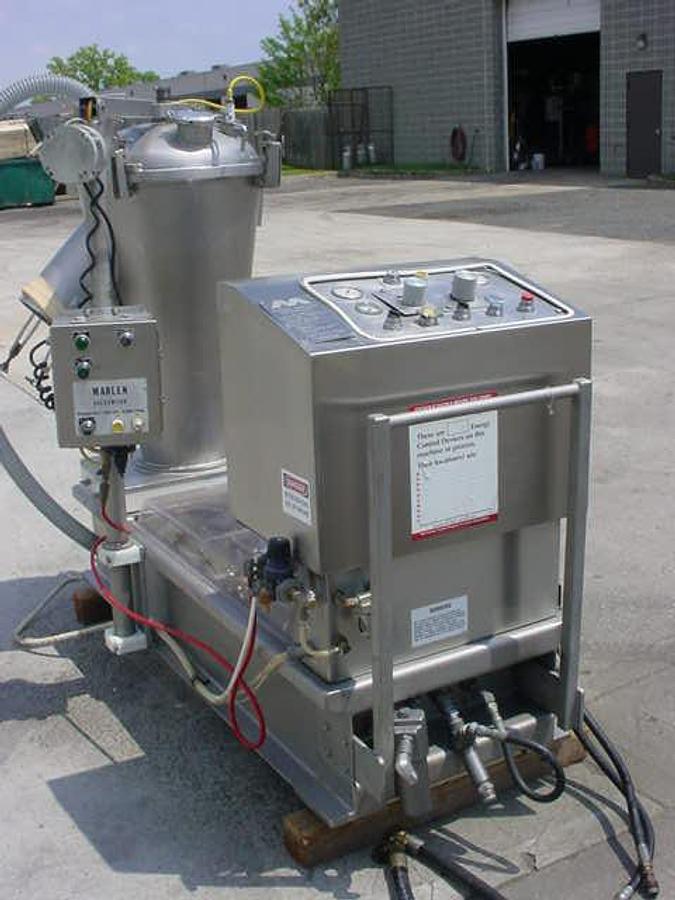
Marlen is recognized for its food processing equipment, particularly in the meat and poultry industries. They offer solutions for grinding, mixing, and forming, which are essential for producing high-quality meat products.
FAQ:
What types of Marlen food processing equipment are commonly available on the used market?
Marlen International produces a wide range of food processing machinery, and many of these machines circulate regularly on the secondary market due to the brand's long operational lifespan and strong resale value. The most frequently available used Marlen equipment includes vacuum stuffers, twin-head vacuumizers, portion cutters, forming systems, grinders, mixers, and continuous cooking and oven systems. A specific example of equipment that surfaces in used inventories is the Marlen 670 Twin Head Vacuumizer/Stuffer, which is a well-regarded machine in meat and poultry processing operations.
Marlen's product lineup has historically served high-volume commercial and industrial food production environments, so the machines available on the used market tend to be built for heavy-duty, continuous-use applications. Buyers looking for stuffing and forming equipment in particular will find Marlen to be one of the more consistently available brands in the used food processing space. The variety of machine types means that processors working across different stages of production, from raw material handling through to finished product forming, can often source multiple pieces of Marlen equipment from the secondary market.
What industries and food products is Marlen equipment best suited for?
Marlen equipment is most closely associated with meat and poultry processing, where it has built a strong reputation over decades of use in commercial and industrial facilities. Its stuffers, vacuum stuffers, and forming systems are particularly well-suited for sausage production, whole muscle products, deli meats, and formed patties. Beyond traditional meat applications, Marlen machinery is also used in seafood processing and, more recently, in the production of alternative proteins and plant-based products, which have increasingly adopted the same forming and portioning technology originally developed for conventional meat processing.
The equipment is generally designed for mid-to-large scale production environments where throughput, consistency, and food safety compliance are priorities. Marlen machines are built with stainless steel construction and, on many models, tool-free disassembly features that support sanitation requirements in regulated food production facilities. This makes them practical for operations that must meet USDA, FDA, or other food safety standards. Smaller artisan producers occasionally source used Marlen equipment as well, since buying on the secondary market can make otherwise cost-prohibitive machinery accessible to operations with tighter capital budgets.
Why do buyers choose used Marlen equipment over purchasing from other brands?
Marlen has a well-established reputation for building durable, long-lasting food processing machinery, and that durability is a major reason buyers seek out used Marlen equipment specifically. Because the machines are engineered for continuous industrial use, they tend to retain functional value well into their operational life. A used Marlen stuffer or forming system that has been properly maintained can still perform reliably for many additional years, which makes the secondary market a legitimate sourcing option rather than a compromise.
From a practical standpoint, used Marlen equipment often represents significant cost savings compared to comparable machinery from other sources, while still delivering the performance characteristics the brand is known for. Buyers in the meat, poultry, and seafood industries who are already familiar with Marlen's design standards, sanitation features, and parts ecosystem often prefer to stay within the brand when expanding capacity or replacing aging equipment. The stainless steel construction and food-grade design principles that Marlen applies across its product lines also mean that even older machines can often be brought back to production-ready condition with proper inspection and servicing.
How does buying used Marlen equipment affect pricing compared to other options?
Used Marlen food processing equipment is typically priced at a fraction of what comparable machinery would cost through other channels, though the exact price varies considerably based on the machine type, model, age, condition, and the complexity of features involved. Simpler machines like basic stuffers may be available at lower price points, while more complex systems such as twin-head vacuumizers, continuous cooking systems, or multi-component forming lines will command higher prices even on the secondary market, given their original manufacturing cost and the level of engineering involved.
It's worth approaching used equipment pricing with a clear picture of total landed cost, not just the listed machine price. Rigging, crating, freight, and any reconditioning or parts costs after delivery all factor into the real investment. Buyers should ask dealers specifically about packaging and shipping costs upfront, since larger Marlen machines may require specialized rigging for loading and unloading, which adds to the overall expense. Getting a full breakdown of costs before committing to a purchase helps avoid surprises and allows for a more accurate comparison against other sourcing options.
Does used Marlen food processing equipment come with a warranty?
Used food processing equipment, including Marlen machinery, is generally sold on an as-is basis by secondary market dealers. Warranties are typically only offered by original manufacturers on new equipment, and used equipment dealers do not usually extend warranty coverage. This places the responsibility of due diligence squarely on the buyer, which makes selecting a reputable dealer with a long track record in food processing equipment an important part of the purchasing decision.
Buyers should take advantage of inspection opportunities before committing to a purchase, whether that means an in-person visit, a virtual walkthrough, or reviewing video documentation of the machine's current condition. It's also advisable to contact Marlen directly to understand what level of technical support, parts availability, and service documentation can be expected for a specific model and age of equipment. Older or discontinued models may have more limited manufacturer support, while more recent machines are more likely to have accessible parts and service resources. Doing this research before buying reduces the risk that comes with purchasing equipment without warranty protection.
What should buyers look for when inspecting used Marlen equipment before purchasing?
A thorough inspection of used Marlen food processing equipment should cover both the mechanical condition of the machine and its compliance-related features. On the mechanical side, buyers should examine the condition of wear parts such as seals, blades, stuffing horns, and drive components, since these are the areas most likely to show the effects of heavy use. Stainless steel surfaces should be checked for corrosion, dents, or welds that may have been done to repair damage. Electrical panels, motors, and control systems should also be reviewed, particularly on machines with more sophisticated automation or portioning controls.
From a food safety standpoint, Marlen equipment is generally designed with sanitation in mind, but buyers should verify that disassembly features are still functional and that no modifications have been made that could compromise cleanability. If the machine is still in production at a facility, an in-person inspection can sometimes be arranged through the dealer, which gives buyers the opportunity to see the equipment running under actual production conditions. Keep in mind that most used equipment dealers are not set up to run full production tests with actual food product, since that requires different permitting and facility standards. Video documentation of the machine in operation is a reasonable alternative when a live production inspection isn't possible.
Are replacement parts and technical support available for used Marlen machines?
Parts availability for Marlen equipment depends largely on the age and model of the machine in question. Marlen International has been producing food processing equipment for decades, and for many of its product lines, parts remain available either directly through the manufacturer or through third-party suppliers who specialize in food processing machinery components. Commonly replaced items like stuffing horns, seals, blades, and certain drive parts tend to be more accessible than proprietary electronic components or specialized assemblies from older discontinued models.
Before purchasing a used Marlen machine, it's a good practice to contact Marlen directly and ask specifically about parts and service support for that model. The manufacturer can give a realistic picture of what's available, what lead times look like, and whether technical documentation such as manuals and schematics can still be obtained. This step is especially important for older equipment, where the manufacturer may have limited or no remaining support. Knowing the parts situation in advance helps buyers budget for ongoing maintenance and avoid the scenario of acquiring a machine that becomes difficult or expensive to keep running.
How does the shipping and delivery process work for used Marlen food processing equipment?
Shipping used Marlen equipment involves more logistical planning than standard freight, particularly for larger machines like vacuum stuffers, forming systems, or cooking lines. Dealers will typically handle packaging, which may range from basic palletization to full crating depending on the size and fragility of the equipment. The level of packaging required has a direct impact on shipping costs, so buyers should ask for a clear breakdown of what's included before finalizing a purchase. Heavier or more complex machines may also require specialized rigging services for both loading at the dealer's location and unloading at the buyer's facility, which are typically additional costs.
Buyers should request a full landed cost estimate from the dealer before committing, covering packaging, rigging, freight, and any applicable fees. This is especially important for international shipments or deliveries to locations that require specific unloading equipment. Lead times for shipping can vary based on the dealer's location, the destination, and the carrier used, so it's worth discussing expected timelines upfront. For large or high-value machines, buyers may also want to consider freight insurance to protect against damage in transit, since used equipment is sold as-is and transit damage would fall on the buyer to resolve.
What payment terms are typical when purchasing used Marlen food processing equipment?
Most used food processing equipment dealers require payment in full before a machine is shipped. This is standard practice in the secondary equipment market and applies to used Marlen machinery as with most other industrial food processing equipment. Some dealers may offer extended payment terms to repeat customers or buyers with an established purchasing relationship, but first-time buyers should generally plan for full upfront payment as the default expectation.
Buyers should clarify payment terms, accepted payment methods, and any deposit requirements early in the purchasing conversation, before inspections or negotiations go too far. Understanding the full payment structure alongside the total landed cost, including shipping, rigging, and packaging, gives buyers a complete picture of the financial commitment involved. For larger purchases, it may also be worth asking whether the dealer can provide any documentation or references that speak to their track record, since paying in full before shipment requires a reasonable level of trust in the dealer's reliability and transparency.
How long do Marlen food processing machines typically last, and is used equipment still a practical investment?
Marlen equipment has a well-documented reputation for durability in demanding industrial food production environments. Many machines from this manufacturer have operational lifespans measured in decades when properly maintained, which is a significant factor in why used Marlen equipment holds value on the secondary market. The stainless steel construction and food-grade engineering that Marlen applies across its product lines contributes to this longevity, as does the fact that the machines are originally designed for continuous, high-volume use rather than intermittent light-duty applications.
Whether a specific used Marlen machine represents a practical investment depends on its maintenance history, current mechanical condition, and the availability of parts for that particular model. A well-maintained machine with accessible parts and manufacturer support can deliver years of additional productive use at a cost well below what comparable equipment would require through other sourcing channels. The key is doing the upfront work: inspecting the machine thoroughly, researching parts availability, and understanding the full cost of getting it operational at the buyer's facility. Buyers who approach the purchase with that level of diligence generally find used Marlen equipment to be a sound investment for scaling or maintaining food processing capacity.