Category
Manufacturer
Model
Markem-Imaje
Markem-Imaje specializes in industrial marking and coding solutions, offering a variety of printers and labeling machines. Their equipment is essential for ensuring compliance and product identification across multiple industries.
FAQ:
What types of Markem-Imaje coding and marking equipment are available on the used market?
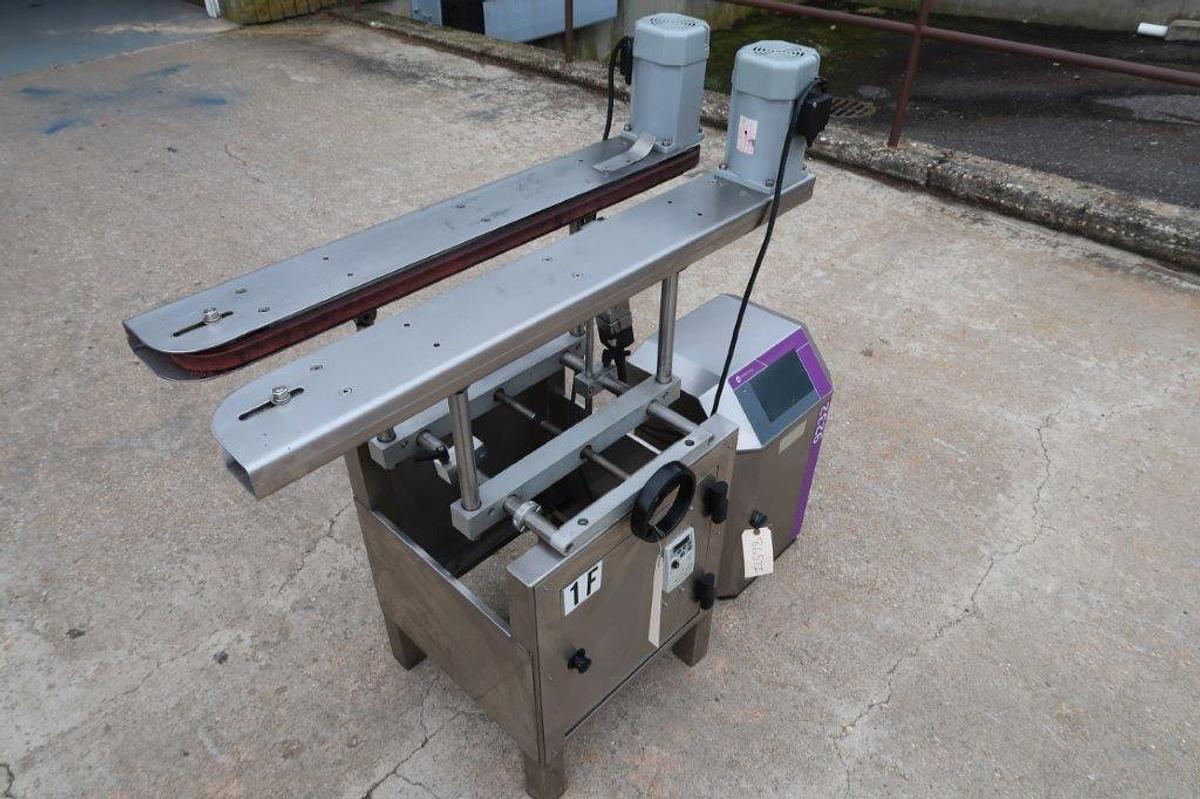
Markem-Imaje produces a broad range of industrial coding and marking equipment, and most of the major product lines turn up regularly on the used market. The 9000 Series continuous inkjet (CIJ) printers are among the most commonly traded, valued for their high-speed, non-contact printing on curved, irregular, and porous surfaces. Beyond CIJ, buyers also encounter used SmartLase laser coders, thermal inkjet systems, and integrated conveyor/coder combinations such as bottomless conveyor gap transporters fitted with Markem-Imaje coding heads. Each technology suits a different production environment, so the right choice depends on substrate type, line speed, and the type of code being applied.
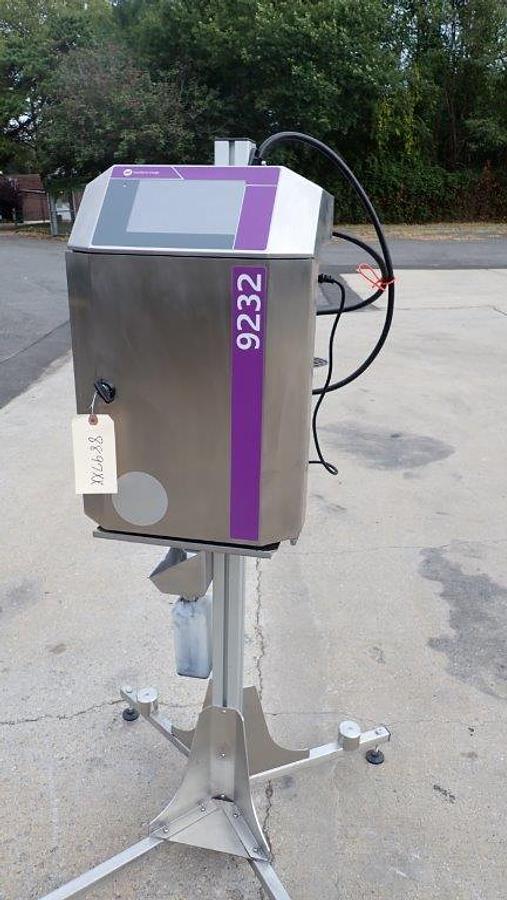
Within the CIJ category alone, models like the 9232 inkjet printer appear frequently and are well-regarded for single-phase operation on standard production lines. Laser coders are popular where solvent-free, low-maintenance marking is a priority, while thermal inkjet units are favored for smaller-format, high-resolution printing on cartons and packaging. Because Markem-Imaje has been a major supplier across food, beverage, pharmaceutical, and general manufacturing for decades, the installed base is large, which means a healthy supply of used machines continues to enter the market as facilities upgrade or consolidate.
Are used Markem-Imaje machines reliable enough for production use?
Markem-Imaje equipment has a reputation for durability in demanding industrial environments, which is a big part of why used units retain their appeal. The 9000 Series CIJ printers, for example, are built for continuous operation and are found running in facilities that produce millions of codes per shift. That underlying build quality means a well-maintained used machine can still deliver solid performance, provided the buyer takes the time to verify its condition before purchasing. Key things to assess include the printhead condition, ink system integrity, hours of operation if that data is available, and whether the unit has had regular solvent flushes and filter changes as the manufacturer recommends.
That said, used equipment is sold as-is, so the burden of inspection falls entirely on the buyer. Reputable used equipment dealers will typically offer in-person inspections, video walkthroughs, or photo documentation of the machine's current state. Some units may still be in active production at a facility, which allows a buyer to observe the machine running under real conditions. It is also worth contacting Markem-Imaje directly to ask about parts availability and service support for the specific model and age of machine being considered, since older models may have limited parts supply or reduced factory support.
What is the typical price range for used Markem-Imaje inkjet printers and coders?
Pricing for used Markem-Imaje equipment varies considerably depending on the technology type, model, age, and overall condition of the machine. Entry-level used CIJ printers from older model generations can be found for a few thousand dollars, while later-model 9000 Series units in good working condition often command significantly more. Integrated systems, such as a conveyor line fitted with a Markem-Imaje coder, will naturally carry a higher price than a standalone printer because of the additional mechanical components involved. Laser coding systems tend to sit at the higher end of the used price spectrum given their more complex optics and electronics.
Beyond the purchase price, buyers should factor in the total landed cost of the equipment. Shipping, rigging, and crating charges can add meaningfully to the final number, particularly for heavier or larger integrated systems that require specialized loading equipment. Consumables are another ongoing cost consideration. Markem-Imaje CIJ systems use proprietary inks, solvents, and make-up fluids, and those recurring costs should be calculated as part of the total cost of ownership. Getting a clear picture of consumable pricing before committing to a purchase helps avoid surprises once the machine is in production.
What industries use Markem-Imaje coding and marking equipment?
Markem-Imaje equipment is used across a wide range of industries where product identification, traceability, and regulatory compliance are essential. Food and beverage manufacturing is one of the largest application areas, where CIJ and laser coders print date codes, lot numbers, and barcodes directly onto bottles, cans, cartons, and flexible packaging at high line speeds. Pharmaceutical and cosmetics manufacturers rely on Markem-Imaje systems for serialization and tamper-evidence coding that meets strict regulatory requirements in markets around the world. The non-contact nature of CIJ printing is particularly useful in these environments because it can mark products without slowing the line or requiring physical contact with the substrate.
Beyond food, beverage, and pharma, Markem-Imaje coders are widely used in general manufacturing, automotive parts production, electronics, and building materials. Any production environment that needs a permanent, machine-readable, or human-readable code on a product or package is a potential application. This broad industrial footprint is one reason why used Markem-Imaje equipment appears across so many different types of secondary market listings. A machine that spent its first life in a beverage plant may be perfectly suited for a second life in a contract packaging facility or a consumer goods line.
How does continuous inkjet (CIJ) technology work in Markem-Imaje printers?
Continuous inkjet printing works by generating a continuous stream of ink droplets from a pressurized printhead. The droplets are electrically charged and then deflected by an electric field to form characters, barcodes, or graphics on the substrate as it passes by on a production line. Droplets that are not needed for the print pattern are captured by a gutter and recirculated back into the ink system, which is why the process is called continuous. This non-contact approach allows the printhead to mark products at high speeds without touching the surface, making it effective on irregular shapes, curved containers, and surfaces that would be damaged by physical contact.
Markem-Imaje's 9000 Series CIJ printers are a well-known implementation of this technology, designed for industrial environments where uptime and print quality consistency matter. The ink system in CIJ machines requires periodic maintenance, including solvent top-ups to maintain the correct ink viscosity, filter changes, and printhead cleaning. These maintenance requirements are an important consideration when evaluating a used CIJ machine, since the condition of the ink system and printhead directly affects print quality. Buyers inspecting a used Markem-Imaje CIJ unit should pay close attention to the state of the ink circuit components and ask about the service history of those parts.
What consumables are required for Markem-Imaje CIJ printers?
Continuous inkjet printers from Markem-Imaje require a regular supply of proprietary consumables to operate correctly. The primary consumables are ink, solvent or make-up fluid, and filters. The ink is the pigmented or dye-based fluid that forms the printed code, and it comes in formulations suited to different substrates and environments, including heat-resistant inks for hot-fill applications, adhesion-specific inks for plastics or metals, and UV-fluorescent inks for covert marking. The make-up fluid or solvent is used to maintain the correct ink viscosity within the system, compensating for evaporation during operation. Filters in the ink circuit prevent particulate contamination from reaching the printhead.
These consumables are a recurring operational cost, and Markem-Imaje has historically used a proprietary consumable system, meaning the inks and solvents are designed specifically for their machines. Third-party compatible consumables exist in the market, but buyers should research compatibility carefully before using them, as mismatched consumables can affect print quality or cause damage to the ink system. For anyone purchasing a used Markem-Imaje CIJ machine, it is worth establishing a reliable consumable supply chain before the machine goes into production. Contacting Markem-Imaje or an authorized distributor to confirm which consumables are compatible with the specific model is a practical first step.
What should buyers inspect before purchasing used Markem-Imaje equipment?
A thorough inspection is the most important step in any used industrial equipment purchase, and Markem-Imaje coders are no exception. For CIJ printers, the printhead is the most critical component to evaluate. Signs of clogging, corrosion, or wear in the nozzle and gutter area can indicate a machine that has been poorly maintained or left sitting without proper flushing. The ink circuit components, including pumps, filters, and solenoid valves, should also be examined for leaks, blockages, or deterioration. If the machine can be powered on during the inspection, observing a live print test is the best way to assess actual output quality.
Reputable used equipment dealers will typically accommodate in-person inspections at their facility, or provide detailed video walkthroughs and photo documentation for remote buyers. In some cases, a machine may still be installed and running at the original production facility, which creates an opportunity to see it operating under real production conditions. Buyers should also ask about the machine's service history, any known issues, and whether replacement parts are still available from the manufacturer for that specific model. Reaching out to Markem-Imaje directly to discuss parts availability and technical support for the model in question is a sensible step before finalizing any purchase.
Does a warranty come with used Markem-Imaje equipment purchased from a reseller?
Manufacturer warranties are tied to the original sale of equipment and do not transfer through the secondary market. Used Markem-Imaje machines sold by third-party dealers are typically offered as-is, without any warranty coverage. This is standard practice in the used industrial equipment industry and places the responsibility of assessing the machine's condition squarely on the buyer. Because there is no safety net of warranty coverage, selecting a reputable dealer with a long track record in the industry becomes especially important. A dealer who specializes in coding and marking equipment, or in the broader packaging machinery sector, is better positioned to accurately represent the condition of a Markem-Imaje machine than a generalist auction platform.
Buyers can reduce their risk by taking full advantage of inspection opportunities before committing to a purchase. Most established dealers will arrange in-person visits, video inspections, or provide detailed condition reports and photographs. It is also worth consulting with Markem-Imaje about the level of factory support available for the specific model being considered, since older machines may have limited parts availability or may no longer be supported by the manufacturer's service network. Understanding those constraints before purchase helps set realistic expectations about maintenance and repair costs over the machine's remaining service life.
How difficult is it to integrate a used Markem-Imaje coder into an existing production line?
Integration complexity depends on the type of equipment and how the existing production line is configured. A standalone CIJ printer like the Markem-Imaje 9232 is relatively straightforward to add to an existing line. It connects to a single-phase power supply, and the printhead is mounted on a bracket positioned close to the product path. The main integration tasks involve setting the correct printhead distance from the substrate, configuring the encoder or product-detect sensor to trigger the print at the right moment, and programming the code content and format into the printer's controller. Facilities with in-house maintenance teams familiar with CIJ technology can often handle this setup without outside assistance.
More complex integrations, such as a bottomless conveyor gap transporter paired with a Markem-Imaje coding head, involve additional mechanical alignment, conveyor speed synchronization, and potentially PLC communication if the system needs to interface with a broader line control architecture. In those cases, having a qualified technician or integrator involved in the installation is advisable. One practical consideration with used equipment is that the machine's existing settings and stored code formats may reflect the previous owner's production requirements, so the new operator will need to reconfigure the system for their specific application. Markem-Imaje's controller interfaces are generally considered user-friendly, but access to the machine's documentation or operator manuals makes the setup process considerably smoother.
What should buyers expect regarding shipping and logistics for used Markem-Imaje equipment?
Shipping costs and logistics for used coding and marking equipment vary based on the size and weight of the machine, the distance it needs to travel, and the level of packaging required to protect it in transit. A standalone CIJ printer is a relatively compact unit and can typically be palletized and shipped via standard freight carriers. Integrated systems that include conveyors or larger frame structures require more substantial crating and may need to be partially disassembled for transport, which adds to the preparation cost. Buyers should ask the dealer specifically about how the machine will be packaged and what that packaging cost includes before agreeing to a purchase price.
Larger or heavier equipment may require specialized rigging for loading at the dealer's facility and unloading at the destination, and those rigging charges are usually separate from the freight cost. Getting a clear breakdown of all shipping-related costs, including crating, freight, and any required rigging, gives a buyer an accurate picture of the total landed cost of the machine. Most used equipment dealers require full payment before a machine ships. Buyers who are purchasing remotely and cannot inspect in person should request video documentation or a virtual walkthrough of the machine's condition prior to payment, to ensure the equipment matches its description before it leaves the seller's facility.