Category
Manufacturer
Model
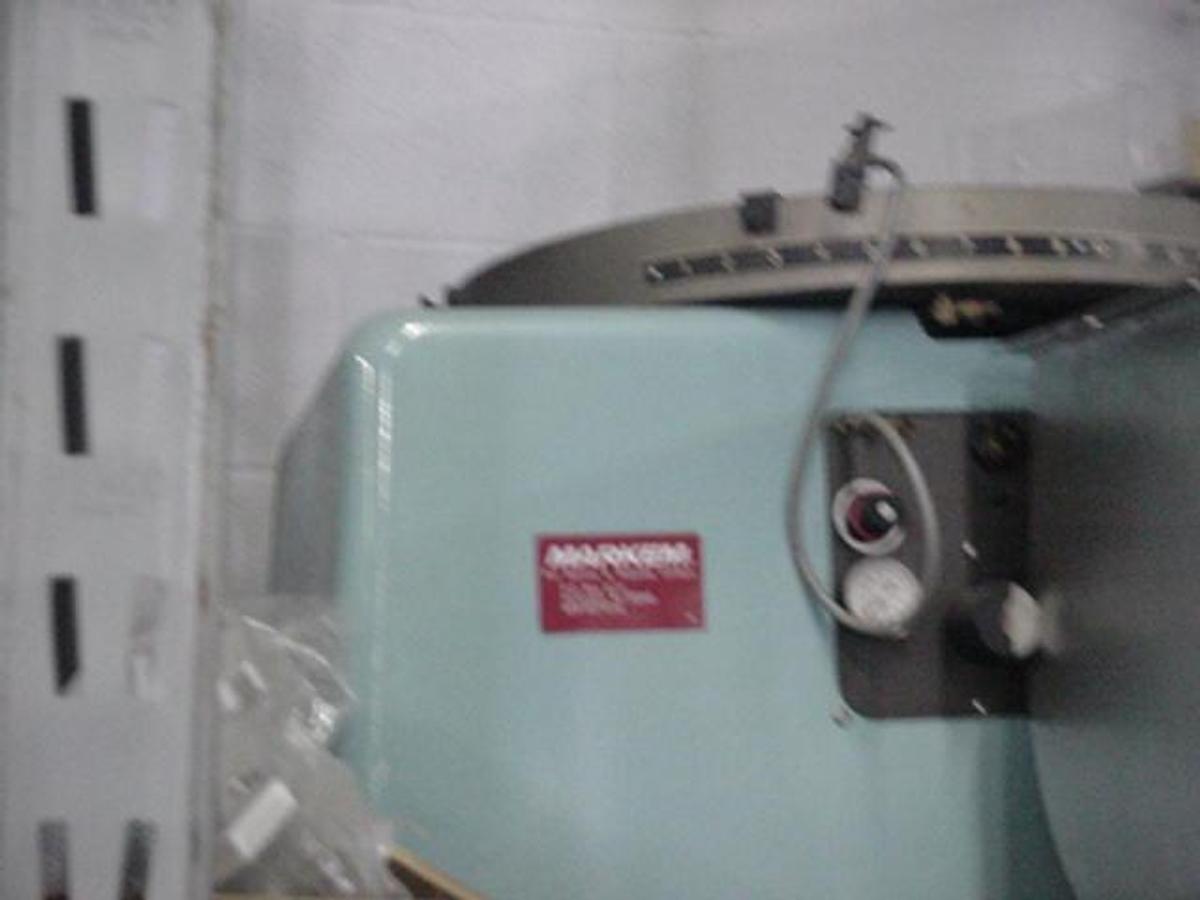
Markem
Markem is known for its coding and marking solutions, providing equipment that ensures products are labeled correctly for traceability. Their machines are widely used in food, beverage, and pharmaceutical sectors.
FAQ:
What types of Markem coding and marking equipment are available on the used market?
Markem-Imaje produces several distinct categories of coding and marking equipment, and most of these technology types appear regularly on the used equipment market. The main categories include continuous inkjet (CIJ) printers, thermal inkjet (TIJ) systems, thermal transfer overprinting (TTO) machines, laser coders, and print-and-apply labeling systems. Each technology serves a different set of substrates and production speeds, so buyers typically start by identifying which technology fits their line requirements before shopping for a specific model. Markem's CIJ printers, particularly the 9000 series, are among the most commonly traded used units because of how widely they were deployed across food, beverage, and pharmaceutical production lines.
Beyond CIJ, used Markem TTO systems are popular for flexible packaging applications where high-resolution date and lot codes need to be printed directly onto film or foil. Laser coders show up less frequently on the used market but are sought after for permanent, consumable-free marking on glass, metal, and certain plastics. Tablet and capsule printers, such as the Markem 156amk2, are also available through used equipment dealers and are specifically designed for direct printing on solid-dose pharmaceutical products. The variety of models available used gives buyers across many industries a realistic path to sourcing Markem equipment at a lower acquisition cost than purchasing through a manufacturer's distribution channel.
What industries use Markem coding and marking equipment?
Markem-Imaje coding and marking equipment is deployed across a wide range of manufacturing sectors, with the heaviest concentration in food and beverage, pharmaceutical, and cosmetics production. In food and beverage, the equipment is used to print expiration dates, lot codes, and batch numbers directly onto bottles, cans, cartons, and flexible packaging at high line speeds. Pharmaceutical manufacturers rely on Markem systems for regulatory compliance, using them to apply lot numbers, manufacturing dates, and serialization codes to blister packs, bottles, vials, and tablet or capsule surfaces. The precision and reliability of Markem equipment makes it a standard choice in any environment where traceability and regulatory labeling are non-negotiable.
Outside of those core sectors, Markem systems are also used in automotive parts manufacturing, electronics assembly, and general industrial packaging. In automotive and electronics, laser coders and CIJ printers are used to mark components with part numbers, serial codes, and traceability data directly onto metal, plastic housings, or circuit boards. The flexibility of Markem's product line, covering everything from small-character inkjet to high-resolution thermal transfer, means the equipment can be adapted to almost any substrate or production environment. Buyers sourcing used Markem equipment should match the specific model and technology type to their industry's substrate and speed requirements rather than assuming all Markem machines are interchangeable across applications.
How much does used Markem coding and marking equipment typically cost?
Pricing for used Markem coding and marking equipment varies considerably depending on the technology type, model, age, and condition of the machine. Entry-level used CIJ units and older thermal inkjet systems can be found for a few thousand dollars, while more sophisticated systems such as laser coders, TTO units with advanced controls, or print-and-apply systems can range from ten thousand to forty thousand dollars or more depending on the configuration. Tablet and capsule printers like the Markem 156amk2 occupy a specialized niche and are priced based on their condition, included tooling, and compatibility with current pharmaceutical line standards. Buyers should treat any listed price as a starting point and factor in additional costs before committing.
Beyond the machine price itself, the total landed cost of used Markem equipment includes shipping, crating or rigging fees, any consumables needed to get the machine running (inks, ribbons, or cartridges), and potential service costs for installation or calibration. Buyers should request a detailed quote from the dealer that breaks out all of these line items. It is also worth consulting directly with Markem-Imaje about parts and support availability for the specific model being considered, since older or discontinued models may have limited parts availability, which can affect the true cost of ownership over time.
What should buyers inspect when purchasing used Markem equipment?
Inspecting used Markem coding and marking equipment carefully before purchase is essential because these machines are sold as-is, without manufacturer warranties, and the condition can vary significantly based on how they were maintained in their previous production environment. Key areas to evaluate include the condition of the print head or nozzle assembly, the state of the ink or ribbon delivery system, the integrity of control boards and display interfaces, and whether the machine powers on and cycles through its startup sequence correctly. For CIJ printers, the condition of the ink system, including filters, pumps, and the printhead itself, is critical because rebuilding or replacing these components can be expensive. For TTO and thermal inkjet systems, the printhead wear and ribbon path condition are the primary concerns.
Reputable used equipment dealers will typically accommodate in-person inspections at their facility or offer video inspections and photo documentation of the machine in its current state. Some machines may still be installed in an active production facility, in which case the dealer can arrange a plant inspection where the buyer can observe the equipment operating under real production conditions. Buyers should ask dealers directly about the machine's known history, whether it was decommissioned or pulled from active use, and whether any components have been replaced or repaired. Consulting with a Markem-Imaje service technician independently before finalizing a purchase can also help identify any model-specific concerns about parts availability or serviceability for the unit in question.
Does Markem coding equipment support GS1 barcodes, QR codes, and 2D data matrix codes?
Many Markem-Imaje coding systems are capable of printing GS1 barcodes, QR codes, and 2D data matrix codes, though the specific capability depends heavily on the technology type and model. CIJ printers are generally limited to small-character text, linear barcodes, and simple dot-matrix graphics due to the nature of the inkjet droplet formation process. For high-resolution 2D codes like data matrix and QR codes, thermal inkjet, laser, and thermal transfer overprinting systems are better suited because they offer the resolution required for reliable scanner reads in compliance-sensitive applications. In pharmaceutical and food packaging environments where GS1 compliance is required, TTO and laser systems are the more common choice for 2D code printing.
Buyers sourcing used Markem equipment specifically for 2D barcode applications should verify the print resolution specification of the model they are considering, typically expressed in dots per inch (DPI), and cross-reference it against the minimum resolution requirements for the code size they need to print. A data matrix code printed at too low a resolution or too small a size will fail verification scanners and create compliance problems. Dealers selling used Markem equipment may be able to provide technical specification sheets for specific models, and Markem-Imaje's published documentation for most of its product lines is available to help buyers confirm compatibility before purchase.
What consumables are compatible with used Markem marking systems?
Markem-Imaje coding and marking systems use a range of consumables depending on the technology type, including inks and solvents for CIJ printers, thermal transfer ribbons for TTO systems, and ink cartridges for thermal inkjet units. Markem-Imaje manufactures its own line of inks and fluids that are formulated specifically for its equipment, and in many cases the printers are designed to work optimally with Markem-branded consumables. For CIJ systems in particular, using inks that are not matched to the printer's specifications can cause nozzle clogging, inconsistent print quality, or damage to internal components. Buyers of used Markem CIJ equipment should confirm which ink series the machine requires and check on the current availability and pricing of those consumables before committing to a purchase.
For TTO systems, ribbon compatibility is determined by the ribbon width, core size, and ink formulation required for the specific substrate being printed. Third-party ribbon suppliers do produce ribbons compatible with Markem TTO machines, giving buyers some flexibility on consumable sourcing and cost. Thermal inkjet cartridges for Markem TIJ systems may be proprietary or compatible with industry-standard cartridge formats depending on the model. Buyers should research consumable availability for the specific Markem model they are considering, particularly for older or discontinued models where Markem-Imaje may have limited or discontinued its own consumable supply. A used machine with no available ink supply is not a functional asset regardless of its mechanical condition.
Can Markem coding equipment integrate with existing production line software and ERP systems?
Markem-Imaje coding and marking systems, particularly those produced in the past fifteen to twenty years, are generally designed with connectivity in mind. Many models support serial (RS-232), Ethernet, and in more recent versions, industrial protocols that allow them to receive print data, job changes, and variable information from line controllers, SCADA systems, or ERP platforms. This means a Markem printer can be configured to pull lot numbers, expiration dates, or serialization data directly from an upstream system rather than requiring manual entry at the machine. The depth of integration capability varies by model, so buyers with specific connectivity requirements should review the technical specifications of the unit they are considering and confirm which communication interfaces are present on that machine.
For older Markem models, integration options may be more limited, relying on serial connections or basic Ethernet rather than modern industrial protocols. In some cases, third-party middleware or integration software is used to bridge older Markem equipment with current ERP or MES systems. Buyers should factor in the potential cost of integration work when evaluating used equipment, particularly if the machine needs to communicate with a modern production management system. Consulting with a systems integrator who has experience with Markem equipment can help buyers understand what is achievable with a specific used model before purchase, avoiding scenarios where a machine is acquired but cannot be practically connected to the buyer's existing infrastructure.
What print speed and resolution can Markem coding systems achieve?
Print speed and resolution in Markem coding and marking systems vary significantly across technology types and are two of the most important specifications buyers should evaluate against their production line requirements. Markem CIJ printers are designed for high-speed line marking and can typically handle line speeds from 100 to over 1,000 meters per minute depending on the model, the number of lines of text being printed, and the character height. CIJ resolution is generally in the range of 32 to 64 dots per character height, which is sufficient for small-character alphanumeric codes and simple linear barcodes but not for high-resolution 2D codes. These printers are well suited for marking expiration dates and lot codes on bottles, cans, and cartons moving at high speed on a conveyor.
Thermal transfer overprinting systems offer higher resolution, typically 200 to 300 DPI, which makes them appropriate for printing 2D barcodes, GS1 codes, and detailed graphics on flexible packaging film. Laser coders provide permanent, high-contrast marks and can achieve very fine resolution on appropriate substrates, though their line speed capability depends on the laser power and the complexity of the code being marked. Thermal inkjet systems generally fall in the 300 to 600 DPI range and are used for medium-speed applications requiring sharper text and simple 2D codes. Buyers should match the speed and resolution specifications of a specific used Markem model to their actual line speed and code requirements, as buying a machine with insufficient speed or resolution for the application will create production problems regardless of the machine's overall condition.
Is technical support and servicing available for used Markem coding equipment?
Technical support for used Markem-Imaje equipment is available through several channels, though the level of support depends on the age and model of the machine. Markem-Imaje maintains a global service network and in many cases will provide service contracts, spare parts, and technical support for its equipment even when purchased through the used market. However, buyers should contact Markem-Imaje directly before purchasing a specific used model to confirm whether that model is still within its supported lifecycle. Older or discontinued models may have limited parts availability or may no longer be supported by the manufacturer's service organization, which is an important factor in evaluating the long-term viability of a used machine.
Beyond manufacturer support, a network of independent service technicians and third-party parts suppliers exists for many Markem CIJ and TTO models, particularly the more widely deployed series. These independent resources can be a practical option for maintaining older equipment that is no longer fully supported by Markem-Imaje. When purchasing used Markem equipment, buyers should ask the dealer about the machine's service history, whether any recent maintenance or repairs have been performed, and whether service documentation or manuals are included with the sale. Having access to the machine's service manual is particularly valuable for in-house maintenance teams who will be responsible for ongoing upkeep of the equipment after installation.
What are the shipping and payment considerations when buying used Markem equipment?
Shipping used Markem coding and marking equipment requires careful planning to prevent damage in transit, and the cost of shipping will vary based on the size and weight of the machine, the destination, and the level of packaging required. Smaller CIJ and TIJ units can often be palletized and shipped via freight carrier with standard protective packaging, while larger print-and-apply systems or multi-component coding lines may require custom crating to protect sensitive components during transport. Buyers should ask dealers for a detailed breakdown of packaging, rigging, and freight costs before finalizing a purchase so they understand the full landed cost of the equipment, not just the listed machine price. Larger or heavier machines may also require forklift or crane rigging at both the origin and destination, which adds to the total cost.
On payment terms, most used equipment dealers require full payment prior to shipping the machine. Some dealers may offer payment terms to established repeat customers, but this is not standard practice and should not be assumed. Buyers should clarify payment expectations with the dealer early in the process and confirm what forms of payment are accepted. Wire transfer is the most common method for used industrial equipment transactions of significant value. Buyers should also confirm with the dealer what documentation will be provided at the time of sale, including any available service records, manuals, or specification sheets, as these documents add practical value and are often needed for installation, calibration, and ongoing maintenance of the equipment.