Category
Manufacturer
Model
FAQ:
What types of products can be filled using Mars filling line equipment?
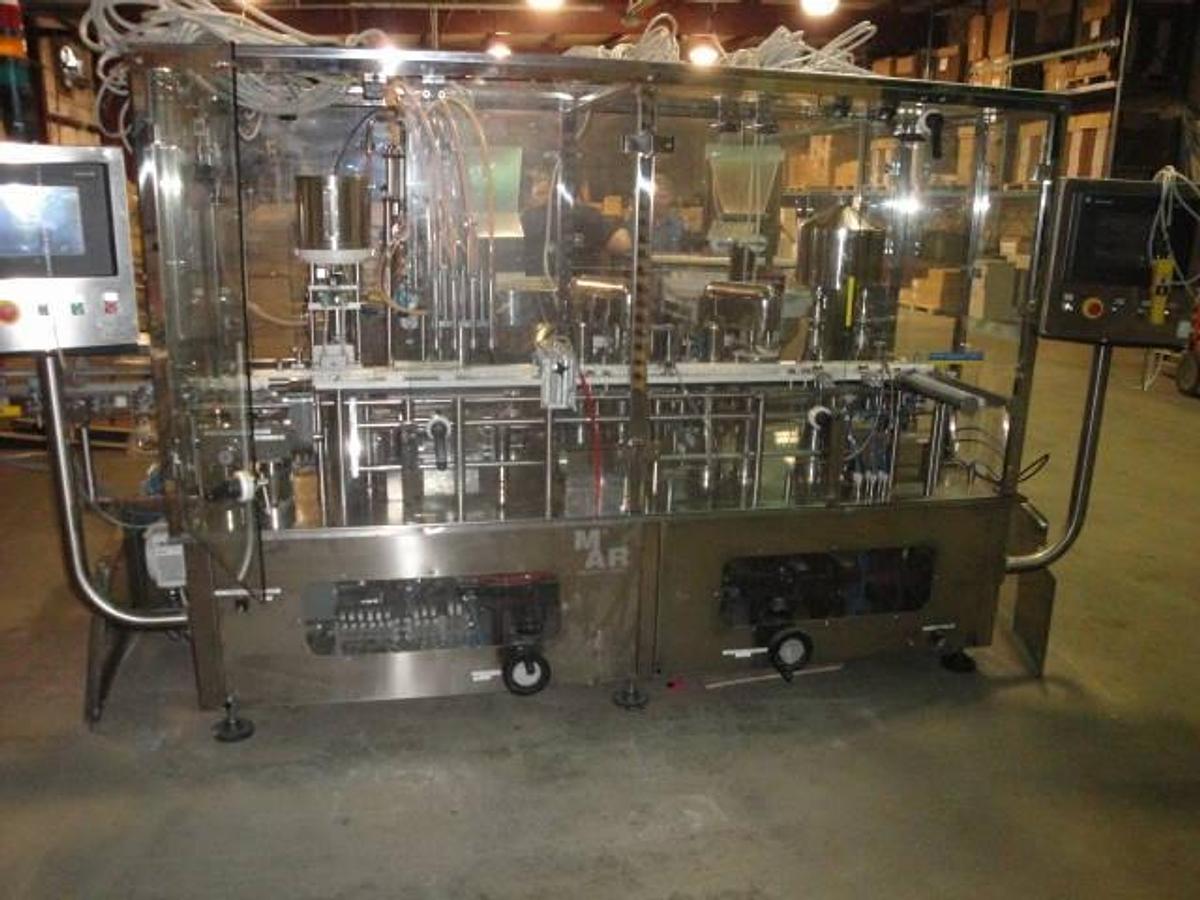
Mars filling line equipment has been used across a range of liquid and semi-liquid product applications. The existing market for used Mars machinery includes equipment configured for nail polish and nail enamel filling, which are notoriously challenging products due to their viscosity, flammability, and the precision required to fill small-diameter bottles without spillage or inconsistent fill levels. This makes Mars equipment particularly relevant to cosmetic and personal care manufacturers who need reliable, repeatable fills in specialty containers.
Beyond cosmetics, filling line equipment in this general category is often adaptable to other viscous liquids depending on the specific machine model, pump type, and nozzle configuration. Buyers sourcing used filling line equipment should review the original machine specifications carefully and, where possible, consult with a technician or the equipment dealer to confirm compatibility with their specific product. Fluid characteristics like viscosity, foaming tendency, particulate content, and chemical aggressiveness all affect whether a given machine is suitable without modification.
What industries use Mars filling line equipment?
Mars filling line equipment is primarily associated with the cosmetics and personal care industry, particularly for filling products like nail polish and nail enamel. These are precision-demanding applications that require consistent fill volumes in small containers, often with specialized nozzles and pumps designed to handle pigmented, viscous, or solvent-based formulas without clogging or dripping. The straight-line configuration seen in Mars equipment is common in cosmetic production environments where floor space efficiency and sequential filling operations matter.
Filling line machinery of this type can also find applications in pharmaceutical, chemical, and specialty industrial sectors, depending on the machine's construction materials, pump technology, and compliance with relevant industry standards. Buyers from regulated industries should pay close attention to whether a used machine's wetted parts meet the material standards required for their product, such as stainless steel grades or chemical-resistant seals, and should verify the machine's history and condition through a thorough inspection before purchase.
What is a straight-line filling machine and how does it differ from a rotary filler?
A straight-line filling machine moves containers in a linear path through the filling station, typically on a conveyor or indexed track. Containers are filled as they pass beneath fixed or descending nozzles, and the line can be configured to fill one container at a time or multiple containers simultaneously depending on the number of fill heads. Straight-line fillers are generally favored for operations with lower to mid-range production speeds, frequent product changeovers, or smaller batch sizes, since they tend to be easier to adjust and clean than rotary systems.
Rotary fillers, by contrast, move containers on a rotating carousel and are typically built for high-speed, high-volume continuous production. They require more floor space and are generally more complex to maintain and reconfigure. For cosmetic applications like nail polish filling, where containers are small, fills are precise, and production runs may vary in size, straight-line equipment like the Mars configuration is often a practical choice. Used straight-line fillers also tend to be more accessible in terms of price and simpler to integrate into existing production lines.
What should buyers inspect when evaluating used Mars filling line equipment?
Inspecting used filling line equipment requires attention to several mechanical and operational details that directly affect performance after purchase. Buyers should examine the condition of the fill heads and nozzles for wear, clogging residue, or corrosion, since these components have the most direct contact with the product being filled. Pump mechanisms, whether piston, peristaltic, or gear-based, should be checked for seal integrity and consistent displacement. Drive systems, conveyors, and indexing mechanisms should be observed for smooth operation without excessive vibration or noise. Any visible rust, chemical damage, or signs of improvised repairs are worth noting and discussing with the seller.
Used equipment dealers typically offer in-person inspections, video walkthroughs, or recorded video captures of the machine so buyers can assess its current condition remotely. Some equipment may still be installed at a production facility where it can be observed running, though testing with actual product is rarely possible at a dealer's location due to permitting and facility constraints. Buyers who cannot visit in person should request detailed photo documentation of wetted parts, electrical panels, and any areas showing wear. Consulting with a qualified technician or the machine's manufacturer about the specific model's known wear points and parts availability is also a sound step before committing to a purchase.
What filling technologies are commonly used in cosmetic liquid filling lines?
Cosmetic filling lines, particularly those handling products like nail polish, nail enamel, or similar viscous liquids, most commonly use piston filling or peristaltic pump filling technology. Piston fillers draw a precise volume of product into a cylinder and then dispense it into the container, making them well-suited for thick or pigmented liquids where consistent fill volumes are critical. They are mechanically straightforward and can be adjusted for different fill volumes by changing the piston stroke length. Peristaltic pumps, which move fluid by compressing a flexible tube in sequence, are valued for their gentle handling of shear-sensitive products and their easy cleaning since the product only contacts the tubing.
Gravity fillers and overflow fillers are more common for thin, free-flowing liquids and are less typical in nail polish applications due to the higher viscosity involved. The choice of filling technology affects not only fill accuracy but also cleanability, product waste, and the range of viscosities the machine can handle. When evaluating used filling equipment, understanding which pump or fill mechanism a machine uses helps buyers determine whether it is compatible with their product without requiring significant modification or part replacement.
What materials should the wetted parts of a filling machine be made of for cosmetic applications?
Wetted parts are the components of a filling machine that come into direct contact with the product being filled. For cosmetic applications involving nail polish or nail enamel, which typically contain solvents like ethyl acetate or butyl acetate, material compatibility is a serious concern. Stainless steel, particularly 304 or 316L grade, is a standard baseline for wetted parts in many filling applications because of its corrosion resistance and ease of cleaning. However, solvent-based cosmetics can degrade certain elastomers and plastics, so seals, gaskets, and tubing must also be made from chemically compatible materials such as PTFE (Teflon) or other solvent-resistant compounds.
When purchasing used filling equipment, buyers should confirm the materials used in all wetted components and assess whether any seals or gaskets have degraded over time. Worn or chemically compromised seals are a common maintenance item on used machines and may need replacement before the equipment is put back into production. Requesting documentation or the machine's original specifications from the dealer can help clarify what materials were used in construction, and a qualified technician can assess whether the existing components are still serviceable or require sourcing replacements.
What is the typical price range for used Mars filling line equipment?
Pricing for used Mars filling line equipment varies depending on the model, age, condition, configuration, and the number of fill heads or ancillary components included with the line. Straight-line filling systems for cosmetic applications like nail polish can range from a few thousand dollars for basic or older units to significantly higher figures for more complete, well-maintained lines with multiple fill heads, integrated capping or conveyor systems, and documented service histories. Condition is the dominant pricing factor in the used equipment market, since a well-maintained machine from an established production environment will command a premium over one that has been sitting idle or shows significant wear.
Buyers should also factor in costs beyond the purchase price when calculating the total landed cost of used filling equipment. Rigging, crating, freight, and any refurbishment or parts replacement needed before the machine is production-ready can add meaningfully to the overall investment. Requesting a detailed quote from the dealer that breaks out packaging, loading, and shipping costs is a standard step in the buying process. Comparing the total landed and operational cost of a used machine against the cost of purchasing equipment from a manufacturer is a useful exercise, since well-maintained used filling lines often represent substantial savings while delivering comparable performance.
How is used filling line equipment typically shipped, and what should buyers expect in terms of freight costs?
Shipping used filling line equipment involves several logistical steps that buyers should understand before finalizing a purchase. Smaller filling machines may be palletized and shipped via standard LTL (less-than-truckload) freight, while larger or heavier lines typically require full truckload shipping and specialized rigging for loading and unloading. The level of packaging, whether a simple pallet wrap, a wooden crate, or a custom-built shipping frame, affects both the protection the machine receives in transit and the cost of preparation. Dealers generally charge for crating and packaging separately from the equipment price, and buyers should request a clear breakdown of these costs upfront.
For heavier or more complex filling lines, professional riggers may be needed at both the origin and destination to safely move the equipment using forklifts, cranes, or skates. These rigging costs can be substantial and are typically the buyer's responsibility at the receiving end. International shipments add customs clearance, duties, and potentially fumigation requirements for wooden crating materials. Getting a full landed cost estimate, including the machine price, freight, rigging, and any import fees, before committing to a purchase helps avoid surprises and allows for accurate budget planning.
What payment terms are standard when buying used filling line equipment?
Most used equipment dealers require payment in full before a machine is released for shipping. This is standard practice in the industry and reflects the nature of used machinery transactions, where the seller needs certainty of payment before incurring the costs of preparing, crating, and loading equipment. Wire transfer is the most common payment method for transactions of this size, though some dealers may accept other forms of payment depending on the transaction. Buyers who are working with a dealer for the first time should expect to pay in full upfront as a baseline.
Some dealers extend credit terms or deferred payment arrangements to repeat customers or buyers with established relationships, but this is not a universal practice and should not be assumed. Buyers who need financing should explore equipment financing options through third-party lenders who specialize in machinery loans, as this can allow a business to spread the cost of a used filling line over time while taking possession of the equipment. Before sending any payment, buyers are well-served by completing their inspection process and confirming all details of the sale, including what is included with the machine, shipping timeline, and any agreed-upon preparation work.
How does buying used filling line equipment compare to purchasing from a manufacturer?
Purchasing used filling line equipment offers a meaningful cost advantage over buying from a manufacturer, often at a fraction of the price for equipment that can perform comparably in production. For businesses that need to add or expand filling capacity without a large capital outlay, the used equipment market provides access to proven machinery from established brands at prices that can make a project financially viable when a purchase from a manufacturer would not be. This is particularly relevant for smaller cosmetic producers or contract fillers who need reliable equipment but operate with tighter budgets.
The trade-offs are worth understanding clearly. Used equipment comes without the support structure that typically accompanies a manufacturer purchase, such as installation assistance, operator training programs, and parts supply agreements for current production models. Buyers should research parts availability for any specific model they are considering, since older machines may have limited availability for certain components. Selecting a reputable dealer with experience in the cosmetics or packaging machinery sector, and conducting a thorough inspection before purchase, are the two most important steps a buyer can take to reduce risk. A well-chosen used machine from a knowledgeable dealer can deliver years of reliable service at a fraction of the cost of buying from a manufacturer.