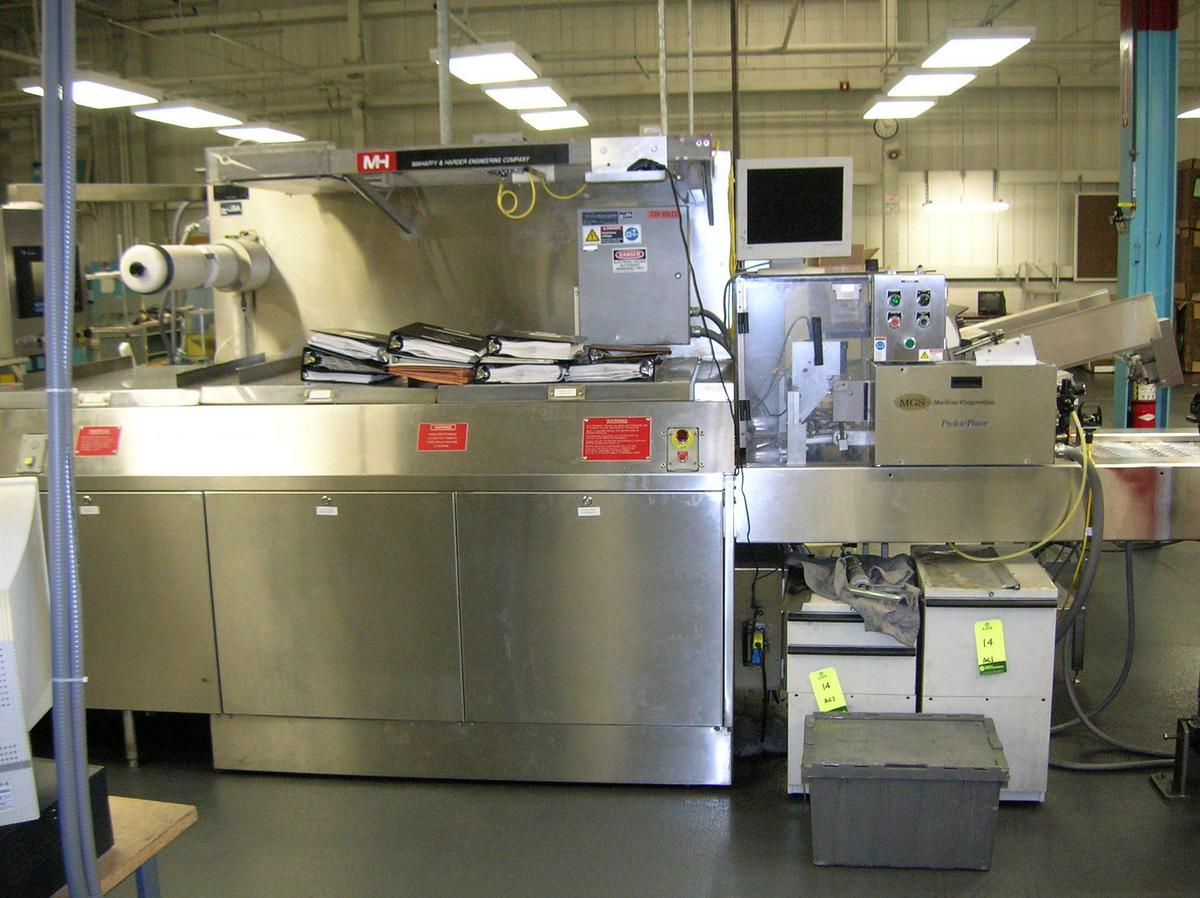
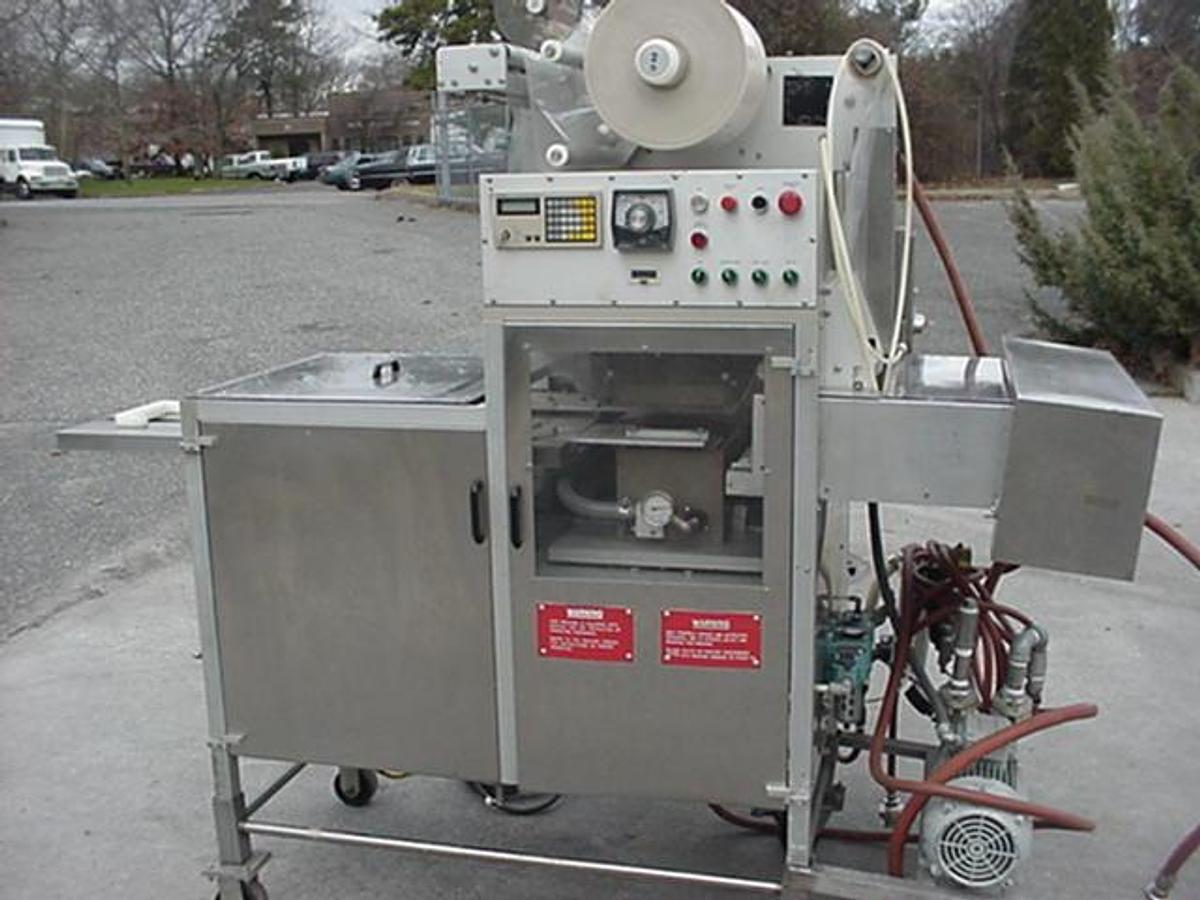
Category
Manufacturer
Model
Mahaffy &Amp; Harder
Mahaffy & Harder is a company that provides specialized machinery for the beverage industry, particularly in the production of soft drinks and juices. Their carbonators and filling machines are well-regarded for their reliability and efficiency.
FAQ:
What types of packaging machines did Mahaffy & Harder manufacture?
Mahaffy & Harder built a range of heavy-duty packaging equipment primarily aimed at high-volume commercial production. The brand is historically associated with thermoform-fill-seal (TFFS) machines, tray sealers, vacuum packaging systems, and filling equipment. Specific models have included the HTS-1500-1 tray sealer and the "Sureflow" 8000 toothbrush packaging machine, which shows the breadth of their product line beyond food packaging alone. Their carbonators and filling machines were also well-regarded in the beverage industry, particularly for soft drink and juice production.
On the food processing side, Mahaffy & Harder machines were heavily adopted in meat, poultry, seafood, and cheese applications where consistent, high-throughput packaging is critical. The thermoforming machines in particular earned a reputation for heavy-duty construction that kept them operational well beyond what many competing machines of the same era could manage. This durability is a big reason the used market for these machines remains active today, with buyers often seeking out older units that are still mechanically sound.
What industries are Mahaffy & Harder packaging machines best suited for?
Mahaffy & Harder machines have the strongest track record in food processing environments. Meat packing, poultry processing, seafood handling, and cheese production are the industries most commonly associated with their thermoform and vacuum packaging equipment. These sectors demand machines that can run continuously under demanding conditions, and the brand's heavy-duty construction made it a natural fit. Beyond food, the beverage industry also used their carbonators and filling machines for soft drink and juice production lines.
The "Sureflow" 8000 toothbrush packaging machine is a good example of how the brand also served non-food consumer goods manufacturers. This suggests that buyers in personal care and household products manufacturing may also find Mahaffy & Harder equipment relevant to their operations. When evaluating a specific used machine, it is worth confirming the model's design intent, since a machine built for food-grade applications will have different material and sanitation specifications than one designed for dry consumer goods packaging.
What is the difference between a packing machine and a packaging machine?
The terms are often used interchangeably in casual conversation, but there is a practical distinction worth understanding. A packing machine typically refers to equipment that physically places or arranges products into a container, such as a case packer or a filling machine that loads product into a pre-made tray or bag. A packaging machine is a broader term that can refer to any equipment involved in the full process of enclosing, sealing, labeling, or protecting a product for distribution or sale. Thermoform-fill-seal machines, like those historically produced by Mahaffy & Harder, are packaging machines in the fullest sense because they form the package from raw film, fill it with product, and seal it in one continuous operation.
For buyers shopping used equipment, this distinction matters because it affects what upstream and downstream equipment will be needed to complete a packaging line. A tray sealer, for example, requires pre-formed trays and a separate filling step, while a thermoforming machine creates the cavity itself. Understanding where a specific machine sits in the production sequence helps buyers assess whether it will integrate smoothly into an existing line or require additional capital investment in supporting equipment.
How do thermoform-fill-seal packaging machines work?
Thermoform-fill-seal (TFFS) machines operate by pulling a continuous roll of plastic film through a series of stations in sequence. First, the film is heated until it becomes pliable, then vacuum or pressure is applied to form it into a cavity or tray shape. Product is then loaded into those formed cavities, either manually or through an automated filling system. A top film is then applied and heat-sealed to close the package. Many systems also incorporate vacuum or gas flushing at the sealing stage to extend shelf life, which is particularly common in food packaging applications.
Mahaffy & Harder machines built around this process were designed for high-volume, continuous production environments. The advantage of the thermoform approach is that it reduces the need to pre-purchase formed trays or bags, since the packaging itself is created inline from roll stock. This can lower per-unit packaging material costs at scale. Buyers evaluating a used TFFS machine should pay close attention to the forming station tooling, sealing platens, and film drive components, as these are the areas that typically show the most wear in high-cycle production environments.
Do Mahaffy & Harder machines support vacuum and modified atmosphere packaging (MAP)?
Many Mahaffy & Harder thermoform and tray sealing machines were designed with vacuum and modified atmosphere packaging (MAP) capabilities, which was a key selling point for food processors looking to extend product shelf life. Vacuum packaging removes oxygen from the sealed package before closing, while MAP replaces the internal atmosphere with a controlled gas mixture, typically a combination of carbon dioxide, nitrogen, and sometimes oxygen, depending on the product. Both methods are standard in meat, seafood, and cheese packaging, which are the core markets Mahaffy & Harder historically served.
When buying a used machine with vacuum or MAP capability, buyers should carefully inspect the vacuum pump condition, gas flushing manifolds, and sealing die integrity. These components are critical to achieving the proper atmosphere inside the package and can be expensive to repair or replace if worn. Prospective buyers should ask the seller for details on the machine's last known production use and, if possible, request a video inspection or in-person walkthrough to assess the condition of these systems before committing to a purchase.
How much does used packaging equipment typically cost?
Pricing for used packaging equipment varies considerably based on machine type, age, condition, brand reputation, and how recently the equipment was last in production. Entry-level or smaller used packaging machines can be found for a few thousand dollars, while large-format thermoform-fill-seal systems from established manufacturers can range from $20,000 to well over $100,000 depending on configuration and condition. Tray sealers generally fall somewhere in the middle of that range, with pricing influenced heavily by the number of forming cavities, sealing platen size, and whether vacuum or MAP capability is included.
For Mahaffy & Harder equipment specifically, the brand's reputation for durability tends to support stronger resale values compared to lesser-known manufacturers. Buyers should also factor in costs beyond the purchase price, including freight, rigging, installation, and any refurbishment or parts replacement needed to bring the machine to operational condition. Getting a clear picture of the total landed cost before finalizing a purchase is essential, since shipping and rigging for heavy industrial equipment can add thousands of dollars to the final expense.
Are replacement parts still available for older Mahaffy & Harder machines?
Parts availability for Mahaffy & Harder equipment depends significantly on the model and its vintage. The brand has been associated with Sealed Air Corporation and later with other packaging equipment companies over the years, which means the ownership lineage for support and parts can be complicated to trace. For some models, the current manufacturer or its successors may still stock or fabricate parts. For older or discontinued models, buyers may need to rely on third-party machining shops to reproduce worn components, or source parts from other used machines being sold for parts.
Before purchasing a used Mahaffy & Harder machine, it is worth contacting the current brand owner or a qualified packaging equipment service technician to assess parts availability for that specific model number. Consulting with the manufacturer's current support organization can help buyers understand what level of technical assistance and parts supply they should realistically expect. Age and model specifics have a direct impact on this, and going in with clear expectations avoids costly surprises after the machine arrives.
What condition should a buyer expect when purchasing a used Mahaffy & Harder machine?
Used industrial packaging machines can range from fully operational units that were recently pulled from active production lines to machines that have been sitting in storage for years and may need significant servicing before they run reliably. The condition of a specific used Mahaffy & Harder machine depends on how it was maintained during its working life, how long it has been idle, and what environment it was stored in. Buyers should not assume any particular condition without conducting a proper inspection, since outward appearance does not always reflect the mechanical state of critical internal components.
Reputable used equipment dealers will typically accommodate in-person inspections, video walkthroughs, or photo documentation to give buyers an accurate picture of the machine's current state. Some machines may still be installed and operational at a production facility, allowing for a more thorough assessment of how the equipment runs. Keep in mind that most dealers are not set up to run actual production tests with live product, since that requires different operational permitting. Buyers should focus inspections on wear items such as sealing elements, tooling, drive systems, and vacuum components to get the most meaningful read on the machine's condition.
What should buyers know about shipping and rigging costs for used packaging machinery?
Shipping a large industrial packaging machine is not a simple freight transaction. These machines are often heavy, sometimes weighing several thousand pounds, and require proper crating or palletization to prevent damage in transit. The level of packaging required, whether that is basic pallet wrapping or full custom crating, directly affects the shipping cost. Buyers should ask the seller for specific details on how the machine will be packaged and what that preparation will cost, since inadequate packaging can result in damage that is difficult to recover from once the machine is in transit.
Beyond packaging, larger machines typically require professional rigging for loading at the origin and unloading at the destination. Rigging involves specialized equipment such as forklifts, cranes, or machinery skates operated by experienced riggers, and this service carries its own cost that should be factored into the total purchase budget. Buyers should request a full breakdown of packaging, rigging, and freight charges from the seller before finalizing a deal, so the true landed cost of the equipment is understood upfront. Surprises in freight and rigging costs are one of the most common sources of frustration in used equipment transactions.
What are the typical payment terms for purchasing used packaging equipment?
Most used industrial equipment dealers require full payment before a machine is released for shipping. This is standard practice in the industry and reflects the nature of used equipment transactions, where machines are often sold as-is and the seller needs to confirm funds before arranging logistics. Wire transfer is the most common payment method for transactions of this size, though some dealers may accept other forms of cleared funds. Buyers should confirm accepted payment methods with the seller early in the process to avoid delays once a deal is agreed upon.
For buyers with an established relationship with a particular dealer, some sellers may be open to discussing payment terms, though this is not the norm for first-time transactions. Financing through third-party equipment lenders is another option some buyers explore, particularly for higher-value machines. Regardless of payment method, buyers should make sure they have a clear written agreement that outlines what is included in the sale, the machine's described condition, and the logistics plan before funds are transferred.