Category
Manufacturer
Model
FAQ:
What is an M-Agnelli calibrator laminator and what is it used for?
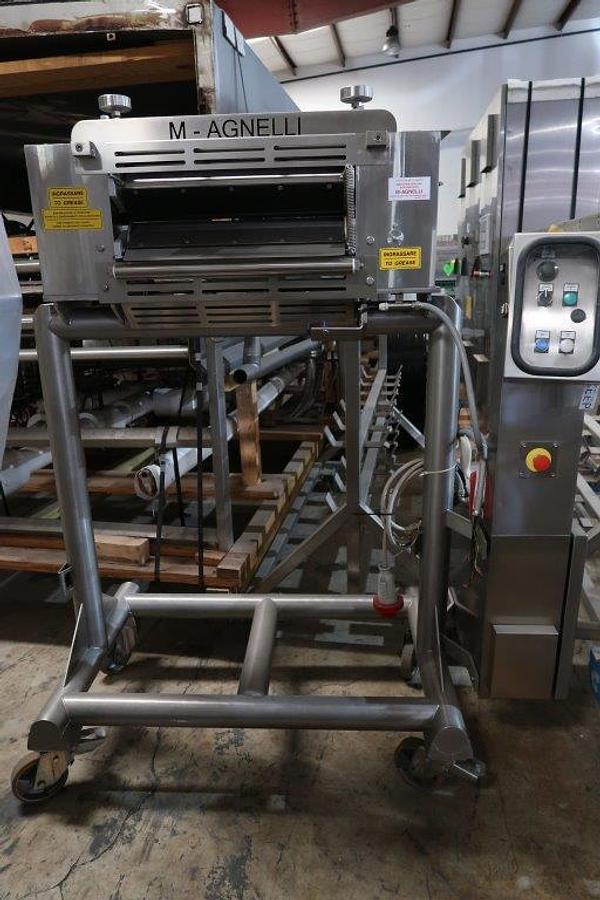
An M-Agnelli calibrator laminator is a combined woodworking machine produced by M-Agnelli, an Italian manufacturer with a long-standing reputation in the panel processing industry. The machine integrates two distinct functions into a single unit: a calibrating (sanding) section that brings panels to a precise, consistent thickness, and a laminating section that applies decorative or protective surface materials such as laminate, veneer, or paper foil. By handling both operations in one pass, the machine significantly reduces handling time, labor costs, and floor space requirements compared to running separate machines for each task.
These machines are widely used in furniture manufacturing, flooring production, door panel fabrication, and kitchen cabinet manufacturing. They are capable of processing materials including MDF, particleboard, plywood, and solid wood panels. The calibration section typically uses abrasive belts or rollers to achieve tight thickness tolerances, while the laminating section uses heated rollers and pressure to bond the surface material permanently to the panel substrate. M-Agnelli calibrator laminators are considered mid-to-high tier Italian woodworking equipment, valued for their precision engineering, build quality, and durability in high-volume production environments.
What types of materials can an M-Agnelli calibrator laminator process?
M-Agnelli calibrator laminators are designed to handle a broad range of panel and board materials commonly found in woodworking and furniture production. This includes MDF (medium-density fiberboard), particleboard, plywood, and solid wood panels. The calibrating section is engineered to bring these substrates to a uniform, precise thickness before the laminating section applies the surface layer, which is critical for achieving a flat, defect-free finished surface.
On the laminating side, these machines can typically apply a variety of surface materials, including paper foil, melamine, PVC film, veneer, and decorative laminates, depending on the specific model and its roller and heating configuration. The ability to process such a wide range of substrate and surface material combinations makes the M-Agnelli calibrator laminator a versatile piece of equipment for manufacturers producing flooring, door skins, furniture components, and wall panels. When evaluating a used machine, buyers should confirm the specific model's capabilities with the selling dealer and, if possible, consult M-Agnelli directly to understand which materials and surface applications are supported by that particular configuration.
How much does a used M-Agnelli calibrator laminator cost?
Pricing for used M-Agnelli calibrator laminators varies considerably depending on the model, working width, age, overall condition, and the configuration of features included. Smaller or older models in average condition can be found at lower price points, while larger, more recent machines with wider working widths, additional sanding heads, or advanced laminating systems will command significantly higher prices. As Italian mid-to-high tier industrial woodworking equipment, M-Agnelli machines generally hold their value reasonably well compared to lower-tier brands, which is reflected in used market pricing.
Buyers should also factor in the full landed cost of acquiring a used machine, not just the purchase price. Rigging, crating or palletization, freight shipping, import duties (for international purchases), and any reconditioning or electrical adaptation work needed at the destination facility can add meaningfully to the total investment. Requesting a detailed quote from the selling dealer that breaks out all of these costs before committing to a purchase is strongly recommended. Since used machines are sold as-is, having a clear picture of the machine's current condition through inspection is just as important as understanding the pricing.
What should a buyer inspect before purchasing a used M-Agnelli calibrator laminator?
Buying a used M-Agnelli calibrator laminator requires a thorough inspection to understand the machine's current condition and avoid costly surprises after delivery. Key areas to examine include the condition of the abrasive belts or calibrating rollers, the state of the laminating rollers (looking for flat spots, wear, or damage), the integrity of the heating system, the condition of the conveyor belt or feed rollers, and the functionality of all electronic controls and safety systems. Any signs of excessive wear, cracks in structural components, or non-functional controls should be carefully evaluated against the asking price.
Reputable used machinery dealers will typically accommodate in-person inspections at the machine's location, or offer virtual inspections via live video call or pre-recorded video footage. Some machines may still be in active production at the facility where they are being sold, which can allow a buyer to see the machine running under real production conditions. Keep in mind that most equipment dealers are not set up to run full production tests themselves, as that requires different permitting and operational infrastructure. Buyers should use the inspection to assess the machine's mechanical condition, verify that all components are present, and identify any parts that may need replacement before or shortly after installation.
Are spare parts and technical support available for used M-Agnelli machines?
Parts availability and technical support for used M-Agnelli calibrator laminators depend largely on the age and specific model of the machine. M-Agnelli is an established Italian manufacturer with a history in the woodworking machinery industry, and for relatively recent models, parts may still be available directly from the manufacturer or through authorized service networks. For older machines, some components may need to be sourced from third-party suppliers or fabricated, which can increase maintenance costs and lead times.
Before purchasing a used M-Agnelli machine, prospective buyers are strongly encouraged to contact M-Agnelli directly to ask about parts availability and the level of technical support they can expect for the specific model and serial number they are considering. The manufacturer is generally the most reliable source of information on whether a machine is still supported, which parts are in stock, and whether service documentation or manuals are available. This due diligence step is especially important for older machines, where support may be limited. A selling dealer experienced in woodworking machinery can also be a useful resource for identifying commonly needed wear parts and pointing buyers toward reliable supply sources.
What are the typical working widths available for M-Agnelli calibrator laminators?
M-Agnelli calibrator laminators are produced in a range of working widths to accommodate different production requirements and panel sizes. Common working widths found on these machines in the used market typically range from around 1300mm (approximately 51 inches) on the smaller end to 1600mm (approximately 63 inches) or wider on larger industrial models. The working width determines the maximum panel width the machine can calibrate and laminate in a single pass, so selecting the right width for the intended product range is an important part of machine selection.
When evaluating a specific used machine, buyers should verify the exact working width and confirm it matches their production needs. It is also worth checking whether the machine's working width is consistent across both the calibrating and laminating sections, as some configurations may have slight differences between the two. The selling dealer should be able to provide the machine's full technical specifications, and buyers can cross-reference this information with M-Agnelli's documentation if available. Choosing a machine with a working width that comfortably accommodates the largest panels in a buyer's product line helps avoid production bottlenecks.
How does a calibrator laminator differ from a standalone sander or standalone laminator?
A standalone wide-belt sander (calibrator) is designed solely to sand panels to a consistent, precise thickness. A standalone laminator applies surface materials to panels but relies on the substrate already being at the correct thickness. Running these as two separate machines means handling panels twice, occupying more floor space, and managing two separate maintenance schedules and operator requirements. In high-volume production environments, this two-step process adds time and increases the risk of damage between operations.
A combined calibrator laminator integrates both functions into a single machine, so panels are calibrated to the correct thickness and then immediately laminated with the surface material in one continuous pass. This reduces handling, improves throughput, and helps maintain consistent quality since the panel goes from calibration to lamination without being repositioned or stored between steps. For furniture manufacturers, flooring producers, and door panel fabricators running large volumes of laminated panels, the combined machine typically offers a meaningful efficiency advantage over separate machines. The trade-off is that a combined machine is a larger capital investment and requires more floor space than either standalone unit alone, but the operational savings often justify this for mid-to-high volume production.
What are the power and electrical requirements for M-Agnelli calibrator laminators?
M-Agnelli calibrator laminators are industrial machines designed for three-phase electrical power, as is standard for heavy woodworking equipment of this type. The specific voltage, amperage, and total power consumption vary by model and configuration. Machines produced for the European market are typically wired for 380-400V, 50Hz, three-phase power. Buyers purchasing a machine from Europe for use in North America or other regions with different electrical standards (such as 460V, 60Hz) will need to factor in the cost of electrical conversion, which may involve replacing motors, control panels, or other electrical components.
Before purchasing a used M-Agnelli calibrator laminator, buyers should obtain the full electrical specifications from the selling dealer and have a qualified electrician evaluate what adaptation work, if any, is required to make the machine compatible with the destination facility's power supply. The cost of electrical conversion can range from modest to significant depending on the extent of changes needed, and this should be included in the total cost of ownership calculation. Some dealers specializing in used woodworking machinery will have experience with these conversions and may be able to provide guidance or referrals to qualified technicians.
What does it mean that a used M-Agnelli calibrator laminator is sold as-is?
Used industrial machinery, including M-Agnelli calibrator laminators, is typically sold as-is by equipment dealers. This means the machine is sold in its current condition at the time of sale, without any guarantee from the dealer regarding its performance, completeness, or fitness for a particular purpose. Warranties are generally only offered by manufacturers on equipment sold through authorized channels. Used equipment dealers do not typically extend such coverage, which places the responsibility of evaluating the machine's condition squarely on the buyer before the sale is finalized.
This makes pre-purchase inspection critically important. Buyers should take full advantage of any inspection opportunity offered by the dealer, whether in person, via live video call, or through detailed video footage of the machine. Asking specific questions about the machine's history, hours of use, any known issues, and what components have been replaced or repaired can help build a clearer picture of what is being purchased. Selecting a dealer with a long track record of selling woodworking machinery and a reputation for transparency is one of the most effective ways to reduce risk when buying used equipment on an as-is basis.
What should buyers know about shipping a used M-Agnelli calibrator laminator?
Shipping a used M-Agnelli calibrator laminator is a logistics undertaking that requires careful planning, given the size and weight of these industrial machines. Proper packaging is essential to prevent damage in transit. Depending on the machine's dimensions and the shipping distance, this may involve palletization, custom crating, or both. The level of packaging required directly affects shipping costs, and buyers should ask the selling dealer for a detailed breakdown of packaging, rigging, and freight charges to understand the full landed cost of the machine before committing to a purchase.
For larger machines, heavy-duty rigging equipment is typically needed to load the machine onto the transport vehicle at the origin and unload it at the destination. This rigging work is usually an added cost and may require coordination with a specialized rigging company at both ends of the shipment. For international purchases, buyers also need to account for customs clearance, import duties, and any applicable taxes. Most used equipment dealers require full payment prior to shipment. Once all costs are understood, buyers should also confirm that their facility has adequate access and equipment (such as a forklift or overhead crane) to receive and position the machine upon arrival.