Category
Manufacturer
Model
M & O Perry Industries
M & O Perry Industries offers a variety of industrial equipment, focusing on manufacturing solutions for the food and beverage sectors. Their machinery is designed to enhance production efficiency and product quality.
FAQ:
What types of equipment does M & O Perry Industries manufacture?
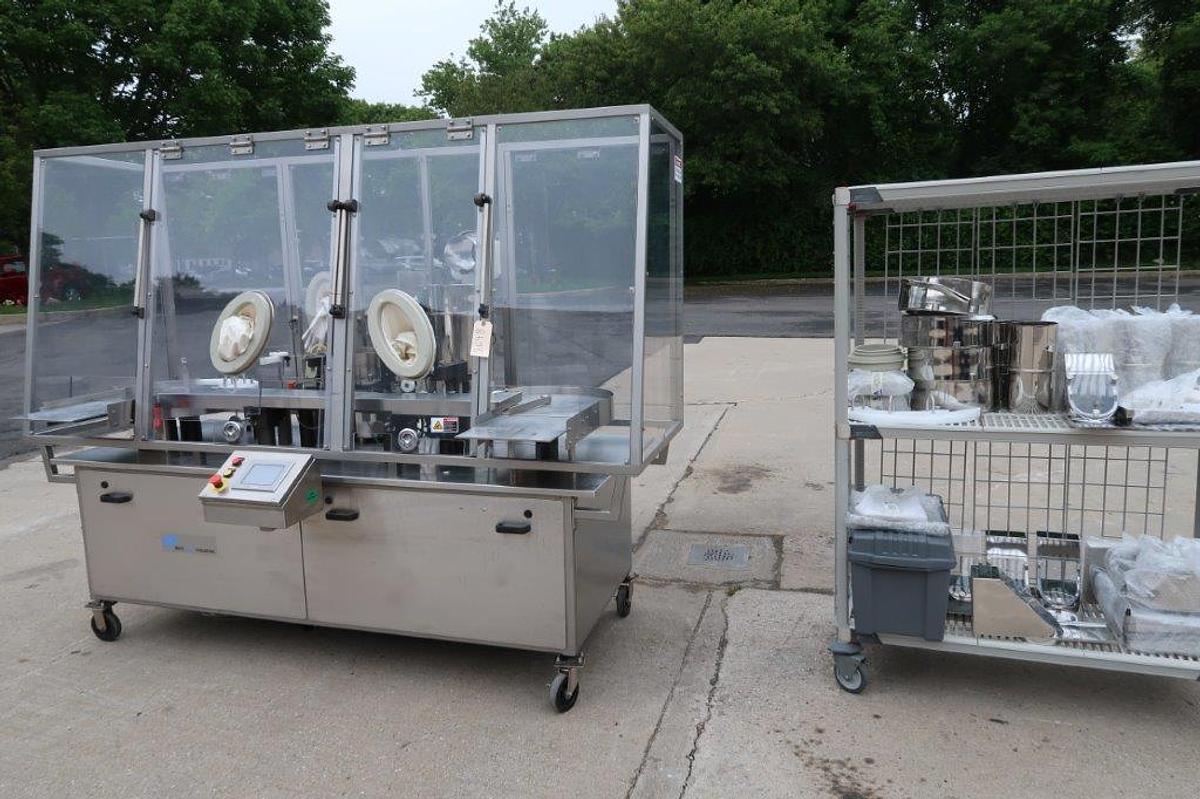
M & O Perry Industries is known for producing industrial machinery focused on manufacturing solutions for the food and beverage sectors. Their equipment is designed to enhance production efficiency and product quality across a range of processing and packaging applications. One well-documented example is the P1510 Vial Liquid Filling, Stoppering and Crimp Capping Machine, which reflects the company's focus on precision liquid handling and packaging equipment suited for pharmaceutical and beverage production environments.
Beyond filling and capping machinery, M & O Perry Industries equipment is generally regarded for its durability and build quality, which is a key reason used units remain attractive to buyers decades after production. Facilities that handle liquid products in vials, bottles, or similar containers have historically found M & O Perry equipment reliable enough to justify sourcing used units rather than investing in newer alternatives. Buyers looking for this type of machinery should work with used equipment dealers who specialize in food, beverage, or pharmaceutical processing equipment to find available inventory.
Where can I find used M & O Perry Industries equipment for sale?
Used M & O Perry Industries equipment is available through specialized used industrial machinery dealers, particularly those focused on food, beverage, and pharmaceutical processing equipment. Working with a dealer that has a long track record in these specific industries is important, as they are more likely to have relevant inventory, understand the machinery's application, and be able to answer technical questions about condition and compatibility with your production needs. Dealers who specialize in this category are also better positioned to help buyers assess whether a specific machine suits their facility.
When sourcing used M & O Perry equipment, buyers should prioritize dealers who can provide detailed photographs, video walkthroughs, or in-person inspection opportunities. Asking for the machine's service and maintenance history is also advisable, as this gives a clearer picture of remaining useful life and any known issues. Factoring in freight, rigging, and installation costs from the outset will help avoid surprises, since shipping large industrial equipment can add significantly to the total landed cost.
What should I inspect before buying used M & O Perry Industries equipment?
Before purchasing any used M & O Perry Industries machine, buyers should request a thorough inspection of the equipment's mechanical and electrical components. Key areas to examine include the condition of filling heads, sealing mechanisms, drive systems, and any pneumatic or hydraulic components. Look for signs of wear, corrosion, or prior repairs that may indicate heavy use or deferred maintenance. If the machine has been decommissioned, ask how long it has been sitting idle, as extended periods without use can affect seals, belts, and lubricated components.
Buyers should also request any available documentation, including service logs, maintenance records, and operator manuals. This paperwork helps establish how the machine was used, how often it was serviced, and whether any major components were replaced. Most reputable dealers will accommodate in-person inspections, virtual walkthroughs, or video captures of the machine in its current state. Keep in mind that used equipment dealers typically do not have production permits, so live product runs are rarely possible during an inspection. Consulting the manufacturer about parts availability and support for the specific model and age of the machine is also a smart step before committing to a purchase.
Does used M & O Perry Industries equipment come with a warranty?
Used industrial equipment, including M & O Perry Industries machinery, is typically sold on an as-is basis by used equipment dealers. This is standard practice in the industry and means that the responsibility for verifying the machine's condition falls on the buyer prior to purchase. Warranties are generally only offered by manufacturers on newly produced equipment, and used equipment dealers are not in a position to extend those protections. This makes thorough pre-purchase inspection all the more critical.
To protect themselves, buyers should choose dealers with a strong, verifiable track record in the relevant equipment category. A reputable dealer will be transparent about the machine's known condition, provide inspection access, and be forthcoming about any visible issues or missing components. Buyers are also encouraged to contact the manufacturer directly to understand what level of technical support, documentation, and parts availability can be expected for the specific model and production year of the machine they are considering. This due diligence goes a long way toward reducing risk on an as-is purchase.
Are replacement parts still available for M & O Perry Industries machines?
Parts availability for M & O Perry Industries equipment depends heavily on the specific model and the age of the machine. For older machines, some components may no longer be in active production, which means buyers may need to source parts through the manufacturer, third-party suppliers, or by having worn components machined to spec. Contacting the manufacturer directly before purchasing a used unit is a practical step, as they can clarify which parts are still stocked, which are available on a limited basis, and which may require custom fabrication.
Some buyers also source parts from other used machines of the same model, particularly when a unit is purchased primarily for parts rather than full operation. When evaluating a used M & O Perry machine, asking the dealer about any known parts shortages or components that were recently replaced can help buyers anticipate future maintenance costs. A machine with a complete set of spare parts included in the sale can represent significant added value, especially for models where certain components are difficult to find on the open market.
How is used industrial equipment like M & O Perry machinery typically graded for condition?
Used equipment dealers commonly use condition grades to give buyers a quick reference point for the general state of a machine. The most widely used categories are excellent, good, fair, and parts only. An excellent grade typically indicates a machine that is fully operational with minimal wear, while good suggests the machine functions properly but shows normal signs of use. Fair usually means the machine requires some attention or repair before it is production-ready, and parts only indicates the unit is not operational and is being sold for its components.
These grades are useful starting points, but buyers should not rely on them alone. The definition of each grade can vary between dealers, and a machine listed as good by one seller may have different characteristics than one listed the same way elsewhere. Requesting detailed photographs, a video inspection, or an in-person visit gives a much more accurate picture than a condition label alone. Asking specific questions about the hours of operation, last known use, and any repairs or modifications made during the machine's life will help buyers make a more informed assessment of value and risk.
What are the typical shipping and logistics considerations for purchasing large used industrial equipment?
Shipping large industrial machinery involves several cost layers that buyers should account for before finalizing a purchase. Beyond the base freight charge, there are often costs associated with palletization, crating, and securing the equipment for transit. Heavier or more complex machines may require specialized rigging for loading at the seller's facility and unloading at the destination, which adds to the total expense. Buyers should ask dealers for a detailed breakdown of all packaging, rigging, and freight costs so they can calculate the true landed cost of the equipment.
For very large machines, flatbed trucking, crane services, or other heavy transport options may be necessary, and lead times for arranging this type of logistics can extend the overall timeline from purchase to delivery. Buyers should also consider whether their facility is equipped to receive and install the equipment, including whether a forklift, loading dock, or additional rigging will be needed on the receiving end. Getting freight quotes from multiple carriers and confirming the machine's exact dimensions and weight with the dealer ahead of time helps avoid cost surprises and ensures the receiving facility is properly prepared.
What payment terms should buyers expect when purchasing used industrial equipment?
The standard practice among used equipment dealers is to require full payment before a machine is released for shipping. This applies to most transactions, particularly for buyers who are purchasing from a dealer for the first time. The rationale is straightforward: once a machine leaves the dealer's facility, their ability to verify its condition or recover it in the event of a dispute is limited. Buyers should plan for this expectation and ensure their financing or capital is in place before finalizing a purchase agreement.
Some dealers may offer payment terms or other arrangements to established customers with a history of prior transactions, but this is the exception rather than the rule. Wire transfer is the most common payment method for large equipment purchases, though dealers may accept other forms of payment depending on the transaction size and buyer relationship. Buyers should clarify all payment expectations, including any deposit requirements, before proceeding so there are no misunderstandings at the point of sale.
How can I verify the condition of used M & O Perry Industries equipment before buying?
The most reliable way to assess a used machine's condition is through a direct inspection, either in person or via a detailed video walkthrough arranged with the dealer. In-person inspections allow buyers or their technicians to physically examine wear points, check electrical panels, review mechanical assemblies, and ask questions in real time. Video inspections, while not a perfect substitute, can still reveal a great deal about the machine's cosmetic and mechanical state, particularly when the dealer is willing to show specific areas of concern on request.
Some machines may still be installed and operating at a facility, in which case the dealer may be able to arrange an inspection at the production site. This can give buyers a clearer sense of how the machine has been maintained and whether it is currently functional. However, even in these cases, dealers typically cannot run actual product through the machine during an inspection due to permitting and liability constraints. Buyers who want additional assurance can hire an independent machinery appraiser or engineer to conduct a third-party evaluation before committing to a purchase.
What is the M & O Perry Industries P1510, and what does it do?
The M & O Perry Industries P1510 is a vial liquid filling, stoppering, and crimp capping machine. It is designed to handle the complete filling and sealing process for small vials, making it suitable for pharmaceutical, biotech, and related liquid packaging applications. The machine combines three functions into a single piece of equipment: accurately filling vials with a measured liquid volume, inserting a stopper to seal the vial, and applying a crimp cap to secure the closure. This type of integrated functionality is valued in production environments where precision, hygiene, and throughput consistency are priorities.
Used units of the P1510 are sought after because the machine's multi-function design reduces the need for separate pieces of equipment at each stage of the vial filling process. Buyers considering a used P1510 should pay particular attention to the condition of the filling heads, the stoppering mechanism, and the capping tooling, as these are the components most subject to wear during normal production. Verifying that all three functions operate correctly, and that tooling for the vial sizes needed is included or available, is an important part of the pre-purchase evaluation process.