Category
Manufacturer
Model
FAQ:
What types of industrial mixers does LPS manufacture?
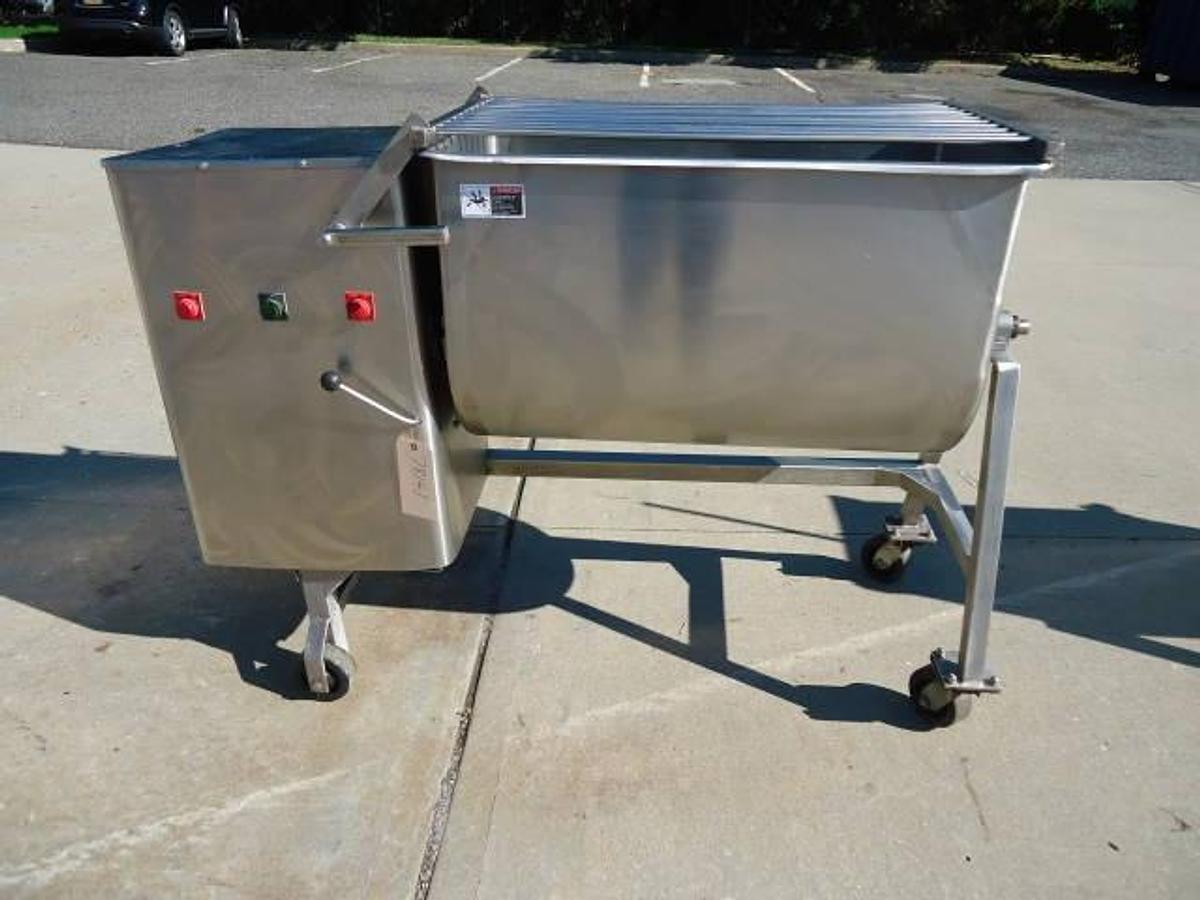
LPS produces heavy-duty industrial mixing equipment designed for demanding production environments. Their lineup includes double acting mixers built for high-torque applications, with stainless steel construction being a defining feature across many of their models. The 100 lb. stainless steel double acting mixer is one example of the type of equipment LPS has built its reputation on, reflecting a focus on durability and material compatibility for industries where sanitation and corrosion resistance are non-negotiable.
Double acting mixers are particularly valued in applications where thorough blending of dense or viscous materials is required. The mechanical design allows for mixing action in multiple directions simultaneously, which improves batch consistency and reduces cycle times compared to single-action alternatives. Buyers sourcing used LPS equipment should pay close attention to model specifications, as capacity, motor size, and material construction can vary considerably across the product range.
What industries use LPS industrial mixers?
LPS industrial mixers are commonly found in food processing, chemical manufacturing, pharmaceuticals, and construction materials production. The stainless steel construction on many LPS models makes them well suited for food-grade and pharmaceutical environments, where sanitary surfaces and resistance to cleaning agents are required by regulation and good manufacturing practice. Chemical processing facilities also rely on stainless steel mixing equipment because it holds up against corrosive compounds that would degrade carbon steel or aluminum components over time.
Beyond those core sectors, heavy-duty industrial mixers of this type are used in cosmetics production, adhesives manufacturing, and specialty coatings applications. The common thread across all of these industries is the need for consistent, repeatable mixing of materials that may be thick, abrasive, reactive, or temperature-sensitive. When evaluating a used LPS mixer for a specific application, buyers should confirm that the mixer's rated capacity, motor horsepower, and material construction are appropriate for the viscosity and chemical properties of the product being processed.
How much do industrial mixers cost?
Industrial mixer pricing spans a wide range depending on capacity, mixer type, motor power, and construction materials. Smaller bench-top or pilot-scale industrial mixers can be found for a few thousand dollars, while large-scale production mixers with high horsepower motors and stainless steel construction can run well into the tens of thousands of dollars when purchased through equipment dealers. Specialty configurations for high-viscosity or sanitary applications tend to sit at the higher end of that range.
Buying used industrial mixing equipment is one of the most effective ways to reduce capital expenditure without sacrificing capability. A used stainless steel double acting mixer from a reputable manufacturer like LPS can represent substantial savings compared to purchasing equivalent equipment through other channels. That said, buyers should factor in the full landed cost, including freight, rigging, and any reconditioning work that may be needed, when comparing prices. Total cost of ownership, including long-term parts availability and energy consumption, is often a more useful benchmark than the purchase price alone for industrial buyers evaluating mixing equipment.
What should buyers look for when purchasing a used LPS industrial mixer?
Condition assessment is the most critical step in any used industrial mixer purchase. Buyers should request a thorough inspection of the mixing vessel, agitator blades or paddles, shaft seals, gearbox, and motor. For stainless steel models, it is worth checking for pitting, cracks, or weld repairs that could compromise sanitary integrity or structural strength. Gearbox wear and seal condition are particularly important on double acting mixers because those components experience significant stress during operation and can be costly to rebuild.
Reputable used equipment dealers will typically accommodate in-person inspections, video walkthroughs, or photo documentation of the machine's current condition. Some equipment may still be installed and operating at a production facility, which can allow a buyer to observe it running under load. Keep in mind that most dealers are not set up to run actual product through a mixer during an inspection, as that level of testing requires production permitting they do not hold. Buyers should also contact LPS directly to understand parts availability and manufacturer support for the specific model under consideration, since age and production status of a given model can affect what service resources are available.
Are LPS industrial mixers suitable for high-viscosity materials?
Double acting mixers, which are a key part of the LPS product range, are specifically engineered to handle materials that resist flow and require significant mechanical force to blend uniformly. High-viscosity applications such as thick pastes, doughs, adhesives, and dense chemical compounds put substantial strain on a mixer's motor, gearbox, and agitator assembly. LPS mixers built with heavy-duty construction and appropriately rated motors are designed to manage that kind of load over extended production runs.
When evaluating a used LPS mixer for a high-viscosity application, buyers should pay close attention to the motor horsepower rating and gearbox condition, as these are the components most affected by sustained high-torque operation. It is also worth verifying that the agitator geometry is appropriate for the specific material, since blade design has a significant effect on how efficiently a mixer moves dense product. If there is any uncertainty about whether a particular used model is rated for the intended application, consulting with a mixer specialist or the manufacturer directly before purchase is a prudent step.
What does stainless steel construction mean for an industrial mixer's performance and longevity?
Stainless steel is the material of choice for industrial mixers used in food processing, pharmaceutical production, and chemical applications because it resists corrosion, does not absorb odors or flavors, and can withstand the aggressive cleaning protocols required in regulated industries. In a mixer context, stainless steel is typically used for the mixing vessel, agitator, shaft, and any product-contact surfaces. The grade of stainless steel matters as well. 304 stainless is common in general food-grade applications, while 316 stainless offers better resistance to chlorides and is preferred in pharmaceutical or marine environments.
For used equipment buyers, stainless steel construction is also a practical durability consideration. A well-maintained stainless steel mixer can remain serviceable for decades, which is part of why used LPS stainless steel models retain value in the secondary market. Buyers should inspect welds, surface finish, and any areas prone to crevice corrosion during the evaluation process. Minor surface oxidation or discoloration is generally cosmetic, but deep pitting or compromised welds on product-contact surfaces can be a more serious concern depending on the intended application.
How is used industrial mixing equipment typically shipped, and what costs should buyers anticipate?
Shipping an industrial mixer involves more logistical planning than standard freight because of the weight, size, and sensitivity of the equipment. Smaller units may ship on a standard pallet with appropriate bracing and wrapping, while larger mixers often require custom crating to prevent damage in transit. The level of packaging required directly affects freight costs, and buyers should ask the dealer for a clear breakdown of palletization or crating charges before committing to a purchase. Freight costs for heavy industrial equipment are also distance-dependent and can vary significantly based on carrier rates and the origin of the equipment.
For larger or heavier machines, professional rigging is typically required for both loading at the dealer's location and unloading at the buyer's facility. Rigging involves specialized equipment and trained personnel to safely move heavy machinery, and it is billed as a separate cost from freight. Buyers who are not familiar with industrial equipment logistics should budget for this expense and confirm with the dealer what rigging services are included or need to be arranged independently. Getting a full landed cost estimate, covering packaging, rigging, freight, and any applicable fees, before finalizing a purchase is the best way to avoid unexpected expenses.
What payment terms are typical when buying used industrial mixing equipment?
Used industrial equipment dealers generally require full payment before a machine is released for shipment. This is standard practice in the industry and reflects the nature of used equipment transactions, where the dealer needs to confirm cleared funds before arranging logistics. Buyers should plan accordingly and confirm the accepted payment methods, which typically include wire transfer, certified check, or other verifiable forms of payment. Credit terms are not commonly extended to first-time buyers, though some dealers may offer payment arrangements to established customers with a purchase history.
Buyers should also clarify what the payment covers and what is billed separately. In many transactions, the quoted price is for the equipment only, with freight, rigging, and packaging invoiced as additional line items once the shipping details are finalized. Understanding the full cost structure before issuing payment prevents surprises and allows for accurate internal budgeting. For large purchases, some buyers choose to use an escrow arrangement or work through a purchase order process that their finance or procurement team manages.
How does buying a used LPS industrial mixer compare to purchasing other used mixing equipment brands?
LPS has built a track record in the industrial mixing space with equipment known for heavy-duty construction and durability. When comparing used LPS mixers to other brands on the secondary market, buyers typically weigh factors like parts availability, build quality, the reputation of the manufacturer for a specific application type, and how well the equipment has held up over time. A mixer from a manufacturer with a strong service network and documented engineering standards will generally be easier to maintain and support than equipment from a lesser-known builder, even if the initial purchase price is lower.
The used equipment market for industrial mixers is broad, and buyers will encounter machines from a wide range of manufacturers at varying price points and conditions. The most important comparison is not brand versus brand in the abstract, but rather how well a specific unit's specifications match the buyer's production requirements. Capacity, mixer type, motor rating, material construction, and overall condition should drive the evaluation. Choosing a dealer who specializes in industrial processing equipment and has a history in the category provides an additional layer of confidence, since they are better positioned to accurately represent a machine's condition and application suitability than a generalist auction platform.
What questions should buyers ask a dealer before purchasing a used LPS industrial mixer?
Before committing to a used industrial mixer purchase, buyers should gather detailed information about the machine's history and current condition. Key questions include: How many hours or production cycles has the mixer logged? What was it last used to process? Has it undergone any repairs or component replacements, and if so, what work was done and when? Is the motor, gearbox, and electrical system intact and functional? Are all original components present, or have any parts been removed? What is the current physical condition of the mixing vessel and agitator surfaces?
Buyers should also ask about inspection options. A reputable dealer will offer in-person visits, video inspections, or detailed photo documentation. If the equipment is still installed at a production facility, ask whether an operational demonstration can be arranged. It is also worth asking the dealer about their experience with LPS equipment specifically and whether they can provide any documentation, such as prior maintenance records or a specification sheet for the model. Finally, buyers should confirm all shipping and payment terms upfront, including what packaging is included, what rigging arrangements are needed, and what the full landed cost will be to their facility.