Category
Manufacturer
Model
Lowe Industries
Lowe Industries provides a range of industrial equipment, focusing on manufacturing solutions for various sectors including automotive and construction. Their products are known for their durability and efficiency in demanding environments.
FAQ:
What types of industrial equipment does Lowe Industries manufacture?
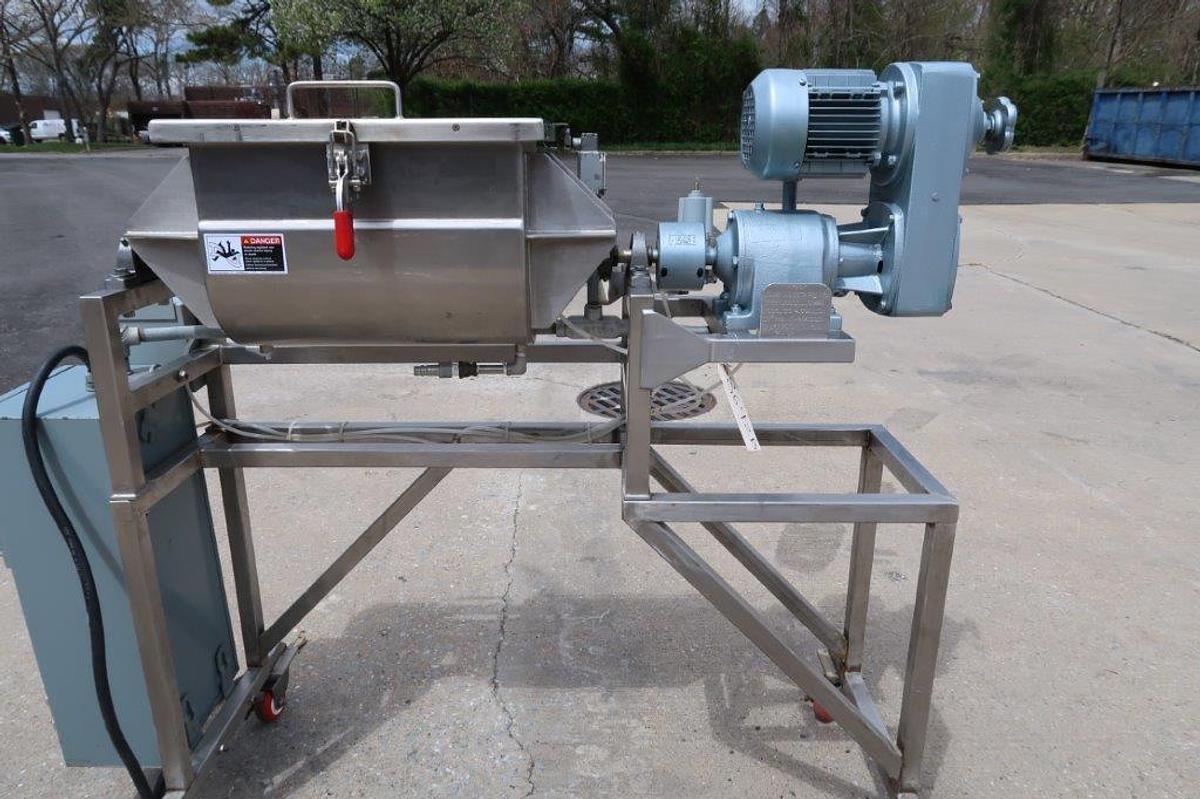
Lowe Industries produces industrial equipment aimed at manufacturing and processing applications across several sectors. Their product line includes mixing and blending equipment, such as ribbon blenders, which are used in chemical, food processing, pharmaceutical, and materials manufacturing environments. The ribbon blender design, for example, uses a double-ribbon agitator inside a trough to mix dry solids, pastes, and slurries efficiently. Jacketed versions allow for temperature control during mixing, which is critical in processes that require heating or cooling. Variable speed drives give operators control over mixing intensity, making the equipment adaptable to a range of material viscosities and batch sizes.
Beyond blending equipment, Lowe Industries has supplied machinery to sectors including automotive and construction, where durability and consistent performance under demanding conditions are non-negotiable. Buyers looking for used Lowe Industries equipment will typically find units ranging from lab-scale machines (such as the 0.6 cubic foot double ribbon blender) to larger production-scale units. Because all available units are used, specifications will vary by individual machine, and buyers should review the listed details carefully, including capacity, drive configuration, material of construction, and any jacketing or special features that affect process compatibility.
What should I know before buying used industrial equipment?
Buying used industrial equipment is meaningfully different from buying new machinery, and buyers who understand those differences tend to make better purchasing decisions. The most important shift in mindset is that used equipment is typically sold as-is, meaning the seller does not offer the same kind of coverage a manufacturer would provide on a factory-fresh machine. That puts the responsibility of due diligence squarely on the buyer. Before committing to a purchase, a buyer should gather as much information as possible about the machine's operating history, including how many hours it has run, what materials it processed, whether it received regular maintenance, and whether any major components have been repaired or replaced.
Beyond the history, buyers should pay close attention to the technical specifications to confirm the machine fits their process requirements. For mixing and blending equipment, that means verifying capacity, agitator configuration, motor horsepower, material of construction (stainless steel versus carbon steel, for example), and whether the unit includes features like jacketing or variable speed control. It is also worth contacting the original manufacturer to ask about parts availability and technical support for the specific model and age of the machine, since older units may have limited parts supply. Selecting a reputable used equipment dealer with a documented history in the relevant industry category is one of the most reliable ways to reduce risk in a used equipment purchase.
How can I verify the condition of used industrial equipment before purchasing?
Reputable used equipment dealers typically offer several inspection options to help buyers assess a machine's condition before finalizing a purchase. The most thorough option is an in-person inspection, where the buyer or a qualified technician visits the dealer's facility (or, in some cases, the plant where the equipment is still located) to examine the machine directly. During an in-person inspection, a buyer can check for visible wear, corrosion, seal condition, structural integrity, and the general state of electrical and mechanical components. If the machine is still in production at a facility, it may even be possible to observe it running under real operating conditions, which provides the clearest picture of its current working order.
For buyers who cannot travel, most dealers can arrange a virtual inspection via video call or provide detailed video documentation of the equipment. These remote options have become increasingly common and can be quite thorough when the dealer is willing to walk through every major component on camera. Keep in mind that even the most detailed inspection has limits. Used equipment dealers generally do not have the permitting or infrastructure to run full production tests, so a buyer cannot always verify output quality or throughput under load. For high-stakes purchases, it is worth hiring an independent equipment appraiser or technician who specializes in the relevant equipment category to accompany or conduct the inspection.
What is a double ribbon blender and what is it used for?
A double ribbon blender is a type of industrial mixing machine that uses two helical ribbons, one inside the other, mounted on a central shaft inside a U-shaped trough. The outer ribbon moves material in one direction while the inner ribbon moves it in the opposite direction. This counter-current action creates a highly efficient mixing pattern that turns over the entire batch repeatedly, producing a homogeneous mixture in a relatively short cycle time. The design is well-suited to dry powders, granules, and semi-moist materials, and it is widely used in industries including food and beverage, pharmaceuticals, chemicals, plastics compounding, and agricultural products.
Jacketed versions of the double ribbon blender add a layer of functionality by allowing a heating or cooling medium (such as steam, hot water, or chilled water) to circulate through the jacket surrounding the trough. This makes the jacketed blender suitable for processes that require temperature-controlled mixing, such as melting a binder into a powder blend or cooling a product after a heat-generating reaction. Lab-size units, such as a 0.6 cubic foot capacity machine, are used for small-batch development, quality control testing, and pilot-scale production runs where a full production-scale machine would be impractical. Variable speed drives on these units allow operators to adjust the ribbon speed to match the material's sensitivity to shear, which is particularly important for fragile or compressible materials.
How does pricing for used industrial equipment compare to buying new machinery?
Used industrial equipment is almost always priced at a significant discount compared to equivalent machinery purchased directly from a manufacturer. The discount varies widely depending on the age of the machine, its condition, how rare or in-demand the model is, and current market supply. For common equipment types like ribbon blenders, the used market can offer savings of 40 to 70 percent compared to current manufacturer pricing, though specialized or recently manufactured machines in excellent condition may carry a smaller discount. That price gap is a major reason why many manufacturers, processors, and research facilities turn to the used equipment market, especially when budget constraints make new machinery impractical.
However, buyers should be careful to calculate the full landed cost rather than comparing sticker prices alone. The total cost of acquiring used industrial equipment includes the purchase price, shipping and freight charges, any rigging or specialized loading and unloading required, and the cost of any refurbishment, parts replacement, or installation work needed before the machine is operational. In some cases, a lower-priced machine in poor condition can end up costing more in total than a higher-priced unit in better shape. Buyers who focus on total cost of ownership, factoring in expected maintenance, parts availability, and remaining service life, tend to make more economically sound decisions than those who select equipment based on purchase price alone.
What are the typical payment terms for purchasing used industrial equipment?
Used industrial equipment dealers generally require payment in full before a machine is released for shipment. This is standard practice across the industry and reflects the nature of the used equipment market, where machines are often one-of-a-kind items that cannot simply be restocked if a transaction falls through. Payment in advance protects the seller from holding a machine off the market while a buyer arranges financing or delays closing. Accepted payment methods vary by dealer but commonly include wire transfer, certified check, or other verified funds. Credit card payments may be accepted for smaller purchases, though dealers sometimes pass along processing fees for large transactions.
Some dealers will offer extended payment terms or installment arrangements to established customers with a history of repeat purchases, but this is at the dealer's discretion rather than a standard offering. Buyers who require financing should arrange it independently before committing to a purchase, either through a commercial bank, an equipment financing company, or a leasing arrangement. Equipment leasing companies that specialize in industrial machinery can sometimes structure deals that allow a buyer to acquire equipment without a large upfront capital outlay, though the total cost over the lease term will typically exceed an outright purchase price. Buyers should clarify all payment expectations with the dealer before signing any purchase agreement.
How is used industrial equipment typically shipped, and what costs should I expect?
Shipping used industrial equipment involves more complexity than standard freight because of the size, weight, and fragility of the machinery involved. Smaller pieces of equipment may be palletized and shipped via standard LTL (less-than-truckload) freight carriers, while larger or heavier machines typically require flatbed trucks, specialized heavy freight carriers, or full truckload shipping. The dealer is generally responsible for preparing the machine for shipment, which can include draining fluids, removing protruding components, and securing the unit to a pallet or skid. Crating is sometimes required for equipment that is particularly fragile or that must be protected from weather and handling during transit. The level of packaging directly affects shipping cost, and buyers should ask for a detailed breakdown of what preparation is included in the quoted price.
Rigging costs are another factor that buyers often overlook. Loading a heavy industrial machine onto a truck at the seller's facility and unloading it at the destination may require a forklift, crane, or other specialized lifting equipment. If the buyer's facility does not have adequate receiving equipment, they may need to arrange and pay for rigging services separately. International shipments add additional layers of complexity, including export documentation, customs clearance, and potentially import duties. The best approach is to ask the dealer for a complete landed cost estimate that covers packaging, rigging, freight, and any applicable fees, so there are no surprises once the machine arrives.
What industries commonly use ribbon blenders and similar mixing equipment?
Ribbon blenders are among the most versatile pieces of mixing equipment in industrial processing, and they appear across a remarkably broad range of industries. In the food and beverage sector, they are used to blend dry ingredients like spice mixes, flour blends, powdered drink mixes, and animal feed. The pharmaceutical industry relies on ribbon blenders for blending active ingredients with excipients before tableting or capsule filling. Chemical manufacturers use them to mix dry chemicals, pigments, and specialty compounds. Plastics processors use ribbon blenders to combine resin pellets with colorants, additives, or fillers before extrusion or molding. Agricultural product manufacturers use them for fertilizer blending, seed coating, and pesticide formulation.
Beyond those core sectors, ribbon blenders also appear in cosmetics manufacturing, detergent production, ceramics processing, and construction materials production (such as dry mortar and grout mixes). The jacketed variant is particularly valuable in applications where temperature control during mixing is necessary, such as melting wax or fat into a dry blend or maintaining a specific temperature to preserve ingredient integrity. Lab-scale ribbon blenders serve a slightly different purpose, primarily supporting product development teams, quality control labs, and contract manufacturers who need to produce small, precise batches for testing or sampling. The wide applicability of ribbon blenders across these sectors is one reason used units remain in demand and hold their value reasonably well compared to more specialized equipment.
What technical specifications should I review when evaluating used mixing or blending equipment?
Evaluating used mixing and blending equipment requires a methodical review of the machine's technical specifications to confirm it will perform as needed in your specific process. The most fundamental specification is capacity, typically expressed in cubic feet or liters, which determines the maximum batch size the machine can handle. Beyond capacity, buyers should look at the agitator configuration (single ribbon, double ribbon, paddle, or combination), motor horsepower, and drive type (fixed speed or variable speed). Variable speed drives are particularly valuable because they allow the operator to adjust mixing intensity, which affects blend time and the amount of shear applied to the material. For jacketed units, buyers should confirm the jacket's pressure rating and the type of heat transfer medium it was designed to handle.
Material of construction is another critical specification, especially in food, pharmaceutical, and chemical applications where contamination is a concern. Stainless steel construction (typically 304 or 316 stainless) is standard in sanitary applications, while carbon steel may be acceptable for less sensitive materials. Buyers should also check the discharge mechanism (slide gate, butterfly valve, or manual cleanout door), the condition of seals and gaskets, and whether the machine meets any relevant safety or sanitary standards for their industry. Electrical specifications including voltage, phase, and frequency must match the buyer's facility power supply. Dimensions and weight are important for confirming the machine will fit through doorways and floor load limitations at the installation site. Collecting all of this information before purchase, ideally verified through direct inspection, significantly reduces the risk of a mismatch between the equipment and the application.
How do I find a reputable dealer for used industrial equipment?
Finding a trustworthy used industrial equipment dealer takes more than a quick search. The most reliable indicator of a dealer's credibility is their track record, specifically how long they have been in business and whether they specialize in the category of equipment you need. A dealer who has been selling industrial processing equipment for many years will have accumulated the product knowledge, industry contacts, and inspection expertise that a generalist or newer operation may lack. Specialization matters because a dealer who focuses on mixing and blending equipment, for example, will be better equipped to accurately represent a ribbon blender's condition and suitability for a given application than a dealer who handles all types of machinery indiscriminately.
Beyond longevity and specialization, buyers should look for dealers who are transparent about the condition of their inventory, provide detailed specifications and photographs, and actively accommodate inspection requests. A dealer who is reluctant to allow an in-person or video inspection, or who provides vague answers about a machine's history, is a red flag. It is also worth asking the dealer about their process for sourcing equipment. Machines that come directly from a single-owner facility with documented maintenance records carry less risk than equipment with an unclear chain of custody. References from past buyers and a physical address where the equipment can be inspected in person are additional markers of a legitimate operation. Taking the time to vet a dealer carefully before committing to a purchase is one of the most effective ways to protect yourself in the used equipment market.