Category
Manufacturer
Model
FAQ:
What is the Loma Lock metal detector and what industries is it designed for?
The name 'Loma Lock' actually refers to two separate and well-regarded industrial inspection brands that buyers frequently search for together: Loma Systems and Lock Inspection Systems. Loma Systems operates under ITW (Illinois Tool Works) and produces food-grade inspection equipment including metal detectors, checkweighers, and X-ray systems. Lock Inspection Systems is a UK-based manufacturer with a similar focus on contamination detection for food processing environments. Both brands have earned strong reputations in food manufacturing, pharmaceuticals, and packaging, where detecting foreign body contamination is a regulatory and safety requirement.
Used Loma and Lock metal detectors appear regularly on the secondary market because food manufacturers frequently upgrade their lines or consolidate facilities, releasing quality inspection equipment that still has considerable service life remaining. These machines are built to handle the demands of high-throughput production environments, which means even a used unit often retains solid mechanical and electronic integrity. Buyers in meat processing, bakery, dairy, snack food, and pharmaceutical packaging are among the most common purchasers of used Loma and Lock detectors, drawn by the brands' reputations for detection sensitivity and food-safe construction.
What types of metals can a Loma or Lock metal detector detect?
Industrial metal detectors like those made by Loma and Lock are generally capable of detecting three primary categories of metal contamination: ferrous metals (such as iron and steel), non-ferrous metals (such as aluminum, copper, and brass), and stainless steel. Ferrous metals are the easiest to detect due to their strong magnetic signature. Non-ferrous metals are also relatively straightforward to identify. Stainless steel is widely considered the most difficult metal to detect because it has low magnetic permeability and poor electrical conductivity, which reduces the signal it produces as it passes through the detector aperture.
The detection sensitivity for stainless steel is a critical spec to evaluate when purchasing any used metal detector, and it varies by aperture size, product effect, and the specific model's signal processing capabilities. Loma's IQ series and Lock's MET series, for example, are engineered with phase discrimination technology to separate product signal from contaminant signal, improving stainless steel detection even in challenging wet or conductive products. When evaluating a used machine, buyers should request documentation or a demonstration of the unit's current sensitivity settings and ask the seller whether the detector has been calibrated recently, as calibration directly affects detection accuracy.
What is the Loma Insight metal detector and how does it differ from other Loma models?
The Loma Insight is a conveyor-based metal detection system designed for inline product inspection in food and pharmaceutical manufacturing. It features a digital signal processing platform that allows the machine to learn the product's natural electromagnetic signature, a process called 'product learning' or 'auto-learn,' which reduces false rejects caused by the product effect. This is particularly useful for wet, salty, or conductive products like fresh meat, cheese, or bread, which generate their own electromagnetic signal that can interfere with contaminant detection if not properly compensated for.
Compared to earlier Loma models, the Insight platform generally offers improved sensitivity, a more intuitive operator interface, and better data logging capabilities for audit trail purposes. These features align with food safety standards such as HACCP, BRC, and IFS, which require documented inspection records. On the used market, the Insight is a sought-after model because its digital architecture tends to age better than older analog-based detectors, and replacement parts and technical support from Loma are more likely to be available for relatively recent models. Buyers should verify the specific software version and hardware configuration of any used Insight unit before purchasing.
What does 'motorized' mean in the context of a Loma Lock metal detector?
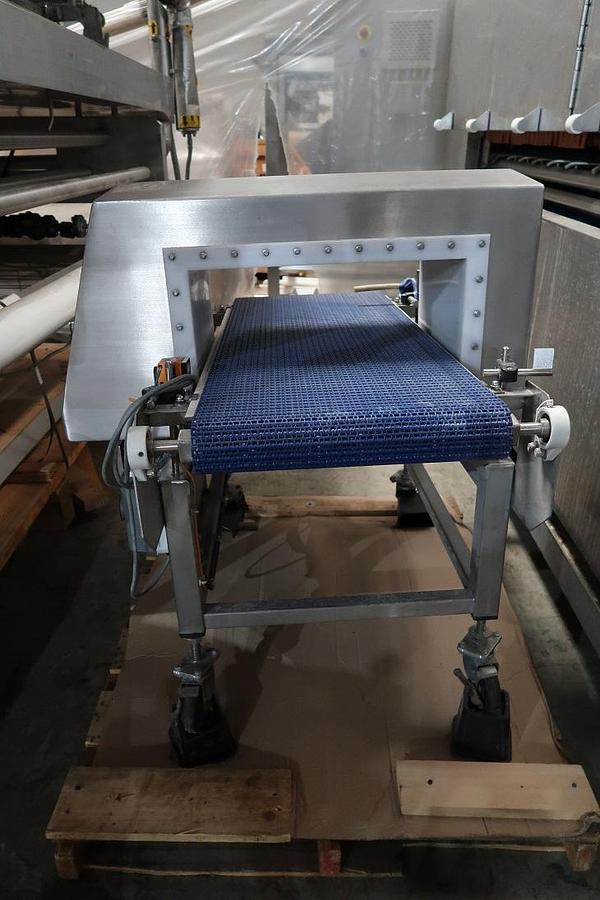
A motorized metal detector refers to a unit that includes a self-contained conveyor drive system integrated directly into the detector frame. The conveyor belt is powered by an electric motor built into the machine, which means the detector operates as a standalone inspection station rather than relying on an external conveyor line to move product through the aperture. This configuration gives production managers flexibility in placement, since the unit does not need to be synchronized with or physically attached to an existing conveyor system to function.
Motorized configurations are common in food and pharmaceutical lines where the metal detector serves as a dedicated quality control checkpoint, often positioned at the end of a packaging line or between processing stages. The integrated drive also allows for independent speed control, which can be adjusted to optimize detection performance for specific product types or package sizes. On the used market, motorized detectors are generally considered more versatile than non-motorized tunnel-only units, since they can be repositioned or repurposed more easily if a production line is reconfigured. Buyers evaluating a used motorized unit should confirm that the belt, drive motor, and speed control components are in functional condition, as these are wear items that may need attention on older machines.
Are used Loma and Lock metal detectors compliant with food safety standards like HACCP, BRC, or IFS?
Loma and Lock metal detectors are designed to support compliance with major food safety frameworks including HACCP (Hazard Analysis and Critical Control Points), BRC (British Retail Consortium), and IFS (International Featured Standards). These frameworks require manufacturers to identify and control physical contamination hazards, and a properly functioning metal detector is one of the most common critical control points in a food production HACCP plan. Both brands include features such as automatic reject verification, audit trail data logging, and performance testing protocols that align with what auditors expect to see at a CCP.
When purchasing a used metal detector, compliance readiness depends heavily on the condition and configuration of the specific machine. A used unit that has been well-maintained and is operating within its specified sensitivity parameters can absolutely serve as a compliant CCP in a food facility, but the buyer's quality team and any relevant third-party auditors will need to validate the machine's performance through documented sensitivity testing using certified test pieces. Buyers should ask the seller for any available service history, calibration records, or prior validation documentation, as this information can significantly reduce the time and cost of qualifying the machine in a new facility.
Can a used Loma or Lock metal detector be integrated into an existing production line?
Used Loma and Lock metal detectors are generally designed with integration in mind, and most models include electrical outputs for connecting to upstream and downstream equipment such as reject mechanisms, stoplights, alarms, and line control systems. Conveyor-based units can typically be positioned in-line with existing belt systems, provided the aperture height and belt width are compatible with the product and packaging being inspected. Many models also support communication protocols that allow data to be transmitted to plant-level monitoring or ERP systems, though the availability of these features depends on the specific model and software version.
Integrating a used detector does require some engineering evaluation upfront. Buyers should confirm that the machine's aperture dimensions match their product profile, that the conveyor height is compatible with their line layout, and that the reject system (air blast, pusher, or diverter) is appropriate for their package type. Electrical compatibility with facility voltage and control systems should also be verified before purchase. Reputable used equipment dealers will typically accommodate video inspections or provide detailed specifications to help buyers assess fit before committing, and some machines may still be installed in active production facilities where a more thorough evaluation can be arranged.
What should buyers look for when evaluating a used Loma or Lock metal detector?
Evaluating a used metal detector requires attention to both mechanical and electronic condition. On the mechanical side, buyers should inspect the conveyor belt for wear, cracking, or contamination buildup, check the frame and aperture housing for physical damage or corrosion, and confirm that the reject mechanism operates correctly. For food-grade units, the condition of seals, gaskets, and any washdown-rated components is worth examining closely, since deteriorated seals can compromise both hygiene and the machine's IP (ingress protection) rating.
On the electronics side, the key question is whether the detector can still achieve its rated sensitivity for ferrous, non-ferrous, and stainless steel contaminants. Asking the seller to demonstrate detection performance using calibrated test spheres is the most direct way to assess this. Buyers should also ask about the age and version of the control software, the availability of spare parts for that model from the manufacturer, and whether the machine has any active fault codes or known issues. Loma and Lock are established brands with service networks, but the level of support available for older or discontinued models can vary, so it pays to contact the manufacturer directly to understand what parts and technical assistance they can provide for the specific unit being considered.
What are typical conveyor belt sizes and aperture configurations available on used Loma and Lock metal detectors?
Loma and Lock metal detectors are manufactured in a range of aperture sizes to accommodate different product formats and packaging types. Aperture widths on conveyor-based units commonly range from around 200mm (roughly 8 inches) for small packaged goods up to 600mm or wider for larger products or bulk applications. Aperture heights vary as well, with low-profile configurations available for flat or thin products and taller openings for bulkier items like whole poultry, large retail packs, or industrial containers. The aperture size directly affects detection sensitivity, as a smaller opening produces a stronger electromagnetic field relative to the product size, improving the ability to detect small metal fragments.
On the used market, buyers will find a variety of configurations depending on what was originally specified for the previous owner's production line. It is worth noting that aperture size is fixed in most standard metal detector designs, so a unit with a 400mm wide by 150mm tall aperture cannot be easily modified to a different size. Buyers should confirm that the aperture dimensions of any used unit are compatible with their own product dimensions and packaging before purchasing. Sellers of used inspection equipment can typically provide detailed mechanical drawings or specifications sheets to help with this evaluation.
How does purchasing a used Loma or Lock metal detector differ from buying one directly from the manufacturer?
Buying a used metal detector from a secondary market dealer is fundamentally different from a factory purchase in a few key ways. Used equipment is sold in 'as-is' condition, meaning the machine reflects its actual current state rather than a factory specification. There are no manufacturer warranties transferred through a used equipment sale, and the buyer takes on the responsibility of verifying the machine's condition through inspection before committing to a purchase. This places real importance on choosing a dealer with a solid track record in industrial or food processing equipment, since their knowledge of the machinery and their willingness to facilitate thorough inspections directly affects the buyer's ability to make an informed decision.
The tradeoff is cost. Used Loma and Lock metal detectors are typically available at a fraction of the cost of a comparable current-production unit, which makes them attractive for operations looking to add or upgrade inspection capability without a large capital outlay. Buyers should factor in potential reconditioning costs, integration expenses, and any parts that may need replacement when calculating the true landed cost of a used machine. Consulting with the manufacturer about parts availability and service support for the specific model and serial number is a practical step that can prevent surprises after the purchase.
What should buyers know about shipping and logistics for a used Loma or Lock metal detector?
Metal detectors are precision instruments with sensitive electronics and mechanical components, so proper packaging before shipment is critical. Depending on the size and configuration of the unit, shipping may require custom palletization, foam padding around the aperture and control head, and in some cases full wooden crating to prevent damage in transit. Larger motorized conveyor systems may also require professional rigging for loading and unloading, particularly if a forklift or crane is needed to move the machine safely. These packaging and rigging requirements add to the overall cost of the purchase and should be discussed with the seller upfront to get an accurate picture of total landed cost.
Shipping rates will vary based on the machine's dimensions and weight, the origin and destination, and the carrier used. Freight for industrial equipment of this type is typically quoted on a per-shipment basis rather than a standard rate. Buyers should request a detailed breakdown of packaging, rigging, and freight costs from the seller before finalizing a purchase. Payment terms for used equipment purchases generally require full payment prior to shipment, which is standard practice in the used machinery industry. Buyers who are unfamiliar with a particular dealer should take time to research the seller's history and reputation, and take advantage of any inspection opportunities offered before funds are transferred.