Category
Manufacturer
Model
FAQ:
What is a Logical Machines stainless steel weigh type filler?
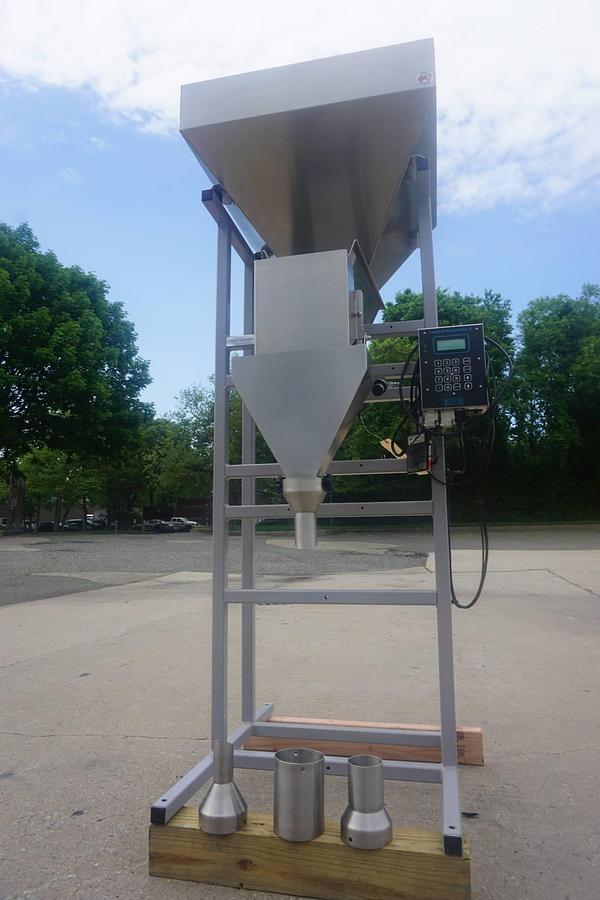
A Logical Machines stainless steel weigh type filler is a filling machine designed to dispense product by weight rather than by volume. The weigh-fill method is widely used in food, pharmaceutical, chemical, and nutraceutical production because it delivers a higher degree of accuracy per fill cycle compared to volumetric alternatives. The stainless steel construction makes these machines well-suited for environments that require frequent washdowns or strict sanitation standards, which is why they are a common choice in food processing and regulated manufacturing settings.
The foot switch feature on these machines allows an operator to trigger each fill cycle hands-free, which speeds up production on semi-automatic lines and reduces operator fatigue during longer production runs. Weigh fillers from Logical Machines are typically used for free-flowing granular products, powders, and similar materials where consistent net weight is critical for regulatory compliance or customer satisfaction. When purchasing a used Logical Machines weigh filler, buyers should confirm the scale calibration status, inspect the hopper and contact parts for wear or residue, and verify that the foot switch and control components are fully functional.
What should I look for when buying a used Logical Machines filler?
Inspecting a used Logical Machines filler carefully before purchase is the most important step a buyer can take. Key areas to evaluate include the condition of the stainless steel contact surfaces, the accuracy and calibration of the weighing system, the integrity of the hopper and discharge components, and the working condition of the foot switch and any electronic controls. Wear on seals, gaskets, and discharge gates is common on machines that have seen heavy production use, and replacement parts availability should be confirmed with the manufacturer before committing to a purchase.
Buyers should request an in-person inspection, a video walkthrough, or detailed photo documentation from the dealer to get an accurate picture of the machine's current condition. Some machines may still be installed in an active facility where a live demonstration can be arranged. Keep in mind that most used equipment dealers do not have the production permits required to run actual product through a machine during a dealer-side inspection, so buyers should factor that limitation into their evaluation process. Consulting Logical Machines directly about parts availability and technical support for the specific model under consideration is also a smart step before finalizing a purchase.
What industries commonly use weigh type filling machines?
Weigh type filling machines are used across a broad range of industries where accurate fill weights are a regulatory or commercial requirement. Food processing is one of the largest application areas, covering products like coffee, nuts, grains, snack foods, spices, and frozen vegetables. Pharmaceutical and nutraceutical manufacturers rely on weigh fillers for powders, capsules, and granular supplements. Chemical and agricultural companies use them for fertilizers, seeds, and industrial powders. In nearly all of these sectors, net weight labeling laws require that the amount of product in each package matches the declared weight on the label, making fill accuracy a compliance issue rather than just a quality preference.
Semi-automatic weigh fillers like those produced by Logical Machines are particularly common in small to mid-size production operations where flexibility matters as much as throughput. A single machine can often be adjusted to handle a range of products and container sizes, which makes it a cost-effective piece of equipment for contract packagers or manufacturers running multiple SKUs. Used weigh fillers in good working condition represent a practical way for smaller operations to access accurate filling technology without the capital outlay of a fully automated line.
How does a weigh type filler differ from a volumetric filler?
A weigh type filler measures each dose of product by its mass before dispensing it into a container. A volumetric filler, by contrast, measures a fixed volume of product per cycle, relying on consistent bulk density to deliver a consistent weight. The practical difference matters most with products whose density can vary due to moisture content, temperature, particle size variation, or settling during transport. For those products, a volumetric filler can produce significant weight variation from fill to fill, while a weigh filler compensates automatically because it is measuring mass directly.
For products sold by weight and subject to net content regulations, weigh fillers are generally the more reliable choice. They tend to require more maintenance than simple volumetric systems because the load cells and weighing electronics need periodic calibration, but the accuracy advantage often justifies that added upkeep. Volumetric fillers have their own strengths, particularly for liquids and free-flowing products with very consistent density, where they can operate at higher speeds with lower equipment cost. Understanding which fill method is appropriate for a specific product is an important part of selecting the right used filling equipment.
What does stainless steel construction mean for a filling machine's durability and sanitation?
Stainless steel is the material of choice for filling equipment used in food, pharmaceutical, and chemical applications primarily because of its corrosion resistance and ease of cleaning. The most common grades used in food-contact machinery are 304 and 316 stainless steel. Grade 316 offers better resistance to chloride-based cleaning agents and is preferred in more demanding sanitary environments. A machine built with stainless steel contact parts can withstand repeated washdowns with water, steam, and sanitizing chemicals without corroding or harboring bacteria in the way that painted steel or aluminum surfaces might.
For buyers evaluating a used stainless steel filler, the condition of the welds, surface finish, and any crevices in the contact zone are worth close inspection. Pitting, rust staining, or rough welds can indicate that the machine was not properly maintained or was exposed to incompatible cleaning chemicals. These issues do not always disqualify a machine from further use, but they should be factored into the price negotiation and the buyer's assessment of what reconditioning may be needed before putting the machine back into production.
How is shipping handled for used filling machines, and what costs should buyers expect?
Shipping a used filling machine involves more logistical planning than standard freight because of the weight, size, and mechanical sensitivity of the equipment. The machine will typically need to be palletized or crated before shipment, and the level of packaging required depends on the machine's dimensions, fragility, and the shipping distance involved. Heavier or larger machines may require specialized rigging equipment for loading at the origin and unloading at the destination, and those rigging services carry additional costs that buyers should confirm upfront. Getting a full breakdown of packaging, rigging, and freight charges before agreeing to a purchase is the best way to understand the true landed cost of the equipment.
Buyers should ask the dealer specifically about how the machine will be prepared for transit and whether the shipping quote includes inside delivery, liftgate service, or installation assistance. Damage during shipping is one of the more common complications in used equipment transactions, so thorough crating and proper blocking of moving parts before shipment is worth paying for. For international shipments, customs documentation, import duties, and compliance with destination country equipment standards add another layer of cost and complexity that should be factored into the total acquisition budget.
What are typical payment terms when purchasing used filling equipment?
Most used equipment dealers require full payment before a machine is released for shipment. This is standard practice in the industry and reflects the fact that used machinery transactions carry different risk profiles than purchases from large manufacturers with established credit relationships. Wire transfer is the most common payment method for higher-value machinery purchases. Some dealers may accept other forms of payment for lower-priced items, but buyers should clarify accepted payment methods early in the negotiation process to avoid delays.
Repeat customers with an established relationship with a dealer may occasionally be offered payment terms, but this is not the norm for first-time buyers. Buyers who need financing for equipment purchases can explore third-party equipment financing companies that specialize in used machinery. These lenders evaluate the equipment value and the buyer's creditworthiness independently of the dealer, and they can sometimes structure payments that make a capital purchase more manageable for smaller operations. Confirming financing arrangements before making an offer on a machine is advisable so that payment can be completed promptly once a deal is agreed upon.
Can a used weigh filler be inspected before purchase, and how does that process work?
Inspections are a standard part of the used equipment buying process and are typically accommodated by reputable dealers in several formats. An in-person inspection at the dealer's warehouse or at the facility where the machine is currently installed gives the buyer the most complete picture of the equipment's condition. If travel is not practical, many dealers can arrange a video call walkthrough or provide detailed video recordings of the machine, including footage of the controls, contact surfaces, and any visible wear. Still photos covering all angles, close-ups of critical components, and the nameplate data are a reasonable minimum for any remote evaluation.
It is worth understanding that most dealers cannot run actual product through a machine during an inspection because production operations require permits and facility setups that a used equipment dealer does not maintain. What a buyer can reasonably expect is confirmation that the machine powers on, that mechanical components move freely, and that the weighing system responds correctly. For machines that are still installed in an active production environment, the dealer may be able to arrange an inspection at the plant where the equipment is in use, which can provide a much clearer picture of real-world performance. Buyers should always request an inspection before finalizing any used equipment purchase.
How do buyers assess parts and service support for a used Logical Machines filler?
Before purchasing any used filling machine, confirming parts availability is a practical necessity. The age and model of the machine directly affect how readily spare parts can be sourced, and some older models may have components that are no longer stocked by the manufacturer or that require custom fabrication to replace. Contacting Logical Machines directly with the model number and serial number of the machine under consideration is the most reliable way to get an honest assessment of what parts and technical support are available for that specific unit.
Beyond the manufacturer, the used equipment dealer's familiarity with the machine is worth gauging during the buying process. A dealer who specializes in packaging and filling equipment and has handled multiple units of the same model will often have practical knowledge about common wear points and available aftermarket parts that a general machinery reseller would not. Third-party service technicians who work on filling and packaging equipment can also be a resource for parts sourcing and repairs. Buyers should budget for at least a basic inspection by a qualified technician after taking delivery, even if the machine appeared to be in good condition during the pre-purchase evaluation.
What questions should a buyer ask a used equipment dealer before purchasing a filling machine?
A thorough set of questions before purchase can prevent costly surprises after a machine arrives. Buyers should ask about the machine's production history, including what product it was used to fill, how many shifts it ran, and when it was last serviced. Asking for any available maintenance records or service documentation is worth doing even if records are incomplete, since partial records can still reveal useful information about the machine's history. The dealer should also be asked to confirm the machine's current operational status and to describe any known defects or issues honestly.
On the logistics side, buyers should request an itemized breakdown of all costs associated with the purchase, including the machine price, packaging and crating fees, rigging charges, freight, and any applicable taxes or import duties for international transactions. Clarifying the payment process, the timeline from payment to shipment, and how the machine will be prepared for transit are all practical questions that help avoid misunderstandings. Finally, asking about the dealer's experience with the specific brand and type of equipment, and how long they have been operating in the used machinery market, gives useful context for assessing the reliability of the information being provided.