Category
Manufacturer
Model
Lock
Lock specializes in industrial locking and security solutions, catering to the manufacturing and logistics sectors. Their products include heavy-duty locks and security systems designed to protect valuable equipment and inventory.
FAQ:
What is a Lock conveyorized metal detector and what industries use them?
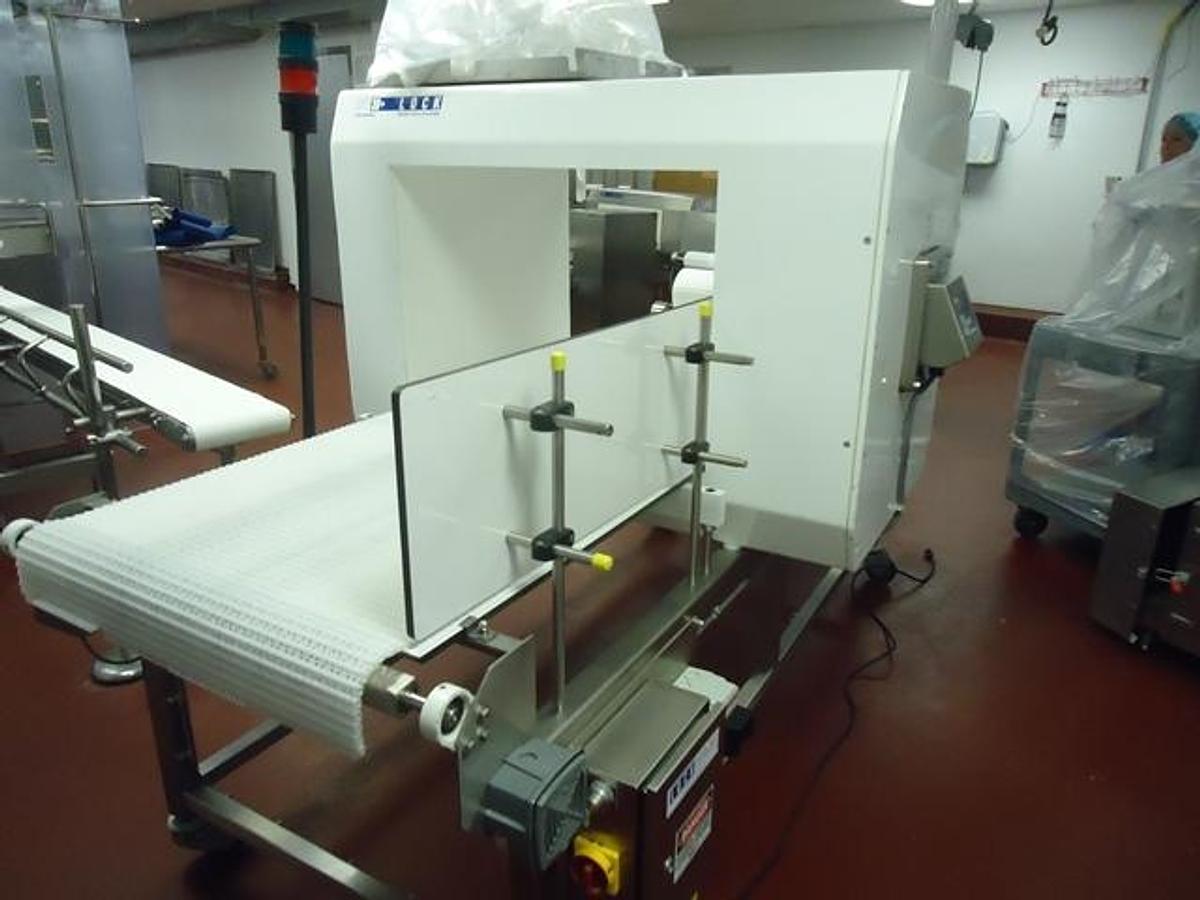
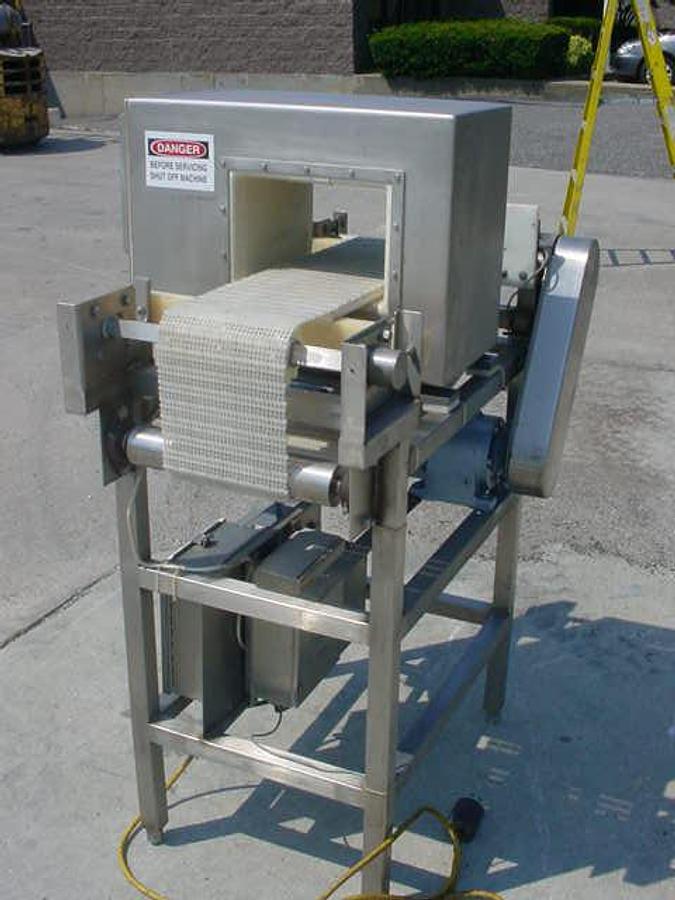
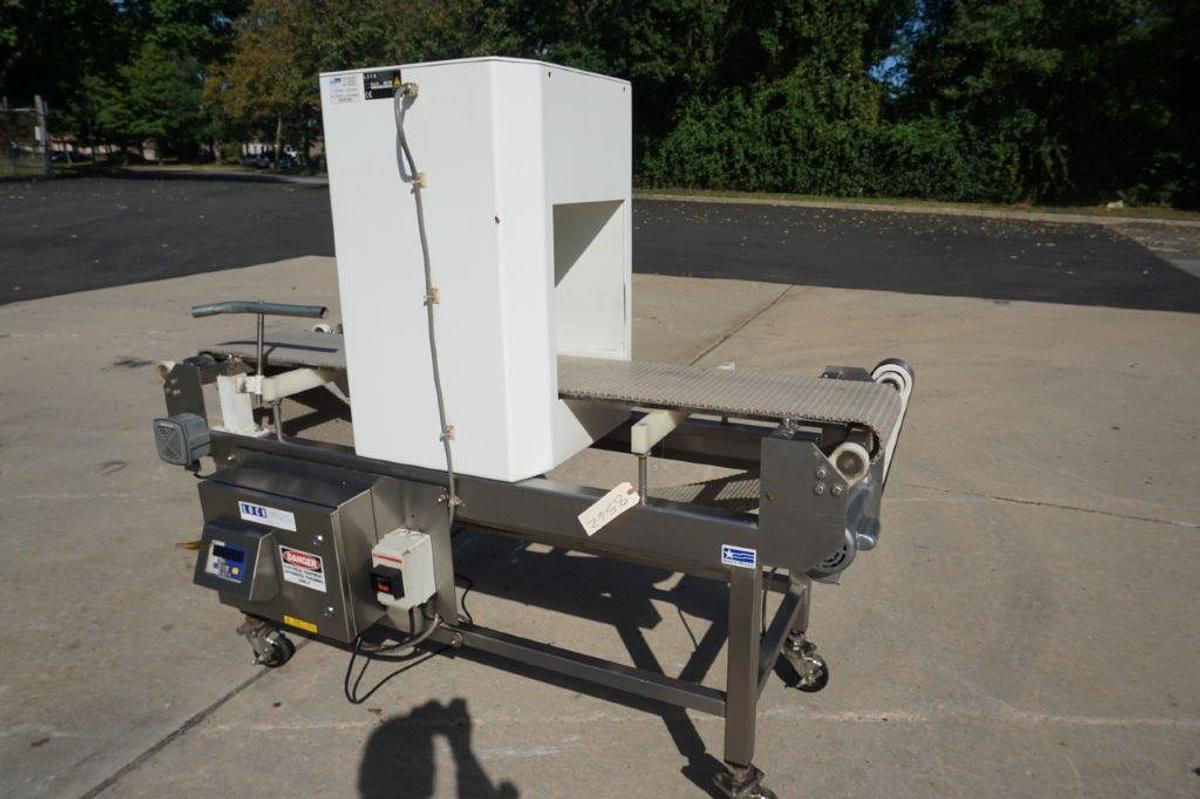
Lock is a manufacturer known for producing industrial-grade conveyorized metal detectors used primarily in food processing, packaging, and manufacturing environments. Their machines, such as the Lock MET30+ and Metalchek 9, are designed to inspect products moving along a production line and detect the presence of ferrous, non-ferrous, and stainless steel contaminants before goods reach consumers or downstream equipment. The conveyorized design means products pass through an aperture on a belt, allowing continuous inline inspection without interrupting production flow.
These detectors are widely used in sectors where metal contamination poses a serious safety or quality risk, including meat and poultry processing, bakery and snack food production, pharmaceutical manufacturing, and industrial parts inspection. The aperture size of a given machine determines what product sizes it can accommodate. For example, a unit with a 14-inch wide by 15-inch high aperture handles a different product range than a smaller unit with a 10-inch wide by 6.5-inch high opening. Buyers selecting a used Lock metal detector should match the aperture dimensions carefully to their specific product dimensions and line speed requirements.
What models of used Lock metal detectors are commonly available on the market?
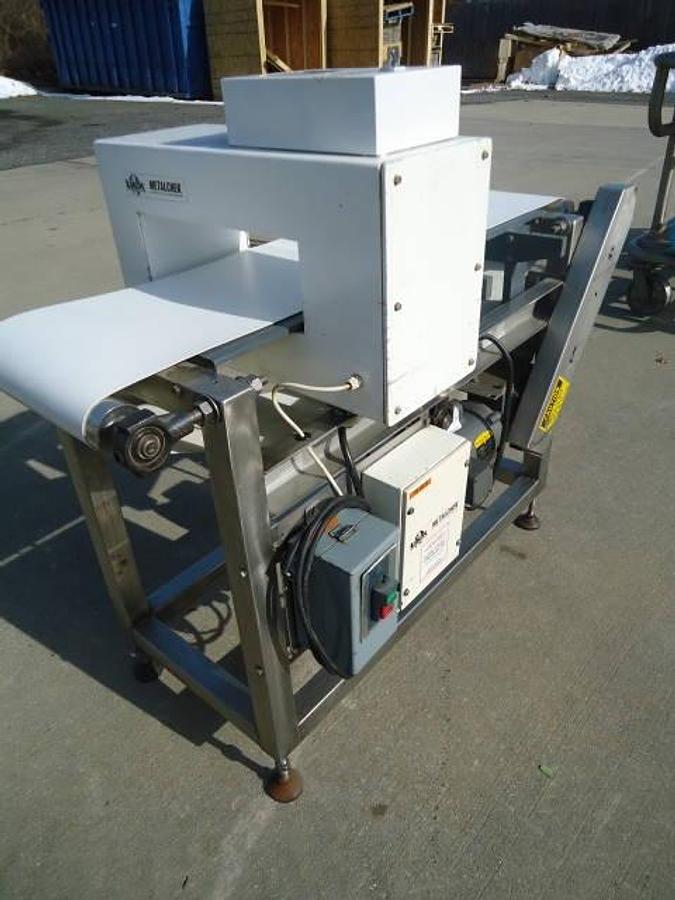
Several Lock metal detector models appear regularly in the used industrial equipment market. The Lock MET30+ is one of the more commonly encountered models, available in different aperture configurations. One version features a 14-inch wide by 15-inch high aperture, while another configuration offers a larger 29.5-inch wide by 21-inch high opening, making it suitable for wider conveyor lines or bulkier product formats. The Lock Metal Chek conveyorized model with air reject is another frequently listed unit, designed to automatically eject detected contaminated product from the line using a pneumatic air blast. The Metalchek 9 is a smaller-aperture model, with approximately a 10-inch wide by 6.5-inch high opening, better suited for smaller packaged goods.
Each model has different sensitivity capabilities, reject mechanisms, and integration requirements, so buyers should research the specific model they are considering and, where possible, consult the manufacturer to confirm whether technical support, spare parts, and documentation are still available for that particular unit. Age and production era of the machine can significantly affect parts availability, which is a key consideration when purchasing used inspection equipment.
What does the air reject feature on a conveyorized metal detector do?
An air reject system is an automatic contamination removal mechanism built into certain conveyorized metal detectors, including some Lock Metal Chek models. When the detector identifies a metallic contaminant in a passing product, it triggers a timed burst of compressed air directed at the product to divert it off the main conveyor line and into a reject bin or separate lane. This happens without stopping the line, which preserves throughput and reduces manual intervention. The timing of the air blast is calibrated to the belt speed so that the correct product package is rejected rather than adjacent ones.
Air reject systems are particularly common in food and pharmaceutical production environments where maintaining line speed is critical and where contaminated product must be physically segregated before it can be reviewed by quality control staff. Buyers evaluating a used metal detector with an air reject feature should confirm that the pneumatic components are functional and that the reject timing parameters can be reconfigured for their specific belt speed and product spacing. Since used machines may have been calibrated for a previous application, recalibration is typically required before the unit is put back into production service.
What should buyers inspect when evaluating a used Lock metal detector before purchasing?
Evaluating a used conveyorized metal detector requires attention to both the electronic detection components and the mechanical conveyor system. On the detection side, buyers should ask whether the machine powers on, whether the sensitivity settings are adjustable, and whether the control panel or interface is functioning correctly. The coil assembly inside the aperture is the most critical component and is expensive to replace, so any signs of physical damage to the aperture housing or evidence of prior water or chemical exposure should be noted. Reputable used equipment dealers will typically accommodate in-person or video inspections so buyers can assess the machine's current condition directly.
On the mechanical side, the conveyor belt, drive motor, reject mechanism, and frame should all be examined for wear, corrosion, or damage. It is worth asking whether the machine was recently in production or has been sitting idle, as prolonged storage can affect belts, seals, and electronic components. Keep in mind that most used equipment dealers do not have the production permits or facilities to run actual product through the machine during an inspection, so functional testing is generally limited to powering the unit and observing its basic operation. Buyers should factor this limitation into their purchase decision and budget for any refurbishment or recalibration that may be needed once the machine arrives at their facility.
How is aperture size determined when selecting a metal detector for a production line?
Aperture size is one of the most important specifications to match when selecting a conveyorized metal detector for a specific application. The aperture is the opening through which product passes, and its width and height must be large enough to accommodate the largest product or packaging format running on that line, including any tray, box, or pouch dimensions. As a general rule, the larger the aperture, the lower the achievable sensitivity, because a larger opening requires the detection coils to cover more area, which reduces their ability to detect very small metal particles. For this reason, using the smallest aperture that still fits the product is considered best practice in the industry.
For context, a Lock MET30+ with a 14-inch by 15-inch aperture would be appropriate for mid-sized packaged goods, while the 29.5-inch by 21-inch version is better suited for larger format products or wider conveyor systems. The Metalchek 9 with its roughly 10-inch by 6.5-inch aperture targets smaller packaged items. When buying a used machine, the aperture dimensions are fixed and cannot be meaningfully altered, so buyers must confirm the dimensions match their line before purchasing rather than assuming adjustments can be made after the fact.
What is the difference between a metal detector and an X-ray inspection system for food production?
Metal detectors and X-ray inspection systems both serve as contamination detection tools in food and pharmaceutical manufacturing, but they operate on different principles and have different detection capabilities. A metal detector uses electromagnetic fields to identify the presence of conductive metal contaminants, including ferrous metals like steel and iron, non-ferrous metals like aluminum and copper, and stainless steel. They are well-established, relatively straightforward to operate and maintain, and are often the more cost-effective option, particularly in the used equipment market. Lock metal detectors fall into this category.
X-ray inspection systems use radiation to generate an image of the product's interior and can detect a broader range of foreign bodies, including dense plastics, glass, bone fragments, and rubber, in addition to metals. X-ray systems are generally more expensive to purchase and maintain, and they carry additional regulatory considerations around radiation safety. For many food processing applications, a properly calibrated metal detector provides sufficient contamination control at a significantly lower cost, which is why used conveyorized metal detectors from manufacturers like Lock remain in strong demand among processors looking to meet HACCP and food safety compliance requirements without the capital outlay of an X-ray system.
What factors affect the sensitivity of a conveyorized metal detector?
Several variables influence how well a conveyorized metal detector can detect small metal contaminants. Aperture size is one of the primary factors, as discussed separately, but product effect is another major consideration. Many food products, particularly those with high moisture, salt, or fat content, are electrically conductive themselves, which can interfere with the detector's signal and reduce effective sensitivity. This phenomenon is often called the product effect, and modern metal detectors include phase adjustment or product learn functions to compensate for it. Buyers evaluating a used machine should ask whether it has this capability and whether it can be reprogrammed for their specific product.
Belt speed, the type of metal being detected, and the orientation of the metal contaminant within the product also affect detection performance. Stainless steel is the most difficult metal to detect reliably because it is a relatively poor conductor, which is why stainless steel detection performance is often used as the benchmark when comparing detector sensitivity specifications. Environmental factors like vibration, nearby electrical equipment, and temperature fluctuations can also degrade performance if not properly managed. When commissioning a used metal detector in a facility, running validation tests with certified test pieces of known size and metal type is the standard method for confirming the machine is performing within acceptable sensitivity parameters before it is used in production.
How should a used conveyorized metal detector be shipped and what should buyers expect regarding freight costs?
Conveyorized metal detectors are industrial machines that require careful preparation before transport to avoid damage to sensitive detection coils, conveyor components, and control electronics. Depending on the size and configuration of the unit, the machine will typically need to be palletized or crated, and the level of packaging required directly affects freight costs. Smaller units like the Lock Metalchek 9 may ship on a standard pallet with appropriate blocking and bracing, while larger machines like the MET30+ in the 29.5-inch wide configuration may require a custom crate or additional structural support to prevent movement during transit.
For larger or heavier machines, professional rigging equipment may be needed to load the unit onto a truck at the point of origin and unload it at the buyer's facility, which adds to the total landed cost. Buyers should request a detailed breakdown of packaging, rigging, and freight charges from the seller before finalizing a purchase so there are no surprises. It is also worth confirming whether the freight quote includes liftgate service at delivery, since many industrial facilities do not have a loading dock capable of receiving heavy freight without one. Understanding the full landed cost, not just the machine price, is essential to accurately evaluating the total investment in a used metal detector.
What payment terms are typical when purchasing used industrial metal detection equipment?
Used industrial equipment transactions generally require full payment before the machine is released for shipment. This is standard practice in the used machinery market and reflects the nature of selling pre-owned capital equipment, where the seller needs to confirm cleared funds before arranging logistics. Payment is most commonly made by wire transfer, though some dealers accept other forms of verified payment. Buyers who are working with a dealer for the first time should expect to pay in full prior to shipping as the default arrangement.
In some cases, dealers may extend payment terms to established repeat customers with whom they have a prior business relationship, but this is the exception rather than the rule for first-time transactions. Buyers should also factor in that additional costs beyond the machine price, such as freight, rigging, and any agreed-upon inspection or preparation services, are typically invoiced separately and may be due at different points in the transaction. Clarifying the full payment schedule and what is included in the base price before committing to a purchase helps avoid misunderstandings and ensures both parties are aligned on the total transaction.
How can buyers verify the condition of a used Lock metal detector before committing to a purchase?
Reputable used equipment dealers typically offer several options for buyers to assess a machine's condition before purchase. In-person inspections are the most thorough option and allow a buyer or their technical representative to physically examine the machine, check the control interface, inspect the conveyor and mechanical components, and observe the unit powered on. For buyers who cannot travel to the machine's location, video inspections or recorded walkthroughs are a practical alternative. A dealer should be able to provide detailed video footage showing the aperture interior, control panel, reject mechanism, belt condition, and any visible wear or damage.
It is worth noting that most dealers do not operate production facilities and therefore cannot run actual product through the machine as part of an inspection. Testing is generally limited to powering the unit and demonstrating basic operational functions. Some machines may still be located at the facility where they were last used, in which case the dealer may be able to arrange an inspection at that site, and in some instances the machine may still be in active production there. Buyers should also contact the manufacturer directly to ask about the level of technical support available for the specific model and production era they are considering, since older models may have limited parts availability or documentation, which is an important factor in assessing the long-term usability of the equipment.