Category
Manufacturer
Model
Liverani
FAQ:
What makes stainless steel the preferred material for wine pumps?
Stainless steel, particularly AISI 304 and AISI 316 grades, is the standard material choice for winery pumps because wine is naturally acidic and will corrode lesser metals over time. AISI 316 offers even greater resistance to chlorides and acids than 304, making it the preferred grade for applications involving prolonged contact with wine or aggressive cleaning agents. Beyond corrosion resistance, stainless steel is non-porous, which means it does not harbor bacteria or absorb flavors and odors that could contaminate the wine. Regulatory bodies in most wine-producing countries require food-contact surfaces to meet hygiene standards that stainless steel satisfies without additional coatings or treatments.
Liverani has built its pump line around stainless steel construction specifically because winery environments demand both durability and sanitary compliance. A pump used in wine production may handle thousands of liters per day and must withstand repeated cleaning cycles with caustic or acidic sanitizing solutions. Stainless steel holds up to these cycles without degrading, which is why it remains the material of choice across professional winemaking operations of all sizes.
What types of pumps does Liverani manufacture for winery use?
Liverani produces several pump types, each designed for a specific role within the winery. Peristaltic pumps are well-suited to gentle must and wine transfer because the fluid only contacts a flexible hose inside the pump body, never touching the mechanical components. This design minimizes contamination risk and is particularly valued during delicate stages like moving partially fermented must. Centrifugal pumps are typically used for higher-volume transfers where speed matters more than extreme gentleness, such as moving finished wine between tanks. Lobe pumps offer a middle ground, providing smooth, low-shear flow that works well for transfers where preserving wine structure and aromatics is a priority.
The variety within the Liverani lineup means a winery does not need to source pumps from multiple manufacturers to cover different tasks. A small estate might use a single peristaltic model for most transfers, while a larger commercial facility might deploy centrifugal pumps for bulk movement and lobe pumps for pre-bottling transfers. Understanding which pump type fits each application is an important part of the purchasing decision, and buyers evaluating used Liverani equipment should identify the specific model and pump type before purchase to confirm it matches their intended use.
How do Liverani wine pumps minimize oxidation and protect wine quality during transfer?
Oxidation during pump transfer is a genuine concern for winemakers, especially with delicate white wines, rosés, and low-intervention natural wines where preserving aromatics is critical. Liverani designs several of its pump models to reduce shear force, which is the mechanical stress placed on wine as it moves through the pump. High shear can rupture yeast cells, incorporate dissolved oxygen, and strip volatile aromatic compounds from the wine. Peristaltic and lobe pump designs inherently produce lower shear than impeller-based centrifugal pumps, which is why these types are favored for transfers that happen closer to bottling.
Beyond shear reduction, the smooth internal surfaces of stainless steel pump bodies reduce turbulence during flow, which limits the wine's exposure to air. Some Liverani models are also compatible with inert gas blanketing setups, where nitrogen or CO2 is used to purge oxygen from the pump and transfer lines before wine is introduced. For buyers looking at used Liverani pumps, it is worth confirming the specific model's pump type and internal geometry, as these factors directly affect how gently the machine handles wine in practice.
Are Liverani stainless steel wine pumps suitable for handling must with grape solids or pomace?
Not all wine pumps are built to handle must that contains grape skins, seeds, or pulp. Centrifugal pumps with tight impeller clearances can clog or suffer accelerated wear when solids are present. Liverani's peristaltic models are generally the most tolerant of solids-laden must because the pumping action is entirely external to the fluid path. The flexible hose inside the pump compresses and releases to move liquid, and solid particles pass through without contacting any metal components. This makes peristaltic pumps a common choice during harvest when must comes directly off the crusher-destemmer and still contains significant solid material.
Lobe pumps can also handle some level of solids depending on the lobe clearance and the size of the particles involved. Buyers evaluating a used Liverani pump for must handling should check the model specifications carefully, particularly the maximum particle size the pump can pass without damage. It is also worth inspecting the condition of the hose on used peristaltic models, as hoses are wear items that need periodic replacement and the cost of a replacement hose should be factored into the overall purchase decision.
What power supply configurations are typical for Liverani wine pumps?
Liverani wine pumps are produced in both single-phase and three-phase electrical configurations. Smaller models intended for boutique wineries or mobile use are often available in single-phase, which runs on standard 220-240V supply common in most facilities and residences. Three-phase configurations are standard for larger, higher-capacity pumps because three-phase motors run more efficiently, generate less heat, and provide more consistent torque at higher flow rates. Most commercial wineries already operate three-phase electrical infrastructure, so this is rarely a constraint at that scale.
For buyers purchasing used Liverani pumps, confirming the voltage and phase configuration of a specific machine before purchase is essential. A pump wired for European three-phase supply (typically 380-400V, 50Hz) may require a transformer or rewiring to operate correctly on North American electrical systems (typically 460V, 60Hz). The motor nameplate on the pump will list the voltage, phase, and frequency requirements. Buyers who are unsure about electrical compatibility should consult an electrician familiar with industrial equipment before completing a purchase, as motor modifications can add meaningful cost to the total acquisition price.
How are Liverani wine pumps cleaned and sanitized between uses?
Sanitation is one of the most operationally demanding aspects of running winery equipment, and pump design has a significant impact on how quickly and thoroughly cleaning can be accomplished. Liverani stainless steel pumps are designed with smooth internal surfaces and minimal dead zones where wine residue could accumulate and harbor spoilage organisms. Many models in the Liverani lineup are compatible with CIP (Clean-In-Place) protocols, which allow cleaning solutions to be circulated through the pump without full disassembly. CIP capability is a major time-saver in commercial operations where pumps may be used multiple times per day during harvest.
For models that are not CIP-compatible, or for deeper periodic cleaning, the pump can be disassembled to access internal components for manual cleaning. The stainless steel construction tolerates both caustic (alkaline) and acidic cleaning agents, which are the two primary types used in winery sanitation programs. Buyers evaluating used Liverani pumps should inspect internal surfaces for pitting, scale buildup, or discoloration that might indicate inadequate cleaning history or exposure to incompatible chemicals. A thorough pre-purchase inspection, whether in person or via detailed video, should include a look at the pump's internal wetted surfaces.
What flow rates can be expected from Liverani stainless steel wine pumps?
Flow rate capacity varies considerably across the Liverani product range depending on pump type, model size, and motor power. Smaller peristaltic models designed for boutique winery use may deliver flow rates in the range of 20 to 80 liters per minute, which is adequate for transferring wine between barrels or small tanks. Mid-range lobe and centrifugal models typically cover 100 to 500 liters per minute, suitable for estate wineries processing several hundred tons of fruit per vintage. Larger industrial centrifugal models can exceed 1,000 liters per minute for high-volume commercial operations.
For buyers considering used equipment, the rated flow rate on the manufacturer's specification plate is a useful starting point, but actual performance in service depends on factors like hose condition (for peristaltic models), impeller wear, and the viscosity of the product being pumped. Must with high sugar content is more viscous than finished wine, which affects achievable flow rates. When inspecting a used Liverani pump, asking the seller about the pump's service history and any performance observations from previous use can provide context that the spec plate alone does not capture.
What should buyers look for when purchasing a used Liverani wine pump?
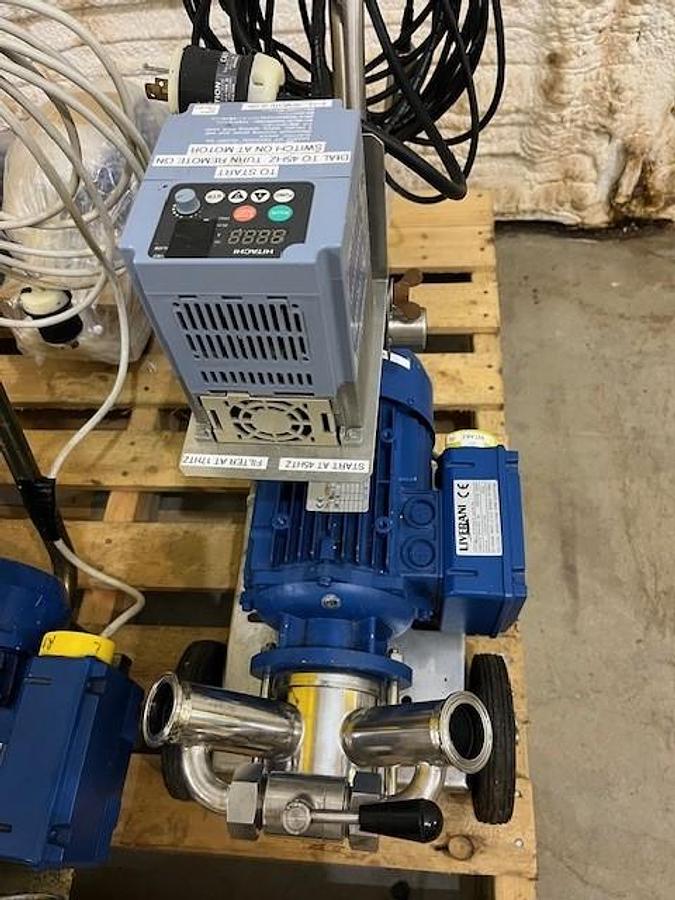
Buying used winery equipment requires a more thorough evaluation process than purchasing machinery direct from a manufacturer, since there is no production-line quality check and the machine's history may not be fully documented. For a used Liverani pump, the most important areas to inspect are the wetted surfaces inside the pump body, the mechanical seals, and the motor condition. Pitting or corrosion on internal stainless steel surfaces can indicate exposure to incompatible chemicals or prolonged contact with wine that was not properly cleaned out. Mechanical seals are wear items and their condition directly affects whether the pump will run without leaking.
Reputable used equipment dealers will typically accommodate in-person or video inspections so buyers can assess condition before committing. Buyers should request detailed photos or video of the pump's interior, the motor nameplate (for electrical specifications), and any visible wear points. It is also worth contacting Liverani directly to ask about parts availability for the specific model under consideration, since older or discontinued models may have limited support. Age and model generation can significantly affect how readily replacement parts like hoses, seals, and impellers can be sourced, and this should factor into the purchase decision alongside the asking price.
How do Liverani wine pumps compare to other Italian winery pump manufacturers?
Italy has a dense concentration of winery equipment manufacturers, and several Italian brands compete in the same market segment as Liverani. Companies like Sames, Mori, and Colombo also produce stainless steel wine pumps with similar material specifications and pump type offerings. What differentiates manufacturers in this category tends to come down to build quality in specific components, the range of pump types offered, and the availability of replacement parts in a buyer's region. Liverani has maintained a consistent presence in professional winemaking markets across Europe, North America, and Australia, which has contributed to a relatively strong aftermarket parts network compared to smaller or more regionally focused Italian brands.
For buyers evaluating used Italian wine pumps, brand reputation matters primarily in the context of parts and service support. A well-known brand with an established distributor network means that seals, hoses, and other wear items are more likely to be available without long lead times or custom fabrication. When comparing used Liverani pumps against competing Italian brands on the secondary market, buyers should weigh not just the purchase price but also the practical availability of consumable parts, since a pump that cannot be easily serviced has limited long-term value regardless of its initial build quality.
What are the typical shipping and inspection considerations when buying a used Liverani wine pump?
Used wine pumps are industrial equipment and require proper packaging to prevent damage during freight. Smaller Liverani models can typically be palletized and shipped via standard LTL freight carriers, while larger centrifugal or lobe pump units may require custom crating to protect protruding fittings, motors, and pump bodies. Buyers should ask the selling dealer for specific details on how the machine will be packaged, what the shipping weight and dimensions are, and whether any rigging equipment is needed for loading and unloading at either end. Larger pumps may require a forklift or pallet jack at the delivery location, and this should be arranged before the shipment arrives.
Inspection before purchase is strongly recommended for any used pump purchase. Most reputable dealers will accommodate an in-person visit to examine the equipment directly, or will provide a detailed video walkthrough if travel is not practical. The goal of any inspection is to get an accurate picture of the machine's current mechanical condition, including the state of seals, internal surfaces, and the motor. Keep in mind that used equipment dealers generally do not have production permits that would allow them to run wine through the pump during an inspection, so functional testing is typically limited to confirming the motor runs and the pump turns freely. Buyers should factor this limitation into their assessment and price negotiation accordingly.