Category
Manufacturer
Model
Liquid Carbonics
Liquid Carbonics specializes in cryogenic equipment and solutions, focusing on the healthcare and food industries. They are known for their storage and distribution systems for liquid gases, ensuring safe and efficient handling of cryogenic materials.
FAQ:
What types of cryogenic equipment did Liquid Carbonics manufacture?
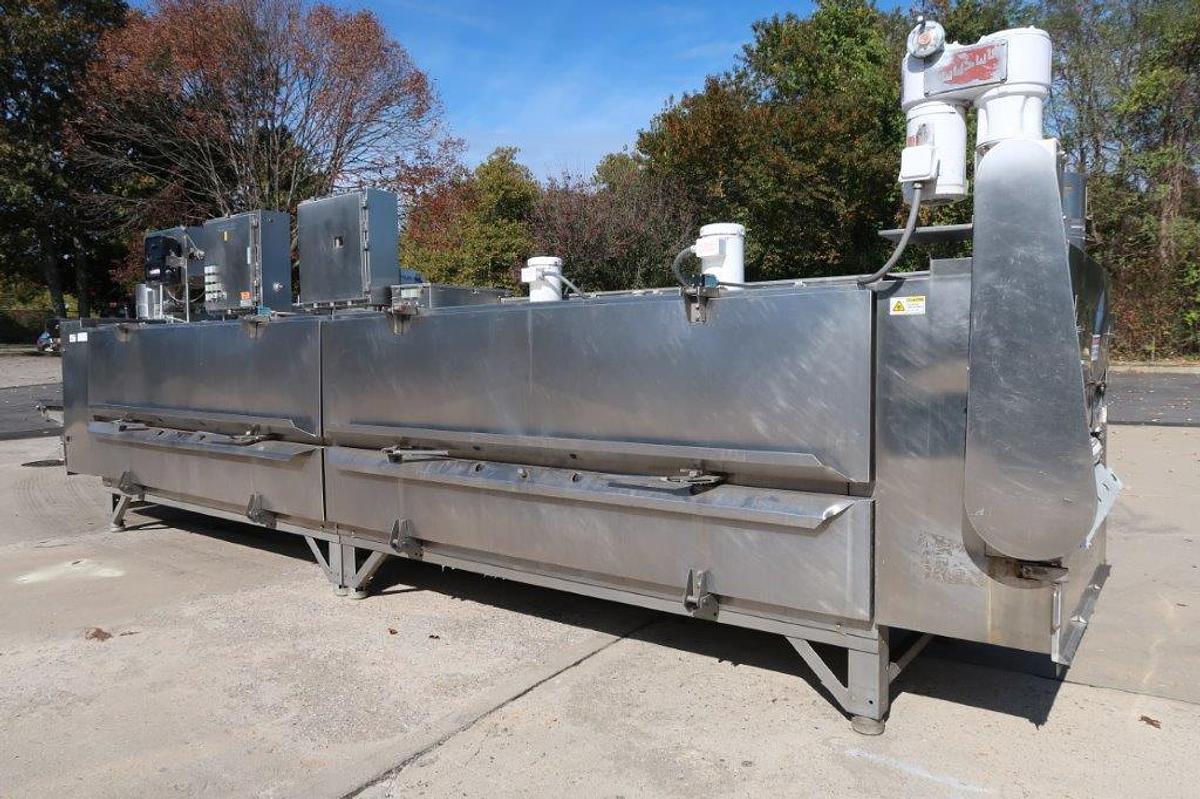
Liquid Carbonics built a broad range of cryogenic equipment centered on the storage, distribution, and application of liquid gases, primarily carbon dioxide (CO2) and liquid nitrogen (LN2). Their product line included cryogenic freeze tunnels, spiral freezers, batch freezers, and immersion chillers designed for high-throughput industrial use. They also manufactured storage and distribution systems for liquid gases, with a strong emphasis on safe and efficient handling of cryogenic materials in demanding production environments. The JE-04 stainless steel freeze tunnel, for example, features a 42-inch wide belt and represents the kind of durable, production-grade equipment the brand was known for.
Their equipment was designed with the food processing and healthcare industries in mind, though many units found use in pharmaceutical manufacturing and other industrial applications as well. Freeze tunnels and cryogenic chillers were among the most widely deployed product types, used to rapidly lower product temperatures in meat, poultry, seafood, baked goods, and ready-meal production lines. Because the equipment was built to handle continuous industrial operation, many units remained functional for decades, which is a large part of why they still appear regularly on the used equipment market today.
Is Liquid Carbonics cryogenic equipment still being manufactured?
Liquid Carbonics equipment is no longer actively manufactured under that brand name. The company built its reputation over several decades supplying cryogenic systems to the food processing and healthcare industries, but the brand is no longer in production. As a result, all Liquid Carbonics equipment available for purchase today comes from the secondary market, sourced through industrial auctions, plant liquidations, decommissioned production facilities, or specialized used equipment dealers.
This does not diminish the practical value of the equipment. Liquid Carbonics machines were engineered for long service lives and heavy industrial use, and well-maintained units continue to perform reliably in active production environments. Buyers researching this brand should focus their search on reputable used industrial equipment dealers who specialize in food processing or cryogenic machinery, as they are the most likely sources for verified inventory and accurate condition assessments. Understanding that the equipment is used and sourced from the secondary market is an important starting point for any purchasing decision.
What industries commonly use Liquid Carbonics cryogenic equipment?
The food processing industry is by far the largest user of Liquid Carbonics cryogenic equipment. Freeze tunnels and cryogenic chillers from this brand are commonly found in facilities processing meat, poultry, seafood, baked goods, pasta, ready meals, and dairy products. Cryogenic freezing with CO2 or liquid nitrogen allows processors to achieve very rapid temperature reduction, which preserves product quality, extends shelf life, and supports high-volume throughput on continuous production lines. The ability to freeze product quickly also reduces drip loss and helps maintain texture in proteins and other moisture-sensitive foods.
Beyond food processing, Liquid Carbonics equipment has been used in pharmaceutical manufacturing, where precise temperature control is critical for preserving the integrity of biological materials and certain drug formulations. Healthcare and laboratory settings have also utilized their liquid gas storage and distribution systems. Industrial applications requiring controlled cryogenic environments round out the user base. Because of this cross-industry applicability, used Liquid Carbonics equipment attracts buyers from a fairly wide range of sectors, and the resale market for these machines reflects that broad demand.
What are the most common Liquid Carbonics cryogenic freezer models available on the used market?
Among the used Liquid Carbonics equipment that circulates on the secondary market, cryogenic freeze tunnels are the most frequently encountered category. The JE-04 stainless steel freeze tunnel with a 42-inch wide belt is one example of the type of continuous-belt freezing equipment the brand produced for food processing applications. These tunnel freezers were designed to handle a steady flow of product on a conveyor belt passing through a cryogenic environment, making them well suited to high-volume protein and prepared food operations.
Availability of specific models fluctuates based on what comes to market through liquidations and plant closures, so the selection at any given time depends on current inventory at used equipment dealers. Buyers looking for a particular model or configuration are best served by working directly with dealers who specialize in cryogenic or food processing equipment, as they tend to have deeper knowledge of what has been available historically and what may be coming to market. Checking with multiple dealers and monitoring industrial auction activity are practical strategies for locating specific Liquid Carbonics models.
Are replacement parts still available for used Liquid Carbonics cryogenic equipment?
Parts availability is one of the more important practical considerations when buying used Liquid Carbonics equipment, and it deserves careful attention before any purchase. Since the brand is no longer actively manufactured, there is no ongoing production of brand-specific replacement parts. Some components, particularly those made to standard industrial specifications such as belts, motors, drives, and common electrical components, may still be sourced through third-party suppliers or fabricated by qualified machine shops. However, proprietary or highly specific components can be harder to locate.
Before finalizing a purchase, buyers are strongly advised to consult directly with the manufacturer or their authorized service network to understand what level of support is realistically available for the specific model and age of equipment being considered. Taking a detailed inventory of the machine's current condition and identifying any components that may need near-term replacement is a practical step that can prevent costly surprises after installation. Dealers who specialize in cryogenic food processing equipment may also have access to spare parts sourced from decommissioned machines, which can be a valuable resource for buyers planning long-term operation of older Liquid Carbonics units.
How should a buyer verify the condition of used Liquid Carbonics equipment before purchasing?
Verifying the condition of used cryogenic equipment before buying requires a combination of physical inspection, documentation review, and direct communication with the seller. Reputable used equipment dealers will typically accommodate in-person inspections, virtual walkthroughs, or detailed video captures of the machine so buyers can assess its current state. If the equipment is still installed at a production facility, it may be possible to arrange an inspection at the plant itself, where the machine might still be in operation or recently decommissioned. Seeing the equipment in its actual environment provides the most accurate picture of its working condition.
Buyers should keep in mind that most used equipment dealers do not have the permitting or production infrastructure to run cryogenic freezers under actual operating conditions, so functional testing with live product is generally not possible at a dealer's facility. The inspection process therefore focuses on physical condition, mechanical integrity, visible wear, and completeness of components. Reviewing any available service records or maintenance logs adds useful context. Consulting with a qualified cryogenic equipment technician or a third-party inspector who specializes in food processing machinery is a sound investment for high-value purchases, as their assessment can identify issues that are not immediately visible during a standard walkthrough.
What cryogenic gases do Liquid Carbonics freezers use, and what does that mean for operating costs?
Liquid Carbonics cryogenic freezers and chillers operate primarily on carbon dioxide (CO2) or liquid nitrogen (LN2), depending on the specific model and application. CO2-based systems typically operate at temperatures around minus 78 degrees Celsius (minus 109 degrees Fahrenheit), while liquid nitrogen systems can reach minus 196 degrees Celsius (minus 320 degrees Fahrenheit), making LN2 equipment suitable for applications requiring extremely rapid or deep freezing. The choice of cryogen affects freezing speed, product quality outcomes, and operating cost structure.
Ongoing cryogen supply is a significant component of total cost of ownership for this type of equipment, and it should be factored into any purchasing evaluation alongside the acquisition price of the used machine. CO2 and LN2 are both commercially available industrial gases, but pricing varies by region, supplier contract terms, and volume consumed. Buyers should establish a reliable supply relationship with an industrial gas provider before commissioning the equipment. Energy costs, maintenance labor, and potential parts sourcing expenses also contribute to the overall cost picture. A thorough cost-of-ownership analysis that accounts for cryogen consumption at the machine's rated throughput capacity is essential for making an informed buying decision.
What installation and utility requirements do Liquid Carbonics cryogenic freeze tunnels typically need?
Cryogenic freeze tunnels from Liquid Carbonics are industrial-scale machines that require careful facility planning before installation. At a basic level, these systems need adequate floor space with appropriate load-bearing capacity, since the equipment itself is heavy and may require reinforced flooring or specific foundation considerations. Electrical service requirements vary by model but typically involve three-phase power at industrial voltages, and the facility's electrical infrastructure must be verified against the machine's specifications before installation begins. Ventilation is another critical factor, as CO2 and LN2 both displace oxygen and can create confined-space hazards if the area is not properly ventilated.
Cryogen supply connections, including insulated piping or bulk storage tanks positioned within safe proximity to the equipment, must also be planned as part of the installation. Depending on the facility and local regulations, permits may be required for bulk cryogen storage or for operating equipment that handles liquefied gases at industrial volumes. Buyers acquiring used cryogenic equipment should work with qualified installation contractors who have direct experience with cryogenic food processing systems, and they should consult with the relevant regulatory bodies in their jurisdiction to ensure compliance. Engaging a knowledgeable equipment dealer early in the process can help buyers anticipate these requirements and avoid delays during commissioning.
What should buyers understand about payment terms and shipping when purchasing used Liquid Carbonics equipment?
Used industrial equipment transactions, including purchases of cryogenic machinery, generally require full payment before the equipment is shipped. Some dealers extend payment terms to established repeat customers, but first-time buyers should expect to pay in full prior to any loading or transport arrangements being made. Understanding the complete landed cost of the equipment is just as important as the purchase price itself, and buyers should request detailed breakdowns of packaging, rigging, and freight charges before committing to a purchase.
Cryogenic freeze tunnels and similar large-format industrial equipment often require specialized rigging for loading and unloading, which adds to the total cost. The level of palletization or crating required to protect the machine in transit will also affect shipping charges, and proper packaging is essential to prevent damage to sensitive components like conveyor belts, drive systems, and cryogen distribution manifolds. Buyers should ask dealers specifically about how the equipment will be prepared for shipment and what the loading process involves at the point of origin. For international purchases, customs documentation, import duties, and compliance with destination-country regulations for cryogenic equipment add further layers of planning that should be addressed before finalizing the transaction.
Why does used Liquid Carbonics cryogenic equipment still hold value on the secondary market?
The durability of Liquid Carbonics equipment is the primary reason used units continue to trade actively on the secondary market decades after manufacture. These machines were built for continuous industrial operation in demanding food processing and healthcare environments, and the construction quality reflects that. Stainless steel fabrication, heavy-duty conveyor systems, and industrial-grade refrigeration components were standard features, and well-maintained units can remain productive for many years beyond their initial service life. That longevity creates a steady supply of viable used machines entering the market through plant liquidations, facility upgrades, and production line changes.
For buyers, the secondary market for Liquid Carbonics equipment offers a practical path to acquiring proven cryogenic freezing capability at a fraction of what comparable capacity would cost from a current manufacturer. Food processors looking to expand capacity, start up a new production line, or replace aging equipment often find that used cryogenic tunnels and chillers represent strong value relative to their acquisition cost. The key is working with dealers who have genuine expertise in cryogenic food processing equipment and who can provide accurate condition assessments, so buyers have a clear picture of what they are acquiring and what investment in reconditioning or parts sourcing may be needed to bring the machine to full operational status.