Category
Manufacturer
Model
Lfa
Lfa is recognized for its innovative packaging machinery, particularly in the pharmaceutical and food sectors. The company is well-known for its tablet press machines and filling equipment, which are designed to meet the stringent requirements of these industries.
FAQ:
What types of tablet press machines does LFA make?
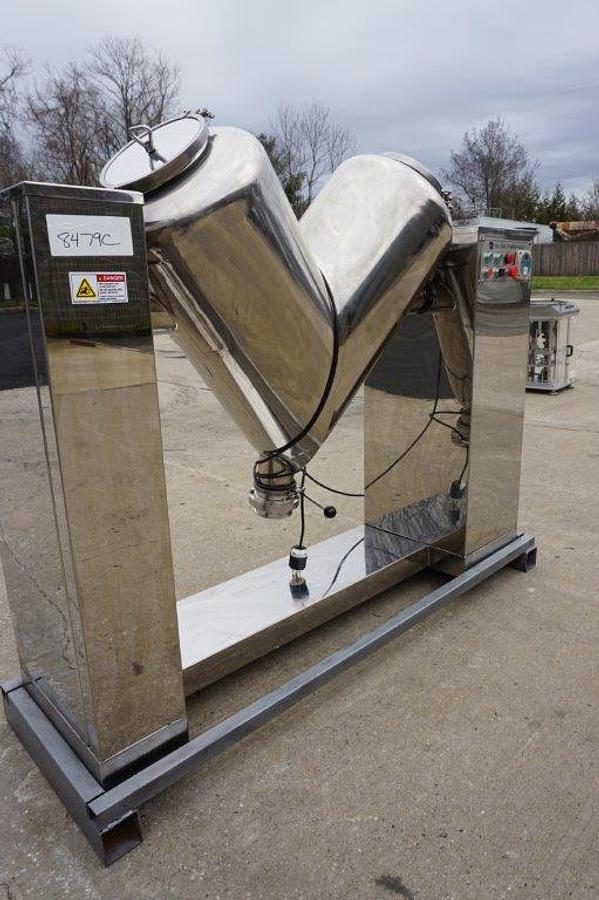
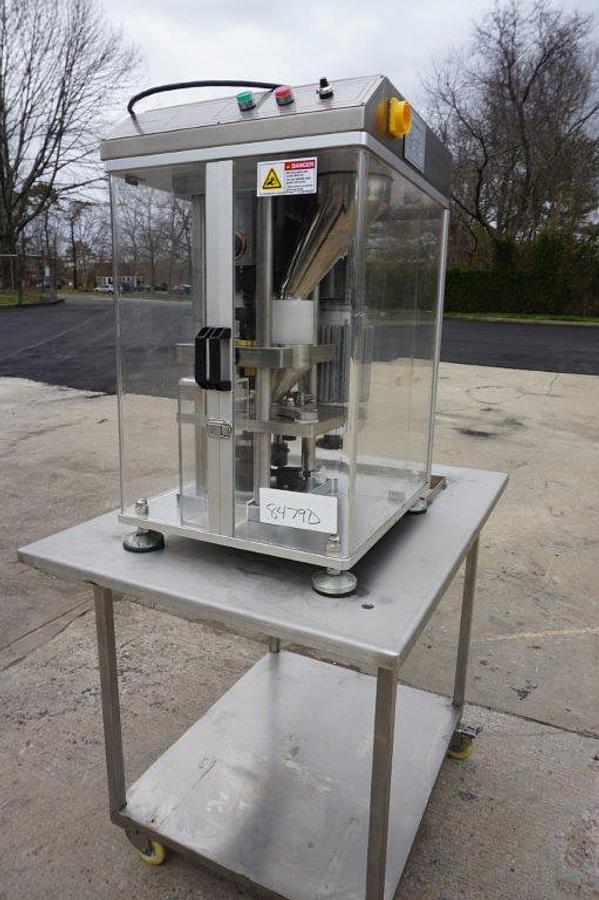
LFA produces a tiered range of tablet press equipment designed to serve different production scales. At the entry level, single punch tablet presses handle small batches and are well-suited for labs, R&D operations, and startups that need to develop and test formulations before committing to high-volume manufacturing. Rotary tablet presses sit at the mid-to-high volume end of the range and are built for producers who need consistent output across longer production runs. LFA also manufactures capsule filling machines and powder blending equipment, such as twin shell V-blenders, which complement the tablet pressing process by handling upstream mixing and preparation.
This tiered approach makes LFA equipment relevant across a fairly wide range of industries. Pharmaceutical manufacturers, nutraceutical brands, herbal supplement producers, and food-sector companies all use LFA machines at various points in their production workflows. Because the machines are designed with scalability in mind, buyers can often start with a single punch press and move up to a rotary model as their output demands grow. When shopping for used LFA equipment, understanding where a specific model sits within this product hierarchy helps buyers match the machine to their actual production needs rather than over- or under-buying capacity.
What is the difference between a single punch tablet press and a rotary tablet press?
A single punch tablet press, sometimes called an eccentric press, uses one set of upper and lower punches and a single die to compress powder into tablets one at a time. The process is straightforward: the lower punch drops to create a cavity in the die, powder fills the cavity, and the upper punch descends to compress the material. This makes single punch machines relatively simple to operate, clean, and maintain, which is why they are a common starting point for small-scale producers, compounding pharmacies, and research labs. LFA's single punch models, for example, accommodate tablet diameters up to 25 mm, covering a broad range of standard tablet sizes.
Rotary tablet presses work on a fundamentally different principle. Multiple punch-and-die stations are arranged around a rotating turret, allowing the machine to produce tablets continuously as the turret spins. Output can range from thousands to hundreds of thousands of tablets per hour depending on the number of stations and the rotation speed, making rotary presses the standard choice for commercial-scale manufacturing. The trade-off is greater mechanical complexity, a larger footprint, and higher purchase cost. For buyers evaluating used LFA equipment, the choice between these two types usually comes down to required output volume, available floor space, budget, and whether the operation prioritizes flexibility and ease of use or throughput and efficiency.
What tablet sizes and shapes can LFA tablet press machines produce?
The tablet sizes and shapes an LFA press can produce depend on the specific model and the tooling installed. LFA's single punch tablet press, for instance, handles maximum tablet diameters up to 25 mm, which covers the vast majority of standard round tablet formats used in pharmaceuticals, nutraceuticals, and supplements. Beyond round tablets, the shape is determined by the punch and die tooling rather than the machine itself. Oval, capsule-shaped, oblong, and custom embossed tablets are all achievable by swapping in the appropriate tooling set, provided the tooling dimensions fall within the machine's specified capacity.
Buyers purchasing used LFA equipment should pay close attention to what tooling is included with the machine, since punches and dies represent a meaningful portion of the total setup cost. It is also worth verifying that any included tooling conforms to recognized standards such as TSM (Tablet Specification Manual) or EU standard, which affects interchangeability with tooling from other suppliers. If the used machine comes without tooling, or with tooling that is worn, factor the cost of replacement or new tooling into the overall budget. Consulting with the seller about the condition and specifications of included tooling is a practical step before finalizing any purchase.
What production output should buyers expect from LFA tablet press machines?
Output capacity varies considerably across LFA's product line. Single punch presses are inherently low-volume machines, typically producing anywhere from a few hundred to a couple of thousand tablets per hour depending on the material being compressed and the cycle speed. This makes them practical for batch sizes in the range of tens of thousands of tablets per shift rather than the millions that commercial rotary presses can achieve. They are well-matched to pilot production, clinical trial batches, small contract manufacturing runs, and product development work where flexibility matters more than throughput.
Rotary tablet presses scale output dramatically by running multiple punch stations simultaneously. Depending on the number of stations and turret speed, a mid-range rotary press can produce tens of thousands to well over a hundred thousand tablets per hour. When evaluating a used LFA rotary press, the rated maximum output is a useful reference point, but actual throughput in practice depends on the formulation being compressed, the hardness and friability targets, and how aggressively the operator runs the machine. Buyers should ask sellers about the operational history of the specific unit, including what products it was used to produce and at what speeds, since this provides a more realistic picture of what to expect than nameplate specifications alone.
Are LFA tablet press machines compliant with GMP or FDA regulatory standards?
LFA designs its tablet press equipment with regulatory compliance in mind, and the machines are marketed with features relevant to CE marking requirements, which apply to equipment sold into European markets. CE marking indicates that a machine meets applicable European health, safety, and environmental protection standards, which is a baseline consideration for pharmaceutical and food-sector buyers operating under EU regulations. For buyers in other jurisdictions, including the United States, the relevant standards are different. FDA compliance in pharmaceutical manufacturing is primarily about the facility, the process, and the documentation practices rather than the machine itself having an FDA approval stamp, though machines used in FDA-regulated production must be suitable for GMP environments.
For used equipment specifically, compliance considerations become more nuanced. A machine that left the factory meeting certain standards may have been modified, worn, or operated in ways that affect its suitability for a regulated environment. Buyers should assess the condition of contact surfaces, verify that the machine can be adequately cleaned and sanitized, and confirm that it can be integrated into their existing validation and documentation protocols. Consulting with a qualified engineer or regulatory specialist before purchasing used tablet press equipment for GMP-regulated production is a practical step. The age and model of the machine can also affect the availability of documentation, spare parts, and manufacturer support, all of which factor into a thorough compliance assessment.
What should buyers inspect when evaluating a used LFA tablet press?
A thorough inspection of a used tablet press should cover both mechanical condition and suitability for the buyer's intended application. Key areas to examine include the condition of the punch guides and cam tracks on rotary presses, the state of the feeder system, the accuracy of the weight control mechanism, and the overall condition of all product-contact surfaces. Wear on these components directly affects tablet weight consistency, hardness uniformity, and overall output quality. On single punch presses, the condition of the upper and lower punch holders and the die table are the primary focus. Any visible cracking, pitting, or corrosion on stainless steel surfaces is worth flagging, particularly for buyers who need to meet sanitary or GMP standards.
Most reputable used equipment dealers can accommodate in-person inspections, virtual walkthroughs, or detailed video captures of the machine to give buyers an accurate picture of its current condition. Some machines may still be installed and operational at a production facility, which can allow for observation under working conditions, though it is worth noting that used equipment dealers generally do not have the permitting required to run actual production runs for demonstration purposes. Buyers should ask specific questions about the machine's service history, any repairs or part replacements that have been made, and how long it has been out of service. Contacting LFA directly is also advisable to understand what level of technical support and parts availability exists for the specific model being considered, since older models may have more limited support options.
How does buying a used LFA tablet press compare to buying one directly from the manufacturer?
Purchasing a used LFA tablet press from a reputable used equipment dealer typically comes at a significantly lower price point than buying the equivalent model through standard distribution channels. For startups, small-scale producers, and contract manufacturers testing a new product line, this price difference can be substantial enough to make entry into tablet manufacturing financially viable when it otherwise would not be. Used equipment also tends to be available for faster delivery since it does not need to be manufactured or imported on a standard lead time, which can matter when a production timeline is pressing.
The trade-offs are real and worth understanding clearly. Used machines are sold as-is, meaning the buyer takes on the responsibility of assessing condition rather than receiving a machine with a manufacturer's assurance of performance. There is no equivalent of a factory acceptance test or standard manufacturer support package included with a used purchase. Parts availability and technical support from LFA for older or discontinued models may be more limited than for current production units, so it is worth reaching out to the manufacturer before buying to understand what support is realistically available for the specific model and age of the machine. Buyers who do their homework, conduct proper inspections, and work with experienced used equipment dealers in the pharmaceutical and food machinery space can find excellent value in the used market, but it requires more due diligence than a standard equipment purchase.
What is the typical price range for used LFA tablet press machines?
Used LFA tablet press pricing varies based on the model, age, condition, and included accessories such as tooling sets or additional punch stations. Single punch presses at the entry level of the LFA range tend to be the most affordable used tablet press option available in the market, making them accessible for labs, small nutraceutical brands, and pilot-scale operations. Rotary presses command higher prices due to their greater mechanical complexity and production capacity, and pricing within that category can range considerably depending on the number of stations, the generation of the machine, and how well it has been maintained.
Beyond the base machine price, buyers should account for the full landed cost of the equipment. Shipping charges will depend on the size and weight of the machine, the level of packaging or crating required to protect it in transit, and whether specialized rigging is needed for loading and unloading at either end. These logistics costs can add meaningfully to the total investment, particularly for larger rotary presses. Tooling, if not included, is an additional line item. Buyers should request a detailed breakdown of all costs from the seller before committing to a purchase so there are no surprises between the listed machine price and the final cost of having the equipment operational at their facility.
What are typical payment and shipping terms when buying used tablet press equipment?
Payment practices in the used equipment market are fairly consistent across reputable dealers. Most require payment in full prior to shipping the machine, which reflects the nature of used equipment transactions where the seller needs to confirm funds before releasing inventory. Some dealers extend payment terms to repeat customers with an established purchasing history, but buyers approaching a dealer for the first time should generally expect to pay upfront. Wire transfer is the most common payment method for equipment transactions of this size, though specific accepted methods vary by dealer.
Shipping logistics for tablet press equipment depend heavily on the machine's size and weight. Smaller single punch presses can often be palletized and shipped via standard freight carriers with relatively straightforward packaging. Larger rotary presses may require custom crating and heavy-duty rigging for safe loading at the origin and unloading at the destination, both of which add to the total cost. Buyers should ask the seller for specifics on how the machine will be packaged, what rigging is involved, and what the estimated freight cost is to their location before finalizing the purchase. Understanding the full landed cost, including the machine price, packaging, rigging, freight, and any applicable import duties, gives a complete picture of the actual investment required.
What other equipment is typically used alongside a tablet press in a production line?
A tablet press sits in the middle of a broader production workflow, and several pieces of upstream and downstream equipment are typically needed to run a complete operation. On the upstream side, powder blending is one of the most critical steps. Ingredients need to be mixed thoroughly and uniformly before compression to ensure consistent tablet weight, potency, and appearance. Equipment like twin shell V-blenders, which LFA also manufactures, are commonly used for this purpose. Depending on the formulation, granulation equipment may also be part of the process, since many powders need to be granulated before they can be compressed effectively.
Downstream from the tablet press, de-dusting equipment removes fine powder from the surface of freshly pressed tablets, which improves appearance and reduces dust in the work environment. Tablet coating systems are used when the product requires a film coat, enteric coating, or sugar coat for taste masking, moisture protection, or controlled release purposes. Metal detection and checkweighing equipment are standard in regulated production environments to catch out-of-spec tablets before they reach packaging. Finally, bottling, blister packaging, or sachet filling equipment handles the finished tablets. Buyers setting up a complete production line should factor in all of these components when budgeting, and sourcing used equipment across multiple categories from dealers who specialize in pharmaceutical and nutraceutical machinery can help manage the overall capital investment.