Category
Manufacturer
Model
Leland
Leland is known for its filling and packaging solutions for the beverage industry. Their equipment is designed for high-speed production, ensuring accuracy and efficiency in filling processes. Leland’s commitment to quality ensures that their machines meet the demands of beverage manufacturers.
FAQ:
What types of used Leland industrial mixers are typically available on the market?
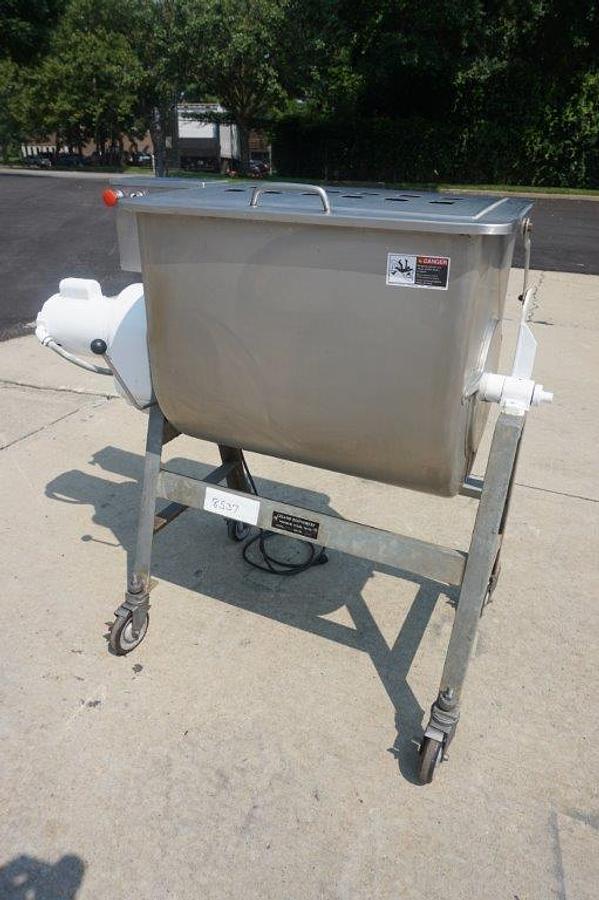
Used Leland industrial mixers appear on the market in several configurations, with double action mixers being among the most commonly listed. Double action mixers use a planetary-style motion where the mixing blade rotates on its own axis while simultaneously orbiting the bowl, which produces thorough, consistent blending without dead spots. Leland has produced these in a range of capacities, and used listings frequently include portable stainless steel units in the 200 lb. range as well as larger 600 lb. tilt-discharge models designed for higher-volume production environments.
Beyond double action mixers, the broader used industrial mixer market includes ribbon blenders, paddle mixers, and high-shear units, each suited to different materials and production demands. Leland's equipment has historically been associated with filling and packaging solutions for the beverage industry, so their mixers are built to handle the precision and throughput requirements that food and beverage production demands. When browsing used inventory, buyers should pay close attention to the listed capacity, discharge method, and construction material, since stainless steel construction is a significant factor for food-grade applications.
What industries commonly use Leland industrial mixers?
Leland industrial mixers are most closely associated with the food and beverage industry, where their equipment has been used in high-speed production environments that require accurate, repeatable mixing results. Beverage manufacturers in particular have relied on Leland equipment for its efficiency and the consistency it delivers across large batch runs. The stainless steel construction found on many Leland mixer models also makes them a practical fit for any industry with strict sanitation or contamination-control requirements.
Beyond beverages, used Leland mixers find their way into food processing operations handling sauces, batters, doughs, and similar products. The double action mixing mechanism is well suited to dense or viscous materials that need thorough incorporation without overworking the product. Some buyers in the pharmaceutical and chemical sectors also source used food-grade stainless steel mixers for compatible applications, though it is always worth confirming that a specific unit meets the regulatory and material requirements of the intended use before purchasing.
What capacity and configuration options are available for used Leland mixers?
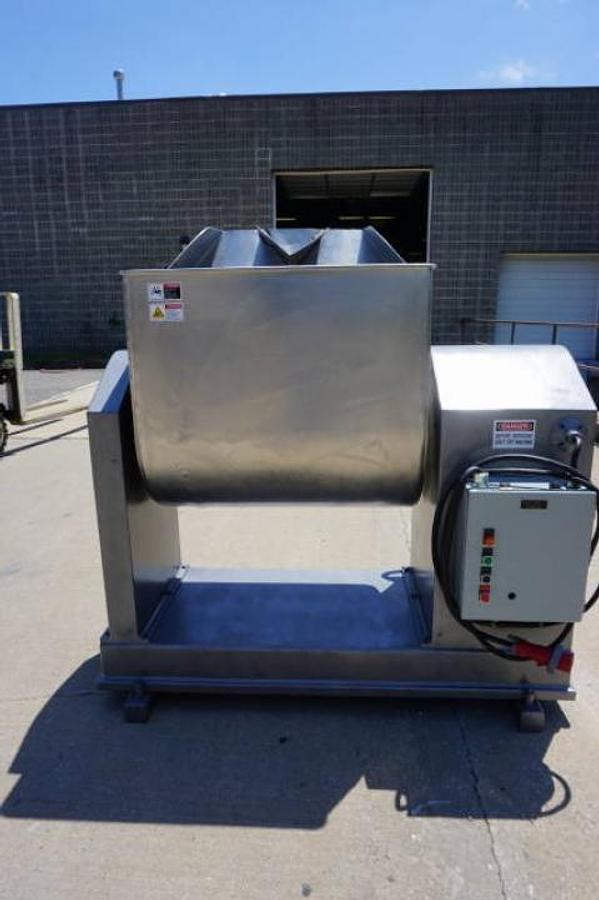
Used Leland mixers are listed in a variety of capacities to accommodate different production scales. Smaller portable units, such as 200 lb. stainless steel double action mixers, are practical for operations with moderate batch sizes or facilities that need to move equipment between stations. Larger units, like the 600 lb. stainless double action mixer with tilt discharge, are built for higher-volume production where efficiency in emptying the bowl is a priority. Tilt-discharge designs reduce manual handling and speed up the transfer of mixed product, which matters significantly in continuous production settings.
When evaluating capacity, buyers should consider not just the listed weight rating but also the type of product being mixed, since density varies considerably between materials. A 600 lb. capacity rating for a light powder behaves very differently from the same rating applied to a dense, viscous liquid. Confirming the bowl volume in gallons or liters alongside the weight capacity gives a more complete picture of whether a particular used unit fits the intended application. Dealers listing used Leland equipment can often provide additional specification details beyond what appears in the basic listing.
How do I verify the condition of a used Leland industrial mixer before buying?
Verifying the condition of a used industrial mixer requires a combination of documentation review and direct observation of the machine. Buyers should ask for any available maintenance records, operational history, and information about prior repairs or replaced components. Knowing how many hours a machine has run, what it was used to mix, and how consistently it was serviced gives a much clearer picture of remaining useful life than visual inspection alone. It is also worth asking whether the unit was decommissioned from a facility that kept detailed service logs, as those records carry real value.
Most reputable used equipment dealers will accommodate in-person inspections, virtual walkthroughs, or video captures of the machine so buyers can assess its current condition before committing to a purchase. Some equipment may still be installed and operational at a production facility, in which case the dealer can often arrange access for a direct inspection. Keep in mind that dealers typically do not have the permitting or infrastructure to run actual product through a machine during inspection, so testing is generally limited to confirming that motors, controls, and mechanical components operate as expected. Engaging a qualified millwright or equipment technician to accompany an inspection adds another layer of confidence when evaluating a significant purchase.
Are warranties or guarantees typically offered on used Leland industrial mixers?
Used industrial mixers, including used Leland models, are generally sold on an as-is basis, which is standard practice across the used equipment industry. Warranties are typically associated with manufacturer programs for equipment sold through authorized channels, and those programs do not typically extend to subsequent resale of used machines. This places the responsibility for evaluating condition squarely on the buyer, which is why thorough pre-purchase inspection is so important.
Buyers navigating the used equipment market should focus on selecting dealers with an established track record in industrial machinery and a specialization in the relevant equipment category. A dealer who has been selling food processing or industrial mixing equipment for many years brings a level of product knowledge that helps buyers make more informed decisions. It is also worth reaching out directly to Leland or their authorized service network to understand what technical support, parts availability, and service documentation exist for a specific model and production era, since the age of a machine can affect what resources are still accessible.
Are replacement parts still available for older Leland industrial mixer models?
Parts availability for older Leland industrial mixers depends on the specific model, its production era, and the current support posture of the manufacturer. For many established industrial mixer brands, common wear components like seals, agitator blades, drive belts, and gear components remain available through the manufacturer, authorized distributors, or aftermarket suppliers for years after a machine is discontinued. Leland's reputation in the beverage and food processing space means their equipment has been widely deployed, which generally supports a reasonable aftermarket parts ecosystem.
Before purchasing a used Leland mixer, it is a practical step to contact Leland directly and provide the model number and serial number to confirm what parts and technical documentation are still supported. Some older models may require sourcing components through specialty aftermarket suppliers or having parts fabricated, which adds cost and lead time to future maintenance. Understanding the parts situation upfront allows buyers to factor those potential expenses into the total cost of ownership rather than discovering gaps after the machine is already installed in production.
How do I choose the right used Leland mixer model for my application?
Matching a used mixer to a specific application starts with understanding the physical and chemical properties of the material being processed. Viscosity, density, particle size, and sensitivity to heat or shear all influence which mixer type and configuration will perform correctly. Leland's double action mixers, for example, are well suited to applications requiring thorough blending of moderate-to-high viscosity materials, while a different mixer type might be more appropriate for dry powder blending or high-shear emulsification. Getting this match right from the start avoids costly mistakes.
Capacity planning is equally important. Buyers should calculate their required batch size, account for typical fill levels (most mixers perform best when filled to 60-80% of rated capacity), and then select a unit that fits that range without being significantly oversized or undersized. Discharge method matters too: a tilt-discharge model like the 600 lb. Leland unit is more efficient for frequent batch cycles, while a portable unit may offer flexibility advantages in a smaller operation. Consulting with an equipment specialist who understands both the machinery and the production process can prevent mismatches that are expensive to correct after purchase.
What should I physically inspect on a used Leland industrial mixer before purchasing?
A thorough physical inspection of a used Leland industrial mixer should cover both the mechanical and structural condition of the unit. Start with the mixing bowl and agitator: look for cracks, pitting, heavy scratches, or corrosion in the stainless steel, any of which can compromise sanitation or structural integrity. Check the agitator blades and their attachment points for wear, bending, or signs of impact damage. On double action models, inspect the planetary gear assembly for smooth, quiet operation without excessive play or unusual noise during rotation.
The drive system deserves close attention as well. Examine the motor for signs of overheating, oil leaks, or unusual vibration. Check that variable speed controls, if present, respond correctly across the full speed range. Inspect all seals and gaskets for wear, and look at the discharge mechanism on tilt models to confirm it operates smoothly and locks securely in both positions. Any hydraulic or pneumatic components should be checked for leaks and proper function. Finally, review the overall frame and base for cracks, weld repairs, or signs that the machine was subjected to unusual stress during its prior service life. Bringing a qualified technician to the inspection adds significant value when evaluating complex mechanical systems.
What are typical shipping and logistics considerations when buying a used industrial mixer?
Shipping a used industrial mixer involves more planning than standard freight because of the weight, size, and sensitivity of the equipment. Smaller portable units like a 200 lb. mixer can often be palletized and shipped via standard LTL freight, but the packaging must be substantial enough to protect the machine from shifting or impact during transit. Larger units, such as a 600 lb. tilt-discharge mixer, may require custom crating to prevent damage, and the cost of that crating is typically the buyer's responsibility. Buyers should ask the dealer specifically what packaging is included in the quoted price and what additional crating or blocking may be needed.
Loading and unloading larger industrial mixers often requires rigging equipment such as forklifts or cranes, and those services carry additional costs that should be confirmed before finalizing the purchase. Buyers should request a full breakdown of all logistics costs, including packaging, rigging, freight, and any required liftgate service at the destination, to understand the true landed cost of the equipment. Freight damage claims on used machinery can be complicated, so ensuring the machine is properly secured and documented before it leaves the seller's facility is worth the extra effort upfront.
What payment terms should buyers expect when purchasing used industrial mixing equipment?
Payment practices in the used industrial equipment market are fairly consistent across reputable dealers. Full payment prior to shipment is the standard expectation, and most dealers will not release equipment until funds have cleared. This protects the dealer from risk on high-value transactions and is a widely accepted norm that experienced buyers in the industry are accustomed to. Wire transfer is the most common payment method for larger transactions, though dealers may accept other forms depending on the purchase amount and the buyer's relationship with the seller.
Some dealers extend payment terms to repeat customers or established buyers with a history of transactions, but this is not the default and should not be assumed. Buyers who are new to a particular dealer should plan for full upfront payment and build that into their purchasing timeline. It is also worth confirming whether any deposit is required to hold a machine while inspection or financing arrangements are finalized, as popular or competitively priced equipment can sell quickly in an active used machinery market.