Category
Manufacturer
Model
Lci Corporation
Lci Corporation is a provider of industrial automation solutions, focusing on the food and beverage sectors. They offer a variety of machines, including conveyors and packaging systems, designed to improve efficiency and reduce labor costs. Lci Corporation’s commitment to innovation makes them a valuable partner for manufacturers.
FAQ:
What is LCI Corporation and what types of industrial equipment does it produce?
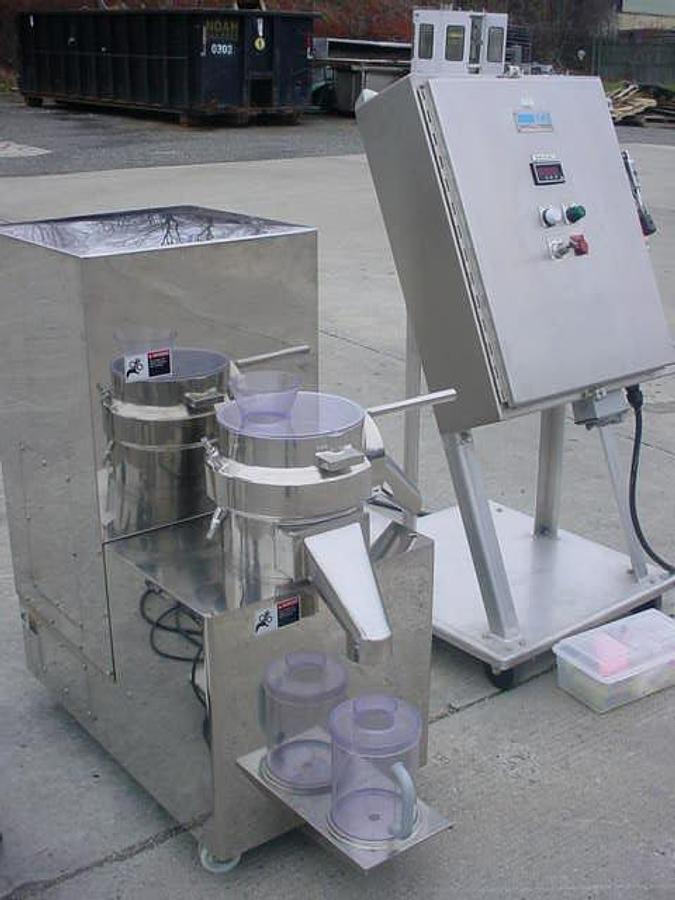
LCI Corporation is a provider of industrial automation solutions with a strong focus on the food and beverage processing sectors. The company manufactures a range of machinery designed to improve production efficiency and reduce labor costs, including conveyors, packaging systems, and specialized processing equipment. One notable example of their equipment is the LCI (Fuji Paudal) Stainless Steel Marumerizer, a spheronization machine used to form uniform pellets or granules in pharmaceutical and food processing applications.
Buyers researching LCI Corporation industrial equipment should be aware that there are multiple companies operating under similar names across different industries. Lippert Components, for instance, also uses the LCI brand and focuses on slide-out mechanisms and components for the RV and manufactured housing sectors. Verifying the specific LCI entity and the exact equipment model before purchasing is an important step, especially in the used machinery market where listings can span multiple industries and product lines.
What is a Marumerizer and what is it used for in industrial production?
A Marumerizer, sometimes called a spheronizer, is a piece of industrial processing equipment that takes extruded or granulated material and rounds it into uniform spherical pellets. The process relies on a rotating friction plate inside a cylindrical chamber, which tumbles the material until it forms consistent, smooth spheres. This equipment is widely used in pharmaceutical manufacturing to produce pellets for capsule filling, as well as in food processing applications where uniform particle shape affects texture, coating adhesion, or dosing accuracy.
The LCI (Fuji Paudal) Marumerizer is a well-regarded machine in this category, often constructed with stainless steel contact parts to meet hygienic standards required in food and pharmaceutical environments. Used Marumerizers in good condition can offer significant cost savings compared to purchasing equivalent processing capacity through other means, making them a practical option for manufacturers scaling up production or replacing aging equipment. When evaluating a used unit, buyers should pay close attention to the condition of the friction plate, the drive motor, and the control panel, as these are the components most subject to wear over time.
What industries commonly use LCI Corporation industrial equipment?
LCI Corporation's automation and processing equipment is primarily used in food and beverage manufacturing, where consistent output, sanitary construction, and reliable throughput are critical. Their conveyors and packaging systems are well suited to production lines that require high-volume handling of products with minimal manual intervention. In addition to food and beverage, LCI equipment such as the Fuji Paudal Marumerizer sees use in pharmaceutical and nutraceutical manufacturing, where precise pellet formation is a key step in product development and production.
Beyond these core sectors, LCI-branded processing and packaging machinery can also appear in chemical processing, cosmetics manufacturing, and other industries that require granulation or spheronization of bulk materials. The stainless steel construction common in LCI equipment makes it adaptable across hygiene-sensitive environments. Buyers from any of these sectors frequently seek used LCI equipment as a cost-effective way to add capacity or replace machinery without the lead times associated with ordering purpose-built equipment.
What should buyers know about purchasing used LCI Corporation equipment instead of buying from the manufacturer?
Purchasing used LCI Corporation equipment through the secondary market offers a meaningful cost advantage, but it comes with a different set of considerations than a direct manufacturer purchase. Used machines are sold as-is, meaning the buyer takes on the responsibility of assessing the machine's condition before committing to a purchase. There are no manufacturer warranties on used equipment, so the burden of due diligence falls entirely on the buyer. Selecting a reputable used equipment dealer with a long track record in the relevant industry is one of the most effective ways to reduce risk in this process.
Buyers should also contact LCI Corporation or the original equipment manufacturer directly to understand what level of technical support, parts availability, and documentation is still offered for a specific model and production year. Older machines or discontinued models may have limited parts availability, which can affect long-term operating costs. Requesting full maintenance and service records from the seller is equally important, as this history provides insight into how the machine was used, what repairs have been made, and what components may be approaching the end of their service life.
How does the inspection process work when buying used industrial equipment?
Used industrial equipment dealers typically offer buyers three main inspection options: an in-person visit to the equipment's location, a live video call walkthrough, or a recorded video inspection of the machine. The goal in all cases is to give the buyer an accurate picture of the equipment's current condition, including visible wear, the state of key components, and any obvious signs of prior damage or repair. Some machines may still be installed and operating at a facility, in which case the dealer can often arrange an inspection at the actual production site, giving buyers a chance to see the equipment running under real conditions.
It is worth understanding that most used equipment dealers do not have the permits or production infrastructure to run full product trials on machinery. Testing a conveyor, packaging line, or processing machine with actual product requires a permitted production environment, which is typically beyond what a dealer can provide. Buyers should therefore focus inspections on mechanical condition, electrical systems, control panel functionality, and the physical state of wear parts. Bringing in an independent equipment technician or engineer for an in-person inspection is a practical step for high-value purchases.
What are typical payment terms when buying used industrial equipment?
Most used industrial equipment dealers require payment in full before a machine is released for shipping. This is standard practice across the industry and reflects the nature of the secondary equipment market, where machines are often one-of-a-kind and held for a specific buyer once a sale is agreed upon. Wire transfer is the most common payment method for transactions of this size, though some dealers may accept other forms of payment depending on the transaction amount and the buyer's relationship with the seller.
Some dealers extend payment terms to repeat customers or long-standing business relationships, but buyers who are purchasing from a dealer for the first time should expect to pay in full upfront. Financing through third-party equipment lenders is another avenue some buyers explore, particularly for higher-value machinery. In those cases, the buyer arranges financing independently and the lender pays the dealer directly. It is always worth asking the dealer early in the process about available payment options so there are no surprises when the transaction moves forward.
How is used industrial equipment typically shipped, and what costs should buyers anticipate?
Shipping costs for used industrial equipment vary considerably depending on the size and weight of the machine, its destination, and the level of packaging required to protect it in transit. Smaller equipment may ship on a standard pallet, while larger or more fragile machines often require custom crating to prevent damage during handling and transport. The cost of palletization or crating is typically separate from the freight charge itself, so buyers should ask for a detailed breakdown that covers both packaging and transportation to understand the full landed cost of the equipment.
Larger machines frequently require specialized rigging for loading at the origin and unloading at the destination. Rigging involves cranes, forklifts, or other heavy lifting equipment, and the cost depends on the weight of the machine and the complexity of the move. Buyers should confirm with the dealer whether rigging is included in any quoted shipping price or whether it will be billed separately. Getting a clear picture of all shipping-related costs before finalizing a purchase helps avoid unexpected expenses and allows for accurate budgeting of the total acquisition cost.
Are replacement parts readily available for used LCI Corporation processing equipment?
Parts availability for used LCI Corporation equipment depends largely on the age of the machine and whether the model is still supported by the manufacturer or its authorized service network. For relatively recent models, many components such as drive motors, belts, control panels, and wear parts can often be sourced directly from LCI, Fuji Paudal (in the case of co-branded equipment), or through industrial parts distributors. Contacting the manufacturer before purchasing a used machine is a practical step, as they can confirm what parts and service documentation are still available for a specific model number and production year.
For older or discontinued equipment, parts sourcing becomes more involved. Buyers may need to work with third-party machining shops to fabricate worn components, source compatible parts from other manufacturers, or cannibalize parts from similar machines. This is a common reality in the used equipment market and not necessarily a dealbreaker, but it should factor into the total cost of ownership calculation. A machine purchased at a significant discount may still represent good value even if some parts require custom sourcing, as long as the buyer goes in with a clear understanding of what maintenance the equipment will require.
What should buyers look for when evaluating the condition of used food processing or packaging equipment?
Evaluating used food processing or packaging equipment requires attention to both mechanical and sanitary condition. On the mechanical side, buyers should examine the drive systems, motors, bearings, and any conveyor belts or chain drives for signs of excessive wear, corrosion, or prior repairs. Control panels and electrical components deserve particular scrutiny, as sourcing replacement parts for older programmable logic controllers or proprietary control systems can be difficult and expensive. Asking for the machine's maintenance history and any available service records provides useful context for what has already been repaired or replaced.
For equipment used in food or pharmaceutical production, the condition of stainless steel contact surfaces is especially important. Pitting, deep scratches, or compromised welds can harbor bacteria and may require remediation before the machine can be used in a regulated production environment. Gaskets, seals, and other sanitary components are typically considered consumables and should be budgeted for replacement regardless of the machine's overall condition. Buyers who plan to use the equipment in a facility subject to FDA, USDA, or other regulatory oversight should also verify that the machine's design meets current sanitary standards, since older equipment may predate certain regulatory requirements.
How does buying used industrial automation equipment compare to purchasing new machinery in terms of cost and lead time?
Used industrial automation equipment typically sells at a fraction of the cost of equivalent capacity purchased through a manufacturer, with savings often ranging from 40 to 70 percent depending on the machine's age, condition, and how specialized it is. For manufacturers working within capital budget constraints or needing to add production capacity quickly, the used equipment market offers a practical alternative. Lead times are another significant factor: ordering purpose-built industrial machinery can take months or even over a year depending on the manufacturer's production schedule, while used equipment can often be inspected, purchased, and shipped within a matter of weeks.
The tradeoff is that used equipment comes without the assurances that accompany a direct manufacturer purchase. Buyers accept the machine in its current condition and take on the responsibility of any repairs, upgrades, or compliance work needed to bring it up to their operational standards. This makes thorough pre-purchase inspection and honest seller communication especially important. For buyers who approach the process carefully and work with reputable dealers, used industrial equipment can deliver strong value and a much faster path to production than waiting for new machinery to be built and delivered.