Category
Manufacturer
Model
Lb Italia
Lb Italia specializes in manufacturing machinery for the food and beverage industries, particularly for bottling and canning. Their equipment is known for its efficiency and precision, helping manufacturers optimize their production lines. Lb Italia’s technology supports a wide range of beverage products.
FAQ:
What types of food processing machinery does LB Italia manufacture?
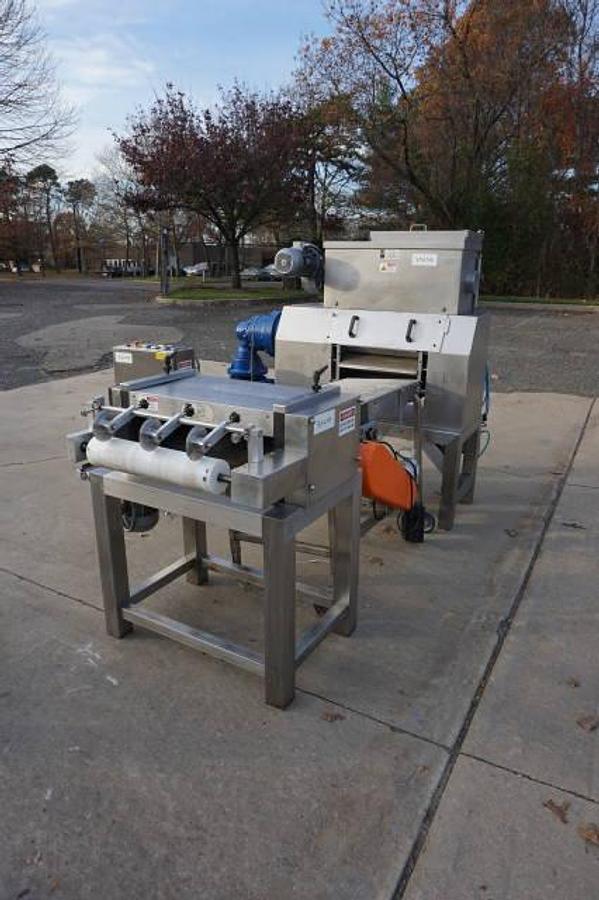
LB Italia produces equipment focused on the food and beverage industries, with a particular emphasis on bottling, canning, and dough processing applications. Their product range includes mixers, sheeters, and laminators, which are used in bakery and pastry production lines where consistent dough thickness and texture are critical to output quality. The company's machinery is designed to support high-volume production environments where precision and repeatability matter.
Beyond dough handling equipment, LB Italia's technology extends into beverage processing, supporting a wide range of liquid product lines. Italian food machinery manufacturers of this type typically engineer their equipment to handle multiple product formats within the same category, giving food producers flexibility across different SKUs or recipes without requiring a full line changeover. Buyers looking at used LB Italia equipment should review the specific model specifications carefully, as capabilities can vary significantly between machine generations and configurations.
What industries use LB Italia food processing equipment?
LB Italia equipment is primarily used in the food and beverage manufacturing sector, with strong representation in bakery, pastry, and confectionery production, as well as bottling and canning operations. Sheeting and laminating machinery like the types LB Italia produces are standard in industrial bread, croissant, puff pastry, and flatbread production lines. These machines are found in both mid-scale artisan operations and large-scale industrial food plants.
On the beverage side, LB Italia's bottling and canning machinery serves producers of soft drinks, juices, water, and other packaged liquid products. Food manufacturers in these segments typically prioritize equipment that can sustain high throughput rates while maintaining hygienic standards. Italian-manufactured food processing machinery has a strong reputation in these industries globally, partly because Italian engineering in this sector has historically emphasized durability, precision tolerances, and compliance with food safety regulations.
What should buyers know about purchasing used LB Italia food processing machinery?
Buying used food processing machinery requires a different level of due diligence compared to sourcing equipment directly from a manufacturer. Used machines are sold as-is, which means the condition, wear, and operational history of the equipment are entirely the buyer's responsibility to assess. This makes the inspection process critical. Buyers should request in-person or video inspections of any LB Italia machine they are considering, and ideally review the machine in its current environment, whether it is still installed in a production facility or has been decommissioned and moved to a dealer's warehouse.
It is also worth contacting LB Italia directly or consulting with a qualified technician familiar with the brand to understand parts availability and manufacturer support for the specific model and age of the machine. Older models may have limited parts availability, which affects long-term serviceability. Selecting a used equipment dealer with a verifiable track record in food processing machinery specifically, rather than a general industrial equipment reseller, reduces risk considerably. Dealers who specialize in food processing equipment are better positioned to accurately represent the condition and suitability of LB Italia machines for a given application.
How should buyers inspect used LB Italia machinery before purchasing?
Inspections of used food processing equipment can take several forms. Most reputable dealers will accommodate an in-person visit to physically examine the machine, check for wear on contact surfaces, inspect mechanical components, and review the overall structural condition. For buyers who cannot travel, video inspections or detailed photo documentation are common alternatives. A thorough video walkthrough should cover all major mechanical assemblies, visible wear points, control panels, and any areas where food contact materials are present.
One important caveat for used equipment inspections is that most dealers do not have the permitting or facility setup to run actual food production on-site. This means buyers typically cannot test the machine with real product during an inspection. However, some machines may still be installed and operational at the original production facility where they were used, which can allow for a live demonstration under production conditions. Buyers should ask the dealer specifically about the machine's current status, whether it has been tested electrically or mechanically, and what documentation is available regarding its prior use and maintenance history.
What are the food safety and hygiene standards relevant to LB Italia food processing equipment?
Food processing machinery sold into European and international markets is generally expected to meet a set of established safety and hygiene standards. CE marking is the baseline regulatory requirement for machinery sold within the European Union, indicating compliance with the EU Machinery Directive. For food contact surfaces specifically, EU Regulation 1935/2004 governs materials that come into contact with food, and compliance with this regulation is a standard expectation for European food machinery manufacturers including Italian brands.
Hygienic design is another major consideration. Food processing equipment in categories like dough sheeting, mixing, and beverage filling is typically constructed with AISI 304 or AISI 316 stainless steel on all food-contact surfaces. These grades of stainless steel resist corrosion, are non-reactive with food products, and can withstand the cleaning chemicals and temperatures used in standard sanitation protocols. HACCP-compatible design, meaning equipment that can be thoroughly cleaned and inspected without disassembly of inaccessible areas, is also a baseline expectation in this category. Buyers of used equipment should verify that the specific machine they are considering meets the standards required by their local regulatory environment, particularly if the machine will be used in a facility subject to FDA oversight or other non-EU regulatory frameworks.
What is the significance of 'Made in Italy' for food processing machinery like LB Italia equipment?
Italy has a long-established reputation as one of the leading countries for food processing and packaging machinery manufacturing. Italian food machinery exports are substantial, and the country's manufacturers are widely recognized for precision engineering, durable construction, and equipment designed specifically around the demands of food production. This reputation is not simply a marketing label. It reflects decades of specialized industrial development concentrated in regions like Emilia-Romagna, where many of the world's leading food machinery brands are based.
For buyers evaluating used LB Italia equipment, the Italian manufacturing origin is a meaningful quality signal. Machines built to Italian food industry standards are typically engineered for continuous production environments and designed with hygienic construction as a core requirement rather than an afterthought. That said, the age and maintenance history of any individual used machine matters more than country of origin when assessing current condition. A well-maintained older Italian machine can outperform a poorly maintained newer one, which is why inspection and service history documentation are so important in the used equipment evaluation process.
Can used LB Italia food processing machinery be integrated into an existing production line?
Integration of used food processing equipment into an existing line is common practice in the food manufacturing industry, but it requires careful planning. Key factors include the machine's physical dimensions and footprint, its throughput capacity relative to upstream and downstream equipment, its electrical and utility requirements, and the interface points where product transfers between machines. LB Italia equipment, like most Italian food machinery, is typically built to European electrical standards, which may require modifications or adapters for facilities operating on different power systems.
Buyers should also consider the control system compatibility of older used machines. Machines from different eras may use older PLC platforms or proprietary control interfaces that require additional engineering work to connect with modern line management systems. It is advisable to have a qualified food processing equipment technician review the specifications of any used LB Italia machine against the existing line configuration before purchase. This reduces the risk of discovering integration incompatibilities after the equipment has already shipped. Consulting with the manufacturer about the specific model's integration history and any known compatibility considerations can also provide useful guidance during the evaluation process.
What are typical shipping and logistics considerations for used LB Italia food processing machinery?
Food processing machinery, particularly industrial-scale equipment like mixers, sheeters, and bottling systems, requires careful handling during transport. Proper packaging is essential to prevent damage in transit, and the level of protection required depends on the size, weight, and fragility of the specific machine. Smaller units may ship on standard pallets with appropriate blocking and bracing, while larger or more complex machines typically require custom crating. The cost of packaging and crating varies accordingly and should be factored into the total landed cost calculation before committing to a purchase.
Larger machines often require specialized rigging for loading and unloading, which adds to the overall logistics cost. Rigging involves the use of forklifts, cranes, or other heavy lifting equipment operated by trained personnel, and it is not always included in a standard freight quote. Buyers should ask the dealer for a complete breakdown of packaging, rigging, and freight costs before finalizing a purchase. For international shipments, customs duties, import taxes, and compliance documentation are additional variables that affect total cost. Getting clarity on all of these elements upfront prevents unexpected expenses after the transaction is complete.
What payment terms are typical when buying used food processing machinery?
Used equipment dealers in the food processing machinery sector generally require full payment before a machine is released for shipping. This is standard practice across the industry and reflects the nature of used equipment transactions, where machines are often one-of-a-kind inventory items that cannot be held indefinitely while financing arrangements are worked out. Wire transfer is the most common payment method for larger equipment purchases, though other arrangements may be available depending on the dealer.
Some dealers extend payment terms to repeat customers or established buyers with a demonstrated purchasing history, but this is not a standard offering for first-time transactions. Buyers who require financing for equipment purchases may need to arrange that independently through equipment financing companies or their own banking relationships before approaching a used equipment dealer. Understanding the payment expectations upfront, along with the full landed cost including shipping and rigging, allows buyers to accurately assess total acquisition cost and make informed purchasing decisions.
What technical support options are available for used LB Italia food processing equipment?
Technical support for used food processing machinery comes from several potential sources. The equipment manufacturer is often the most authoritative resource for documentation, spare parts information, and technical guidance, though the level of support available depends heavily on the age and model of the machine. Older or discontinued models may have limited support from the manufacturer, while more recent models are more likely to have active parts availability and technical documentation. Contacting LB Italia directly to ask about support for a specific model before purchasing is a practical step that can reveal important information about long-term serviceability.
Beyond the manufacturer, independent food processing equipment technicians and service companies that specialize in Italian or European machinery can often provide installation, commissioning, and ongoing maintenance support. Many food machinery components, including motors, sensors, conveyors, and pneumatic systems, are sourced from third-party suppliers and can be serviced or replaced through those suppliers' own networks regardless of the machine's brand. Buyers should also ask the selling dealer what documentation they can provide with the machine, including any available manuals, electrical schematics, or maintenance records. Complete documentation significantly reduces the cost and complexity of future service work.