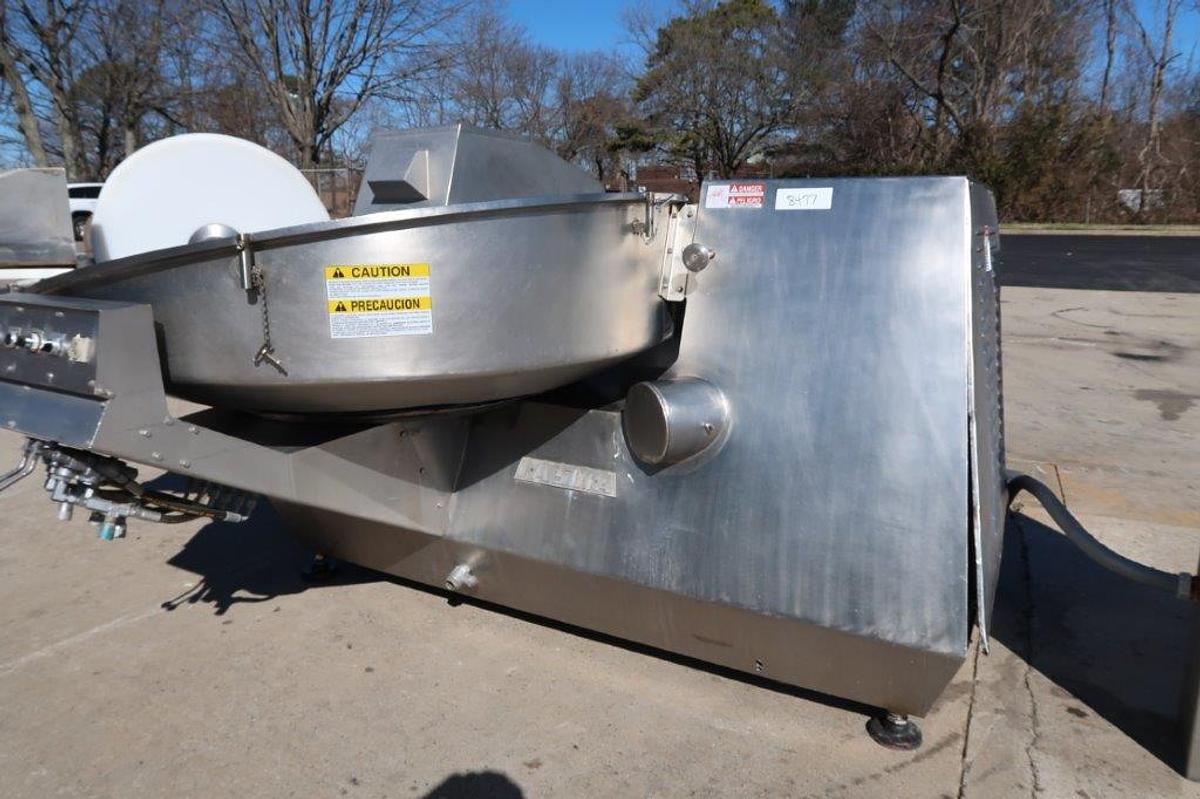
Category
Manufacturer
Model
FAQ:
What bowl sizes are available for Laska bowl choppers?
Laska bowl choppers span a wide range of capacities, making them suitable for operations of very different scales. Smaller commercial units start at around 20 liters, which suits butcher shops or specialty food producers with moderate batch requirements. Mid-range models typically fall in the 80 to 200 liter range, while large industrial configurations go well beyond that. A 500 liter Laska bowl chopper, for example, represents the heavy-duty end of the spectrum and is designed for high-volume continuous production environments.
When evaluating bowl size, buyers should think carefully about batch size relative to throughput goals. A bowl that is too large for a given operation can result in inconsistent emulsification if the bowl is never filled to an appropriate level, while a bowl that is too small creates bottlenecks. Used Laska bowl choppers are available across this full size range, so it is worth identifying the specific capacity that matches current production needs before beginning a search.
What is the motor power of a Laska bowl chopper, and why does it matter?
Motor power on a Laska bowl chopper is directly tied to the machine's ability to handle dense loads and maintain consistent knife speed under resistance. Laska bowl choppers are built with substantial motors to support industrial-grade processing. A 500 liter Laska unit, for instance, is equipped with a 100 HP motor, which provides the torque needed to chop and emulsify tough raw materials at scale without bogging down mid-cycle.
For buyers comparing used models, motor HP is one of the most important specs to review alongside bowl capacity. A machine with an underpowered motor relative to its bowl size will struggle with fatty or dense meat blends and can cause excessive wear on the knife system over time. When inspecting a used Laska chopper, it is worth confirming that the motor has been properly maintained and that the knife head RPM is consistent across speed settings, as this directly affects the texture and quality of the finished product.
What materials and products can a Laska bowl chopper process?
Laska bowl choppers are designed primarily for the meat processing industry, where they are used to chop, blend, and emulsify raw meat into products like sausages, hot dogs, bologna, pâtés, and other comminuted meat items. The machines handle a wide variety of proteins including beef, pork, poultry, and fish. Some models are also used in dairy applications, as indicated by Laska units marketed specifically as dairy machines, where the chopper's ability to blend and emulsify fat and protein components is equally valuable.
Beyond protein processing, bowl choppers in the Laska range can handle vegetables, spice blends, and other food ingredients that require fine chopping or mixing. The key factor is the knife configuration and speed settings, which determine how fine or coarse the finished cut will be. When purchasing a used Laska chopper, buyers should confirm what the machine was previously used to process, since dairy and meat applications may require different sanitation protocols and can affect the condition of the bowl and knife system over time.
What is the typical price range for a used Laska bowl chopper?
Pricing for used Laska bowl choppers varies considerably depending on bowl capacity, model series, age, condition, and whether the unit includes vacuum capability. Smaller used units in the 20 to 80 liter range tend to be more affordable entry points for processors looking to add chopping capacity without a large capital outlay. Mid-size and large-capacity models, particularly those in the 200 to 500 liter range, command higher prices due to their industrial output capability and the cost of the original equipment.
Vacuum bowl chopper models, such as those in the Laska KV series, typically carry a premium over standard atmospheric models because of the added complexity of the vacuum system and the quality advantages it provides for emulsified products. Buyers should factor in not just the purchase price but also the full landed cost, including shipping, rigging, and any reconditioning work needed after inspection. Getting a clear picture of the machine's working condition before committing to a price is essential, since repair or blade replacement costs can significantly affect the total investment.
What is a vacuum bowl chopper, and is it worth paying more for one?
A vacuum bowl chopper operates under reduced atmospheric pressure during the chopping and emulsification cycle. By removing oxygen from the bowl, the machine prevents oxidation of the meat proteins and fats, which results in a finer, more stable emulsion with better color retention and longer shelf life. This is particularly valuable for products like frankfurters, bologna, and fine-textured sausages where a smooth, consistent texture and bright color are critical to quality and consumer acceptance.
For processors focused on emulsified meat products, a used vacuum Laska bowl chopper can deliver meaningful production advantages over a standard model. The trade-off is a higher purchase price and a more complex system that requires the vacuum pump and seals to be in good working order. During any inspection of a used vacuum chopper, buyers should specifically verify the integrity of the vacuum system, including pump performance and bowl seal condition, since these components are critical to the machine's core function and can be costly to repair or replace.
How do you inspect a used Laska bowl chopper before purchasing?
Inspecting a used Laska bowl chopper thoroughly before purchase is one of the most important steps a buyer can take, since these machines are sold as-is and there is no manufacturer-backed coverage on used equipment. Reputable used equipment dealers typically offer in-person inspections, virtual walkthroughs, or detailed video documentation of the machine's current condition. In some cases, a machine may still be installed and operating at a food processing facility, which gives a buyer the opportunity to see it running under real production conditions.
During an inspection, buyers should pay close attention to the condition of the bowl surface, the knife set and knife head assembly, the motor and drive system, and, on vacuum models, the integrity of the vacuum pump and seals. It is also worth asking the dealer about the machine's service history and what it was previously used to process. Keep in mind that most equipment dealers do not have the production permits or facility setup to run actual product through the machine during a demonstration, so the inspection will focus on mechanical operation rather than finished product quality. Consulting with Laska directly about parts availability and technical support for the specific model being considered is also a smart step before finalizing a purchase.
Are replacement parts and blades readily available for used Laska bowl choppers?
Laska is an established Austrian manufacturer with a long history in the food processing equipment industry, which generally works in favor of parts availability compared to smaller or less established brands. Knife sets, bowl scrapers, drive components, and other wear items are the most commonly replaced parts on bowl choppers, and for well-supported Laska models these are typically obtainable through the manufacturer or authorized service channels. However, parts availability can vary depending on the age and specific model of the machine.
Buyers considering a used Laska bowl chopper should contact Laska directly before completing a purchase to confirm that parts and technical support are available for the particular model and serial number in question. Older or discontinued models may have limited parts availability, which can affect long-term serviceability and total cost of ownership. This due diligence step is especially important for high-wear components like knife blades, since a chopper with an unavailable knife set is effectively out of service until a compatible replacement can be sourced.
What is the typical lifespan of a Laska bowl chopper?
Laska bowl choppers are built to industrial standards and are designed for continuous use in demanding food processing environments. When properly maintained, these machines are known for exceptionally long service lives. It is not uncommon to find Laska choppers that have been in production for 20 to 30 years or more, which speaks to the quality of the original engineering and the durability of the major mechanical components. The stainless steel construction of the bowl and food-contact surfaces also contributes to longevity by resisting corrosion from meat acids, salt, and cleaning chemicals.
That said, lifespan is heavily dependent on how the machine was operated and maintained throughout its working life. A used Laska chopper that received regular knife sharpening, proper lubrication, and routine inspection of the drive system will be in significantly better condition than one that was run hard without maintenance. When evaluating a used unit, asking about its maintenance history and looking closely at wear on the knife head, bowl, and motor are the best indicators of how much productive life remains in the machine.
What should buyers know about shipping a used Laska bowl chopper?
Laska bowl choppers are large, heavy pieces of industrial equipment, and shipping them requires careful planning to avoid damage in transit. Packaging requirements will depend on the size of the machine and the distance it needs to travel. Smaller units may be adequately secured on a heavy-duty pallet, while larger machines, particularly a 500 liter chopper, will likely require custom crating to protect the bowl, knife assembly, and motor housing during transport. Buyers should ask the dealer specifically what packaging will be used and what that service costs, since crating charges can be a meaningful addition to the total price.
Loading and unloading a large bowl chopper also requires proper rigging equipment, which is an added cost that buyers should factor into their budget. Forklift access and appropriate dock facilities at the destination are worth confirming in advance. Before finalizing a purchase, it is a good practice to get a clear breakdown of all freight-related costs, including packaging, rigging, freight charges, and any delivery services at the destination, so the full landed cost of the machine is understood before the transaction is completed.
What payment terms are typical when buying a used Laska bowl chopper?
Used industrial equipment purchases, including Laska bowl choppers, generally follow standard industry payment practices. Most used equipment dealers require full payment before the machine is released for shipping. This protects the dealer against non-payment on large transactions and is a widely accepted norm in the used machinery market. Buyers who are new to a particular dealer should expect to pay in full upfront, as extended terms are typically reserved for established customers with a prior transaction history.
For buyers working with a significant capital outlay on a large-capacity machine, it is worth discussing payment logistics with the dealer early in the process. Some dealers may be open to arrangements for repeat customers or on larger transactions, but this is not a standard offering. Wire transfers are the most common payment method for used equipment purchases of this size. Buyers should also confirm the dealer's process for releasing shipping documentation and title once payment is received, so the logistics of taking possession of the machine are clearly understood before funds are sent.