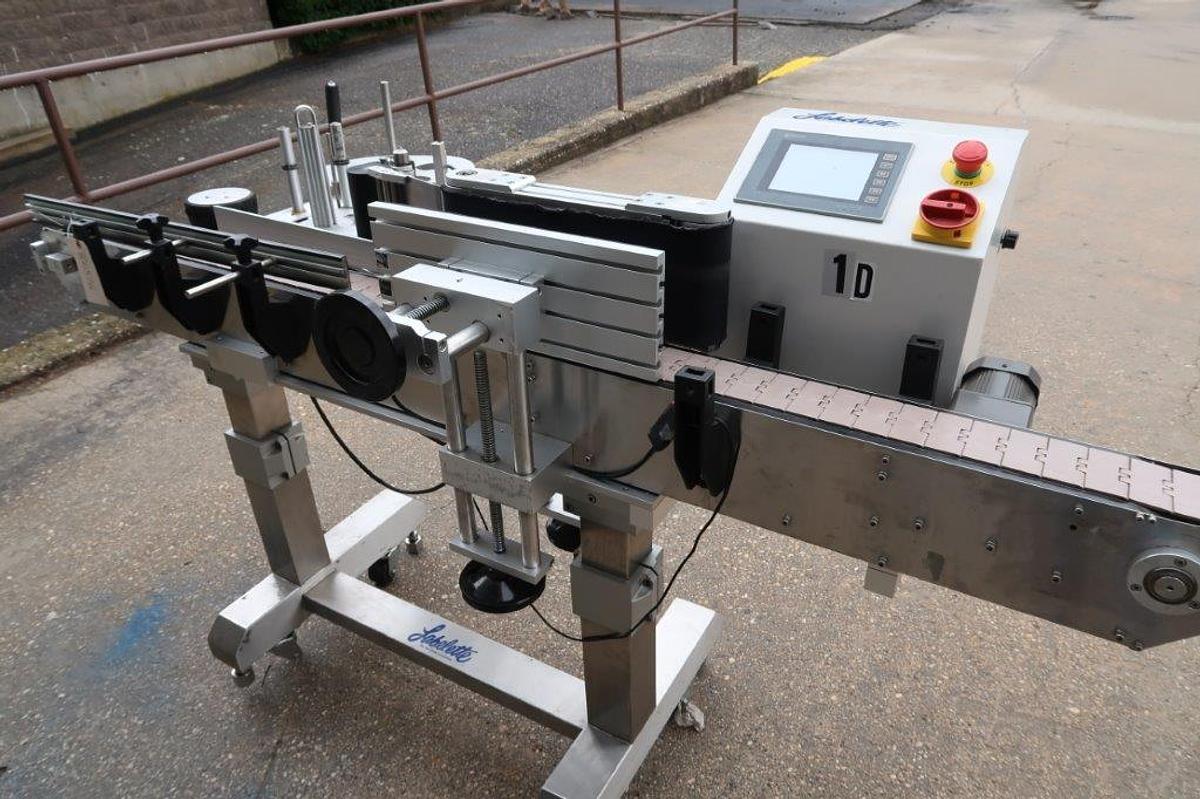
Category
Manufacturer
Model
Labelette/Accutek
Labelette/Accutek offers a range of packaging solutions, including filling, labeling, and capping machines for the food and beverage industries. Their systems are known for their versatility and efficiency, helping companies optimize their production processes. The integration of advanced technology ensures high-quality packaging results.
FAQ:
What types of containers can Labelette Accutek labeling machines handle?
Labelette Accutek labeling machines are designed to work with a wide variety of container types, making them a flexible choice for production environments that deal with multiple packaging formats. Common compatible containers include round bottles, jars, cans, and other cylindrical shapes. Many models in the Labelette series support wrap-around labeling, which is particularly useful for producers working with beverages, condiments, cosmetics, and similar products that come in cylindrical packaging. The wrap-around capability is one of the more sought-after features in this product line, since it allows a single machine to handle the full circumference of a container in one pass.
Beyond cylindrical containers, certain Accutek models also accommodate flat or tapered surfaces, which expands their usefulness across different product categories. The APS-106 Automatic Pressure Sensitive Spot/Wrap Labeler, for example, is built to handle both spot labeling and full wrap applications, giving operators meaningful flexibility without needing separate machines for different container shapes. Buyers evaluating a used Labelette Accutek machine should confirm the specific model's container compatibility range and, if possible, arrange an inspection to verify the machine's current condition and any tooling or change parts included with the sale.
What is the typical labeling speed of Labelette Accutek machines?
Labeling speed on Accutek machines varies depending on the specific model, configuration, and the type of label application being performed. Fully automatic models in the Labelette series are generally capable of handling production rates suited to small and mid-sized manufacturing operations, with many machines capable of applying labels to dozens or even hundreds of containers per minute under optimal conditions. Semi-automatic configurations run at lower throughput rates but offer more operator control, which can be advantageous for short runs, specialty products, or operations that frequently change label formats.
When evaluating a used Labelette Accutek machine, it is worth noting that actual throughput in a production setting depends on factors like container size, label dimensions, line integration, and the overall condition of the machine. A machine that has been well-maintained throughout its service life will typically perform closer to its rated speed than one with worn components. Prospective buyers should ask the dealer for any available documentation on the machine's specifications and, where possible, request a video demonstration or in-person inspection to assess how the machine runs before committing to a purchase.
Are used Labelette Accutek labeling machines a good fit for small businesses or startups?
The Labelette series was originally developed with small to mid-sized production operations in mind, which makes used machines from this line a realistic option for startups and smaller manufacturers looking to automate their labeling process without the cost of buying brand-new equipment. Craft beverage producers, small-batch cosmetic brands, and specialty food manufacturers have historically been among the most common users of Accutek Labelette machines, largely because the machines offer a balance of automation and affordability that suits lower-volume production environments.
Buying used equipment does introduce additional considerations that smaller businesses should think through carefully. Unlike purchasing directly from a manufacturer, used machines are typically sold as-is, so the buyer takes on responsibility for verifying the machine's condition before the sale is finalized. Reputable used equipment dealers will generally offer in-person or video inspections to help buyers assess the machine's working order. It is also a good idea to contact Accutek directly before purchasing a used model to understand what level of parts availability and technical support can be expected for that particular machine and vintage, since older models may have more limited support options than more recent ones.
What label sizes and formats are compatible with Labelette Accutek labeling machines?
Accutek Labelette machines are designed to work with pressure sensitive labels, which is the most common label format used in commercial packaging today. Pressure sensitive labels come on a liner roll and are applied without heat or water activation, making them practical for a wide range of products. The specific label dimensions a given machine can handle depend on the model and its adjustable components, but most Labelette machines accommodate a meaningful range of label widths and lengths, allowing operators to run different label sizes by making mechanical adjustments to the label head and guide components.
For buyers considering a used machine, it is important to verify the label roll core size, the maximum and minimum label dimensions the machine supports, and whether any additional tooling or change parts are included in the sale. Some machines may have been set up specifically for one label format during their production life, and reconfiguring them for a different size may require additional parts or adjustments. Consulting with the dealer and, if possible, the manufacturer about the machine's current configuration and adjustment range will help buyers avoid surprises after the equipment arrives at their facility.
Can Labelette Accutek labeling machines be integrated into an existing production line?
Accutek Labelette machines are built with production line integration in mind, and many models are designed to work in-line with filling, capping, and conveyor systems. This makes them a practical addition to packaging lines where products move continuously from one station to the next. Automatic models in the Labelette series typically include conveyor infeed and outfeed capabilities, allowing them to be positioned between upstream and downstream equipment without requiring manual intervention at the labeling stage. The APS-106 model, for instance, is an automatic pressure sensitive labeler that can be configured to operate as part of a continuous production flow.
That said, integrating any used machine into an existing line requires careful planning. Line speed compatibility, container handling dimensions, and electrical requirements all need to be confirmed before installation. Buyers should gather as much technical documentation as possible from the dealer, including any available manuals or specification sheets, and consider whether the machine's current condition and configuration align with their line's requirements. If the machine has been decommissioned for some time, it may need servicing before it can reliably run at production speeds. A pre-purchase inspection, whether in person or via video, is one of the best ways to identify any potential integration challenges before finalizing the purchase.
What is the price range for used Labelette Accutek labeling machines?
Pricing for used Labelette Accutek labeling machines varies based on the model, age, configuration, and overall condition of the equipment. Semi-automatic models and older units tend to be priced lower, while fully automatic machines with more recent production dates and additional features command higher prices. In the used equipment market, buyers can generally expect to pay significantly less than the cost of a comparable machine purchased directly from a manufacturer, which is one of the primary reasons companies turn to used machinery dealers for packaging equipment.
Beyond the purchase price, buyers should account for the full landed cost of the equipment, which includes shipping, any required crating or rigging for loading and unloading, and any servicing or spare parts needed to bring the machine up to operational condition. Larger or heavier machines may require specialized rigging equipment for safe loading and transport, which adds to the overall cost. Asking the dealer for a detailed breakdown of all associated costs before agreeing to a purchase helps avoid unexpected expenses and gives buyers a clearer picture of the total investment required to get the machine running at their facility.
What should buyers inspect when evaluating a used Accutek labeling machine?
A thorough inspection is one of the most important steps in purchasing any used labeling machine. For Accutek Labelette models, key areas to evaluate include the condition of the label head and applicator, the drive belt and conveyor components, the sensor and detection systems, and any mechanical guides or change parts used to position containers during labeling. Worn or damaged components in any of these areas can affect label placement accuracy and overall throughput, so getting a clear visual and functional assessment before purchase is essential.
Reputable used equipment dealers typically offer in-person inspections, virtual walkthroughs, or video captures of the machine in its current state. If the machine is still installed at a production facility, it may be possible to observe it running live, which provides the most accurate picture of its working condition. Keep in mind that most used equipment dealers do not have the permitting or infrastructure to run actual production tests with a buyer's specific product, so inspections generally focus on mechanical function rather than full production simulation. Buyers should also check with Accutek directly to understand what parts and technical support are available for the specific model being considered, since parts availability can vary by age and model generation.
What is the difference between semi-automatic and fully automatic Accutek Labelette machines?
Semi-automatic Accutek Labelette machines require an operator to manually position each container at the labeling station before the machine applies the label. This approach works well for lower-volume operations, short production runs, or situations where products vary enough in size or shape that full automation is difficult to implement. Semi-automatic machines are generally simpler mechanically, which can make them easier to maintain and adjust, and they typically carry a lower price point in the used equipment market.
Fully automatic models, like the APS-106 Automatic Pressure Sensitive Spot/Wrap Labeler, integrate with conveyor systems to move containers through the labeling process without manual handling at each cycle. This dramatically increases throughput and reduces labor requirements, making automatic machines a better fit for higher-volume production environments. The trade-off is that automatic machines are more complex, require proper line integration, and may need more attention during setup and changeover. When buying used, buyers should confirm that all automation components, including sensors, drives, and conveyor systems, are intact and functional, since these are the parts most likely to show wear in a machine that has seen heavy production use.
How does buying a used Accutek labeling machine compare to buying directly from the manufacturer?
Purchasing a used Accutek labeling machine through a used equipment dealer offers a meaningful cost advantage over buying directly from the manufacturer, often allowing buyers to acquire capable labeling equipment at a fraction of the cost of a comparable machine purchased through standard channels. This price difference makes used machinery an attractive option for companies operating with limited capital budgets, businesses scaling up production gradually, or operations that need functional equipment quickly without the lead time that sometimes comes with ordering through a manufacturer.
The key difference buyers need to understand is that used machines are sold as-is, without the coverage that typically accompanies a purchase directly from a manufacturer. This shifts more responsibility onto the buyer to conduct a careful inspection and assess the machine's condition before the sale is complete. Selecting a used equipment dealer with a solid track record in the packaging machinery space, and one that specializes in this type of equipment, reduces the risk considerably. Buyers should also contact Accutek directly before purchasing to understand what level of technical support and parts availability they can realistically expect for the specific model and production year they are considering, since this information directly affects the long-term value of the purchase.
What industries commonly use Labelette Accutek labeling machines?
Accutek Labelette machines have found wide adoption across several industries where accurate, efficient product labeling is a core part of the packaging process. Food and beverage producers, including craft breweries, wineries, hot sauce brands, and specialty food manufacturers, are among the most common users, largely because these products typically come in cylindrical containers that benefit from the wrap-around labeling capability many Labelette models offer. Cosmetic and personal care brands also rely heavily on Accutek labeling equipment, given the high volume of bottles, jars, and tubes that move through their packaging lines.
Beyond food, beverage, and cosmetics, Accutek machines are used in nutraceutical and supplement production, household chemical packaging, and pharmaceutical-adjacent applications where consistent, precise label placement is required for compliance and presentation. The versatility of the Labelette series, which spans semi-automatic to fully automatic configurations and handles both spot and wrap-around labeling, makes these machines adaptable to a fairly broad range of production environments. Buyers from any of these industries evaluating used Labelette Accutek equipment should assess whether the machine's existing tooling and configuration match their container and label specifications, or factor in the cost of any necessary adjustments.