Category
Manufacturer
Model
FAQ:
What types of labeling technologies do Kosme machines support?
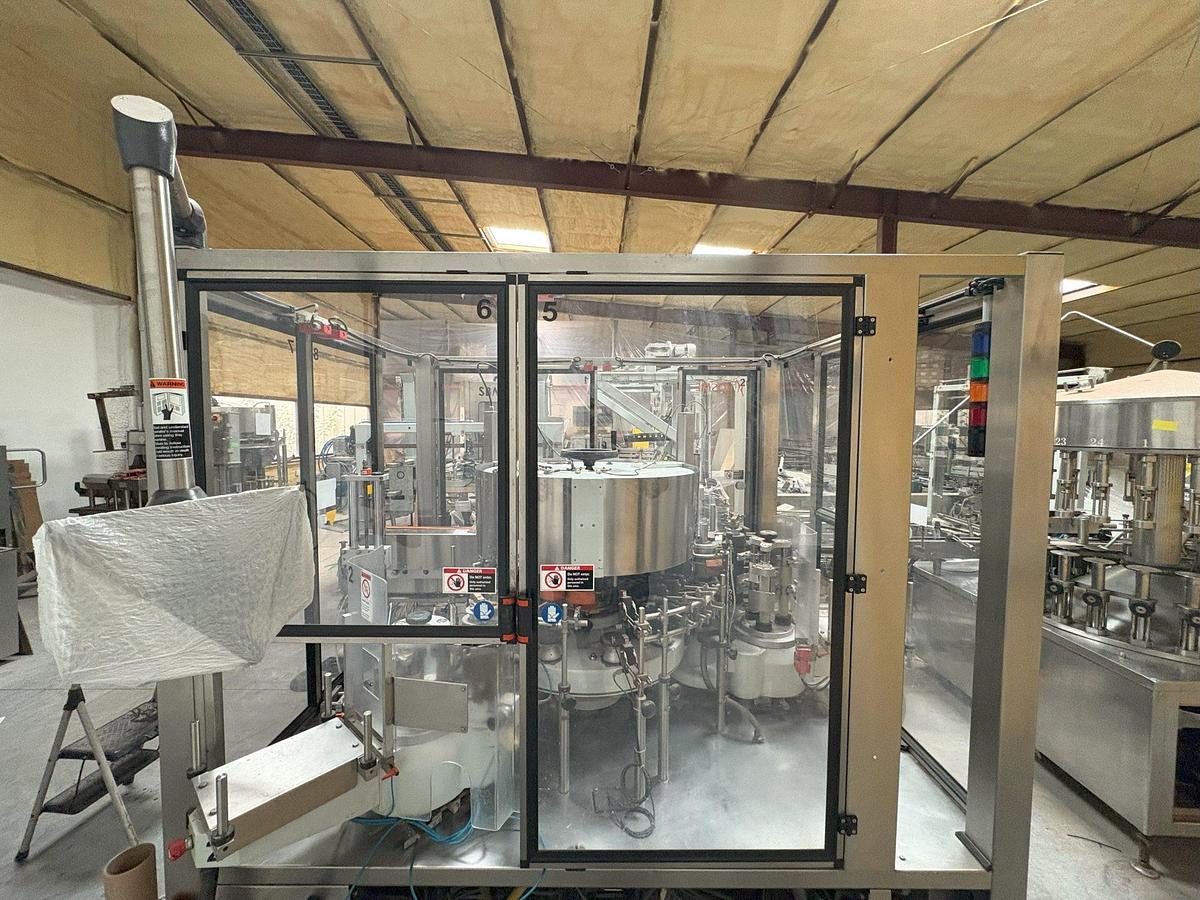
Kosme labeling equipment is built to handle several distinct labeling methods within a single production line or across different machine configurations. The most common technologies found on Kosme machines include cold glue (wet glue) application, hot melt glue systems, and pressure-sensitive (self-adhesive) label application. Many models are also capable of applying front, back, and neck labels simultaneously, which is a significant advantage for beverage and food producers who need multiple label positions applied in one pass. The nine-station rotary cold glue labeling systems, for example, are specifically designed to apply front, back, and neck labels with consistent adhesive coverage at high throughput rates.
This multi-technology flexibility is one reason Kosme equipment has maintained a strong presence in secondary markets. Buyers sourcing used Kosme machines can often find configurations that match their specific labeling requirements without needing to invest in purpose-built machinery. When evaluating a used machine, it is worth confirming which label stations are included and whether the glue application heads are intact and functional, as these components directly affect label placement accuracy and production efficiency.
What industries commonly use Kosme labeling equipment?
Kosme labeling machines have a long history of deployment across industries that require precise, high-volume container labeling. The beverage industry is the most prominent user, particularly breweries, soft drink bottlers, water producers, and wine and spirits operations. These facilities demand consistent label application at high speeds, and Kosme equipment was engineered with exactly those production environments in mind. Beyond beverages, Kosme machines are also found in food processing, pharmaceutical manufacturing, cosmetics production, and personal care product lines, where labeling accuracy and compliance with packaging standards are equally critical.
The breadth of industries that rely on Kosme equipment reflects the machine's ability to handle a wide range of container types, label materials, and adhesive systems. For buyers in the secondary market, this cross-industry applicability means that a machine originally used in a brewery, for instance, may be fully adaptable to a cosmetics or food production line with appropriate changeover parts. Prospective buyers should ask the seller about the machine's production history and any industry-specific configurations that may need to be modified for a different application.
What container shapes and sizes are compatible with Kosme labeling systems?
Kosme labeling machines are generally designed to handle cylindrical containers, which makes them a natural fit for bottles made from glass, PET plastic, and other rigid materials. Round bottles are the most common format, but many Kosme models can be configured with change parts to accommodate oval, square, or irregularly shaped containers depending on the specific machine design and the label station setup. Container sizes typically range from small personal care or pharmaceutical bottles up to large beverage containers, with the exact size range depending on the machine model and the adjustability of its infeed, starwheel, and label station components.
When purchasing used Kosme labeling equipment, buyers should clarify which change parts are included with the machine. Change parts are the format-specific components (starwheels, guide rails, bottle plates, and similar items) that allow the machine to run different container sizes. A machine sold without its full set of change parts may require additional investment to run the buyer's specific container format. Sellers should be able to provide information on which sizes the machine was last running in production, and inspection photos or video can help confirm the current state of these components.
What is the typical production speed of Kosme labeling machines?
Kosme labeling equipment is built for industrial-scale production, and throughput speeds vary considerably depending on the model, the number of label stations, and the labeling technology used. Many Kosme rotary labeling systems are capable of processing several thousand containers per hour, with some higher-end configurations reaching speeds in the range of 40,000 to 60,000 bottles per hour under optimal conditions. These figures make Kosme machines well-suited to large-scale beverage and food production facilities where continuous high-speed operation is a baseline requirement.
For buyers sourcing used Kosme equipment, it is important to understand that a machine's rated maximum speed and its practical operating speed in a specific production environment may differ. Factors like container type, label material, adhesive condition, and line integration all affect real-world throughput. A reputable used equipment dealer should be able to provide the machine's rated speed specifications, and if the machine is still in production at a facility, an in-person or video inspection may allow buyers to observe it running under actual production conditions. This kind of firsthand observation is one of the most reliable ways to assess whether a machine's speed capabilities match the buyer's production requirements.
How should buyers evaluate a used Kosme labeling machine before purchasing?
Buying used labeling equipment requires a more thorough evaluation process than purchasing from a manufacturer, since the machine's history, wear level, and current mechanical condition are all variables that directly affect its value and performance. The most effective approach is to request an in-person inspection or, when travel is not practical, a detailed video inspection conducted by the seller. A good video inspection should cover the label stations, glue application heads, infeed and outfeed components, electrical panels, and any visible wear on mechanical parts. If the machine is still installed at a production facility, it may be possible to observe it running live, which gives the most accurate picture of its current working order.
Beyond the physical inspection, buyers should ask about the machine's production history, the last time it was serviced, and what maintenance records are available. It is also worth contacting Kosme directly to understand what level of technical support, spare parts availability, and documentation can be expected for the specific model and age of the machine being considered. Older models may have limited parts availability, which can affect long-term operating costs. Selecting a used equipment dealer who specializes in packaging and labeling machinery, and who has a verifiable track record in the industry, significantly reduces the risk associated with a used equipment purchase.
What should buyers know about shipping and rigging costs for used Kosme labeling equipment?
Kosme labeling machines, particularly rotary systems with multiple stations, are heavy and mechanically complex pieces of equipment. Shipping costs are not fixed and depend on several factors including the machine's weight and dimensions, the distance between the seller's location and the buyer's facility, the level of packaging or crating required, and whether specialized rigging equipment is needed for loading and unloading. Rotary labeling systems often require forklift or crane rigging at both origin and destination, which adds to the total landed cost. Buyers should request a detailed breakdown of packaging, rigging, and freight costs from the seller before finalizing a purchase to avoid unexpected expenses.
Proper crating and packaging is especially important for labeling equipment because sensitive components like label heads, glue systems, and electronic controls can be damaged during transit if not adequately protected. Some sellers provide basic palletization while others offer full wooden crating, and the level of protection directly affects both the shipping cost and the risk of damage. Buyers should confirm exactly what packaging method will be used and whether the machine will be drained of any fluids or lubricants prior to shipment. Factoring in the full landed cost, including rigging, crating, freight, and any installation or recommissioning expenses at the destination, gives a much more accurate picture of the true acquisition cost of the equipment.
What are the typical payment terms for purchasing used Kosme labeling equipment?
Used equipment transactions in the packaging machinery industry generally operate on terms that favor the seller, given the nature of the secondary market. Most used equipment dealers require full payment before the machine is released for shipment. This is standard practice across the industry and applies to most buyers regardless of the transaction size. Wire transfer is the most common payment method for machinery purchases, though some dealers may accept other forms of payment depending on the transaction. Buyers should confirm accepted payment methods and the exact payment timeline expected before committing to a purchase.
Some dealers extend credit terms or deferred payment arrangements to repeat customers or buyers with an established purchasing relationship, but this is not the norm for first-time transactions. Buyers who are new to a particular dealer should expect to pay in full prior to shipment and should factor this into their cash flow planning, especially for larger equipment purchases. It is also worth confirming with the seller at what point title to the equipment transfers, and whether any deposit is required to hold a machine while financing or internal approvals are arranged.
Is Kosme labeling equipment suitable for smaller production operations?
Kosme machines are primarily engineered for high-volume, continuous production environments. Their rotary designs, multi-station configurations, and high throughput capacities make them most cost-effective when running at scale, which typically means large beverage plants, contract packaging facilities, or food and pharmaceutical operations with sustained production volumes. For very small operations running only a few hundred or a few thousand containers per shift, the capital cost and operational complexity of a Kosme rotary labeler may outweigh the benefits compared to simpler, lower-speed alternatives.
That said, the used equipment market can make Kosme machinery accessible to mid-sized operations that could not justify the cost of purchasing equivalent equipment from a manufacturer. A mid-scale craft brewery, regional food producer, or growing personal care brand that has outgrown entry-level labeling equipment might find a used Kosme machine to be a practical step up in capability at a fraction of the cost of a comparable machine purchased through other channels. The key is matching the machine's minimum efficient operating speed and format range to the buyer's actual production volume and container specifications. Consulting with a dealer who specializes in labeling equipment can help buyers determine whether a specific Kosme model is appropriately sized for their operation.
What spare parts and technical support can buyers expect for used Kosme labeling machines?
Kosme is an Austrian manufacturer with a history in the packaging machinery industry, and like most established equipment makers, they maintain varying levels of support depending on the age and model of the machine. For relatively recent models, spare parts may still be available directly from the manufacturer or through authorized service networks. For older machines, parts availability can be more limited, and buyers may need to rely on third-party machining, refurbished components, or parts sourced from other used Kosme machines. Before purchasing, it is advisable to contact Kosme directly to ask about parts and documentation availability for the specific model and serial number being considered.
Used equipment is sold without the support infrastructure that comes with a manufacturer purchase, which means buyers take on more responsibility for sourcing parts, finding qualified technicians, and maintaining the machine over time. Buyers should ask the seller for any available technical manuals, electrical schematics, and parts lists, as this documentation significantly simplifies future maintenance and repair. Choosing a dealer who specializes in packaging and labeling machinery is also valuable here, as experienced dealers are more likely to have access to technical resources and industry contacts that can support the buyer after the sale.
What is a Kosme mechanical arm depalletizer and how does it fit into a labeling line?
A mechanical arm depalletizer is a piece of upstream equipment that automates the process of removing containers from pallets and feeding them into a production line. In a typical high-speed beverage or food packaging operation, containers arrive stacked on pallets and need to be singulated and transferred to a conveyor before they reach the filler, labeler, or other downstream equipment. A Kosme mechanical arm depalletizer handles this task automatically, reducing the need for manual labor at the start of the line and ensuring a consistent, controlled flow of containers into the system.
For buyers looking to build or expand a complete packaging line, a used Kosme depalletizer can be a practical complement to a used Kosme labeling machine, since both pieces of equipment are designed for similar production environments and container types. Integrating used equipment from the same manufacturer can simplify compatibility considerations, though buyers should still verify that the specific models and configurations are compatible with their line speed and container format. As with any used packaging machinery, an inspection of the depalletizer's mechanical arm, gripping components, and control system is an important step before finalizing a purchase.