Category
Manufacturer
Model
Komline Sanderson
Komline Sanderson is known for its equipment for the food and chemical processing industries, particularly in filtration and drying technologies. Their systems are designed to improve product quality and operational efficiency.
FAQ:
What types of Komline Sanderson equipment are commonly available on the used market?
Komline Sanderson produces a fairly wide range of industrial processing equipment, and several product lines show up regularly in the used market. The most commonly traded units include rotary vacuum drum filters, paddle dryers, disc filters, belt presses, dissolved air flotation (DAF) systems, and double cone blenders. Paddle dryers tend to be particularly sought after because of their ability to handle difficult-to-dry sludges and biosolids with strong thermal efficiency, which makes them valuable across multiple industries. Rotary vacuum drum filters are another staple, available in a range of capacities to suit different throughput requirements.
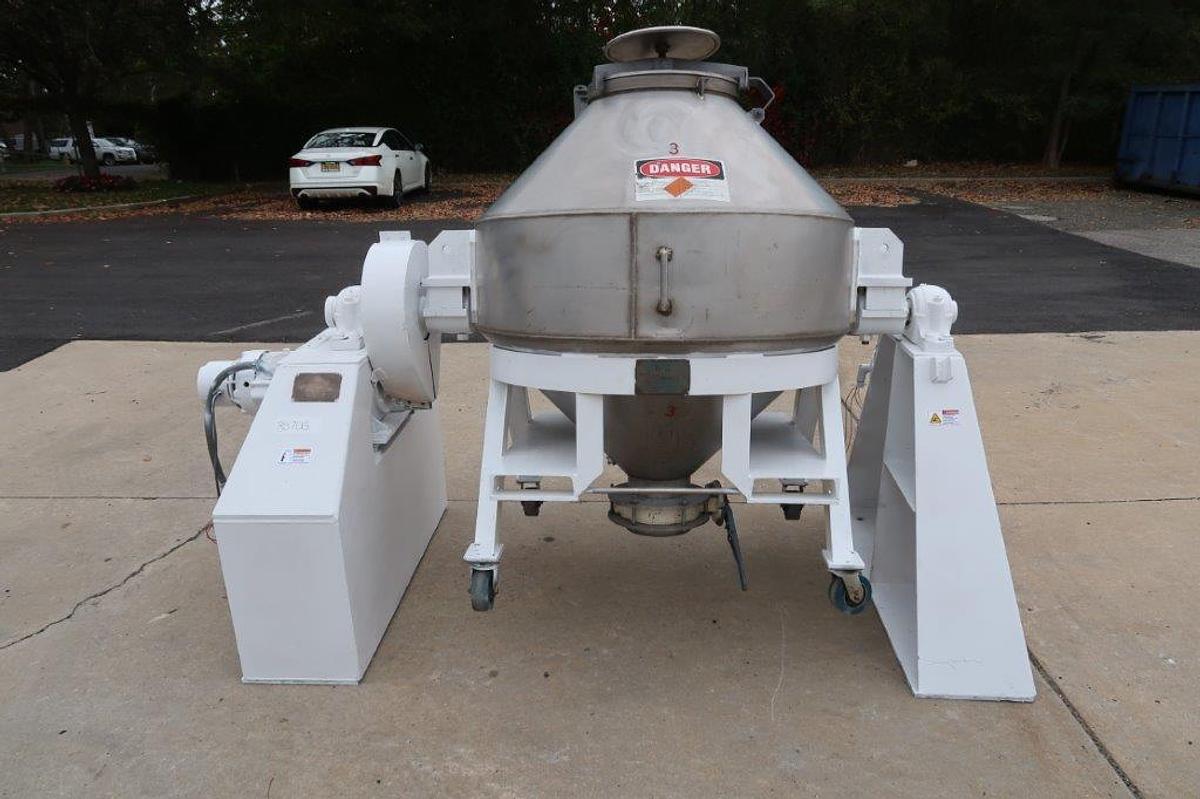
Beyond those core product lines, Komline Sanderson has historically served the food processing, chemical manufacturing, pharmaceutical, and municipal wastewater treatment sectors, so the used equipment available at any given time often reflects the decommissioning cycles of those industries. Buyers looking for filtration or drying equipment should check listings carefully for model numbers and specifications, since capacity, materials of construction (such as stainless steel versus carbon steel), and configuration can vary significantly from one unit to the next. A used Komline Sanderson double cone blender, for example, may come with interchangeable tanks, which adds flexibility for multi-product operations.
What industries use Komline Sanderson equipment?
Komline Sanderson has built its reputation over more than 75 years by serving a broad cross-section of industries that require reliable filtration, drying, and thermal processing solutions. Municipal wastewater treatment is one of the largest end markets, where Komline Sanderson paddle dryers and belt presses are used to process sludge and biosolids. Chemical manufacturing and food processing are also major users, relying on the company's filtration and blending equipment to maintain product quality and meet regulatory standards. Pharmaceutical manufacturers and paper and pulp operations round out the primary customer base.
This diversity of end markets is actually one reason the used Komline Sanderson equipment market stays active. When a food processing plant upgrades its lines, or a municipality replaces aging infrastructure, that equipment often becomes available for resale. For buyers, it means that used Komline Sanderson units have typically seen real-world industrial service, and a machine that has been properly maintained in a food-grade or pharmaceutical environment may be in particularly good condition. Understanding the prior application of a specific unit is an important part of the evaluation process before purchase.
How do I verify the condition of a used Komline Sanderson unit before buying?
Verifying the condition of any used industrial machine requires a layered approach, and Komline Sanderson equipment is no exception. The first step is to request as much documentation as possible from the seller, including any available maintenance records, operational history, and photos or videos of the unit. Reputable used equipment dealers will typically accommodate in-person inspections, virtual walkthroughs, or video captures of the machine so buyers can assess its current state. In some cases, the equipment may still be installed and operating at a production facility, which provides an opportunity to observe it running under actual process conditions.
It is worth noting that most used equipment dealers do not have the permitting or infrastructure to run full production tests, so buyers should set realistic expectations about what an inspection can demonstrate. A thorough visual inspection can reveal obvious wear, corrosion, missing components, or damage to seals and bearings, but it will not replicate a full production run. For high-value purchases, buyers may want to bring in an independent equipment inspector or a process engineer familiar with Komline Sanderson equipment. Consulting directly with Komline Sanderson's service team is also advisable, as they can speak to the serviceability of a specific model and whether parts and technical support are still available for that unit's age and configuration.
Are replacement parts available for older Komline Sanderson models?
Parts availability for older Komline Sanderson equipment varies depending on the model, age, and how long that particular product line has been in production. Komline Sanderson has been manufacturing industrial equipment for over 75 years, and while the company has historically maintained strong support for its installed base, the level of availability for a specific machine can depend on whether that model is still in active production or has been discontinued. Buyers should contact Komline Sanderson directly before purchasing a used unit to get a candid assessment of what parts and technical support they can expect for that particular model.
For older or discontinued models, alternative sourcing strategies are worth considering. Some components, such as bearings, seals, and drive components, are generic enough to be sourced from industrial supply houses. Other parts, like filter media, drum internals, or proprietary paddle assemblies, may need to come directly from the manufacturer or from specialty rebuilders. When evaluating a used Komline Sanderson purchase, factoring in parts availability alongside the purchase price gives a more accurate picture of the true cost of ownership. A well-priced machine that requires hard-to-find components could end up being more expensive to operate than a higher-priced unit with readily available spare parts.
What is the typical price range for used Komline Sanderson equipment?
Pricing for used Komline Sanderson equipment spans a wide range depending on the type of machine, its size and capacity, age, condition, and current market demand. Smaller units like double cone blenders or compact filtration systems may be priced in the low thousands of dollars, while larger paddle dryers, rotary vacuum drum filters, or complete DAF systems can run significantly higher, sometimes into the hundreds of thousands of dollars for well-maintained, larger-capacity units. The stainless steel construction common in food-grade and pharmaceutical equipment also tends to command a premium over carbon steel equivalents.
Because used equipment pricing is driven heavily by condition and configuration, two machines with the same model designation can carry very different price tags. Buyers should treat list prices as a starting point and factor in the cost of inspection, any necessary reconditioning or parts replacement, shipping, rigging, and installation when calculating the total landed cost. Getting quotes from the seller on packaging, crating, and freight early in the process helps avoid surprises. For buyers who are unfamiliar with market pricing for a specific Komline Sanderson product line, reviewing recent comparable sales or consulting with an equipment appraiser can provide useful context.
What should buyers know about shipping and rigging used Komline Sanderson equipment?
Shipping industrial processing equipment like Komline Sanderson paddle dryers, rotary drum filters, or blenders requires more planning than standard freight. These machines are heavy, often irregularly shaped, and sensitive to damage from improper handling. Sellers typically offer different levels of packaging, ranging from basic palletization to full custom crating, and the cost of shipping will vary accordingly. Buyers should ask the dealer specifically what packaging is included in the quoted price and what additional crating or bracing might be recommended for longer transit distances or international shipments.
For larger Komline Sanderson units, professional rigging is usually required for both loading at the seller's facility and unloading at the destination. Rigging costs are generally separate from freight charges and should be confirmed upfront. Buyers who are not familiar with industrial rigging should arrange for a qualified rigger at their receiving location before the shipment departs. It is also worth confirming whether the seller requires full payment before the equipment is released for shipping, which is standard practice among most used equipment dealers. Understanding all of these logistics costs before committing to a purchase ensures that the final landed cost aligns with the buyer's budget.
What are Komline Sanderson paddle dryers, and why are they valued on the used market?
Komline Sanderson paddle dryers are indirect heat transfer dryers that use a series of hollow, wedge-shaped paddles mounted on rotating shafts to simultaneously convey and dry wet materials. Heat is transferred through the paddles and the dryer's jacketed housing rather than through direct contact with a heated gas stream, which makes them well suited for heat-sensitive materials and applications where controlling moisture content precisely is important. They are widely used for drying sludges, biosolids, filter cakes, and various chemical and food-grade materials.
On the used market, Komline Sanderson paddle dryers hold their value for a few reasons. Their construction is typically heavy-duty, and units that have been properly maintained can continue operating reliably for many years after leaving their first installation. The indirect heating design also means they tend to have fewer wear points than direct-fired systems, which can translate to lower ongoing maintenance costs. For buyers in wastewater treatment, food processing, or chemical manufacturing who need a proven drying solution without the capital cost of purchasing new equipment, a used Komline Sanderson paddle dryer can represent a practical and cost-effective option, provided the unit has been properly inspected before purchase.
How does buying used Komline Sanderson equipment compare to purchasing new equipment?
The most obvious advantage of buying used Komline Sanderson equipment is cost. Used industrial machinery typically sells for a fraction of the price of a comparable unit purchased directly from a manufacturer, which can make a significant difference in project budgets, especially for smaller operations or facilities that need to expand capacity quickly. Lead times are another factor. Ordering industrial equipment from a manufacturer can involve months of production and delivery time, while a used unit that is already in inventory can often be shipped within weeks of purchase.
The trade-offs are real, though, and buyers should go in with clear expectations. Used equipment is sold as-is, meaning there is no manufacturer's warranty coverage, and the buyer takes on the responsibility of confirming the machine's condition through inspection. The equipment may also have wear on components that will need attention before it reaches full operational capacity. Buyers who do their homework, work with reputable dealers who have a long track record in their industry, and invest in a thorough pre-purchase inspection are generally in the best position to get reliable performance from used Komline Sanderson equipment. The durability that Komline Sanderson is known for means that even older units, when properly evaluated, can deliver strong service life.
What capacity ranges are available for used Komline Sanderson rotary vacuum drum filters?
Komline Sanderson rotary vacuum drum filters have been manufactured in a range of sizes to accommodate different process throughput requirements. Filter drum diameters and face widths vary across the product line, with drum surface areas that can range from just a few square feet for smaller laboratory or pilot-scale units up to several hundred square feet for large industrial installations. The specific capacity of any given unit depends on the drum dimensions, the vacuum level applied, the nature of the slurry being filtered, and the filter media in use.
On the used market, availability at any point in time is driven by what has recently been decommissioned, so buyers may not always find the exact size they need immediately. It is worth working with a dealer who specializes in filtration equipment and who can either locate a specific configuration or alert buyers when a unit matching their requirements becomes available. When evaluating a used rotary vacuum drum filter, buyers should pay close attention to the condition of the drum surface, the vacuum system components, the drive mechanism, and any associated slurry agitation or filtrate receiver equipment, as these are the areas most subject to wear in normal operation.
What payment terms should buyers expect when purchasing used Komline Sanderson equipment?
Payment practices in the used industrial equipment market are fairly consistent across dealers. In most cases, full payment is required before a machine is released for shipping. This is standard practice because used equipment dealers are typically holding inventory they have already purchased, and shipping a machine before payment clears introduces financial risk on the seller's side. Buyers should factor this into their purchasing timeline, particularly if internal purchase approvals or financing arrangements take time to process.
Some dealers may offer extended payment terms to repeat customers or for larger transactions, but this is at the dealer's discretion and is not the norm for first-time buyers. Accepted payment methods vary by dealer and may include wire transfer, ACH, or other arrangements. Before finalizing a purchase, buyers should confirm the exact payment requirements with the dealer, including any deposit structure if the machine needs to be held while financing or approvals are arranged. Getting clarity on payment terms, shipping costs, and any applicable taxes or fees at the outset avoids delays and misunderstandings once the transaction is underway.