Category
Manufacturer
Model
FAQ:
What is a Koch tray sealer and what industries use it?
Koch tray sealers are packaging machines designed to hermetically seal a film lid onto a pre-formed tray, creating a secure, tamper-evident package. Koch Equipment is a well-established U.S.-based manufacturer with a long history in the vacuum packaging and tray sealing space, and their machines are widely used across the meat, poultry, seafood, deli, and prepared foods industries. The sealing process involves placing a filled tray into a die, applying a lidding film under heat and pressure, and trimming the excess film to produce a finished retail-ready package.
Because Koch machines are built for food processing environments, they are typically constructed with stainless steel frames and food-grade components that hold up to washdown conditions and continuous production demands. Processors ranging from small regional meat shops to large-scale protein facilities have relied on Koch tray sealers for decades, which is one reason used Koch equipment remains in high demand on the secondary market. The machines have a reputation for durability, and many units continue to perform reliably well after their initial production life, making them a practical choice for buyers seeking used packaging equipment.
What models of used Koch tray sealers are typically available on the secondary market?
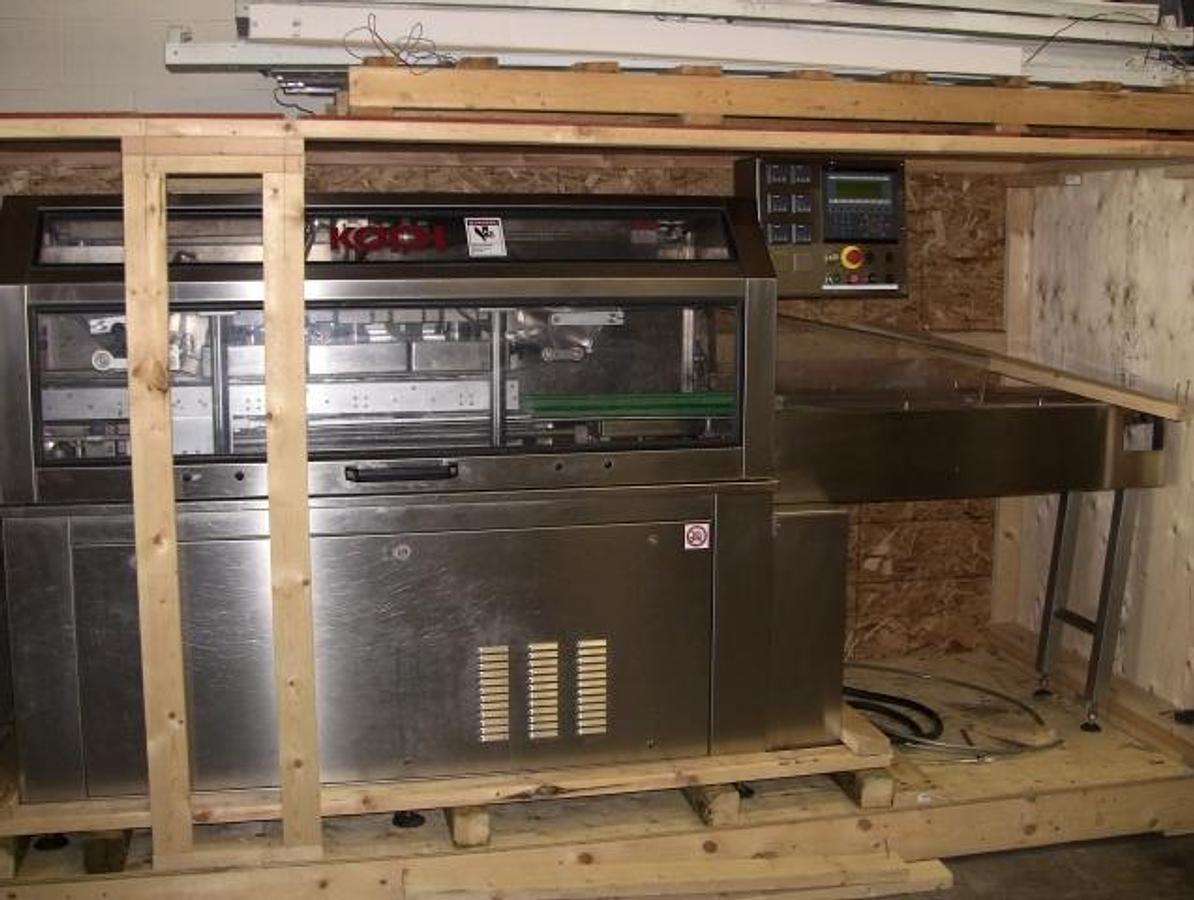
The used equipment market for Koch tray sealers includes both semi-automatic and fully automatic configurations, with one of the more sought-after types being the Koch Automatic Dual Lane Modified Atmosphere Tray Sealer. Dual lane models are particularly valuable in higher-volume operations because they can process two rows of trays simultaneously, effectively doubling throughput without requiring a second machine footprint. These machines are commonly listed by used equipment dealers who specialize in food processing and packaging machinery.
Availability on the secondary market fluctuates based on plant closures, equipment upgrades, and production line changes at food processing facilities. Buyers looking for a specific Koch model or configuration should work with dealers who have an active inventory and a history of sourcing food packaging equipment, as they are more likely to have access to the models that fit a particular production need. It is also worth asking dealers about upcoming inventory, since machines are sometimes acquired before they are formally listed for sale.
Does a Koch tray sealer support modified atmosphere packaging (MAP)?
Yes, several Koch tray sealer models are designed specifically for modified atmosphere packaging, commonly referred to as MAP. This process involves evacuating the air from inside the sealed tray and replacing it with a controlled gas mixture, typically a combination of carbon dioxide, nitrogen, and sometimes oxygen, depending on the product being packaged. The gas mixture is selected based on the specific food product, with the goal of slowing microbial growth and oxidation to extend refrigerated shelf life. For fresh meat and poultry, this can mean the difference between a shelf life of a few days and one that extends to two weeks or more.
MAP-capable Koch tray sealers are a strong fit for retail-ready protein packaging, prepared meals, and fresh produce applications where shelf life extension has a direct impact on product quality and waste reduction. When evaluating a used Koch MAP tray sealer, buyers should confirm that the gas flushing components, including the gas manifold and sealing head, are intact and functional. Inspecting these components either in person or through a detailed video walkthrough is an important step before purchasing, since MAP performance depends on the integrity of the sealing system.
What types of trays and films are compatible with Koch tray sealers?
Koch tray sealers are designed to work with a broad range of standard tray materials, including CPET (crystallized polyethylene terephthalate), APET (amorphous PET), polypropylene (PP), and expanded polystyrene foam trays. This flexibility is useful for processors who run multiple product lines that require different tray formats, as it reduces the need to invest in separate sealing equipment for each tray type. Tray dimensions and depths must fall within the machine's tooling specifications, so buyers should confirm that their tray sizes are compatible with the specific Koch model they are considering.
Lidding films used with Koch tray sealers are typically heat-sealable barrier films that bond to the tray flange under a combination of heat, pressure, and dwell time. The appropriate film depends on the application, with MAP applications requiring films with specific oxygen transmission rates to maintain the integrity of the gas atmosphere inside the package. When purchasing a used Koch tray sealer, it is worth asking the dealer whether the machine comes with existing tooling for specific tray sizes, since tooling is a significant additional cost if it needs to be sourced separately.
What is the difference between a semi-automatic and fully automatic Koch tray sealer?
A semi-automatic Koch tray sealer requires an operator to manually load trays into the sealing die and initiate each sealing cycle, making it better suited for lower-volume operations or facilities where production runs are shorter and more varied. These machines generally have a smaller footprint and lower capital cost, which makes them appealing to smaller processors, specialty food producers, or operations that are just scaling up their packaging capabilities. The trade-off is that output is limited by the speed of the operator, and labor costs per package tend to be higher than with automated systems.
A fully automatic Koch tray sealer integrates a conveyor or indexing system that feeds trays through the machine without constant operator intervention, allowing for much higher throughput. Dual lane automatic models, in particular, can process a significant number of trays per minute, making them practical for high-volume protein and prepared food facilities. For buyers evaluating used equipment, the choice between semi-automatic and fully automatic should be driven by current and projected production volumes, available floor space, and labor costs. Automatic machines are generally more complex mechanically, so a thorough inspection of the drive systems, conveyor components, and controls is especially important when buying used.
What should a buyer inspect when purchasing a used Koch tray sealer?
When evaluating a used Koch tray sealer, the most critical areas to examine are the sealing head and heating elements, the tooling and die condition, the film drive and tensioning system, and the overall condition of the frame and conveyor components. The sealing head is the heart of the machine, and worn or damaged heating elements will directly affect seal quality. Tooling should be checked for wear, warping, or damage to the sealing surface, since poor tooling condition leads to inconsistent seals and potential packaging failures. For MAP models, the gas manifold, valves, and vacuum pump should be inspected for leaks and proper function.
Reputable used equipment dealers will typically offer buyers the option of an in-person inspection, a virtual walkthrough, or a detailed video of the machine in its current condition. Buyers should take full advantage of these options and ask specific questions about the machine's operational history, how recently it was last in production, and whether any components have been replaced or repaired. Keep in mind that most equipment dealers do not have the permitting or facilities to run actual food product through the machine during an inspection, so the evaluation will focus on mechanical condition and operational readiness rather than a live production run. Consulting with the manufacturer about parts availability for the specific model and serial number is also a smart step before committing to a purchase.
What is the typical sealing output or throughput of a Koch tray sealer?
Throughput on a Koch tray sealer varies considerably depending on the model, configuration, and tray size being run. Semi-automatic models are generally limited by operator speed and may produce anywhere from a few hundred to around a thousand packages per hour under normal conditions. Fully automatic single-lane machines can achieve significantly higher rates, and dual lane automatic models are capable of processing multiple trays per cycle, which multiplies output accordingly. The actual cycles-per-minute figure depends on dwell time, which is the time the sealing head holds pressure and heat on the tray, and this is adjusted based on the film and tray material being used.
For buyers trying to match a used Koch tray sealer to a specific production requirement, it helps to know the tray dimensions, target output per hour, and the number of shifts the machine will run. Dealers who specialize in food packaging equipment can often provide model-specific throughput data or connect buyers with technical resources to estimate whether a particular machine fits the production need. When the machine is still installed at a production facility, there may also be an opportunity to observe it running during an in-person inspection, which gives the most accurate picture of real-world output.
Are Koch tray sealers practical for smaller food processors, or are they built primarily for large industrial operations?
Koch has produced tray sealing equipment across a range of scales, and the used market reflects that variety. Semi-automatic models are well within reach for smaller processors, specialty food producers, and operations that are transitioning from manual packaging to machine sealing. These machines offer a meaningful step up in seal consistency and presentation without the complexity or cost of a fully automated line. For a small butcher shop, a regional prepared food company, or a farm-to-table operation scaling up production, a used semi-automatic Koch tray sealer can be a practical and cost-effective investment.
Larger automatic and dual-lane models are better suited to mid-size and large processors where labor savings and throughput justify the higher equipment cost and more involved installation. The secondary market is one of the main ways smaller operations access Koch equipment at all, since purchasing this type of machinery used rather than buying a comparable machine at full price can make the economics work for a business that could not otherwise afford a commercial tray sealing line. Buyers at any scale should factor in the cost of tooling for their specific tray sizes, as well as installation, electrical requirements, and any refurbishment work that may be needed after purchase.
How does tooling work on a Koch tray sealer, and why does it matter when buying used?
Tooling on a Koch tray sealer refers to the upper and lower dies that hold and seal a specific tray size and format. Each tray footprint and depth typically requires its own set of tooling, and the tooling determines the sealing pattern, the film trim line, and how the tray is supported during the sealing cycle. Some Koch models are designed to allow relatively quick tooling changeovers, which is valuable for operations that run multiple tray formats on the same machine. The faster the changeover, the less downtime between product runs, which has a direct impact on overall equipment efficiency.
When buying a used Koch tray sealer, tooling is one of the most important factors to clarify upfront. A machine sold without tooling, or with tooling only for tray sizes that do not match the buyer's needs, will require additional investment to become operational. Custom tooling for tray sealers can be a significant expense, and lead times for fabrication can add weeks to the timeline before the machine is running in production. Buyers should ask the dealer exactly what tooling is included with the machine, confirm the tray dimensions that tooling is designed for, and verify the condition of the tooling surfaces before finalizing a purchase.
What are the typical shipping and payment considerations when buying a used Koch tray sealer?
Used Koch tray sealers are substantial pieces of industrial equipment, and shipping costs can vary widely depending on the size and weight of the specific model, the origin and destination, and the level of packaging required to protect the machine in transit. Smaller semi-automatic units may ship on a standard pallet with appropriate blocking and bracing, while larger automatic models often require custom crating or skidding to prevent damage during freight handling. Heavy machines may also require specialized rigging equipment for loading at the origin and unloading at the destination, which adds to the total landed cost. Buyers should ask the dealer for a detailed breakdown of packaging, rigging, and freight charges before agreeing to a purchase so there are no surprises.
On the payment side, most used equipment dealers require full payment prior to shipping. Some dealers may extend terms to repeat customers with an established relationship, but buyers who are purchasing from a dealer for the first time should expect to pay in full before the machine leaves the facility. Wire transfer is the most common payment method for transactions of this size. Buyers should also factor in any costs associated with installation, electrical work, or commissioning at their facility, as these are separate from the purchase and shipping costs and can add meaningfully to the total investment.