Category
Manufacturer
Model
FAQ:
What is a Kleenline retractable conveyor and how does it work?
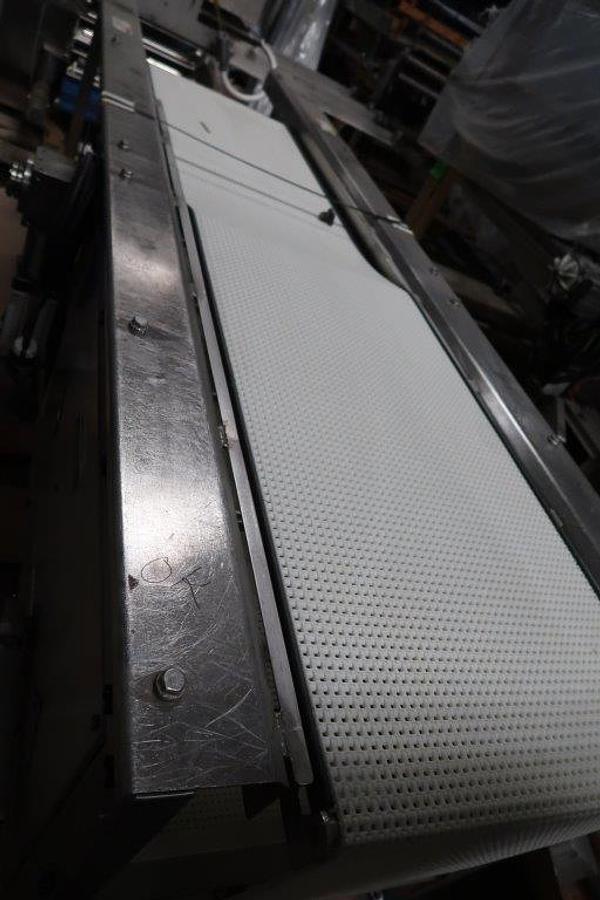
A Kleenline retractable conveyor is a belt conveyor designed to extend and retract along its length, giving operators the ability to position the discharge end precisely over a target such as a tray, bin, or downstream piece of equipment. The retraction mechanism allows the conveyor to pull back when not in use, freeing up floor space and reducing the risk of contamination or interference with other line equipment. This adjustability is one of the defining features that separates retractable conveyors from fixed-length belt conveyors, and it makes them especially practical in production environments where product flow direction or drop point needs to change throughout a shift.
Kleenline built its reputation in the food processing and packaging industry by engineering conveyors that prioritize hygiene without sacrificing mechanical simplicity. The retractable design typically uses a sliding or telescoping carriage system, and the belt adjusts in tension automatically or through a manual tensioning mechanism as the conveyor extends or retracts. Operators can reposition the discharge point without stopping the line entirely, which keeps throughput high. Used Kleenline retractable conveyors retain this core functionality and are actively sought by food manufacturers looking to add flexible transfer capability to an existing line at a lower cost than purchasing comparable equipment manufactured today.
What industries use Kleenline retractable conveyors?
Kleenline retractable conveyors are most closely associated with food processing and food packaging environments. Bakery operations use them to transfer baked goods from ovens or cooling conveyors into packaging lines. Meat, poultry, and seafood processors rely on them for portioning and transfer steps where the drop point needs to shift between different downstream containers or machines. Dairy and prepared foods manufacturers also use them regularly, particularly in applications where sanitary design is a regulatory requirement and where line configurations change between product runs.
Beyond food, the hygienic construction of Kleenline conveyors makes them suitable for pharmaceutical and nutraceutical manufacturing, where washdown capability and stainless steel contact surfaces are standard expectations. The retractable feature has practical value in any facility where floor space is limited or where a single conveyor needs to serve multiple downstream positions. Buyers of used Kleenline retractable conveyors often come from these same industries, looking for equipment that already meets the sanitary design standards their facilities require without the lead times associated with ordering purpose-built equipment.
What materials are Kleenline retractable conveyors made from?
Kleenline conveyors are constructed primarily with stainless steel frames, which is the standard material choice for food-grade conveyor equipment. Stainless steel resists corrosion from water, cleaning chemicals, and food acids, making it appropriate for daily washdown cycles that are common in meat, bakery, and dairy processing environments. The legs, side rails, and structural components are typically fabricated from stainless steel tubing or formed plate, and hardware such as bolts and fasteners is also stainless to prevent rust contamination. This all-stainless construction is one reason Kleenline equipment holds its value well in the used equipment market.
The belt material varies by application and configuration. Food-grade plastic modular belts and urethane or rubber flat belts are both found on Kleenline conveyors, depending on the specific model and what the original buyer specified. Drive components including motors and gearboxes are typically enclosed or sealed to prevent ingress of water during washdown. When evaluating a used Kleenline retractable conveyor, buyers should confirm the belt condition and material, as belts are wear items that may need replacement. The stainless frame and mechanical components, by contrast, tend to have long service lives when the equipment has been properly maintained.
Are used Kleenline retractable conveyors sanitary and suitable for food processing?
Kleenline designed its conveyor line specifically to meet the sanitary standards required in food processing, and that design intent does not change when the equipment moves into the used market. The stainless steel construction, open-frame architecture that minimizes harborage points, and tool-accessible belt removal are all features built into the equipment at the manufacturing stage. A used Kleenline retractable conveyor that has been properly maintained and cleaned will retain these sanitary design characteristics. Buyers should inspect the belt, drive components, and any plastic wear strips or guide rails, as these are the areas most likely to show wear or degradation after years of production use.
Before putting any used conveyor back into food production, a thorough inspection and cleaning is standard practice. Facilities operating under USDA, FDA, or third-party food safety audit programs will typically require that any equipment, used or otherwise, meets their sanitary design criteria before it is approved for use on the line. Kleenline's design generally aligns with accepted food-grade conveyor standards, which is part of why the brand is consistently sought after in the used equipment market. Buyers with specific regulatory requirements should document the equipment's construction materials and design features as part of their internal equipment qualification process.
What should buyers look for when inspecting a used Kleenline retractable conveyor?
The most important areas to evaluate on a used Kleenline retractable conveyor are the belt condition, the retraction mechanism, and the drive system. The belt should be free of cracks, tears, fraying edges, or embedded debris. On modular plastic belts, individual modules can sometimes be replaced rather than replacing the full belt, but significant damage across multiple modules usually means a full belt replacement is needed. The retraction carriage or telescoping mechanism should slide smoothly without binding, and the tensioning system should hold the belt properly at both the extended and retracted positions. Any roughness or resistance in the retraction movement is worth investigating before purchase.
The drive motor and gearbox should be checked for unusual noise, leaks, or signs of overheating. Inspecting the underside of the conveyor frame for corrosion, particularly around welds and in areas that may have held standing water, gives a good indication of how well the equipment was maintained. Reputable used equipment dealers will typically offer in-person inspections, video walkthroughs, or video captures of the machine so buyers can assess its condition before committing to a purchase. For equipment that is still installed in a production facility, some dealers can arrange access to the plant for a live inspection. Buyers should also contact Kleenline directly to understand parts availability for the specific model they are considering, since age and model generation can affect what support is available.
Are replacement parts and belts available for used Kleenline conveyors?
Parts availability for Kleenline conveyors depends on the specific model and its age. Kleenline has been an established manufacturer in the food processing conveyor market for many years, and for relatively recent models, the manufacturer is generally a good resource for replacement belts, drive components, and wear parts. Contacting Kleenline directly with the model number and serial number of a specific conveyor is the most reliable way to get accurate information about what parts are currently stocked or available to order. This is an important step buyers should take before finalizing a purchase of used equipment, particularly if the conveyor is an older model.
For common wear items like belts and belt lacing, there are also third-party suppliers who manufacture food-grade conveyor belting in standard widths that may be compatible with Kleenline frames. Bearings, motors, and gearboxes are often standard industrial components that can be sourced from multiple suppliers regardless of the conveyor brand. A used equipment dealer with experience in food processing machinery can often advise on parts sourcing for specific models. Buyers should factor the potential cost of replacement parts into their overall budget when evaluating a used conveyor, particularly if the belt or drive components show visible wear during inspection.
What are typical belt widths and sizes for Kleenline retractable conveyors?
Kleenline retractable conveyors are produced in a range of belt widths to accommodate different product types and line configurations. Common belt widths in the food processing conveyor market run from roughly 6 inches on the narrow end up to 36 inches or wider for high-volume applications, and Kleenline offers configurations across this range. The overall conveyor length, including the range of extension in the retractable section, varies significantly by model and original specification. Buyers shopping for used Kleenline retractable conveyors should have their required belt width, working height range, and approximate extended length in mind before evaluating specific machines.
Because used conveyors are sold as-is in the configurations they were built for, the available dimensions are determined by what is currently on the market rather than what can be ordered to spec. This makes it worthwhile to work with a dealer that maintains an active inventory of Kleenline equipment, since the selection of belt widths and lengths available at any given time will vary. Measuring the available floor space and the height of downstream equipment before shopping helps buyers quickly determine whether a specific used conveyor will fit their application, which saves time during the evaluation process.
How does buying a used Kleenline retractable conveyor compare to buying one manufactured today?
The primary advantage of buying a used Kleenline retractable conveyor is cost. Used food processing equipment typically sells for a fraction of the price of comparable equipment purchased through a manufacturer or authorized distributor, and lead times are dramatically shorter since the equipment is already built and available. For facilities that need to add transfer capacity quickly, or that are working within a tight capital budget, used equipment is often the practical choice. Kleenline's stainless steel construction and sanitary design mean that a well-maintained used conveyor can perform reliably for years after its initial installation.
The tradeoffs are worth understanding clearly. Used conveyors are sold as-is, which means the buyer takes on responsibility for verifying the machine's condition through inspection before purchase. There are no manufacturer warranties on used equipment, and the buyer should plan for the possibility that belts, bearings, or other wear components may need attention before or shortly after the conveyor goes back into production. Buyers should also confirm parts availability for the specific model with the manufacturer, since older models may have limited support. For many buyers in food processing, these tradeoffs are acceptable given the cost savings, and selecting a reputable used equipment dealer with a track record in food processing machinery helps reduce the risk of an unsatisfactory purchase.
What should buyers expect regarding shipping and logistics for a used Kleenline retractable conveyor?
Shipping a used conveyor requires more planning than shipping a standard pallet of parts. Retractable conveyors have structural frames, drive components, and belt assemblies that can be damaged in transit if not properly secured and packaged. Reputable dealers will typically crate or palletize the equipment to a level appropriate for the size and fragility of the machine, and the cost of that packaging is usually passed on to the buyer. Larger or heavier conveyors may require forklift loading at the origin and a lift gate or loading dock at the destination, and rigging costs for heavy equipment can add meaningfully to the total landed price.
Buyers should ask the dealer for a clear breakdown of packaging, rigging, and freight costs before agreeing to a purchase so there are no surprises on the final invoice. Freight quotes can vary significantly depending on the conveyor's dimensions and weight, the origin and destination locations, and the carrier used. For international shipments, customs documentation and import duties add another layer of cost and complexity to factor in. Getting a full landed cost estimate, including all freight and handling charges, is an important step in evaluating whether a specific used conveyor represents good value relative to alternatives.
What payment terms are typical when buying used food processing conveyors from a dealer?
Most used equipment dealers in the food processing machinery market require full payment before the equipment ships. This is standard practice in the industry and reflects the fact that used equipment is typically sold as-is, without the financing structures that sometimes accompany purchases of newly manufactured machinery. Payment is most commonly made by wire transfer, though some dealers accept other forms of payment depending on the transaction. Buyers should confirm accepted payment methods with the dealer early in the process to avoid delays once a purchase decision is made.
Some dealers offer payment terms to repeat customers or established accounts, but this is the exception rather than the rule for first-time buyers. Buyers who need financing for used equipment purchases can sometimes arrange it through third-party equipment financing companies, which is worth exploring independently if a significant capital outlay is a concern. Regardless of payment method, buyers should ensure they receive clear documentation of the sale, including a description of the equipment, its condition as represented, and the agreed purchase price, before funds are transferred.