Category
Manufacturer
Model
Kirby Lester
Kirby Lester is a leader in pharmaceutical dispensing technology, known for their automated counting and dispensing machines. Their equipment is designed to enhance accuracy and efficiency in pharmacies and healthcare settings.
FAQ:
What models of Kirby Lester pill counters are commonly available on the used equipment market?
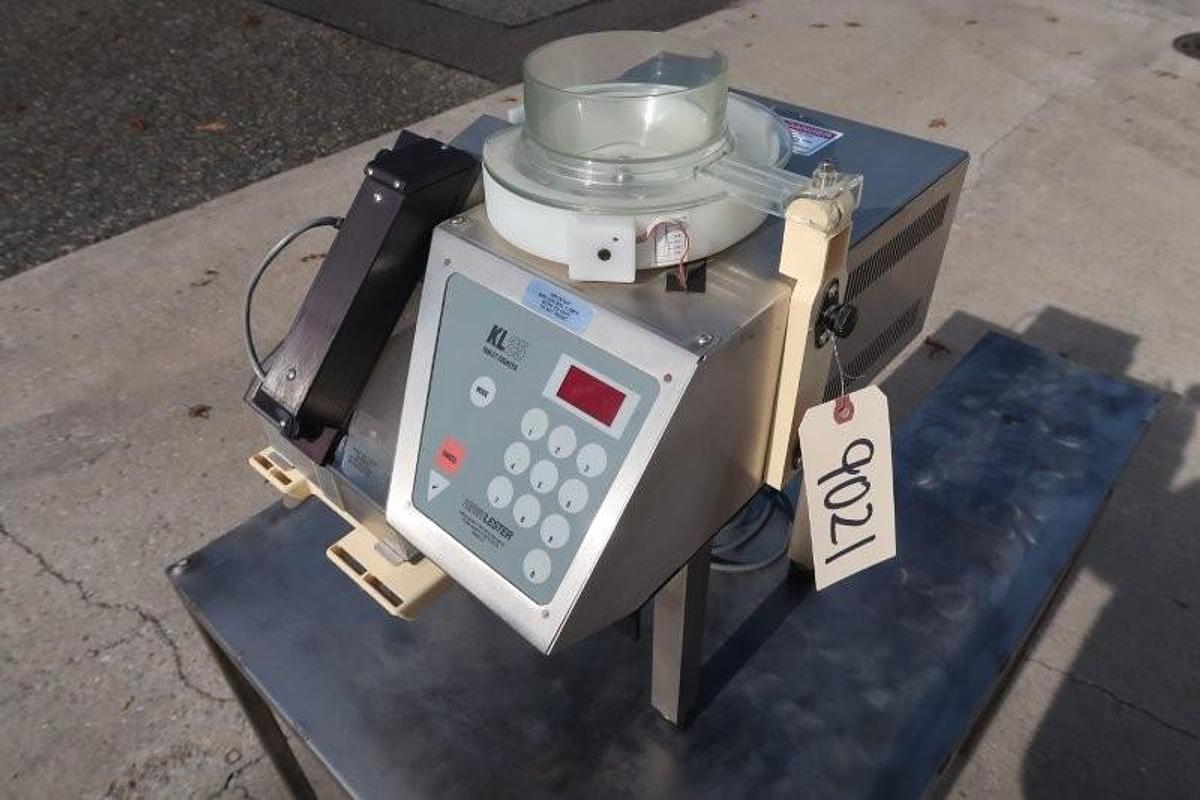
Kirby Lester produces several pill counter models that appear regularly on the used equipment market, ranging from single-bottle counters to high-throughput multi-bottle systems. The KL1 is an entry-level tablet and capsule counter designed for lower-volume pharmacies, while the KL25 is a tabletop unit suited for mid-range dispensing needs. Higher-end models like the KL30 and KL60 are built for pharmacies with greater prescription volume and offer multi-bottle counting capabilities. Each model sits at a different point on the throughput spectrum, so buyers typically match the model to their daily prescription count before purchasing.
On the used market, availability shifts based on what pharmacies are decommissioning or upgrading from, so the selection at any given time may skew toward certain models. The KL1 and KL25 tend to appear frequently because they were widely adopted by independent pharmacies over the past two decades. Buyers looking for a specific model should monitor reputable used pharmaceutical equipment dealers, as inventory turns over regularly. Confirming the exact model number and software version before purchasing is important, since Kirby Lester has released multiple iterations of some models and feature sets can differ between production runs.
Are used Kirby Lester pill counters reliable enough for active pharmacy use?
Used Kirby Lester pill counters can be very reliable in active pharmacy settings, provided the buyer takes the right steps before purchasing. Kirby Lester has a strong reputation for building durable equipment, and many of their machines remain in service for well over a decade with proper maintenance. The optical sensor technology at the core of these counters is robust, and the mechanical components are generally serviceable. That said, reliability on the used market depends heavily on the specific machine's history, how well it was maintained, and whether any components are worn or need calibration.
Buyers should request an inspection before committing to a purchase. Reputable used equipment dealers will typically accommodate in-person visits, video walkthroughs, or recorded demonstrations of the machine operating. It is also worth contacting Kirby Lester directly to ask about parts availability and technical support for the specific model and approximate age of the unit being considered, since older models may have limited manufacturer support. Selecting a dealer who specializes in pharmaceutical or laboratory equipment, and who has a verifiable track record, reduces the risk considerably compared to purchasing from a general auction or unknown source.
What is the difference between the Kirby Lester KL1 and KL25 pill counters?
The KL1 is a single-bottle tablet and capsule counter designed for pharmacies that fill prescriptions one at a time. It counts directly into a single vial or bottle and is well suited for lower-volume independent pharmacies or as a secondary counter in a busier setting. The machine is compact, straightforward to operate, and has been a staple in independent pharmacy for many years. Its simplicity also makes it one of the easier Kirby Lester models to maintain and troubleshoot.
The KL25 is a tabletop unit that steps up in capability, offering faster throughput and a design that accommodates a broader range of workflow configurations. It is built for pharmacies that need to move through prescriptions more efficiently without investing in a full high-volume system like the KL60. Both models use optical counting technology to reduce human error, but the KL25 is generally the better fit for a pharmacy whose daily prescription volume has grown beyond what a single-bottle counter can handle comfortably. When evaluating either model on the used market, confirming the condition of the counting sensors and any software components is the most important part of the inspection process.
How accurate is a Kirby Lester pill counter compared to manual counting?
Kirby Lester pill counters use optical sensor technology to detect and count individual tablets and capsules as they pass through the counting chamber. This approach eliminates the variability that comes with manual counting, where fatigue, distraction, or high workload can introduce errors. Studies on pharmacy dispensing errors have consistently found that manual counting carries a measurable error rate, and automated counters like those made by Kirby Lester are designed specifically to close that gap. In a busy pharmacy environment, the accuracy improvement is not just a convenience, it directly affects patient safety.
That said, accuracy on a used machine depends on the condition of the optical sensors and whether the unit has been properly maintained and calibrated. Sensors that are dirty, worn, or misaligned can produce miscounts, which is why cleaning and inspection protocols matter. Buyers of used Kirby Lester counters should ask the seller whether the machine has been tested recently and whether the sensors have been cleaned or serviced. Running a test count during an inspection, if the dealer can arrange it, gives a practical sense of how the unit is performing before any money changes hands.
Can Kirby Lester pill counters integrate with pharmacy management software?
Kirby Lester counters are known for their compatibility with a wide range of pharmacy management systems. Models like the KL25 and higher-tier units have been designed to interface with platforms including QS/1, PioneerRx, Liberty, and others, allowing prescription data to transfer automatically between the counter and the dispensing system. This integration reduces manual data entry, speeds up the filling process, and creates a cleaner audit trail for each prescription filled. For pharmacies that rely heavily on their management software, this connectivity is one of the primary reasons Kirby Lester equipment holds its value on the used market.
Buyers considering a used Kirby Lester counter should verify that the specific model and software version they are purchasing is compatible with the pharmacy management system they are running. Software compatibility can depend on the firmware installed on the counter, and older units may require updates or may not support the most recent versions of certain management platforms. Reaching out to Kirby Lester's support team with the model number and approximate production year is a practical way to get clarity on this before purchase. Some used equipment dealers who specialize in pharmacy technology can also help clarify compatibility questions based on their experience with the machines they sell.
What types of medications can a Kirby Lester pill counter handle?
Kirby Lester pill counters are designed to handle a broad range of solid oral dosage forms, including standard round tablets, oval tablets, capsules, and gel caps. The optical counting technology works by detecting individual units as they move through the counting path, so the machine can accommodate considerable variation in pill size and shape without requiring manual adjustment for each drug type. This flexibility makes the counters practical for general pharmacy use, where a single machine may be used to fill dozens of different medications throughout the day.
There are some limitations worth knowing. Very small tablets, unusually shaped medications, or certain coated pills can occasionally present challenges for optical counters if the sensor has difficulty distinguishing individual units. Sticky or soft medications are generally not suited for automated counting. Buyers of used equipment should ask whether the specific model they are considering has any known limitations with particular dosage forms, and test the machine with a representative sample of the medications they fill most frequently if a hands-on inspection is possible. Cross-contamination prevention is also a consideration, and Kirby Lester counters are generally designed with cleanable surfaces or disposable counting trays to allow safe transitions between different drug types.
How do you clean and maintain a Kirby Lester pill counter?
Regular cleaning is one of the most important maintenance tasks for any pill counter, and Kirby Lester machines are designed with this in mind. Most models feature removable counting trays or cleanable surfaces that allow pharmacy staff to clear residue between different medications, which is critical for preventing cross-contamination. The general process involves removing loose pill dust and fragments from the counting chamber, wiping down surfaces with appropriate cleaning materials, and inspecting the optical sensors for buildup that could affect counting accuracy. Frequency depends on prescription volume, but high-volume pharmacies typically clean the machine multiple times per day.
Beyond routine cleaning, longer-term maintenance involves inspecting and occasionally calibrating the optical sensors, checking mechanical components for wear, and keeping the firmware updated if the machine supports software updates. For a used machine, it is worth asking the seller about the maintenance history and whether any components have been replaced or serviced. Kirby Lester's manufacturer documentation provides model-specific cleaning and maintenance procedures, and consulting those guidelines is the most reliable way to keep the equipment performing accurately. Buyers should also check with Kirby Lester about parts availability for the specific model they are purchasing, since access to replacement parts varies by model age.
What should buyers inspect before purchasing a used Kirby Lester pill counter?
A thorough inspection before purchasing a used Kirby Lester pill counter significantly reduces the risk of buying a machine with hidden problems. The most important components to evaluate are the optical counting sensors, since these are what determine accuracy. Buyers should look for signs of buildup, damage, or misalignment. The counting tray or chamber should be free of cracks or excessive wear. Mechanical parts like the pill flow mechanism should operate smoothly without unusual noise or resistance. If the machine has a display or software interface, it should power on cleanly and navigate without errors.
Reputable used equipment dealers will typically accommodate in-person inspections, virtual walkthroughs, or video recordings of the machine in operation. Some equipment may still be installed at the facility where it was used, in which case the dealer can arrange access for a direct inspection. Keep in mind that most used equipment dealers are not set up to run actual pharmaceutical production, so a full operational test with live medication may not always be possible. However, a basic power-on demonstration and visual inspection of the key components gives a reasonable picture of the machine's condition. Buyers should also ask the dealer about the machine's approximate age, usage history, and whether it was decommissioned or is being pulled from active service.
What are typical shipping and payment considerations when buying a used Kirby Lester pill counter?
Used Kirby Lester pill counters are relatively compact compared to large pharmaceutical machinery, but they still require careful packaging to arrive without damage. Sellers typically palletize or crate the equipment before shipping, and the level of packaging affects the shipping cost. Buyers should ask the dealer specifically how the machine will be packaged, what carrier will be used, and whether freight or ground shipping is planned. Getting a clear picture of the total landed cost, including packaging, freight, and any handling fees, before agreeing to a purchase prevents surprises after the transaction.
On payment terms, most used equipment dealers require full payment before the machine is shipped. Some dealers extend payment terms to repeat customers, but this is not standard practice for first-time buyers. Wire transfer is a common payment method in used equipment transactions. Buyers should confirm all payment details and get written confirmation of what is included in the sale, such as any accessories, cables, or documentation that comes with the machine. Asking about the dealer's process for resolving issues if the machine arrives damaged in transit is also a reasonable question to raise before finalizing the purchase.
How does buying a used Kirby Lester pill counter compare to purchasing one directly from the manufacturer?
Purchasing a used Kirby Lester pill counter offers a significant cost advantage over buying directly from the manufacturer. Pharmacy automation equipment carries a substantial price tag when purchased through official channels, and the used market allows independent pharmacies, small chains, or facilities with tighter budgets to access the same technology at a fraction of the cost. For pharmacies that are adding a secondary counter, replacing a failed unit quickly, or testing automated counting before committing to a larger investment, the used market is often the most practical path.
The trade-off is that used equipment comes without manufacturer support programs, and buyers take on more responsibility for verifying the machine's condition. There are no warranties from the seller on used equipment, which is standard practice in the industry. This makes the inspection process and the reputation of the dealer more important than they would be in a direct manufacturer purchase. Buyers should research the dealer carefully, look for one with a track record specifically in pharmacy or laboratory equipment, and take advantage of any inspection options offered. Contacting Kirby Lester before purchasing to ask about support availability and parts for the specific model is a practical step that can clarify what level of manufacturer assistance to expect after the sale.