Category
Manufacturer
Model
Kinex
Kinex is recognized for its precision machinery used in the manufacturing sector, particularly in the production of automotive and aerospace components. Their equipment is known for its accuracy and durability.
FAQ:
What types of capping machines does Kinex manufacture?
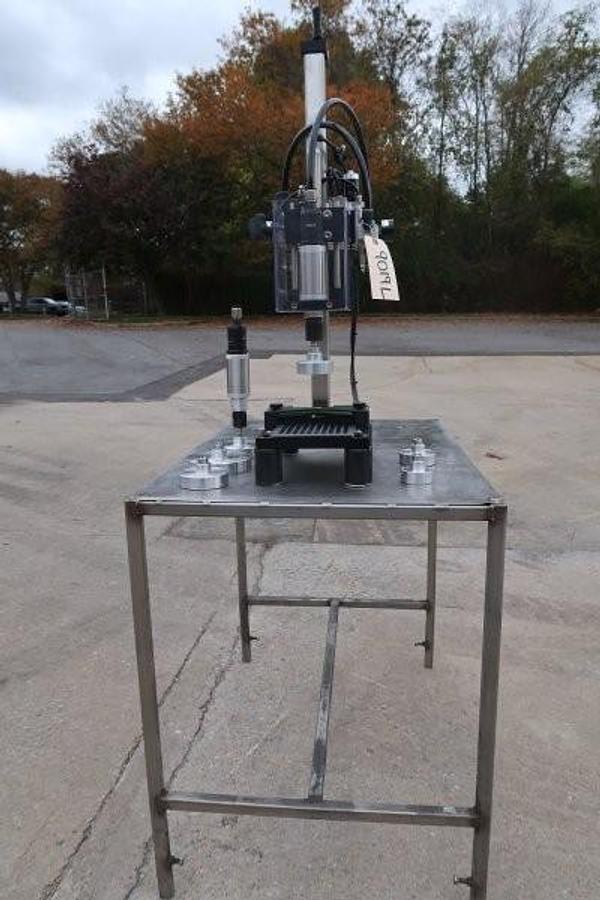
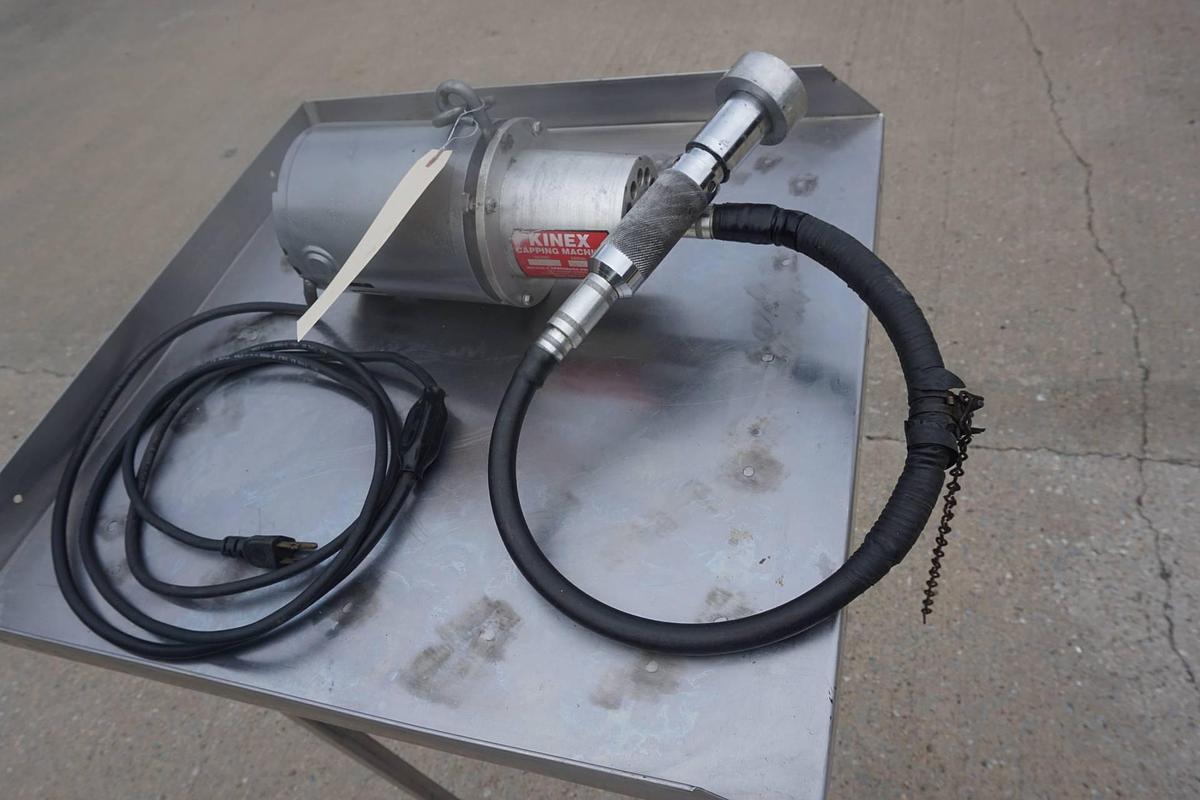
Kinex produces a range of capping equipment designed to handle different production environments and operational needs. Their lineup includes benchtop models, semi-automatic machines, and air-operated chuck-style cappers. The semi-automatic models are typically single-phase electric units that work well in smaller facilities or for operations that require manual bottle placement with automated cap application. The air-operated chuck-style cappers are built for consistent torque application and are often mounted on benchtop tables, making them practical for labs, pilot lines, or lower-volume production runs.
Beyond those specific configurations, Kinex has built a reputation for producing equipment that bridges the gap between manual hand-capping and high-speed fully automated lines. This makes their machines particularly well-suited to small and mid-sized businesses that need reliable, repeatable cap application without the capital investment of a full inline automated system. The variety in their product range means buyers looking at used Kinex equipment will often find models that can be adapted to their specific cap type and bottle format.
What industries commonly use Kinex capping machines?
Kinex capping machines are widely used across several industries where consistent, reliable cap application is critical to product quality and shelf integrity. Food and beverage producers rely on them for bottling sauces, juices, oils, and condiments. Pharmaceutical and nutraceutical companies use Kinex equipment to cap supplement bottles, tinctures, and liquid medications where torque precision directly affects tamper-evidence and dosage safety. Cosmetics and personal care manufacturers also frequently use Kinex cappers for lotions, serums, shampoos, and other bottled products.
The chemical and cleaning products sector is another common application area, where secure capping is essential for safety and leak prevention during shipping and storage. Kinex machines handle a broad enough range of cap styles and bottle materials to serve all of these markets effectively. Because the equipment is known for its durability and consistent torque output, it tends to hold its value well in the used machinery market, making it a practical choice for buyers in any of these industries who want proven capping performance without purchasing brand-new equipment.
What cap types and closure styles are compatible with Kinex capping machines?
Kinex capping machines are designed to work with screw-on caps, which are among the most common closure types across packaging industries. The chuck-style mechanism used in many Kinex models grips the cap from above and applies a controlled, downward torque to thread it onto the bottle. This approach is compatible with a wide variety of continuous-thread caps, including plastic and metal screw caps commonly found in food, beverage, pharmaceutical, and cosmetic packaging.
The specific cap size range a given machine can handle depends on the model and any tooling or chuck inserts that come with it. Used Kinex machines may include multiple chuck sizes or changeover parts that expand their compatibility. Buyers should confirm with the seller which chuck sizes and cap diameter ranges are included with a specific unit, and whether the machine has been configured for a particular cap style. For operations running multiple SKUs with different cap sizes, it is worth asking whether the machine supports quick-change tooling to minimize downtime during format changeovers.
What production speeds can a used Kinex capping machine achieve?
Production speed on a Kinex capping machine depends largely on the model and whether it is semi-automatic or more fully automated. Semi-automatic benchtop models, which make up a significant portion of the used Kinex machines available on the market, typically cap anywhere from 10 to 30 bottles per minute depending on the operator's pace, the cap type, and the bottle format. These speeds are well-suited to small and medium production runs where precision matters more than raw throughput.
For buyers evaluating a specific used Kinex unit, it is worth discussing with the seller what production environment the machine came from and what speeds it was running in practice. A machine pulled from an active production line will have a clearer performance history than one that has been sitting decommissioned. Keep in mind that actual throughput in a new facility will depend on factors like operator experience, line integration, and cap and bottle compatibility, so testing or a detailed inspection is the best way to set realistic speed expectations before purchasing.
Are Kinex capping machines easy to operate and set up?
Kinex capping machines have a reputation for being straightforward to operate, which is one reason they are popular with smaller businesses and operations that cannot dedicate extensive resources to operator training. The semi-automatic benchtop models in particular are designed so that an operator can learn the basic workflow quickly. The process typically involves placing the bottle under the chuck, positioning the cap, and activating the capping cycle, either by foot pedal or a manual trigger depending on the model. Torque settings are usually adjustable through a simple dial or mechanical control.
Setup complexity varies depending on whether the machine is being used as a standalone unit or integrated into a broader packaging line. As a benchtop unit, setup is minimal. For integration into a conveyor-fed line, some mechanical and electrical coordination is required. Buyers purchasing used Kinex equipment should ask the seller for any available operating manuals or setup documentation, since original paperwork may not always be included with a used machine. Consulting the manufacturer directly is also advisable, as Kinex may be able to provide documentation or technical guidance depending on the model's age.
Can a Kinex capping machine handle different bottle sizes and shapes?
Many Kinex capping machines are built with some degree of format flexibility, allowing them to handle bottles of varying heights, diameters, and shapes by adjusting the chuck height and, in some cases, swapping out tooling. This adaptability is one of the reasons Kinex equipment holds appeal for contract packagers and businesses that run multiple product lines. Round bottles are the most common format, but the chuck-style capping mechanism can often accommodate square or oval containers as long as the cap itself is a standard screw-on type.
With used machines, the range of bottle sizes a specific unit can handle will depend on the condition of the adjustment mechanisms and whether all the original tooling and changeover parts are included. Before purchasing, buyers should confirm the bottle height range and cap diameter range supported by the specific unit, and ask whether any size-specific fixtures or inserts are included in the sale. If the machine was previously set up for a narrow product range, some retooling or adjustment may be needed to run different formats effectively.
How does torque control work on Kinex capping machines, and why does it matter?
Torque control is one of the defining features of Kinex capping equipment. The machines are designed to apply a consistent, repeatable amount of rotational force to each cap, which is critical for several reasons. Too little torque and caps may not seal properly, leading to leaks, contamination, or failed tamper-evidence bands. Too much torque and caps can crack, threads can strip, or the package can become difficult for end consumers to open. Kinex machines address this by using a chuck mechanism with adjustable torque settings, allowing operators to dial in the right application force for a specific cap and bottle combination.
For buyers evaluating used Kinex cappers, torque consistency is one of the key performance characteristics to verify during an inspection. A well-maintained machine should apply torque within a tight, repeatable range across multiple cycles. If the machine has worn clutch components or a degraded torque control mechanism, this will show up as variability in cap tightness. Asking the seller about the machine's maintenance history and requesting a demonstration or video of the capping cycle in action are practical ways to assess whether torque performance is still within acceptable limits before committing to a purchase.
What should buyers look for when inspecting a used Kinex capping machine?
A thorough inspection is the most important step in purchasing any used capping machine. For Kinex equipment specifically, buyers should focus on the condition of the chuck and any drive components, since these parts are central to torque application and see the most wear during normal operation. Check for visible wear, scoring, or corrosion on the chuck faces and spindle. The torque adjustment mechanism should move smoothly and hold its setting without slipping. Any pneumatic components on air-operated models should be checked for leaks or cracked fittings.
Beyond the mechanical components, buyers should ask about the machine's history, including how many hours it ran, what products it was used on, and whether it has been serviced or rebuilt at any point. Reputable used equipment dealers will typically accommodate in-person inspections at their facility, or can arrange video walkthroughs and recorded demonstrations if travel is not practical. Some machines may still be located at the facility where they were last used, in which case an inspection can sometimes be arranged at the production site. Keep in mind that most used equipment dealers are not set up to run production-scale tests with actual product, so the inspection will focus on mechanical condition, cycle operation, and visual assessment rather than full production trials.
What is the typical price range for used Kinex capping machines?
Pricing for used Kinex capping machines varies depending on the model, configuration, age, and overall condition of the unit. Benchtop semi-automatic models tend to be among the more accessible options in the used capping machine market, often ranging from a few thousand dollars up to the low tens of thousands depending on what is included and how recently the machine was in service. Air-operated chuck cappers with benchtop tables, like some of the Kinex models commonly found on the used market, generally fall within a similar range, though pricing shifts based on condition and demand at the time of sale.
Buyers should factor in costs beyond the machine price itself. Shipping and crating costs can add meaningfully to the total, especially for machines that require custom palletization or heavier rigging for loading. If the machine needs tooling, replacement parts, or any refurbishment before it can run production, those costs should be budgeted as well. Consulting with the seller upfront about the full landed cost, including freight, rigging, and any known mechanical needs, gives a much clearer picture of the actual investment required compared to looking at the listed machine price alone.
What are the shipping and payment considerations when buying a used Kinex capping machine?
Shipping a used capping machine requires more planning than a typical freight shipment. Kinex benchtop and semi-automatic units are relatively compact compared to large inline systems, but they still require proper palletization or crating to prevent damage in transit. The level of packaging needed, and therefore the shipping cost, depends on the machine's size, weight, and the carrier requirements for the route. Buyers should ask the seller specifically about how the machine will be packaged, whether a standard pallet is sufficient or whether a custom crate is needed, and what the estimated freight cost is to their location. For larger or heavier configurations, rigging for loading at the seller's facility may be an additional charge.
On payment, most used equipment dealers require full payment before a machine ships. This is standard practice in the used machinery industry, and buyers should be prepared for that requirement. Some dealers may offer payment terms to established repeat customers, but that is not the norm for first-time transactions. Buyers should also confirm whether the seller accepts wire transfer, credit card, or other payment methods, and clarify the timeline between payment and shipment so there are no surprises around lead time.