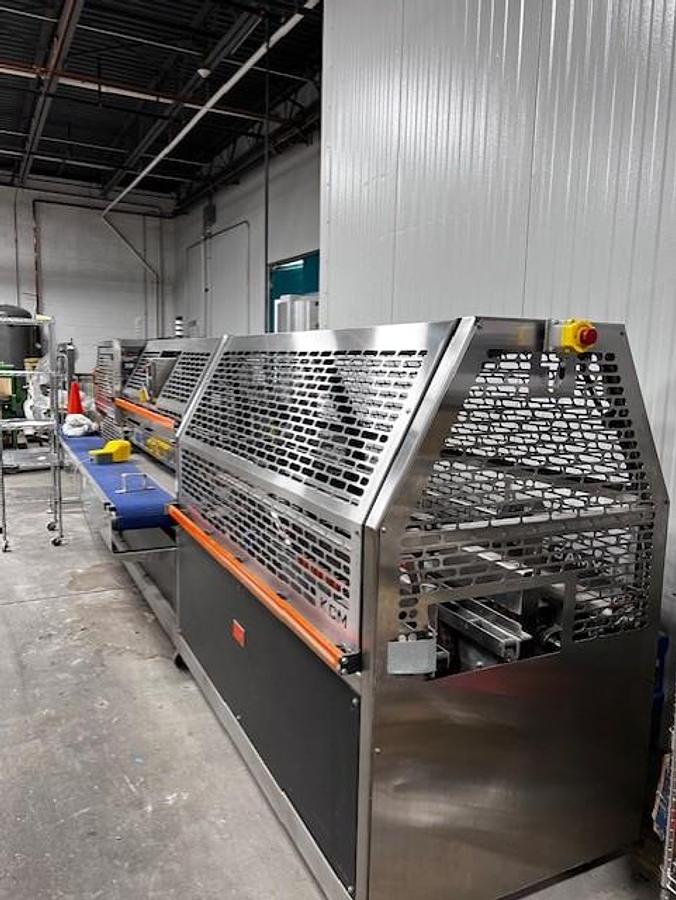
Category
Manufacturer
Model
Keymac
FAQ:
What is a Keymac cartoner and what industries use it?
Keymac is a UK-based packaging machinery brand with a long-standing reputation for producing durable and reliable cartoning machines. Their cartoners are designed to erect, fill, and close folding cartons at production speeds suited to mid-to-high volume manufacturing environments. The machines are built to handle a wide range of carton styles and product types, making them a practical choice across multiple sectors.
The industries that most commonly use Keymac cartoners include pharmaceuticals, food and beverage, cosmetics, and general consumer goods. In pharmaceutical manufacturing particularly, Keymac end-load cartoners have become a go-to solution because they accommodate leaflet insertion systems and tamper-evident closures, both of which are standard requirements in that sector. Their reputation for mechanical reliability means they hold their value well on the secondary market, and used units continue to find buyers across these same industries.
What Keymac cartoner models are commonly available on the used market?
Among the Keymac models that appear most frequently on the used machinery market are the Keymac 25, the Keymac 35, and various continuous motion variants. Each model is designed around a different production volume range, so buyers tend to select based on their required output speed and carton size range. The Keymac SS End Load Glue Cartoner, capable of running at 60 cartons per minute, is one example of the type of unit that surfaces through specialist used equipment dealers.
Because Keymac has been manufacturing cartoning machinery for many years, there is a reasonably steady supply of used units available at any given time. The specific model availability will vary depending on what has recently come off production lines or been decommissioned by manufacturers. Buyers looking for a particular model are generally best served by working with dealers who specialize in packaging machinery, as they tend to have more relevant inventory and the product knowledge to match a machine to a buyer's specific application.
What is the typical price range for a used Keymac cartoner?
Pricing on used Keymac cartoners varies considerably depending on the model, age, configuration, and overall condition of the machine. On the lower end, older or more basic models can be found in the range of £5,000 to £15,000. Higher-spec units, particularly continuous motion models or those with additional features like leaflet insertion or vision systems, can reach £50,000 or more depending on their condition and how recently they were last in production.
Buyers should also factor in costs beyond the purchase price itself. Shipping, rigging, and any refurbishment or re-commissioning work can add meaningfully to the total landed cost. It is worth asking the selling dealer for a clear breakdown of packaging, freight, and loading costs before committing to a purchase, especially for larger machines that require specialized rigging equipment for safe loading and unloading.
What throughput speeds can a Keymac cartoner achieve?
Keymac cartoners are available across a range of output speeds, with the right model depending on the production volume requirements of the buyer. Entry-level or intermittent motion models typically run at lower speeds suited to smaller batch production, while continuous motion variants are built for higher-volume lines. The Keymac SS End Load Glue Cartoner, for example, is rated at 60 cartons per minute, which places it firmly in the mid-to-high range for end-load cartoning applications.
For buyers evaluating whether a particular machine's speed suits their line, it is important to consider not just the rated maximum speed but also the realistic sustained throughput in their specific application. Carton size, product type, and any upstream or downstream equipment constraints can all affect the practical output rate. Consulting with a packaging machinery specialist before purchase can help set realistic expectations and avoid buying a machine that is either underpowered or unnecessarily fast for the intended use.
What is the difference between end-load and top-load cartoners, and which does Keymac offer?
End-load cartoners insert products into a carton from one end, which is then tucked or glued closed. Top-load cartoners, as the name suggests, drop or place products into an open carton from above before the top flaps are sealed. The choice between the two configurations generally comes down to the product shape, fragility, and any regulatory requirements around packaging integrity. End-load designs are particularly common in pharmaceutical and healthcare applications because they make it straightforward to include a folded leaflet alongside the product and to apply tamper-evident closures.
Keymac produces both configurations, and end-load models are among the most frequently seen on the used market. The Keymac SS End Load Glue Cartoner is one example, using a glue-seal closing method rather than tuck-in tabs, which produces a cleaner finished carton and is often preferred where pack presentation matters. Buyers should confirm which closing method and loading orientation a specific used unit is configured for before purchase, as converting between configurations is not always straightforward or cost-effective.
What carton size ranges can a Keymac cartoner typically handle?
Keymac cartoners are generally designed with adjustable format parts to accommodate a range of carton sizes, but the actual minimum and maximum dimensions will vary by model. Typical machines in this class can handle cartons ranging from small pharmaceutical packs of around 30mm x 20mm in cross-section up to larger consumer goods cartons several hundred millimetres in length. The specific range for any given used unit should be confirmed with the selling dealer and, where possible, verified against the machine's original specification documentation.
For buyers who run multiple carton formats on the same line, it is worth asking whether the machine comes with any additional format change parts, as these can be expensive to source separately for older models. Format changes on Keymac cartoners are typically mechanical adjustments rather than tool-free quick-change systems, so the time required to switch between formats is also worth factoring into production planning. Checking parts availability with the manufacturer before purchase is a sensible step, particularly for machines that are several years old.
How should a buyer inspect a used Keymac cartoner before purchasing?
Inspection is one of the most important steps in buying any used packaging machine, and Keymac cartoners are no exception. Reputable used equipment dealers will typically offer in-person inspections, video walkthroughs, or photo documentation of the machine's current condition. Where the machine is still installed at a production facility, it may even be possible to observe it running product, which gives the most accurate picture of its working order. Buyers should take advantage of whatever inspection option is available and ask specifically about the condition of wear parts such as cam followers, chains, and glue system components.
It is worth keeping in mind that most used equipment dealers do not have the permitting or infrastructure to run actual production trials with product, so a full production test may not always be possible. In those cases, a mechanical run and a thorough visual inspection are the practical alternatives. Buyers should also check the machine's electrical specification, particularly voltage and phase requirements, to confirm it is compatible with their facility before finalizing a purchase. Consulting the manufacturer about the level of technical support and parts availability for the specific model and age of machine is also a prudent step before committing.
Are spare parts and technical support available for used Keymac cartoners?
Parts availability for used Keymac cartoners depends primarily on the age and model of the machine. Keymac has been producing cartoning equipment for a considerable number of years, and for more recent models, the manufacturer may still be able to supply spare parts and offer technical guidance. For older machines, some components may no longer be available directly from the manufacturer, which means buyers would need to rely on aftermarket suppliers, engineering fabrication, or parts sourced from other decommissioned machines.
Before purchasing a used Keymac cartoner, it is strongly advisable to contact the manufacturer directly to ask about parts availability and the level of support they can provide for that specific model. This conversation can reveal whether common wear items are still stocked, whether documentation such as manuals and wiring diagrams is available, and what the realistic cost of ongoing maintenance might be. A machine that is mechanically sound but for which parts are difficult to source can end up being a costly investment over time, so this due diligence step is worth taking seriously.
What should buyers know about shipping and delivery for a used Keymac cartoner?
Cartoning machines are substantial pieces of equipment, and shipping costs can vary significantly depending on the size of the machine, the distance involved, and the level of packaging required to protect it in transit. Dealers will typically crate or palletize machines to prevent damage during transport, and the cost of that packaging is generally passed on to the buyer. Larger or heavier machines may also require specialist rigging services for loading at the dealer's facility and unloading at the buyer's site, which adds to the total landed cost.
Buyers should ask for a detailed breakdown of all shipping-related costs before finalizing a purchase, including crating, freight, and any rigging fees at either end. It is also worth confirming whether the dealer handles export documentation if the machine is being shipped internationally, as this can affect both cost and lead time. Getting a clear picture of the full landed cost, rather than just the machine price, allows for a more accurate comparison between available options.
What payment terms are typical when buying a used Keymac cartoner from a dealer?
Most used equipment dealers require full payment before a machine is released for shipping. This is standard practice across the used machinery industry and reflects the fact that dealers are typically moving equipment they have already purchased or are selling on consignment. Buyers who have an established relationship with a particular dealer may occasionally be offered payment terms, but this is the exception rather than the rule for first-time transactions.
Given that full payment upfront is the norm, buyers should take extra care to work with dealers who have a verifiable track record in the packaging machinery sector. Checking how long a dealer has been in business, whether they specialize in the relevant type of equipment, and whether they can provide references or a history of past sales are all reasonable steps before transferring funds. A thorough inspection of the machine prior to payment, whether in person or through video documentation, is also an important safeguard when buying used equipment on these terms.