Category
Manufacturer
Model
FAQ:
What types of labeling equipment does Ketan manufacture?
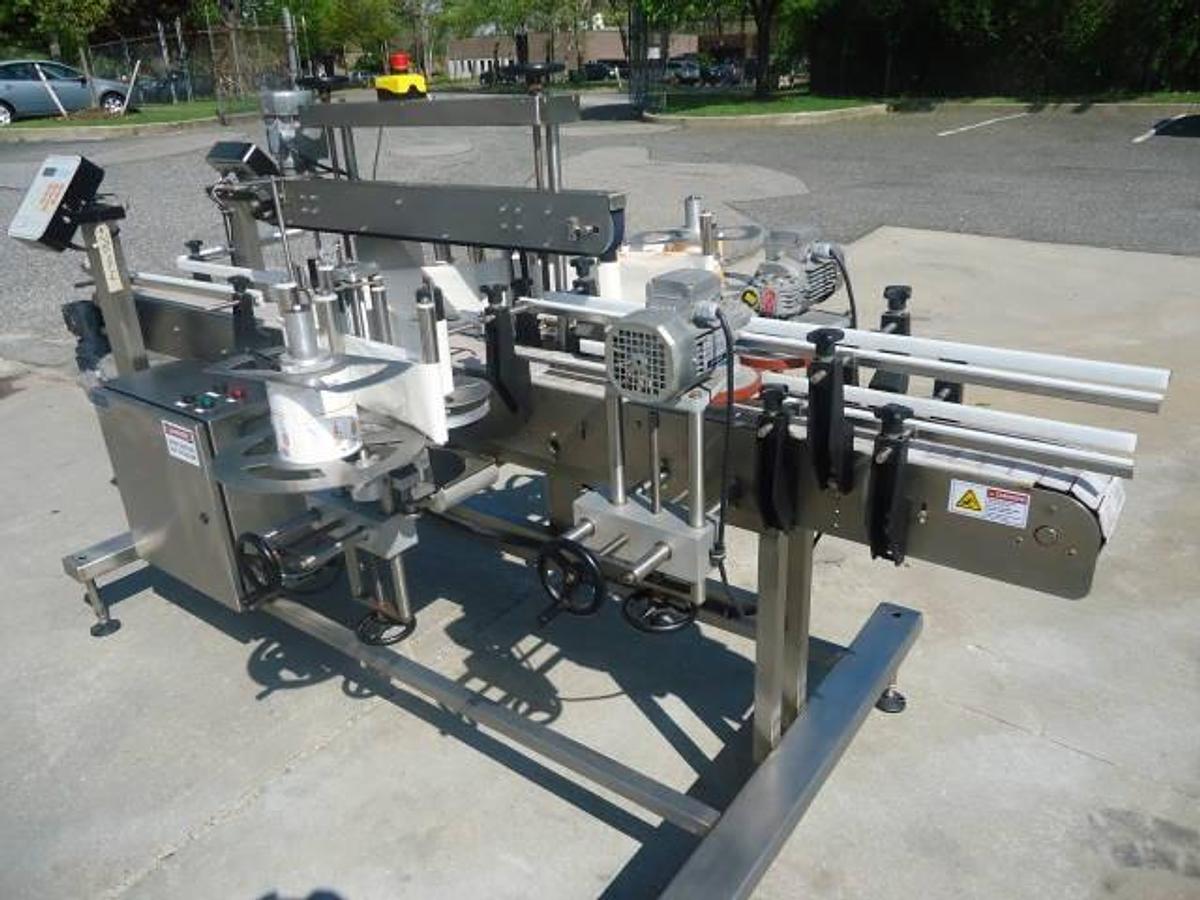
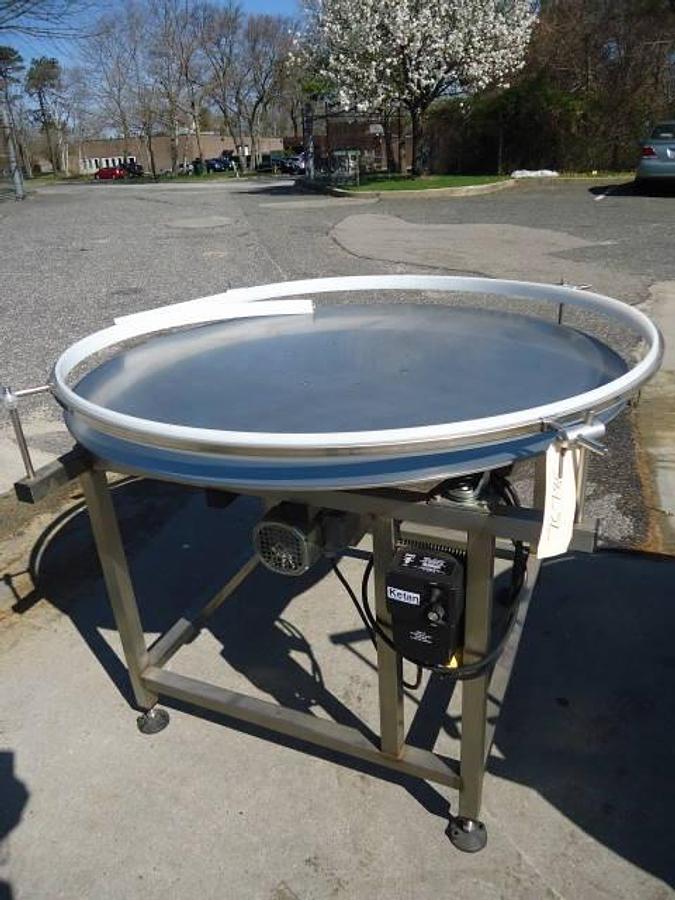
Ketan produces a range of packaging and labeling machinery that covers several common application types. Their lineup typically includes self-adhesive label applicators, wrap-around labelers, front-and-back labeling systems, and top labelers. The Ketan LS80, for example, is a front-and-back labeling system built with stainless steel construction, which makes it well-suited for environments where sanitation and durability are priorities. Rotary unscrambling and accumulating tables are also part of the Ketan product family, used to orient and feed containers into a labeling line efficiently.
Beyond individual machine types, Ketan equipment is generally designed to integrate into broader packaging lines rather than operate in isolation. This means buyers often source a Ketan labeler alongside conveyors, fillers, or cappers to build out a complete production system. Used Ketan machines appear across pharmaceutical, food and beverage, cosmetics, and chemical manufacturing environments, reflecting the brand's broad applicability across industries that rely on high-throughput, accurate label placement.
What industries commonly use Ketan labeling machines?
Ketan labeling equipment shows up most frequently in four core industries: pharmaceuticals, food and beverage, cosmetics, and chemical manufacturing. Each of these sectors demands consistent, accurate label placement to meet regulatory requirements and maintain brand presentation at scale. In pharmaceutical production, for instance, label accuracy is not just a quality concern but a compliance requirement, and Ketan machines are built to deliver repeatable placement across high-volume runs. Food and beverage producers value the stainless steel construction found on models like the LS80, since it holds up to washdown environments and the hygiene standards those facilities require.
Cosmetics and personal care manufacturers tend to work with a wide variety of container shapes, including round, oval, flat, and square bottles or jars. Ketan machines are noted for their compatibility with multiple container geometries, which makes them practical for product lines that span different packaging formats. Chemical manufacturers, meanwhile, prioritize durability and reliable throughput over fine cosmetic precision, and Ketan's mid-range positioning in the market means the equipment is built to handle demanding production schedules without the cost premium of top-tier European or Japanese machinery.
What container shapes and sizes can Ketan labeling machines handle?
Ketan labelers are designed to accommodate a fairly broad range of container geometries, which is one of the reasons they appear across so many different industries. Round bottles are the most common application, particularly for wrap-around labeling, but Ketan machines are also compatible with flat, oval, and square containers depending on the specific model and configuration. Front-and-back labeling systems like the LS80 are particularly well-suited for non-round containers where a single wrap-around label would not lay flat properly.
Changeover between different container sizes and shapes is a practical concern for any manufacturer running multiple SKUs on a single line. Ketan equipment is noted for addressing this with adjustable guide rails and, on many models, tool-free adjustment mechanisms that reduce the time and labor involved in switching from one product format to another. Buyers sourcing used Ketan machines should confirm which container size range a specific unit was configured for, and whether any additional change parts or guide sets are included with the sale, since those components directly affect how many product formats the machine can run without additional investment.
What labeling speeds do Ketan machines typically achieve?
Labeling speed on Ketan equipment varies by model and application, but the machines are generally positioned to serve small to medium-scale production environments rather than the very high-speed lines found in large-scale contract packaging operations. Many Ketan labelers operate in a range suitable for manufacturers running hundreds to several thousand containers per hour, depending on container size, label dimensions, and the complexity of the label placement required. Variable speed drives are common on Ketan equipment, allowing operators to dial in throughput to match the pace of upstream and downstream equipment on the line.
For buyers evaluating a specific used Ketan machine, the rated speed listed in the original specifications is a useful starting point, but actual achievable speed in a given application depends on factors like container stability, label stock quality, and the condition of the machine's drive and sensor components. A thorough inspection, either in person or via detailed video, is the best way to assess whether a particular unit is running at or near its rated capacity. Asking the seller to demonstrate the machine at speed during an inspection is a reasonable request and a standard part of the used equipment evaluation process.
Does Ketan make both automatic and semi-automatic labeling machines?
Ketan's product range spans both automatic and semi-automatic configurations, which is part of why the brand appeals to manufacturers at different stages of production volume and automation. Semi-automatic Ketan labelers typically require an operator to manually position or feed containers, with the machine handling label dispensing and application. These are common in smaller operations or for products that are too fragile or irregularly shaped to run through a fully automated feed system. Automatic Ketan labelers integrate with conveyors and handle container feeding, label application, and product discharge without manual intervention at each cycle.
When shopping for used Ketan labeling equipment, it is worth clarifying whether a listed machine is a standalone unit or part of a larger system that included infeed and outfeed conveyors, since those ancillary components may or may not be included in the sale. Automatic systems also tend to include sensors, PLCs, and touch screen controls that add complexity to the inspection process. Buyers should ask sellers specifically about the condition of the electrical and control components, as these are often the most costly elements to repair or replace on used labeling equipment.
What is the typical price range for used Ketan labeling equipment?
Used Ketan labeling machines are generally considered mid-range equipment, meaning they sit below the price point of high-end European or Japanese labeling systems while offering more capability and build quality than entry-level imported machinery. Pricing on the used market varies considerably based on the model, age, condition, included accessories, and how much of the surrounding line equipment is bundled with the sale. A basic used Ketan labeler in working condition might be priced in the low thousands, while a more complete system with conveyors, change parts, and controls documentation could command significantly more.
Buyers should factor in more than just the listed machine price when budgeting for a used Ketan purchase. Shipping, rigging, and any required installation or recommissioning work all add to the total landed cost. If the machine needs replacement parts or mechanical refurbishment before it can run production, those costs should be estimated before committing to a purchase. Consulting with the manufacturer or an independent service technician about parts availability and typical refurbishment costs for a specific Ketan model is a smart step, particularly for older units where some components may have limited availability.
What should buyers look for when inspecting used Ketan labeling equipment?
A thorough inspection is the most important step in any used labeling equipment purchase, and Ketan machines are no exception. Buyers should prioritize evaluating the mechanical drive components, including belts, rollers, and the label dispensing head, for wear or damage. The label sensor and registration system deserve close attention as well, since inaccurate label placement is often traced back to sensor drift or damage rather than a fundamental mechanical problem. Stainless steel construction, which is standard on models like the LS80, holds up well over time, but buyers should still check for corrosion, dents, or repairs that might affect structural integrity or sanitary compliance.
Inspections of used Ketan equipment can be conducted in person, via live video call, or through detailed video documentation provided by the seller. Some machines may still be installed and running at the facility where they were used, which offers the best opportunity to observe the equipment under actual operating conditions. Keep in mind that most used equipment dealers do not have the permitting or production infrastructure to run label stock through a machine with actual product, so functional demonstrations typically involve running the machine empty or with substitute containers. Buyers should also ask about the availability of the original operating manuals, electrical schematics, and any spare parts that may be included with the sale.
What are the key differences between a front-and-back labeler and a wrap-around labeler?
Front-and-back labelers, like the Ketan LS80, apply two separate labels to opposite faces of a container in a single pass. This configuration is standard for products where the front label carries branding and the back label carries regulatory or ingredient information, which is common in food, beverage, and personal care categories. The two label heads operate independently, which allows for different label sizes on the front and back and gives the machine flexibility across a range of product formats. Front-and-back labelers work best on containers with flat or consistently shaped panels, since the labels need a stable surface to adhere cleanly.
Wrap-around labelers, by contrast, apply a single label that encircles a round or cylindrical container. This approach is efficient for bottles and cans where 360-degree coverage is desired, and it tends to be faster than a dual-head front-and-back system for the right container geometry. The choice between the two configurations usually comes down to the container shape and the label design requirements of the product being packaged. Buyers sourcing used Ketan labeling equipment should confirm which configuration a specific machine uses and verify that it matches their container and label specifications before purchasing, since converting a machine from one labeling style to the other is generally not practical.
How does a rotary unscrambling and accumulating table fit into a labeling line?
A rotary unscrambling table is typically positioned at the start of a packaging line, before the filler or labeler, to orient randomly loaded containers into a single-file stream that feeds downstream equipment at a consistent rate. Containers are loaded in bulk onto the rotating table surface, and a combination of the table's rotation and guide rails directs them into an outfeed lane in an upright, oriented position. The 48-inch diameter Ketan stainless steel rotary table is a mid-sized unit suited for lines running bottles or containers in a range of sizes, and the variable speed drive allows operators to match the feed rate to the speed of the downstream labeler or filler.
Accumulating tables serve a related but slightly different function. They act as a buffer, holding containers between stations to smooth out the flow when upstream and downstream equipment run at slightly different rates or when one station needs a brief pause. In a complete packaging line, both unscrambling and accumulating functions are often handled by the same rotary table, with the operator adjusting the speed and guide configuration depending on which function is needed at a given moment. Buyers sourcing a used Ketan rotary table should verify that the drive motor, variable speed control, and table surface are all in good working condition, since these components take considerable wear in continuous production environments.
What should buyers understand about shipping and payment when purchasing used Ketan labeling equipment?
Shipping used labeling equipment involves more logistical planning than most buyers expect, particularly for larger machines like rotary tables or complete labeling systems. The machine needs to be properly palletized or crated to prevent damage in transit, and the level of packaging required directly affects shipping costs. Heavier or more complex machines may require specialized rigging equipment for loading and unloading, which adds to the total cost. Buyers should ask sellers for a detailed breakdown of packaging, rigging, and freight charges before finalizing a purchase so there are no surprises in the total landed cost of the equipment.
On the payment side, most used equipment dealers require full payment before a machine ships. This is standard practice in the industry and reflects the fact that used equipment transactions carry inherent risk for both parties. Buyers who are unfamiliar with a particular dealer should take time to research the seller's track record, how long they have been in the business, and whether they specialize in packaging and labeling machinery specifically. Dealers who focus on a particular equipment category tend to have better knowledge of the machines they sell and are better positioned to answer technical questions or facilitate inspections. Confirming all terms in writing before payment is always advisable.