Category
Manufacturer
Model
Kanara Industrial
Kanara Industrial specializes in manufacturing equipment for the construction and heavy machinery sectors. They are known for their robust and reliable machinery that meets the demands of tough working environments.
FAQ:
What is a rotary tablet press and how does it differ from a single punch tablet press?
A rotary tablet press uses multiple tooling stations arranged in a rotating turret to compress powder or granules into tablets continuously. As the turret spins, each station cycles through filling, compression, and ejection in sequence, allowing for high-volume production. A 25-station or 31-station machine, for example, can produce significantly more tablets per hour than a single punch press because multiple tablets are being formed simultaneously rather than one at a time.
A single punch tablet press, by contrast, uses one upper and one lower punch to compress material with each stroke of the machine. This makes single punch presses better suited for research and development, small batch work, or situations where tooling changes need to happen frequently. Rotary presses are the standard choice for commercial-scale manufacturing in pharmaceutical, nutraceutical, chemical, and food industries where throughput and consistency matter most.
What does 'D' tooling mean on a rotary tablet press, and what tablet sizes does it produce?
Tablet press tooling is standardized into categories, with 'B' and 'D' being the two most common designations used across the industry. 'D' tooling refers to punches and dies with a larger die bore diameter, typically up to 38.10 mm, which allows for the production of larger tablets compared to 'B' tooling. This makes D-type presses a common choice for manufacturers producing larger-format tablets such as effervescent tablets, veterinary tablets, or certain nutraceutical products where a bigger tablet size is required by the formulation.
The tooling designation also affects the punch barrel diameter and the overall compression force the press can deliver. D tooling punches have a larger barrel diameter than B tooling, which means they can withstand higher compression forces needed to bind harder or denser materials. When sourcing a used rotary tablet press, confirming the tooling type is essential because it directly determines which punches and dies are compatible with the machine and what tablet dimensions are achievable.
What does GMP compliance mean for a rotary tablet press, and why does it matter?
GMP stands for Good Manufacturing Practice, a set of regulations and guidelines that govern the production of pharmaceuticals, nutraceuticals, and other regulated products. For tablet press equipment, GMP compliance generally means the machine is designed to minimize contamination risk, allow thorough cleaning, and meet documentation and traceability standards required by regulatory bodies such as the FDA or equivalent agencies in other countries. Key design features associated with GMP tablet presses include stainless steel contact parts, enclosed compression zones to contain dust, and smooth surfaces that are easy to clean and inspect.
A GMP-designated rotary tablet press is typically a requirement for any manufacturer operating in a regulated industry. When purchasing a used GMP tablet press, buyers should verify that the machine's contact parts are still in good condition and that any seals, guards, or enclosures are intact and functional. The GMP designation on a used machine reflects the design intent of the equipment, but the actual compliance of a production facility also depends on how the machine is maintained, cleaned, and operated within the broader manufacturing environment.
How many tablets per hour can a multi-station rotary tablet press produce?
Output on a rotary tablet press is determined by multiplying the number of tooling stations by the turret speed (measured in rotations per minute). A 25-station press running at 30 RPM, for example, produces 750 tablets per minute, or 45,000 tablets per hour. A 31-station press at the same speed would yield 930 tablets per minute, or roughly 55,800 per hour. In practice, actual throughput depends on the material being compressed, the required tablet hardness, and the speed at which the press can be run without producing defects such as capping or lamination.
Manufacturers often rate their presses at maximum theoretical output, which assumes the machine is running at top speed with no stoppages. Real-world production rates are typically lower once you account for setup time, in-process checks, and any speed adjustments needed to maintain tablet quality. When evaluating a used rotary tablet press, it is worth asking about the machine's operating history and the speeds at which it was typically run, as this can give a more realistic picture of the output achievable in day-to-day production.
What industries use rotary tablet press equipment?
Rotary tablet presses are used across a broad range of industries wherever powder or granule materials need to be compressed into a solid, uniform shape. The pharmaceutical industry is the largest user, producing everything from over-the-counter pain relievers to prescription medications. Nutraceutical manufacturers use tablet presses to produce vitamins, dietary supplements, and herbal products. Chemical manufacturers use them to compress catalysts, detergent tablets, and other solid chemical products, while the food industry uses tablet presses for items like candy, breath mints, and compressed food supplements.
The specific requirements vary considerably by industry. Pharmaceutical applications demand the strictest standards in terms of GMP compliance, material traceability, and cleaning validation. Food and nutraceutical applications have similar but sometimes less stringent requirements depending on the regulatory framework in the target market. Chemical applications may prioritize compression force and durability over cleanability. Understanding the intended application is important when selecting a used tablet press, as a machine previously used in a pharmaceutical setting may have different maintenance history and documentation than one used in a chemical plant.
What should buyers inspect when evaluating a used rotary tablet press?
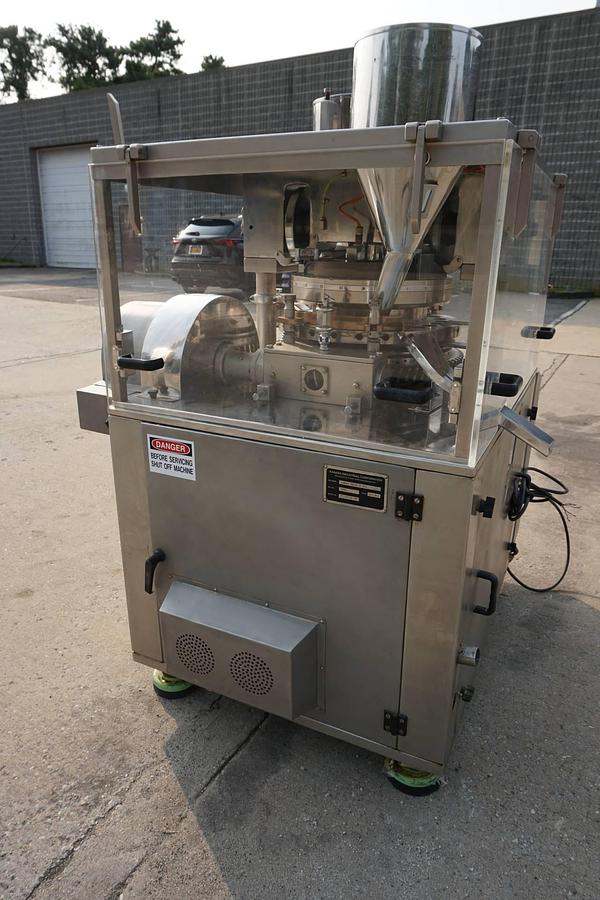
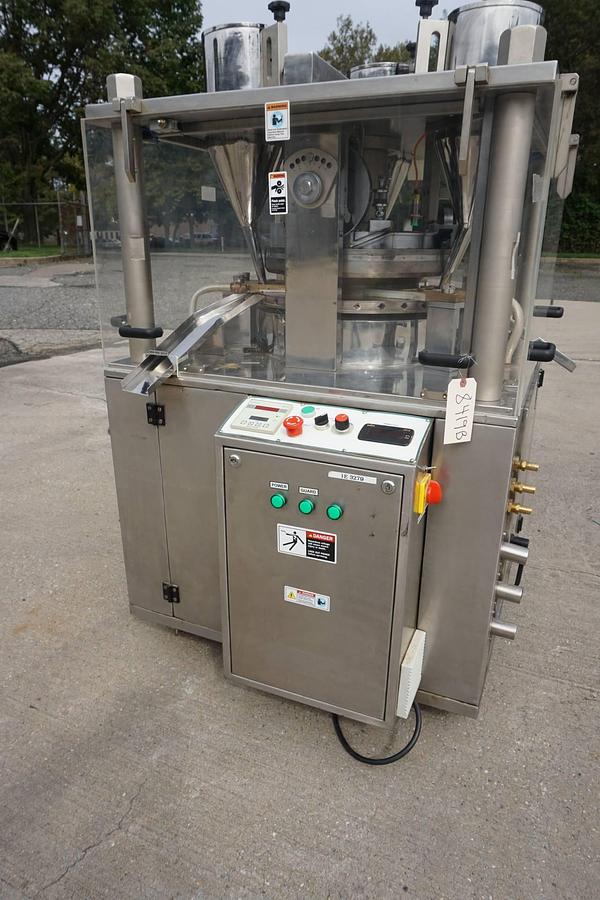
A thorough inspection of a used rotary tablet press should cover several key areas. The turret and tooling stations should be checked for wear, scoring, or damage to the punch guides and cam tracks, as these components directly affect tablet quality and are costly to replace. The compression rollers should be examined for pitting or uneven wear. Drive components including the main motor, gearbox, and drive belts should be assessed for condition and any signs of overheating or excessive wear. The control panel and instrumentation, including force measurement systems and speed controls, should be tested to confirm they are functioning accurately.
Contact parts made of stainless steel should be inspected for corrosion, pitting, or damage that could affect product quality or cleanability. Seals, gaskets, and dust covers should be checked for integrity. Buyers should also ask about the machine's service history, including any major repairs or parts replacements that have been carried out. Most reputable used equipment dealers will accommodate in-person or video inspections, and some machines may still be in production at a facility where a live inspection can be arranged. Keep in mind that dealers typically cannot run actual product through the machine during an inspection due to permitting and facility requirements, so the inspection will focus on mechanical condition and visual assessment rather than a full production trial.
What are the typical installation and utility requirements for a rotary tablet press?
Rotary tablet presses require a stable, level floor surface capable of supporting the machine's weight, which can range from a few hundred kilograms for smaller models to over a thousand kilograms for larger industrial presses. Electrical requirements vary by machine and region, but most industrial rotary presses operate on three-phase power, typically at 380V to 480V depending on the market the machine was built for. Buyers importing used equipment from a different country should confirm the electrical specifications and budget for any necessary modifications to match local power supply standards.
In addition to electrical connections, many tablet presses require compressed air for dust extraction systems or pneumatic components, and some larger presses are connected to external dust collection systems to manage airborne powder during production. Adequate ventilation in the production room is also important, particularly for potent or sensitizing materials. Before installing a used tablet press, it is advisable to consult with an experienced technician who can assess the specific machine's requirements and identify any components that may need servicing or calibration before the press is put back into production.
How does the number of tooling stations on a rotary tablet press affect purchasing decisions?
The number of stations on a rotary tablet press is one of the primary factors that determines production capacity, and it has a direct impact on the cost of the machine and the ongoing cost of tooling. More stations mean higher output at a given turret speed, but they also mean a larger investment in punch and die sets. A full set of punches and dies for a 31-station press costs more than a set for a 16-station press, and this tooling cost can be significant depending on the tablet shape and material specifications involved.
For manufacturers scaling up from small-batch to commercial production, a mid-range station count such as 25 or 31 stations often represents a practical balance between output capacity and capital cost. Larger presses with 45 or more stations are typically found in high-volume pharmaceutical or nutraceutical operations where continuous, high-speed production is required. When buying a used tablet press, buyers should factor in not just the machine price but also the cost and availability of compatible tooling, spare parts, and any refurbishment work the machine may need before it is production-ready.
What should buyers understand about purchasing used tablet press equipment 'as is'?
Used industrial equipment is typically sold without the protections that come with a purchase from the original manufacturer. Most used equipment dealers sell machinery on an as-is basis, meaning the buyer takes on responsibility for assessing the machine's condition before completing the purchase. This places a significant premium on the inspection process. Buyers should take advantage of any opportunity to inspect the machine in person, via video, or through detailed photo documentation provided by the dealer. Asking for service records, maintenance logs, and information about why the machine was taken out of service can provide valuable context about its condition and remaining useful life.
Selecting a reputable dealer with a long track record in the specific industry is one of the most important steps a buyer can take to reduce risk. Dealers who specialize in pharmaceutical and processing equipment are more likely to accurately represent machine condition and provide meaningful technical details than general machinery resellers. It is also worth contacting the equipment manufacturer directly to understand what level of support, spare parts availability, and technical documentation can be expected for the specific model and age of machine being considered, as older models may have limited parts availability or reduced manufacturer support.
What are the typical shipping and logistics considerations for buying a used tablet press?
Tablet presses are precision machines with sensitive components, and proper packaging is critical to preventing damage during transit. Smaller bench-top or single punch presses can often be palletized and shipped via standard freight, but larger rotary tablet presses typically require custom wooden crating to protect the machine and prevent shifting. The level of packaging required will affect shipping costs, and buyers should ask the dealer specifically what packaging will be used and whether crating charges are included in the quoted price or billed separately.
Larger and heavier machines may also require specialized rigging equipment for loading at the dealer's facility and unloading at the buyer's location. Rigging costs can add meaningfully to the total landed cost of the equipment and should be confirmed upfront. For international shipments, buyers need to account for import duties, customs clearance fees, and any compliance documentation required by the destination country. Getting a clear picture of all costs from the dealer before committing to a purchase helps avoid surprises and allows for an accurate comparison of total acquisition cost across different machines and sellers.