Category
Manufacturer
Model
Jvnw
Jvnw is a supplier of machinery for various industrial applications, focusing on custom solutions for their clients. They cater to a wide range of industries, providing tailored equipment that meets specific operational needs.
FAQ:
What types of equipment does JVNW manufacture?
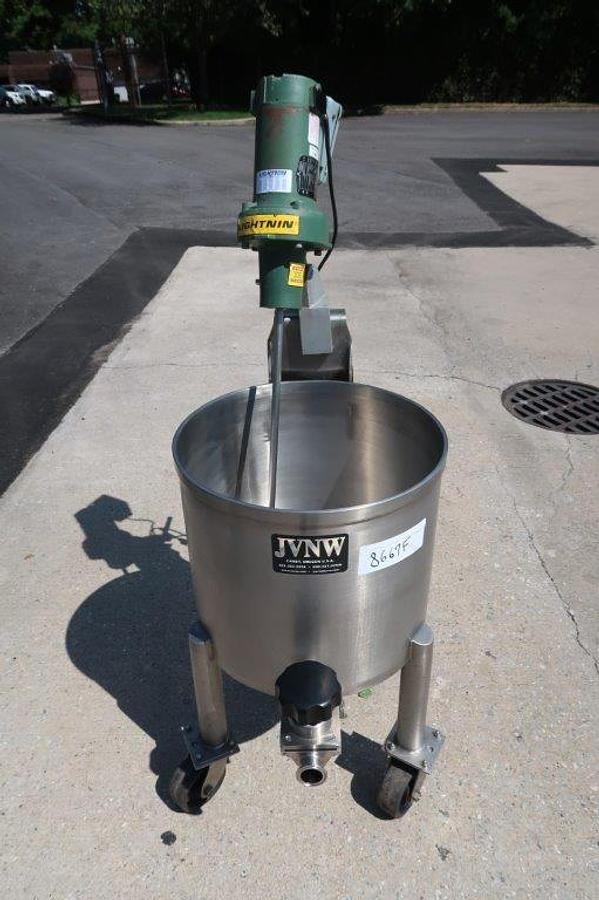
JVNW, also known as JV Northwest, is a custom fabricator specializing in stainless steel and specialty alloy process equipment. Their product line includes pressure vessels, storage tanks, mix tanks, and a broad range of sanitary and industrial-grade process vessels. They are particularly well known for building equipment to client specifications, which means their tanks and vessels vary considerably in size, configuration, and intended application. A 20-gallon portable stainless steel mix tank represents the smaller end of their range, while larger custom pressure vessels can hold thousands of gallons.
Because JVNW focuses on custom fabrication rather than off-the-shelf production, each piece of equipment tends to be built with specific process requirements in mind. That makes their used equipment especially attractive to buyers in industries where standard catalog equipment does not meet the exact dimensional, pressure, or sanitary requirements of a given process. Buyers searching the used market will find a variety of vessel types, including jacketed tanks, agitated mix vessels, and pressure-rated storage tanks across multiple alloy grades.
What industries commonly use JVNW pressure vessels and storage tanks?
JVNW equipment is used across a wide range of industries, but it is most prevalent in sectors that require sanitary or high-purity fabrication standards. Food and beverage processing, dairy, pharmaceutical manufacturing, biotechnology, and specialty chemical production are the core markets. In these industries, stainless steel construction is not just preferred but often required by regulatory agencies and industry standards bodies. JVNW's reputation for meeting those standards is a primary reason their equipment retains strong resale value in the used market.
Beyond food and pharma, JVNW vessels also appear in craft brewing and winemaking operations, nutraceutical production, and cosmetics manufacturing, where hygienic design and corrosion resistance are critical. The versatility of stainless steel fabrication means that a vessel originally built for one application can often be repurposed or cleaned to specification for another, which broadens the pool of potential buyers for used JVNW equipment considerably. Buyers from any of these industries should evaluate whether a specific used unit's configuration, nozzle placement, and pressure rating align with their intended process before purchasing.
Does JVNW equipment meet ASME code and sanitary standards?
JVNW has a strong history of fabricating equipment to ASME Section VIII standards for pressure vessels, and many of their tanks and vessels also carry 3-A sanitary standards compliance, which is a critical certification for equipment used in dairy, food, and pharmaceutical applications. These certifications are typically stamped or documented at the time of fabrication and represent a significant part of the equipment's value. When purchasing a used JVNW vessel, one of the first things a buyer should verify is whether the original certification documentation and data reports are still available.
It is worth noting that certification status can be affected by modifications made after the original fabrication, unauthorized repairs, or significant changes to operating conditions. A vessel that was ASME-stamped at the factory may no longer carry that certification if it was altered without following the proper code procedures. Buyers should ask the seller for any available documentation, including the original manufacturer's data report (Form U-1 for ASME vessels), and may want to have a qualified inspector review the vessel's current condition relative to its rated parameters before putting it back into service.
How do I verify the condition of a used JVNW tank or vessel before buying?
Inspecting a used JVNW vessel before purchase is one of the most important steps a buyer can take. Most reputable used equipment dealers will accommodate in-person inspections, virtual walkthroughs, or detailed video captures of the machine so the buyer can assess its current condition. For vessels still located at an operating facility, the dealer can often coordinate access directly with the facility owner. The equipment may still be in active production or may have been decommissioned, and either scenario can provide useful information about how the vessel was used and maintained.
During an inspection, buyers should look closely at the interior surface finish for pitting, corrosion, weld repairs, or discoloration that could indicate chemical attack or improper cleaning. Exterior welds, nozzle connections, jacket integrity (if applicable), and any agitator or mechanical components should all be examined carefully. Buyers should also ask about the vessel's service history, the materials it held, and any known repairs. Keep in mind that used equipment dealers typically do not have the permitting or production capabilities to run a live process test, so the inspection will focus on physical and mechanical condition rather than full operational testing.
What documentation should I request when purchasing used JVNW equipment?
When buying a used JVNW pressure vessel or tank, documentation can significantly affect both the safety and the regulatory compliance of the equipment in its next application. The most important document for a pressure vessel is the ASME manufacturer's data report, commonly called a U-1 form, which records the vessel's design pressure, temperature rating, materials of construction, and the code edition under which it was built. If this document is available, it gives the buyer a verified baseline for the vessel's rated capacity and construction standards.
Beyond the data report, buyers should ask for any available inspection records, repair histories, hydrostatic test results, and prior certifications such as 3-A compliance documentation. Material certifications (mill certs) for the stainless steel used in fabrication can also be valuable, particularly for pharmaceutical or food-grade applications where traceability of materials is important. Not all used equipment will come with complete documentation, and gaps in paperwork do not necessarily disqualify a vessel from further use, but they do mean the buyer may need to commission an independent inspection or re-certification before placing the equipment back into a regulated process.
What is the typical price range for used JVNW equipment?
Pricing for used JVNW equipment varies considerably depending on vessel size, configuration, condition, and the documentation available. Smaller portable mix tanks in the 20 to 100-gallon range can sell for a few thousand dollars in good condition, while large custom pressure vessels with jacketing, agitation, and full ASME documentation can command prices well into the tens of thousands of dollars. JVNW's reputation for quality fabrication and the durability of stainless steel construction means that well-maintained units tend to hold value better than equipment from less-established fabricators.
Buyers should also factor in costs beyond the listed equipment price. Rigging, crating, freight, and any required re-certification or inspection work all contribute to the total landed cost of a used vessel. A piece of equipment priced attractively may still result in a higher total cost if it requires significant shipping preparation or if documentation gaps necessitate third-party inspection before it can be placed into service. Getting a clear picture of all associated costs before committing to a purchase is essential to making an accurate comparison between available options.
Are replacement parts and service support available for JVNW equipment?
Because JVNW specializes in custom fabrication, many of their vessels and tanks do not rely heavily on proprietary replacement parts in the way that more mechanically complex equipment does. The primary structure of a stainless steel tank is essentially maintenance-free under normal conditions, and wear components such as gaskets, seals, agitator shaft seals, and valve assemblies are typically sourced from standard industrial suppliers rather than from JVNW directly. This is actually an advantage for used equipment buyers, since it reduces dependency on the original fabricator for ongoing maintenance.
That said, buyers should consult directly with JVNW or their authorized service contacts to understand what level of support is available for a specific model or vintage of equipment. The age of a vessel and any changes in JVNW's product lines over the years can affect parts availability and technical support. For older units, a qualified stainless steel fabrication shop can often fabricate replacement components or repair damaged sections, provided the original design parameters are respected. Buyers should factor in the availability of local fabrication and repair resources when evaluating older used vessels.
Why does used JVNW equipment hold its value well compared to other fabricators?
Several factors contribute to JVNW equipment retaining strong resale value in the used market. The primary reason is material quality. Stainless steel construction, particularly in the 304 and 316L grades commonly used for sanitary and chemical applications, is inherently resistant to corrosion and has an extremely long service life when properly maintained. A JVNW vessel that was well cared for in its first application can realistically provide decades of additional service, which makes used units genuinely attractive rather than simply a budget compromise.
Beyond materials, JVNW's history of building to recognized standards such as ASME Section VIII and 3-A sanitary requirements means that buyers in regulated industries can often put used equipment into service with a clearer compliance pathway than they would have with equipment from fabricators who did not follow those standards. Custom fabrication also means that JVNW vessels are often purpose-built for demanding applications, which tends to result in heavier-duty construction than a mass-produced equivalent. All of these factors combine to make JVNW a brand that experienced industrial buyers actively seek out in the used equipment market.
What should I know about shipping and rigging costs for used industrial tanks and vessels?
Shipping a used industrial tank or pressure vessel is more complex than standard freight, and costs can vary significantly based on the size and weight of the equipment, the distance involved, and the level of preparation required to protect the vessel during transit. Smaller portable tanks may ship on a standard pallet, while larger vessels typically require custom crating or specialized blocking and bracing to prevent damage. The seller or dealer should be able to provide details on how the equipment will be prepared for shipment, and buyers should ask for this information before finalizing a purchase.
For large or heavy vessels, professional rigging is usually required for both loading at the origin and unloading at the destination. Rigging involves cranes, forklifts, or other heavy-lift equipment operated by trained specialists, and those services carry their own costs that are separate from freight charges. Buyers should request a complete breakdown of rigging, packaging, and freight costs to understand the full landed price of the equipment. In some cases, arranging your own freight carrier can reduce costs, but it is important to confirm with the seller what preparation they will provide and what the buyer is responsible for coordinating.
What are the typical payment terms when purchasing used industrial equipment?
Used industrial equipment dealers generally require full payment before a machine or vessel is released for shipment. This is standard practice in the industry and reflects the nature of used equipment transactions, where the seller needs to confirm funds before committing to packaging, rigging, and logistics coordination. Buyers who are unfamiliar with this practice sometimes find it surprising compared to consumer purchasing norms, but it is a well-established convention across the used machinery market.
Some dealers may offer extended payment terms or financing arrangements to established repeat customers or for higher-value transactions, but these arrangements are not universal and should be confirmed directly with the seller before assuming they are available. For buyers making a significant purchase, it is reasonable to ask about the dealer's payment process, accepted payment methods, and any escrow or structured payment options that might be available. Understanding payment expectations upfront helps avoid delays once a purchase decision has been made.