Category
Manufacturer
Model
Jrsea
Jrsea is a manufacturer of equipment for the recycling and waste management industries. They are known for their innovative shredders and sorting systems that enhance material recovery and processing.
FAQ:
What is a Jrsea two-head aerosol filling machine with crimping head?
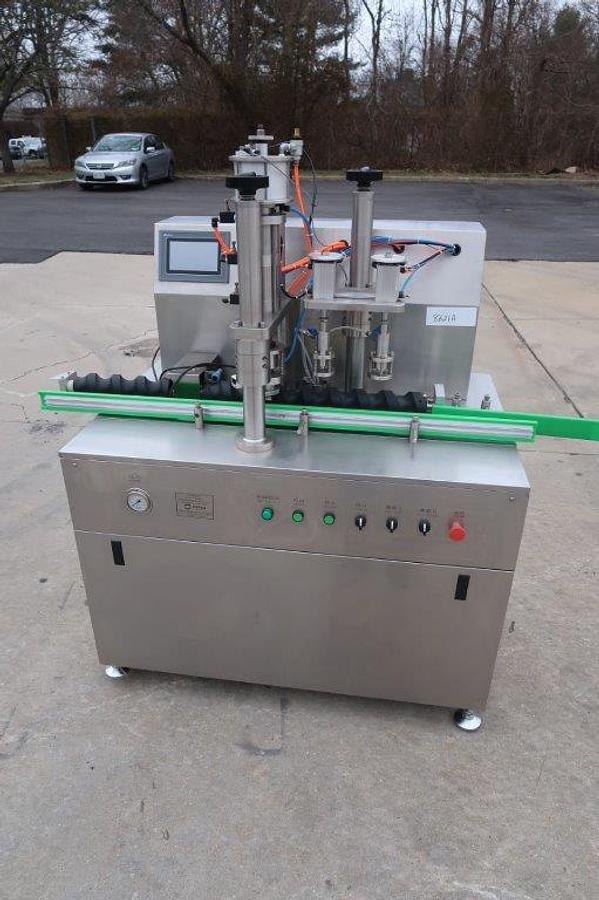
A Jrsea two-head aerosol filling machine with crimping head is a piece of industrial packaging equipment designed to fill aerosol cans with liquid product and propellant, then seal them by crimping the valve cup onto the can body. The two-head configuration means the machine can perform filling and crimping operations in a coordinated sequence, which improves throughput compared to single-head units. Jrsea produced equipment primarily targeting small to mid-sized manufacturers who needed reliable aerosol production capability without the footprint or cost of a fully automated line.
The crimping head is a critical component because it forms the airtight seal that keeps propellant and product pressurized inside the can. On a used machine like this, buyers typically inspect the crimping tooling for wear, verify that the crimp diameter settings can be adjusted for their specific can sizes, and confirm that the filling heads hold pressure accurately. Used Jrsea aerosol fillers appear on the secondary market through industrial equipment dealers and are sought after by contract fillers, paint manufacturers, personal care producers, and other aerosol packagers looking for cost-effective production capacity.
What types of products can be filled using an aerosol filling machine like this?
Aerosol filling machines in this class are used across a wide range of product categories. Common applications include household products such as air fresheners, insecticides, and furniture polish; personal care products like deodorants, hair sprays, and shaving foams; industrial and automotive products including spray paints, lubricants, and rust inhibitors; and food-grade aerosols such as cooking sprays. The specific products a machine can handle depend on the materials used in its wetted parts, the filling valve compatibility, and whether the machine is rated for flammable propellants.
Buyers should carefully evaluate whether a used aerosol filler has been used with compatible product types before. Residue from previous production runs, corrosion in the product pathways, or worn seals can affect filling accuracy and cleanliness. When inspecting a used machine, it is worth asking the dealer about the product history and requesting photos or video of the internal components, filling nozzles, and any product-contact surfaces to assess the condition before committing to a purchase.
What propellants are aerosol filling machines typically compatible with?
Most aerosol filling machines in this segment are designed to work with liquefied petroleum gas (LPG), dimethyl ether (DME), carbon dioxide (CO2), and compressed air. LPG and DME are the most common propellants in consumer aerosol production because they dissolve readily into the product and deliver consistent spray patterns. CO2 and compressed air are used for products where flammability is a concern or where a dry propellant is needed. The specific propellant compatibility of any given machine depends on its seals, pressure ratings, and whether it is equipped with explosion-proof motors and gas-safe electrical components.
For used machines, propellant compatibility is one of the most important things to verify before purchase. Seals and gaskets degrade over time, and a machine that was originally rated for a particular propellant may have worn components that no longer hold pressure safely. Buyers should ask the equipment dealer for any available documentation on the machine's pressure ratings, request a thorough inspection of the propellant-side components, and consult with a qualified aerosol equipment technician to assess whether the machine is fit for their intended propellant before putting it into production.
What safety features should buyers look for when evaluating a used aerosol filling machine?
Aerosol filling involves pressurized, often flammable materials, so safety features are a top priority when evaluating any machine in this category. Key features to look for include explosion-proof motors and electrical enclosures, pressure relief valves on the propellant system, gas leak detection systems or sensors, and proper grounding to prevent static discharge. Machines should also have emergency stop controls that are clearly accessible and in working order. On a used machine, each of these components needs to be physically inspected because safety systems can degrade, be bypassed, or be missing entirely after years of production use.
Buyers should also check whether the machine's pressure-rated components, such as the propellant tank connections and filling heads, show signs of corrosion, fatigue, or improper repair. Requesting a video inspection or an in-person visit to see the machine under power is strongly recommended. If the machine is still in production at a facility, observing it running is the best way to assess whether the safety systems are functional. Consulting with a certified aerosol equipment technician to review the machine before finalizing a purchase adds an important layer of due diligence that can prevent costly and dangerous problems after installation.
What can sizes and can diameters are aerosol filling machines in this category typically compatible with?
Aerosol filling machines designed for small to mid-sized production typically accommodate standard aerosol can diameters ranging from approximately 45mm to 65mm, covering the most common aerosol can formats used in personal care, household, and industrial products. Can height compatibility varies by machine, but most units in this class can handle cans from around 100mm to 300mm tall through adjustable guides and filling head height settings. Machines with wider adjustment ranges offer more flexibility for contract fillers or producers who run multiple product formats.
For a used machine, the actual usable range may be narrower than the design specification if the adjustment mechanisms have worn or if the tooling has been set up for a specific can size over a long production run. Buyers should ask the dealer to demonstrate or document the full range of adjustment, and verify that the crimping tooling matches the valve cup diameter used in their cans. If tooling needs to be replaced or additional change parts purchased to run a different can format, those costs should be factored into the total acquisition budget alongside the machine price, shipping, and installation.
How does a two-head aerosol filling machine differ from a single-head or fully automatic unit?
A two-head aerosol filling machine fills and seals two cans in each cycle rather than one, which roughly doubles throughput compared to a single-head machine operating at the same cycle speed. This makes the two-head configuration a practical middle ground for producers who have outgrown a single-head unit but do not yet have the volume to justify a fully automatic rotary or inline filling line. Two-head machines are typically semi-automatic, meaning an operator loads cans, initiates the cycle, and removes filled cans, while the machine handles the filling and crimping steps automatically.
Fully automatic aerosol lines integrate can feeding, filling, crimping, leak testing, and sometimes labeling into a continuous conveyor-based process with minimal operator involvement, which is suited to high-volume production measured in thousands of cans per hour. A two-head semi-automatic machine is better suited to production runs in the hundreds to low thousands of cans per shift. For buyers shopping used equipment, the two-head format offers a meaningful capacity step up at a fraction of the cost of a full automatic line, making it a common choice for smaller contract fillers, startups scaling up production, or specialty producers with diverse but moderate-volume product lines.
What should buyers inspect when evaluating a used aerosol filling machine?
A thorough inspection of a used aerosol filling machine should cover both mechanical and safety-related components. On the mechanical side, buyers should examine the filling heads for wear and seal condition, check the crimping tooling for deformation or uneven wear patterns, inspect the propellant and product plumbing for corrosion or leaks, and verify that all adjustment mechanisms move freely and hold their settings. The condition of the drive components, including motors, belts, and any pneumatic cylinders, should also be assessed. Asking the dealer for a video of the machine cycling under power is a practical starting point if an in-person visit is not immediately feasible.
Most equipment dealers will accommodate in-person or virtual inspections, and for machines that are still installed at a production facility, it may be possible to arrange a visit to see the equipment running. Keep in mind that dealers typically do not have the permitting or facilities to run actual aerosol product through a machine during an inspection, so functional testing is usually limited to dry cycling and checking mechanical operation. Buyers should also ask about the machine's service history, any known issues, and the availability of replacement parts from the manufacturer or aftermarket suppliers, since parts availability for older or less common models can significantly affect long-term operating costs.
What are typical power and utility requirements for an aerosol filling machine in this class?
Semi-automatic aerosol filling machines in the two-head class generally operate on three-phase electrical power, commonly at 220V or 380V depending on the market the machine was built for, with motor draws typically ranging from 1kW to 5kW depending on the number of heads and the level of automation. Compressed air is usually required to drive pneumatic actuators for the filling and crimping cycles, with typical requirements in the range of 0.4 to 0.8 MPa (approximately 60 to 115 psi) at a flow rate sufficient to support continuous cycling. Some machines also require a dedicated propellant supply line with appropriate pressure regulation and safety shutoffs.
For a used machine, buyers should verify the actual voltage and phase configuration before purchase and confirm it matches their facility's power supply, or budget for any necessary electrical conversion. It is also worth checking whether the machine's electrical enclosures and motor ratings are appropriate for use in a flammable atmosphere, since aerosol production areas typically require explosion-proof or intrinsically safe electrical equipment. Utility requirements should be confirmed with the dealer and cross-referenced with the machine's documentation if available, as modifications made during the machine's working life may have changed the original specifications.
How is shipping typically handled for a used aerosol filling machine, and what costs should buyers expect?
Shipping a used aerosol filling machine involves several cost components that buyers should understand before finalizing a purchase. The machine needs to be properly secured to a pallet or enclosed in a crate to prevent damage in transit, and the level of packaging required depends on the machine's size, weight, and fragility. Larger or heavier machines may require specialized rigging equipment for loading at the origin and unloading at the destination, which adds to the total cost. Freight rates vary based on the machine's dimensions, weight, the origin and destination locations, and whether the shipment moves by ground, air, or ocean freight for international buyers.
Buyers should ask the equipment dealer for a detailed breakdown of packaging, rigging, and freight costs to understand the full landed cost of the machine before committing to a purchase. Most used equipment dealers require full payment prior to shipping. It is also worth confirming who is responsible for any damage claims if the machine arrives in worse condition than described, and whether the dealer provides documentation such as photos taken before shipment that can serve as a reference point. For international shipments, buyers should also account for import duties, customs clearance fees, and any compliance requirements for bringing industrial machinery into their country.
What should buyers understand about warranties and support when purchasing a used aerosol filling machine?
Used aerosol filling machines are typically sold as-is by equipment dealers, meaning there is no manufacturer warranty covering the machine's condition or performance after purchase. Warranties of that kind are generally only offered by manufacturers on equipment sold directly from the production line. Because of this, the responsibility for thoroughly evaluating the machine's condition falls squarely on the buyer before the sale is completed. Selecting a dealer with a long track record in industrial or packaging equipment, and one that specializes in the relevant machinery category, significantly reduces the risk of purchasing equipment with undisclosed problems.
Buyers should also contact the manufacturer directly before purchasing to understand what level of technical support, documentation, and spare parts availability they can expect for the specific model and age of machine being considered. Older models or machines that have been out of production for many years may have limited parts availability, which affects the long-term viability of the equipment. Asking the dealer for any available manuals, wiring diagrams, or service records is worthwhile, as this documentation can be invaluable during installation, troubleshooting, and ongoing maintenance. A pre-purchase inspection by an independent aerosol equipment technician is one of the most effective ways to assess a used machine's true condition and anticipated maintenance needs.